Linh Ứng Pagoda, Sơn Trà
Linh Ứng Sơn Trà: compassion facing the sea and the city
Understand sacred places, explore living traditions, and learn how to engage respectfully with Pilgrim Map.
Access has not been verified. Check current local guidance before planning a visit.
Sơn Trà, Da Nang, Vietnam
Read the sources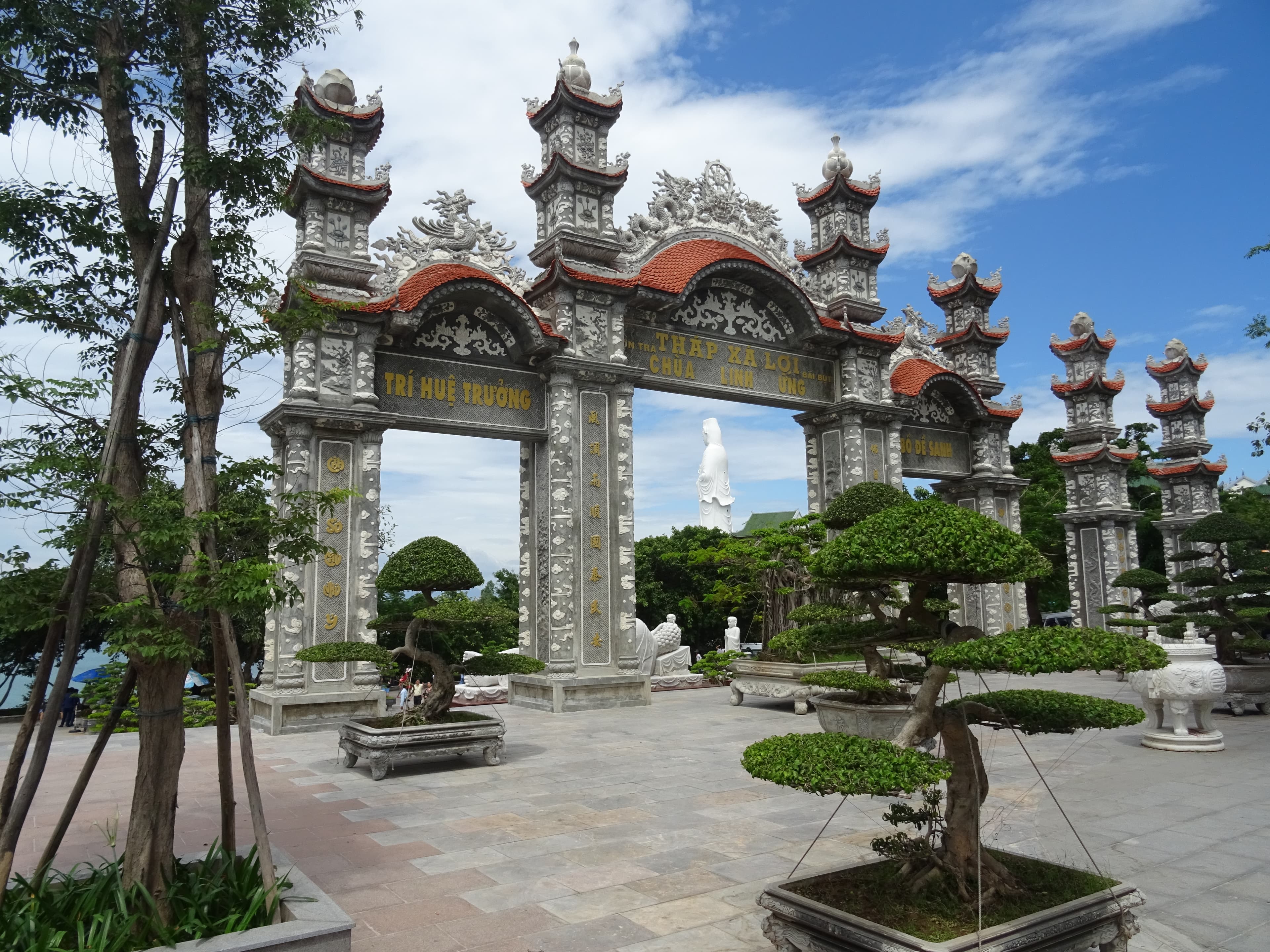
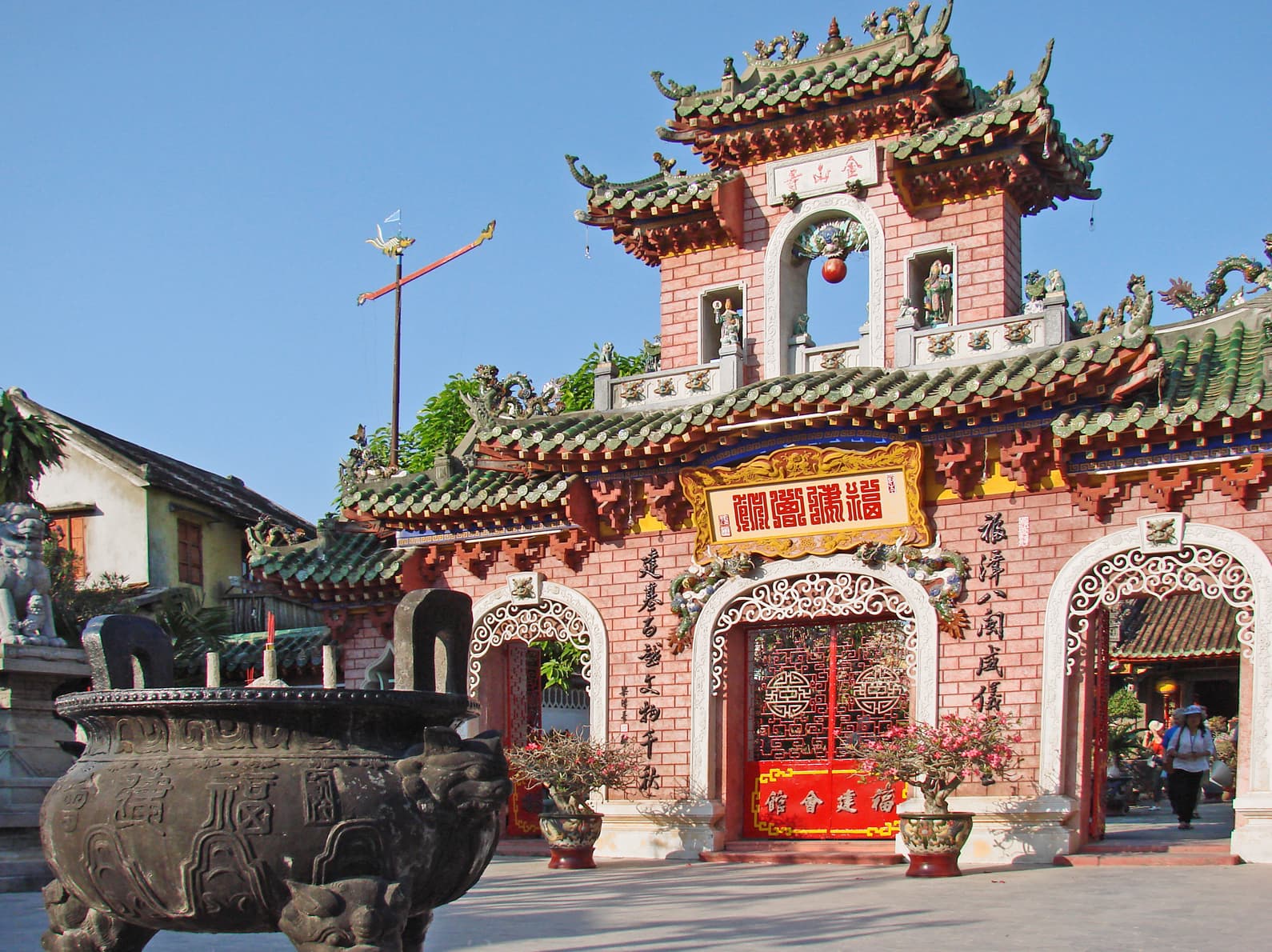
Linh Ứng Pagoda, Sơn Trà in Sơn Trà, Đà Nẵng, Vietnam. Image source · CC BY-SA 4.0
Visit essentials
A quick read before you go
- Duration
- Allow enough time for the worship core as well as the exterior terraces.
- Access
- Use the approved sourced coordinates, then verify routes and current conditions through Đà Nẵng…
Overview
The approach opens toward ocean and city before gathering visitors around Buddhist halls and the great image of Quan Thế Âm. Its scale communicates compassion as watchful presence over a vulnerable coast, not a scenic marker detached from worship.
Devotees may bow, offer incense, or recite the bodhisattva's name while tour groups move through the grounds. Reviewed sources support an active worship identity but do not verify popular stories about storms, miracles, or protection at sea. Visitors can honor the devotional meaning by keeping altar routes open and refusing to turn a praying person into foreground scenery.
Why this place is sacred
A high view can produce awe on its own. Here that response is given a Buddhist direction through Avalokiteśvara, the bodhisattva who hears suffering. Sea, weather, elevation, and the visible city make protection an understandable devotional theme. This relationship is stronger and more specific than describing the headland as an energy point. The setting can support contemplation, but Buddhist compassion is expressed through attention and ethical conduct, not a guaranteed sensation.
The modern complex supports Buddhist worship and public devotion to Quan Thế Âm on the Sơn Trà coast.
Local worship, monastic life, civic symbolism, and large-scale tourism now overlap around the active pagoda.
Experience and orientation
Locate the main worship hall and the Quan Thế Âm image before choosing a viewpoint. Notice how worshippers face the altar or statue and how tour circulation intersects that axis. Wind and bright exposure can make the grounds feel open, while incense and bells draw attention back to practice. The useful contrast is between outward vista and inward vow. Move slowly near steps and avoid crowding the base of a sacred image for photographs.
Separate the public viewing terraces, worship halls, statue approach, and monastic areas on arrival.
Context and lineage
The reviewed sources establish the exact coastal institution, its Buddhist identity, and its Quan Thế Âm focus. They do not provide a sufficiently secure basis for repeating every miracle or foundation tale found in promotional articles. Neither the pagoda nor its Sơn Trà precinct carries UNESCO World Heritage inscription. Its significance rests in living devotion and the relationship between compassion, city, and sea.
Vietnamese Mahayana Buddhism supplies the vows, images, and devotional vocabulary of the complex.
Avalokiteśvara (Quan Thế Âm)
bodhisattva of compassion and principal devotional focus
Traditions and practice
Recitation of the bodhisattva's name, offerings, bowing, and silent petitions may occur. A visitor should watch the local sequence and use only designated incense points. The meaning of protection belongs to Buddhist compassion; it should not be presented as a mechanism for controlling weather or eliminating risk.
Active worship, monastic life, and recreational visitation share the grounds.
Stand outside the main circulation line and connect one sea view with the bodhisattva's vow to hear suffering.
Vietnamese Mahayana Buddhism
ActiveThe coastal sanctuary gives monumental form to Avalokiteśvara's compassion and protective care.
Prayer, name-recitation, incense, offerings, and bows occur under temple guidance.
Perspectives and open questions
Compassion practice, coastal geography, civic symbolism, active worship, and mass tourism require a balanced reading.
Scholarly perspective
The site shows how a modern monumental image can organize both religious devotion and urban identity. Its scale does not make practice superficial, but tourism can obscure the quieter work of prayer and monastic discipline. Geography explains the protective theme without proving supernatural control over the sea.
Living and traditional perspectives
Quan Thế Âm is approached as the bodhisattva who hears suffering, making compassionate response more central than scenic grandeur.
Open questions
Reports of miraculous protection remain unverified unless a source and community attribution are provided.
Plan your visit
Access and arrival
Use the approved sourced coordinates, then verify routes and current conditions through Đà Nẵng authorities; no Google address, phone, hours, website, business status, place ID, or map URI passed exact whole-complex review.
Use licensed Đà Nẵng accommodation; monastic lodging is not claimed.
Respectful visit
Choose modest clothing and footwear safe for exposed steps.
Keep cameras out of altar sightlines and obey any drone or interior restriction.
Use established incense burners and temple donation points only.
Residential buildings, ceremony areas, cliffs, and barriers remain closed.
Do not fly a drone, climb statue features, or use a worship gathering as spectacle.
Location
Map loads as you approach this section.
Pilgrim reflections
A portrait of encounter, not a score
Pilgrims describe what they felt, how present they could become, and whether the place would shape a journey. There are no stars and no ranking of traditions.
No reviewed reflections yet
The first pilgrims can help describe the character of being here.
Share a reflection
Available after an account-backed “Been there.” Every reflection is reviewed before publication.
Nearby sacred places
Explore other sacred places in the region. Proximity does not establish access or travel time; check each place’s guidance.
References
Sources consulted for this page. Source categories describe the publication, not a guarantee that every claim is verified. Traditional accounts and outside interpretations may differ.
- 01Chùa Linh Ứng Sơn Trà — Đà Nẵng City governmentofficialExact Chùa Linh Ứng Sơn Trà identity and Bãi Bụt location.
- 02Linh Ung Pagoda: a must-see destination in Da Nang — Đà Nẵng Tourism Promotion CenterofficialExact Sơn Trà pagoda, peninsula setting, Buddhist use, Lady Buddha, and distinction from the other Linh Ứng pagodas.
- 03Linh Ứng Pagoda on Sơn Trà — Vietnam National Authority of TourismofficialNational tourism corroboration of the exact Sơn Trà Buddhist complex and Quan Thế Âm focus.
- 04Linh Ung Pagoda 18 — Christophe95academicExact-subject photograph, reusable licence, and camera coordinates 16.099702, 108.277792.
- 05Linh Ứng Pagoda, Sơn Trà — Wikidata contributorsacademicCorroborates the exact Bãi Bụt–Sơn Trà identity and location.
Pilgrim glossary
- Kannon
- The bodhisattva of compassion, central to many East Asian pilgrimage routes.
- Bodhisattva
- An enlightened being who postpones full nirvana to help others toward awakening.
Share a photo
Help visitors recognize Linh Ứng Pagoda, Sơn Trà. Every submission is reviewed before publication.