Khao Klang Nok
Dvaravati cosmology rises in concentric terraces beyond Si Thep
Understand sacred places, explore living traditions, and learn how to engage respectfully with Pilgrim Map.
Access has not been verified. Check current local guidance before planning a visit.
Si Thep, Phetchabun, Thailand
Read the sources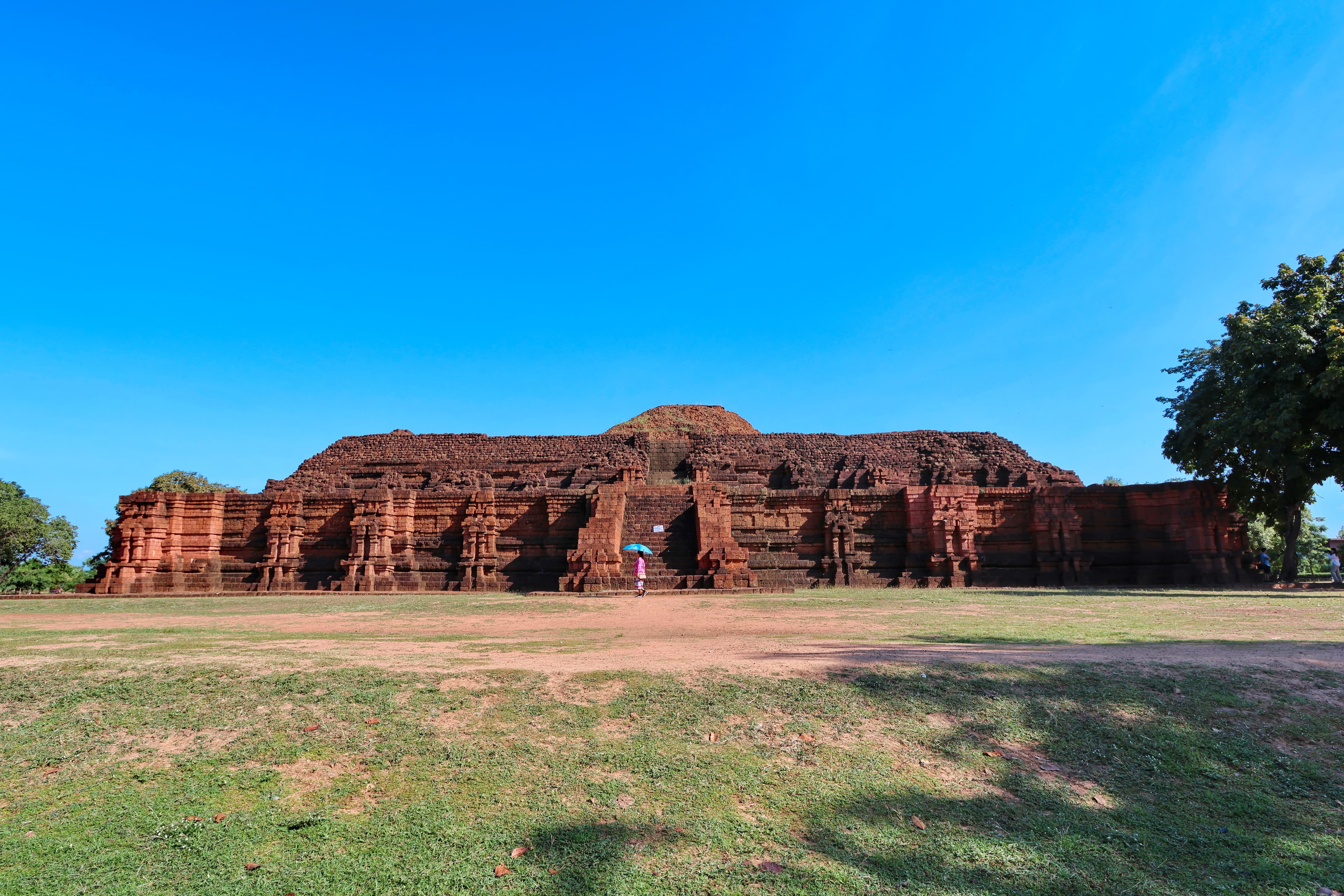
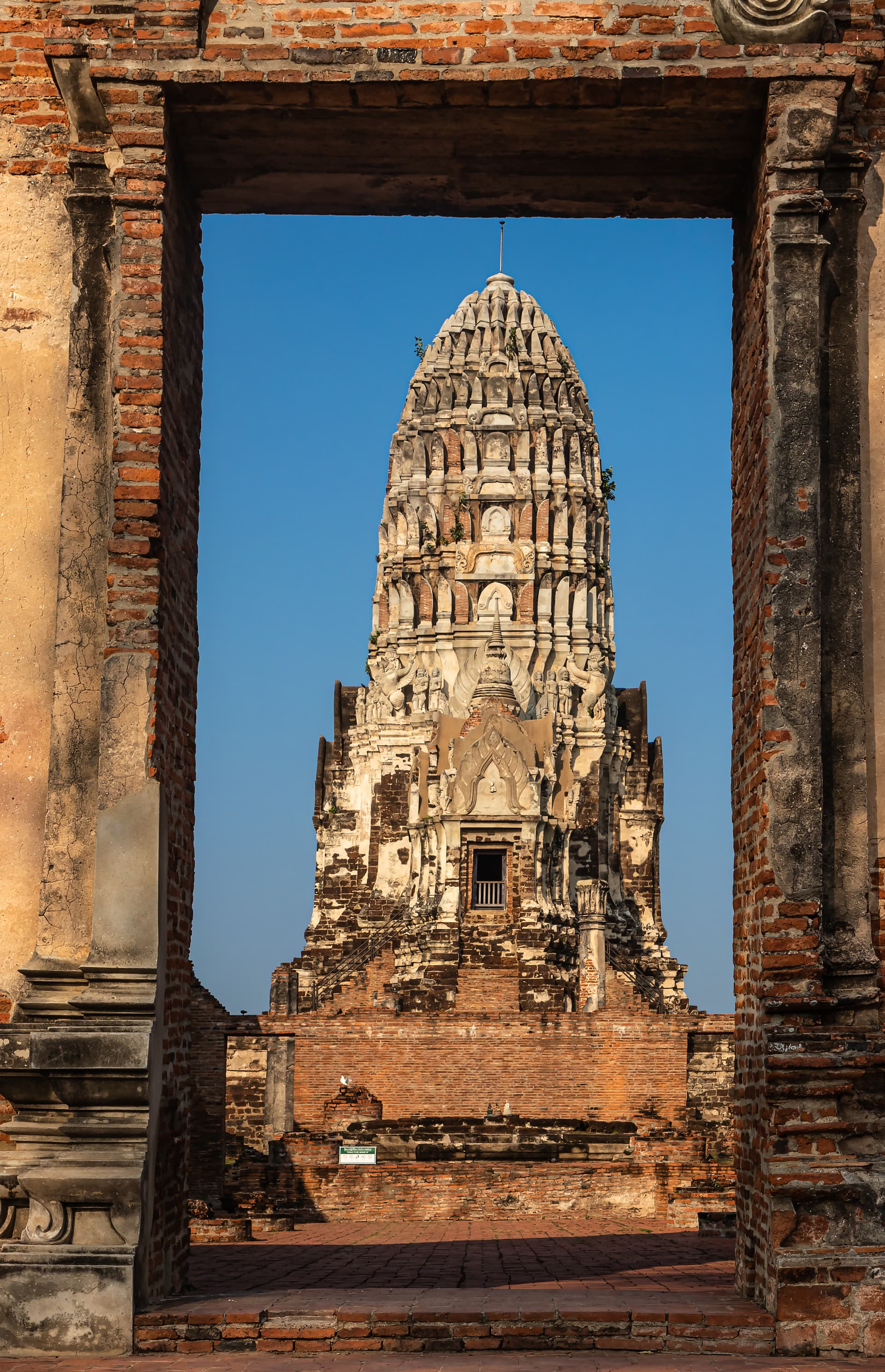
Khao Klang Nok in Si Thep, Phetchabun, Thailand. Image source · CC BY-SA 4.0
Visit essentials
A quick read before you go
- Etiquette
- Protect processional routes, laterite, brick, worshippers, and every management closure.
Overview
Khao Klang Nok spreads sacred order horizontally before rising vertically. Double processional terraces and repeated indented corners supported a now-lost upper stupa; miniature shrine forms and subordinate pagodas extend the composition in four directions. UNESCO reads this plan through Dvaravati cosmological belief and cautiously compares it with Mahayana monuments in Bengal and Java, including Borobudur. At monumental scale, Buddhist ideas became spatially public: circumambulation, directional order, multiplication, and ascent gathered around an unseen or vanished devotional center.
Why this place is sacred
Khao Klang Nok is often described as a pyramid, a term that communicates shape but can obscure Buddhist function. Its terraces are not evidence of a global mystery culture or astronomical power plant. UNESCO's nomination documentation grounds the monument in Dvaravati Buddhist cosmology and regional exchange. Local worship on Visakha Bucha and other key days gives the ruin a present devotional afterlife.
Community reverence is real; claims that the terraces emit energy or reproduce Borobudur's supernatural effects are not independently verified.
Experience and orientation
Stand back to read the full mass before approaching the permitted route. Identify the double terraces, indented corners, replica shrines, and subordinate pagoda positions without climbing closed masonry. The upper structure has collapsed, so digital or guide reconstructions should be labeled as interpretation. Places reports continuous access, but UNESCO management and Fine Arts controls may impose safer actual hours; verify locally. If community circumambulation occurs, give the route to worshippers and do not film close faces without consent.
Context and lineage
Si Thep flourished as a Dvaravati center between the sixth and tenth centuries, adapting religious traditions from India into a distinctive local art. Khao Klang Nok developed outside the twin town as a massive monastic and cosmological monument. UNESCO inscribed the Ancient Town of Si Thep and its associated Dvaravati monuments in 2023; Khao Klang Nok is component 002. Its original laterite and brick survive, while the upper pagoda is lost.
Current research and land protection continue to refine understanding of the component and buffer zone.
Traditions and practice
Historical practice likely included circumambulation, homage, teaching, and monastic activity organized by the pagoda's cosmic plan. UNESCO nomination evidence records nearby residents conducting Buddhist worship and triple circumambulation on Visakha Bucha. That living practice should be observed rather than copied automatically. Visitors must not climb, leave incense on masonry, or invent a Dvaravati initiation. Heritage stewardship and community-led observance are the active traditions now.
Historic Dvaravati Buddhism
HistoricalHistoric Buddhist practice centered pagoda homage, cosmology, circumambulation, and monastic life.
Local Buddhist observance
ActiveNearby communities renew Buddhist attention through observance-day circumambulation under present local authority.
Heritage stewardship
ActiveUNESCO component management protects original materials, form, setting, and community relationships.
Perspectives and open questions
Buddhist cosmology, Dvaravati archaeology, comparative art, UNESCO management, and local devotion meet.
Scholarly perspective
Mahayana and broader Buddhist studies interpret cosmological layout, while Dvaravati archaeology examines brick, laterite, stucco, chronology, and monastic context. Comparative art history studies South Indian, Indonesian, Bengal, and Java connections without claiming direct identity. UNESCO management addresses authenticity, buffer zones, and research gaps. Local Buddhists reactivate the monument through observance days. These perspectives support a sacred account without turning architectural resemblance into proof of lost technology. Community observance complicates a simple ruins label.
The monument no longer supports its original monastery, yet annual Buddhist use gives the terraces a living calendar under present-day local authority. That practice should neither be projected unchanged into the Dvaravati period nor dismissed as tourism. It demonstrates how archaeological heritage can receive new devotional attention while its older cosmological plan remains a matter for research and conservation.
Plan your visit
Places reports continuous access, but UNESCO and Fine Arts management may impose safer current controls.
Respectful visit
Protect processional routes, laterite, brick, worshippers, and every management closure.
Current practical details
Address
Na Sanun, Si Thep District, Phetchabun 67170, Thailand
Hours
Hours, fees, and access can change — verify on the official source before you travel. Practical details last checked Jul 2026.
Location
Map loads as you approach this section.
Pilgrim reflections
A portrait of encounter, not a score
Pilgrims describe what they felt, how present they could become, and whether the place would shape a journey. There are no stars and no ranking of traditions.
No reviewed reflections yet
The first pilgrims can help describe the character of being here.
Share a reflection
Available after an account-backed “Been there.” Every reflection is reviewed before publication.
Nearby sacred places
Explore other sacred places in the region. Proximity does not establish access or travel time; check each place’s guidance.
References
Sources consulted for this page. Source categories describe the publication, not a guarantee that every claim is verified. Traditional accounts and outside interpretations may differ.
- 01The Ancient Town of Si Thep and its Associated Dvaravati Monuments — UNESCO World Heritage CentreofficialAuthoritative component scope, Buddhist cosmology, chronology, inscription, and management context.
- 02Si Thep nomination dossier — Fine Arts Department of ThailandofficialExact Khao Klang Nok cosmology, plan, comparative context, materials, and community worship.
- 03Khao Klang Nok — Google Maps — Google PlacesSource contextStrong name, country, locality, and coordinate match; used only for practical visitor data and identity corroboration.
Pilgrim glossary
- Stupa
- A dome-shaped Buddhist monument that holds relics or marks a sacred place.
Share a photo
Help visitors recognize Khao Klang Nok. Every submission is reviewed before publication.