Khao Chakan Cave Temple
Mahayana worship inhabits a limestone mountain of many caves
Understand sacred places, explore living traditions, and learn how to engage respectfully with Pilgrim Map.
Access has not been verified. Check current local guidance before planning a visit.
Khao Chakan, Sa Kaeo, Thailand
Read the sources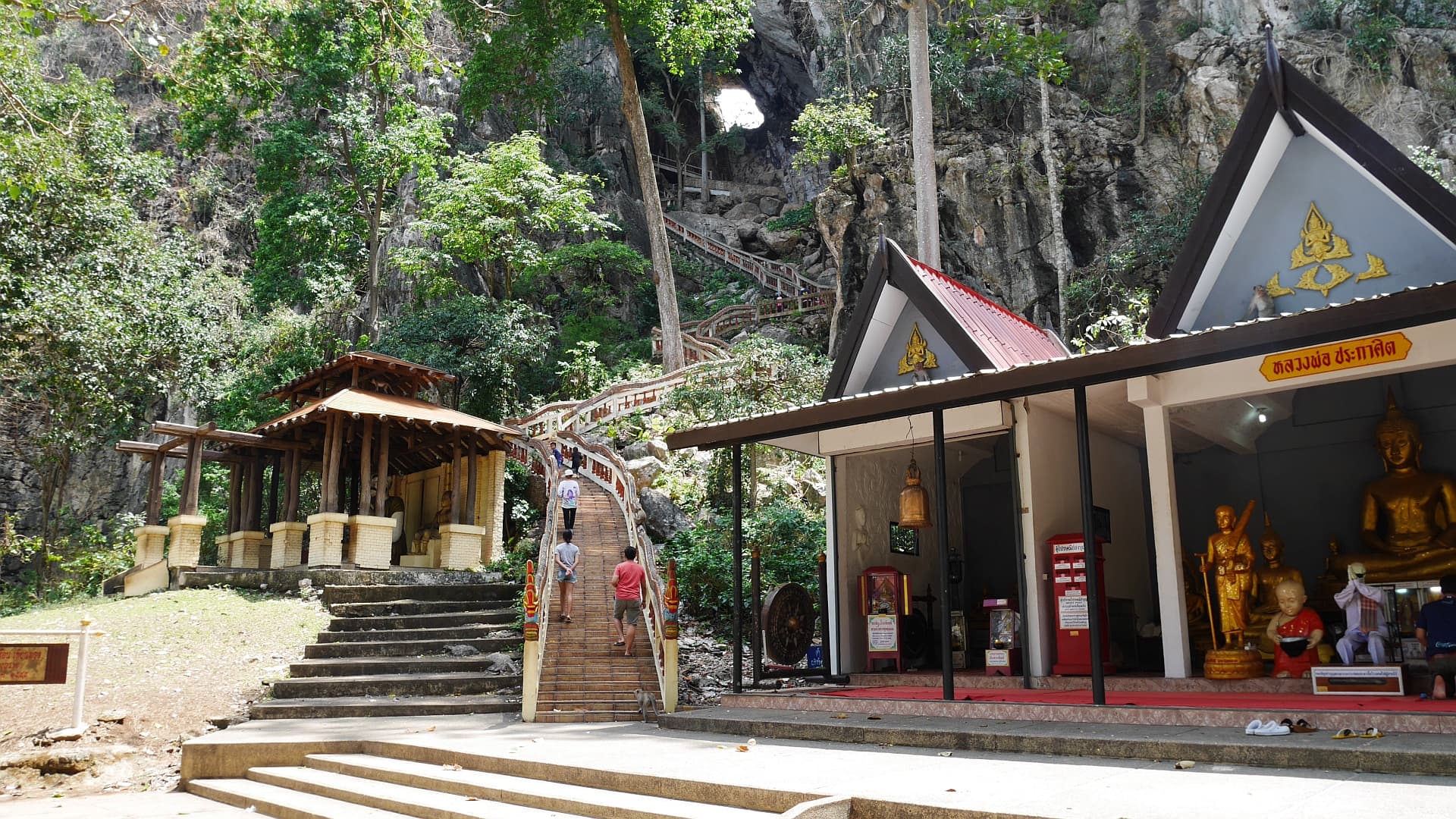
Khao Chakan Cave Temple in Khao Chakan, Sa Kaeo, Thailand. Image source · CC BY-SA 4.0
Visit essentials
A quick read before you go
- Etiquette
- Protect worshippers, historic fabric, and closed thresholds.
Overview
Khao Chakan joins a functioning Mahayana institution to a substantial limestone system rather than merely borrowing a cave's name. Its footprint replica localizes remembrance of the Buddha, while halls and images sustain present worship. The caves create darkness, echo, and vertical thresholds, but their geology is integral, requiring the mountain to be understood as natural, cave, and rock as well as cultural and built.
The official record also resists false antiquity: the current ordination hall is modern, although the landscape and cultural traces are older.
Why this place is sacred
Cave acoustics, cool air, and shafts of light can feel uncanny. These effects have physical explanations and do not prove a portal or energy concentration. The Buddha footprint is explicitly a replica, so the guide does not present it as an authenticated physical impression. Khao Chakan's spiritual distinctiveness comes from Mahayana worship taking place within an extensive limestone setting, not from borrowed legends.
No rampant exact-site miracle claim was found across the official material, and none is added to make the page sound more mystical.
Experience and orientation
Treat cave and temple rules as separate layers. Remove shoes for worship spaces; carry appropriate footwear, water, and light only where cave access is allowed. Do not touch formations, disturb bats or macaques, enter unmarked openings, or assume all seventy-two caves are visitor routes. Strong Places data supplies the exact practical listing, but weather and custodial closures can override it. The reviewed official sources did not confirm a temple-owned website, so no candidate domain is promoted.
Context and lineage
Sa Kaeo PRD records the present temple as Mahayana and dates the ordination hall to 1990. ONEP's cultural-environment inventory describes the wider mountain, many caves, and replica footprint. These sources support a layered account rather than a single founding legend. The limestone landform developed on a geological timescale; religious occupation and construction came later. Current municipal Buddhist observances establish living practice. Khao Chakan has no UNESCO World Heritage inscription in the reviewed evidence.
Traditions and practice
Worship may include bows, offerings at authorized altars, quiet attention to Buddha images, and respectful visits to the footprint replica. Cave exploration is not automatically a ritual, and visitors should not leave coins, incense, paint, or cloth on rock surfaces. A municipal candle-procession report demonstrates active Buddhist community life but does not establish a named pilgrimage route to Khao Chakan, so pilgrimage status remains false. Conservation of habitat and formations is part of appropriate conduct at this mixed sacred landscape.
Mahayana Buddhism
ActiveDocumented tradition layer 1.
Cave and habitat stewardship
ActiveDocumented tradition layer 2.
Perspectives and open questions
Religious, historical, and environmental evidence remain distinct.
Scholarly perspective
Mahayana Buddhism provides the site's living religious frame. Geology and ecology explain the limestone caves and their vulnerabilities; cultural-environment management recognizes that buildings and natural formations must be protected together. Local-government reporting confirms present ceremonial use. Archaeological or legendary claims beyond those sources remain open. This combined perspective prevents two common errors: calling the entire mountain a man-made temple and treating a functioning Buddhist community as incidental scenery inside a tourist cave.
The current ordination hall dates to 1990, while the limestone caves and earlier cultural traces are older. Metadata must preserve the unusual combination rather than choosing only one side. The institution is Mahayana, the ordination hall is modern, the footprint is a replica, and the enclosing limestone is genuinely natural. Those four propositions prevent familiar errors: importing Theravada assumptions, aging the current buildings into antiquity, authenticating a copied footprint, or reducing the mountain to construction scenery.
Together they give reviewers concrete points for a fresh identity and classification check.
Plan your visit
Day-of authority overrides routine listing data.
Respectful visit
Protect worshippers, historic fabric, and closed thresholds.
Current practical details
Address
M36M+6JH, Khao Chakan, Khao Chakan District, Sa Kaeo 27000, Thailand
Hours
Hours, fees, and access can change — verify on the official source before you travel. Practical details last checked Jul 2026.
Location
Map loads as you approach this section.
Pilgrim reflections
A portrait of encounter, not a score
Pilgrims describe what they felt, how present they could become, and whether the place would shape a journey. There are no stars and no ranking of traditions.
No reviewed reflections yet
The first pilgrims can help describe the character of being here.
Share a reflection
Available after an account-backed “Been there.” Every reflection is reviewed before publication.
Nearby sacred places
Explore other sacred places in the region. Proximity does not establish access or travel time; check each place’s guidance.

References
Sources consulted for this page. Source categories describe the publication, not a guarantee that every claim is verified. Traditional accounts and outside interpretations may differ.
- 01Wat Tham Khao Chakan — Google PlacesofficialExact practical metadata accepted after strong name, country, locality, and coordinate review.
- 02Khao Chakan Temple — Sa Kaeo Public Relations OfficeofficialMahayana identity, ordination hall, limestone setting, and caves.
- 03Khao Chakan cultural environment — Office of Natural Resources and Environmental Policy and PlanningofficialExact mountain, seventy-two-cave account, Mahayana temple, and replica Buddha footprint.
- 04Buddhist Lent candle procession — Khao Chakan MunicipalityofficialCurrent exact-site Buddhist ceremonial activity.
Share a photo
Help visitors recognize Khao Chakan Cave Temple. Every submission is reviewed before publication.