Wat Sothon Wararam Worawihan
Luang Pho Sothon anchors river legend and eastern Thai devotion
Understand sacred places, explore living traditions, and learn how to engage respectfully with Pilgrim Map.
Access has not been verified. Check current local guidance before planning a visit.
Chachoengsao, Chachoengsao, Thailand
Read the sources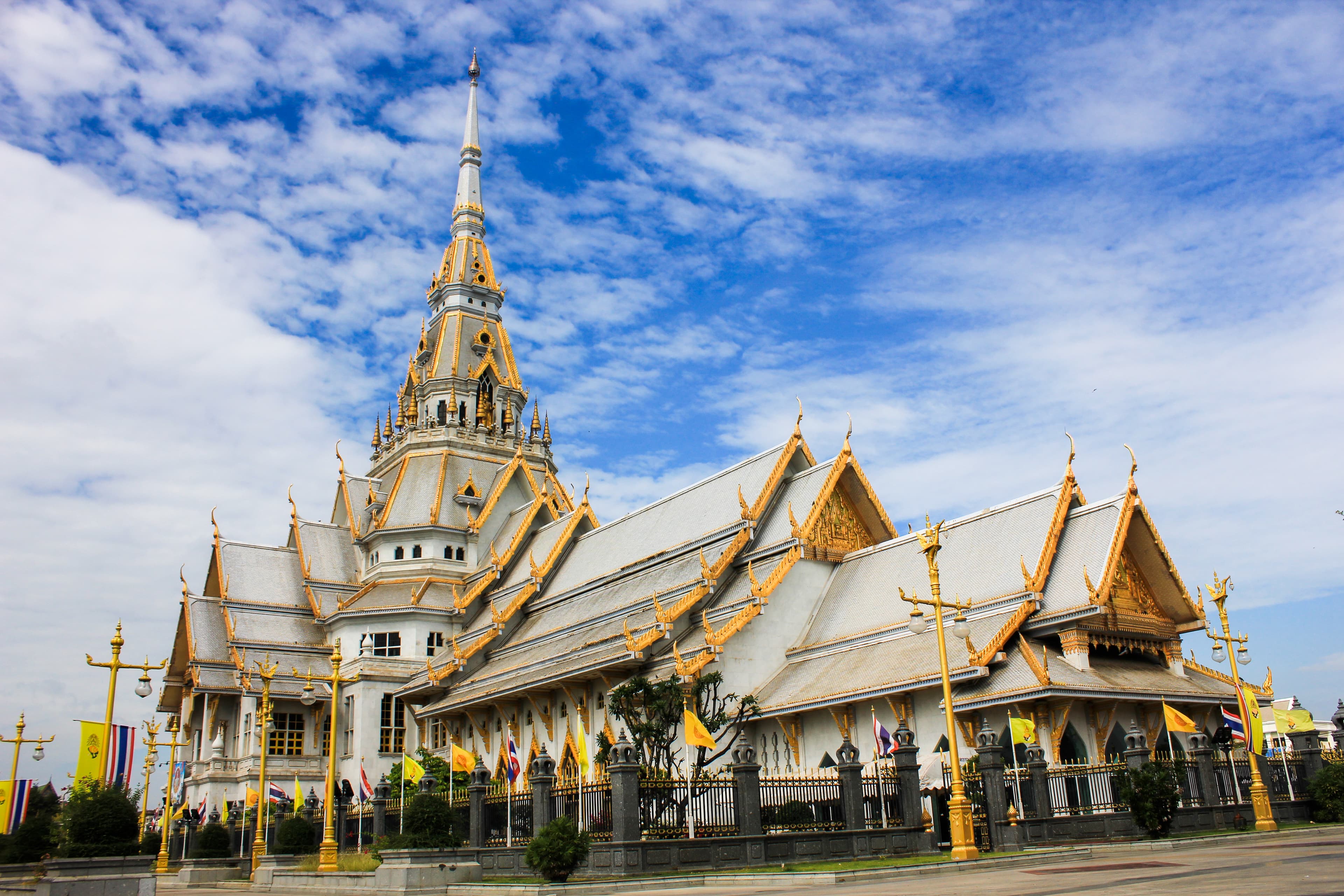
Wat Sothon Wararam Worawihan in Chachoengsao, Chachoengsao, Thailand. Image source · CC BY-SA 4.0
Visit essentials
A quick read before you go
- Etiquette
- Protect prayer queues, shoe rules, image surfaces, offering controls, and private emotion.
Overview
Luang Pho Sothon is small relative to the great hall built around him, but the image gathers the temple's devotional attention. Worshippers bring offerings, bow, make vows, and return in gratitude. The river-arrival narrative connects the Buddha with movement, community effort, and successful invitation into a permanent home. The image is still a Buddha, not a local god detached from Buddhist refuge.
Conservation of Luang Pho Sothon and neighboring images shows that sacred custody includes material care as well as prayer.
Why this place is sacred
The best-known legend says three Buddha images floated downriver and that Luang Pho Sothon could be raised only after the correct ritual approach. Fine Arts records the story as inherited tradition, not eyewitness proof. Devotees and reviews also report answered vows, healing, protection, or success. These claims are prevalent and culturally important, but no outcome is guaranteed or independently verified. The river setting can deepen the narrative without proving supernatural buoyancy or energy.
Experience and orientation
Expect active crowds rather than museum quiet. Follow separate routes for the principal image, offerings, and any vow-fulfillment practices. Remove shoes, dress modestly, and keep movement lanes clear. Do not photograph an emotional petition at close range. Some offerings have site-specific rules, and popular stories about avoiding certain foods or promises should be learned from temple authorities rather than copied from social media. Check the custodian page and Places hours because weekends and festivals extend activity and may change access.
Context and lineage
Fine Arts sources distinguish historical evidence, legend, and conservation. The image has been associated with the temple since the late Ayutthaya or early Bangkok era, while the floating story links it with other central Thai Buddha images. The temple became a royal monastery and a spiritual center of Chachoengsao. A major modern hall now shelters the image, and professional conservation addresses cracks and surface change.
The site is not UNESCO-inscribed and should not be described as ancient simply because its legend is old.
Traditions and practice
Current practice includes bowing, flowers, incense at managed points, vows, merit-making, and festival worship. Visitors should not touch the principal image, force access through a prayer line, or promise offerings they do not understand. Medical concerns require medical care regardless of blessing. A respectful petition can be acknowledged as personal religious practice, while public content must avoid promising fertility, healing, safety, or wealth. Temple announcements govern festival participation.
Theravada Buddhism
ActiveTheravada practice centers Buddha refuge, vows, merit, festivals, and community worship.
Local Buddha-image devotion
ActiveRiver tradition and returned vows express Chachoengsao's sustained relationship with Luang Pho Sothon.
Perspectives and open questions
Theravada refuge, oral tradition, conservation, devotion, and testimony must retain labels.
Scholarly perspective
Theravada teaching identifies Luang Pho Sothon as a Buddha image and focus of refuge. Local oral tradition explains the river arrival and community attachment. Conservation science studies the physical image without deciding devotional truth. Tourism emphasizes devotion and blessing, while devotees tell first-person fulfillment stories. The guide preserves each voice with labels: legend is legend, testimony is testimony, and supernatural efficacy remains unverified. Conservation adds another form of testimony.
Technical examination can identify cracks, materials, repairs, and risks without deciding whether a legend is spiritually true. Devotees, meanwhile, may understand repair as service to a living sacred presence. Presenting those roles together avoids a false choice between science and faith. It also explains why touching, crowd pressure, or unauthorized substances are inappropriate even when offered with sincere religious intention.
Plan your visit
Strong Places and custodian announcements provide current hours subject to festivals and ceremonies.
Respectful visit
Protect prayer queues, shoe rules, image surfaces, offering controls, and private emotion.
Current practical details
Address
134 Thanon Thep Khunakon, Tambon Na Muang, Amphoe Mueang Chachoengsao, Chang Wat Chachoengsao 24000, Thailand
Phone
Hours
Hours, fees, and access can change — verify on the official source before you travel. Practical details last checked Jul 2026.
Location
Map loads as you approach this section.
Pilgrim reflections
A portrait of encounter, not a score
Pilgrims describe what they felt, how present they could become, and whether the place would shape a journey. There are no stars and no ranking of traditions.
No reviewed reflections yet
The first pilgrims can help describe the character of being here.
Share a reflection
Available after an account-backed “Been there.” Every reflection is reviewed before publication.
Nearby sacred places
Explore other sacred places in the region. Proximity does not establish access or travel time; check each place’s guidance.
References
Sources consulted for this page. Source categories describe the publication, not a guarantee that every claim is verified. Traditional accounts and outside interpretations may differ.
- 01Spiritual places to visit for blessing — Tourism Authority of ThailandofficialExact identity, national devotional importance, and living worship.
- 02History of Luang Pho Sothon — Fine Arts DepartmentofficialExact image history, explicitly labeled river legend, art, and sacred reception.
- 03Wat Sothon official social page — Wat Sothon Wararam WorawihanofficialCustodian page supplied by strong Places for current announcements.
- 04Wat Sothon Wararam Worawihan — Google Maps — Google PlacesSource contextStrong name, country, locality, and coordinate match; used only for practical visitor data and identity corroboration.
Share a photo
Help visitors recognize Wat Sothon Wararam Worawihan. Every submission is reviewed before publication.