Kh'leang Pagoda
Kh'leang Pagoda: worship, learning, and manuscript memory in Sóc Trăng
Understand sacred places, explore living traditions, and learn how to engage respectfully with Pilgrim Map.
Access has not been verified. Check current local guidance before planning a visit.
Sóc Trăng, Cần Thơ, Vietnam
Read the sources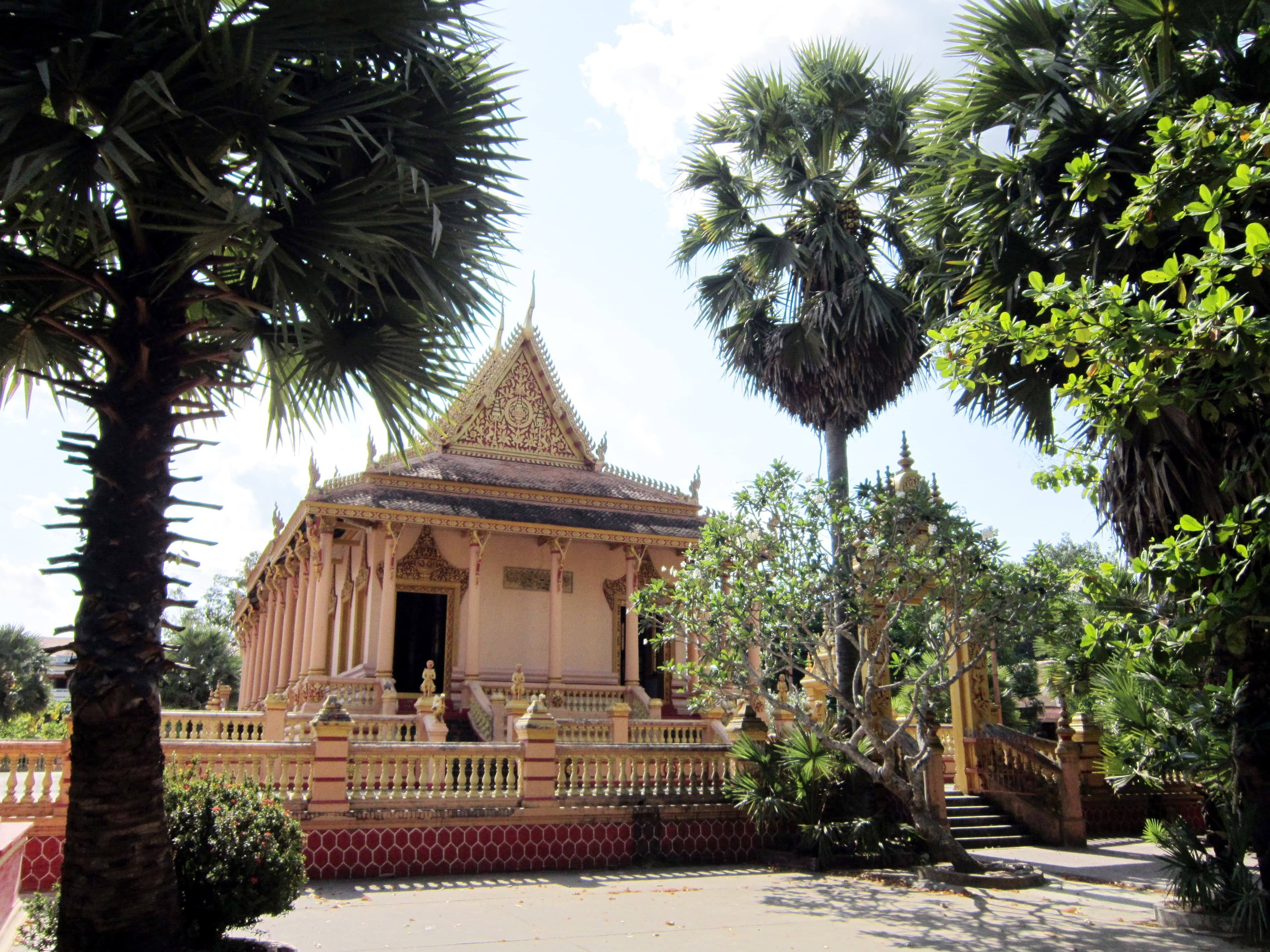
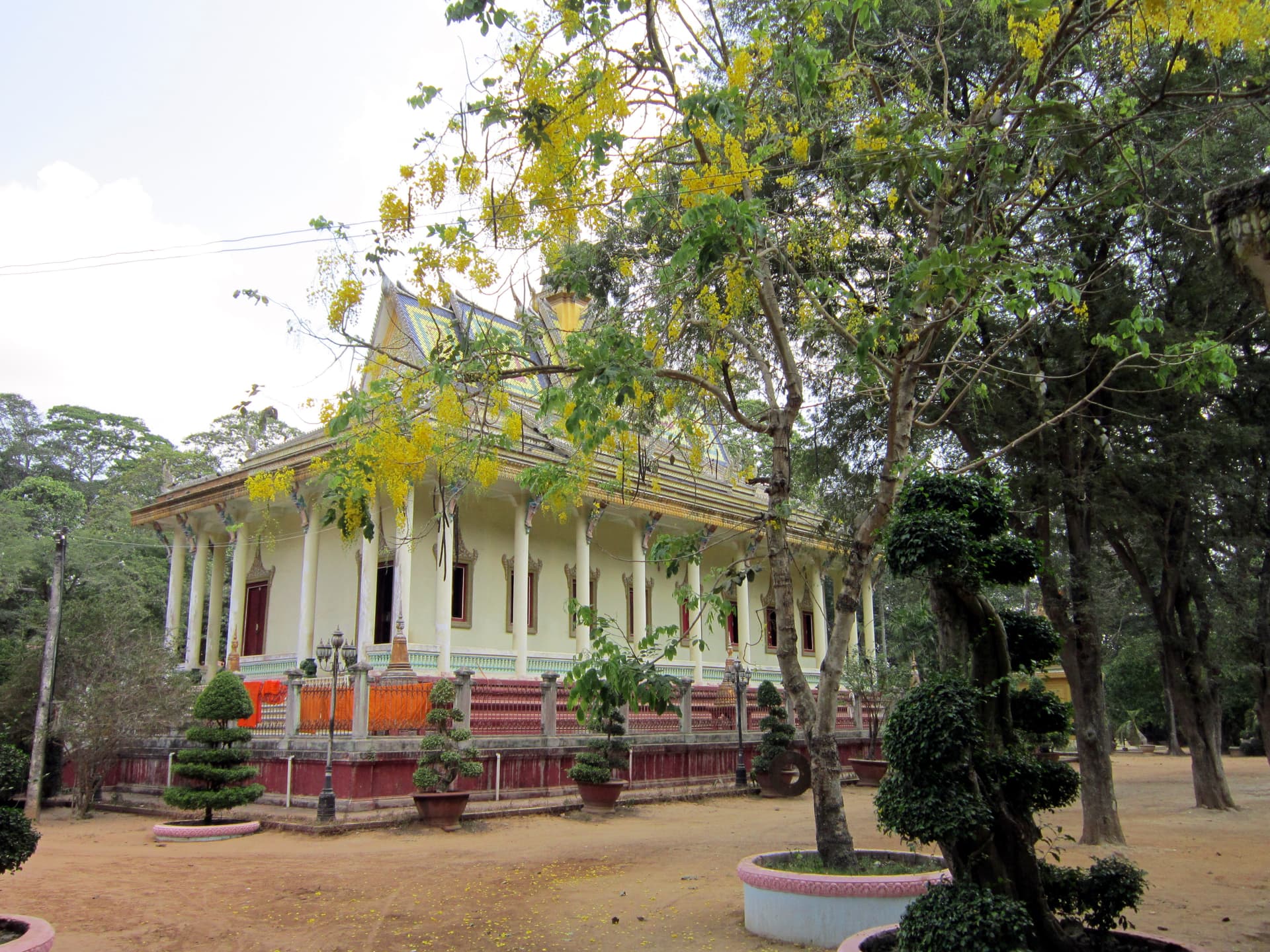
Kh'leang Pagoda in Sóc Trăng, Vietnam. Image source · CC BY-SA 3.0
Visit essentials
A quick read before you go
- Duration
- A careful visit should leave room for both the vihara and the monastery's educational character.
- Access
- The Sóc Trăng identity is source-supported, but no Places result passed the strong-match gate.
Overview
Kh'leang carries sacred significance through learning as well as visible ritual. Its manuscript culture makes the monastery a place of study, copying, teaching, and preservation, not merely a decorated hall. Monastic education gives that inheritance a living setting, while annual observances return knowledge to community time. Śākyamuni Buddha remains the devotional center, joining intellectual work to discipline and practice.
Architecture alone can obscure the quiet labor that continues the tradition. An attentive visit recognizes that books, teaching, residence, and worship may require different kinds of access. Because the research neither inventories particular manuscripts nor supplies a complete chronology, this account does not assign unestablished dates, languages, or contents.
Why this place is sacred
Written preservation creates a quieter threshold than monumental scale. Pages and teaching carry memory through attention, while worship situates knowledge within ethical formation. Even when manuscripts are not publicly visible, the documented culture changes how the monastery should be understood. It is a place where preservation is an active relationship. No special force is attributed to books or buildings; their importance lies in disciplined transmission.
The monastery supports Khmer Theravada worship, monastic formation, study, and community observance.
Historical identity, manuscript stewardship, living education, and public heritage interest now coexist at Kh'leang.
Experience and orientation
The most meaningful activity may not be visible from a central courtyard. A monk reading, a class meeting, or a closed collection room requires more distance than an exterior façade. Listen for the difference between public gathering and concentrated study. When entering a worship hall, orient toward the Buddha image; elsewhere, do not assume that an open doorway marks a display.
Learn the boundary between the vihara, teaching spaces, residences, manuscript care areas, and public grounds before exploring.
Context and lineage
The reviewed sources identify the exact pagoda and support its roles in worship, monastic education, manuscript culture, and annual observance. They do not resolve undocumented foundation variants or describe individual manuscripts in sufficient detail. The site has no asserted stand-alone UNESCO World Heritage inscription.
Khmer Theravada Buddhism connects scripture, monastic discipline, teaching, and ritual practice in the institution.
Śākyamuni Buddha
central teacher and focus of veneration
Khmer monastic teachers and manuscript stewards
community custodians of religious learning
Traditions and practice
Worshippers may bow, chant, give offerings, meditate, or listen to monks. Educational activity is not a performance and should not be interrupted for conversation or photographs. A visitor can honor the learning tradition by receiving uncertainty patiently rather than demanding access to manuscripts.
Monastic education, textual stewardship, worship, and Khmer community gatherings remain meaningful parts of the site.
Notice one transition between a public devotional area and a quieter learning space, respecting the boundary between them.
Khmer Theravada Buddhism
ActiveKh'leang joins reverence for Śākyamuni with monastic education, manuscript memory, and community observance.
Study, chanting, meditation, offerings, teaching, and annual gathering continue under monastery authority.
Perspectives and open questions
Textual heritage makes the monastery legible through memory and teaching, not only through architecture or ceremony.
Scholarly perspective
Manuscript culture expands heritage beyond buildings. Preservation depends on knowledgeable custodians, appropriate environmental care, and transmission of reading traditions. A responsible account acknowledges that collections may be sensitive or inaccessible and does not substitute speculation for a catalogue.
Living and traditional perspectives
Buddhist learning belongs to practice: study supports discipline, understanding, and the continuation of Khmer Theravada life.
Open questions
No esoteric manuscript, hidden initiation, or supernatural result is established by the reviewed research.
Plan your visit
Access and arrival
The Sóc Trăng identity is source-supported, but no Places result passed the strong-match gate. Do not rely on scraped hours or an unverified website; confirm access locally.
Use licensed Sóc Trăng lodging; no public stay or study program is represented here.
Respectful visit
Wear modest clothing appropriate to a monastery and its teaching spaces.
Seek explicit permission before photographing monks, students, texts, shelves, or an annual ceremony.
Use formal donation and altar points; do not place money inside books or on study furniture.
Manuscript storage, classrooms in session, monastic quarters, and altar platforms remain closed unless specifically opened.
Do not handle books, enter collections, or claim that an unseen manuscript contains secret teachings.
Current practical details
Address
53 Tôn Đức Thắng, Sóc Trăng, Cần Thơ, Vietnam
Hours, fees, and access can change — verify on the official source before you travel. Practical details last checked Jul 2026.
Location
Map loads as you approach this section.
Pilgrim reflections
A portrait of encounter, not a score
Pilgrims describe what they felt, how present they could become, and whether the place would shape a journey. There are no stars and no ranking of traditions.
No reviewed reflections yet
The first pilgrims can help describe the character of being here.
Share a reflection
Available after an account-backed “Been there.” Every reflection is reviewed before publication.
Watch deeper
Films, episodes, and recorded talks for visitors who want more context before or after a visit. Speculative and alternative-history entries are labelled as perspectives, not as sources for established claims.
Nearby sacred places
Explore other sacred places in the region. Proximity does not establish access or travel time; check each place’s guidance.
References
Sources consulted for this page. Source categories describe the publication, not a guarantee that every claim is verified. Traditional accounts and outside interpretations may differ.
- 01Chùa Kh'leang — Viet Nam tourism industry databaseofficialExact national-tourism database record for Kh'leang identity, address, Khmer Buddhist art, Buddha-life imagery, and the main-sanctuary Buddha image.
- 02Vietnam National Authority of Tourism — Vietnam National Authority of TourismofficialNational tourism authority context; no weak Google Places fields were persisted.
- 03Sóc Trăng: Khai mạc Lễ Cúng trăng của người Khmer — Tourism Information Technology Center, Viet Nam National Authority of TourismofficialExact national-tourism report corroborating Kh'leang as an active Khmer ceremonial site and venue for the traditional moon-offering rite.
- 04National Assembly approves provincial-level administrative reorganization — Government of Viet NamofficialAuthoritative 2025 successor-province and municipality boundaries.
- 05Chùa Khleang - Phường Sóc Trăng — Google PlacesofficialStrong exact-entity practical metadata from the authoritative current preflight.
- 06Vietnamese-language reference search for Chùa Kh'leang — Vietnamese Wikipedia contributorsacademicDiscovery reference only; unsupported details were not promoted into factual prose.
Share a photo
Help visitors recognize Kh'leang Pagoda. Every submission is reviewed before publication.