Chén Kiểu Pagoda
Chén Kiểu: ceramic fragments carrying Khmer Buddhist stories
Understand sacred places, explore living traditions, and learn how to engage respectfully with Pilgrim Map.
Access has not been verified. Check current local guidance before planning a visit.
Mỹ Xuyên, Cần Thơ, Vietnam
Read the sources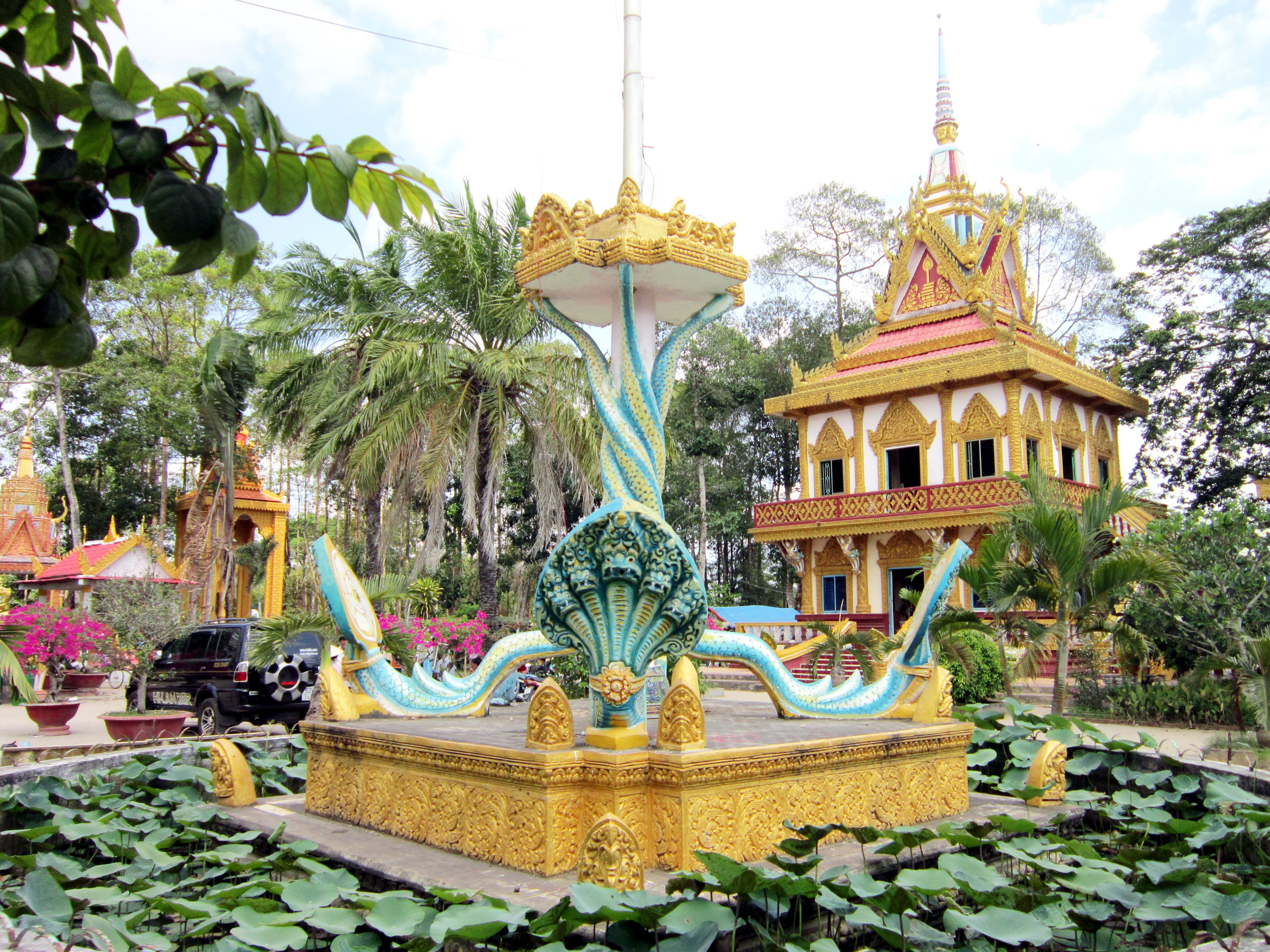
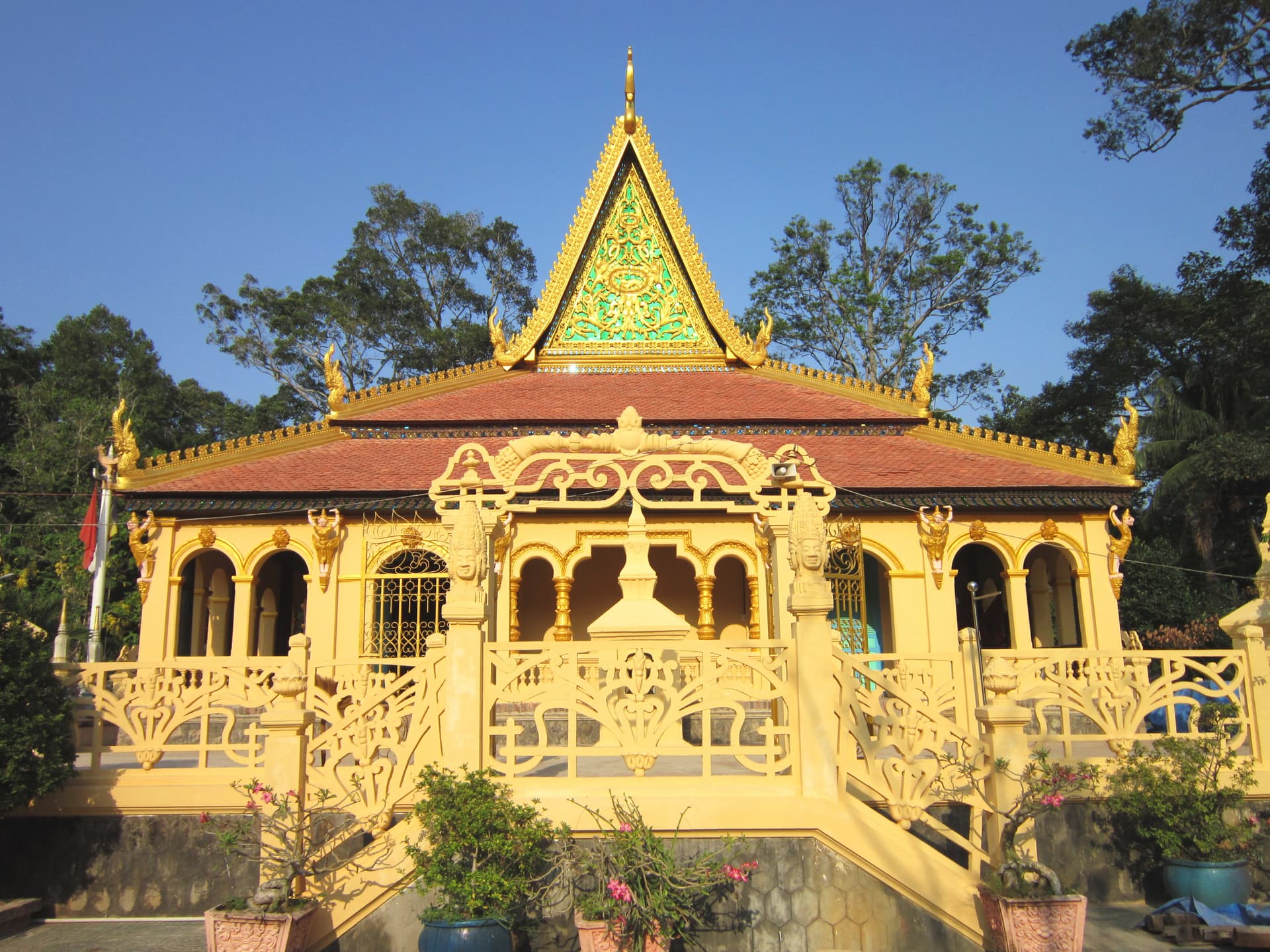
Chén Kiểu Pagoda in Mỹ Xuyên, Sóc Trăng, Vietnam. Image source · CC BY-SA 3.0
Visit essentials
A quick read before you go
- Duration
- Allow enough time to move between wide architectural views, narrative details, and the active…
- Access
- Research confirms the pagoda's Mỹ Xuyên identity, but no Google candidate was strong enough to…
Overview
The pagoda's familiar name points to ceramics, but the craft leads inward: fragments ornament an active monastery of Buddha veneration, teaching, and gathering, while narrative paintings carry religious and moral memory through community life. Rather than hunt individual pieces or treat the compound as folk-art spectacle, ask what each image or pattern does along the route to the worship hall. Research provides no complete catalogue of scenes, so do not confidently name an unlabeled figure without a knowledgeable guide.
Reuse may invite reflection on repair, but it is not evidence that ceramic fragments possess spiritual energy.
Why this place is sacred
Transformation is materially visible at Chén Kiểu: separate pieces are arranged into patterned order. That process can focus attention on patience and communal craft, while narrative painting brings moral instruction into the same visual environment. The sacred quality comes from use—people pray, learn, remember, and maintain the monastery. A viewer's symbolic response remains an interpretation rather than a promised effect of the material.
The monastery supports Khmer Theravada worship, education, and communal gathering focused on Śākyamuni Buddha.
Distinctive ceramic ornament and paintings now draw heritage visitors into a compound that remains religiously active.
Experience and orientation
Let the overall wall or façade register before moving close enough to see individual pieces. Then step back and ask how the surface directs attention toward a doorway, image, or narrative sequence. Inside a hall, worshippers and monks take precedence over visual study. Do not point across someone at prayer or lean against ornament while examining it.
Identify the principal hall, narrative areas, ceramic surfaces, monastic rooms, and current worship route before beginning a close visual circuit.
Context and lineage
Official and Vietnamese reference sources support the site's exact identity, living Khmer Buddhist role, ceramic character, and narrative paintings. They do not settle every construction stage or the identity of every depicted episode. This account preserves those limits and does not claim UNESCO World Heritage status.
Khmer Theravada Buddhism supplies the stories, monastic framework, and devotional purpose surrounding the craft.
Śākyamuni Buddha
teacher and principal focus of veneration
Traditions and practice
Monastery practice may include bows, chanting, offerings, meditation, and listening to teaching. Narrative art can support instruction, but a visitor should not invent explanations when a scene is unfamiliar. Participation depends on local invitation and should never be performed for a camera.
Khmer religious life and communal gathering continue while ceramic craft attracts wider public attention.
Follow one painted or ceramic sequence until it meets the worship hall, noticing how art guides bodily movement.
Khmer Theravada Buddhism
ActiveChén Kiểu joins Buddha worship, teaching, and Khmer community life to ceramic ornament and narrative painting.
Chanting, bows, offerings, meditation, learning, and communal observance follow monastic guidance.
Perspectives and open questions
Ceramic surfaces reward close looking, but Theravada teaching and Khmer community use determine how the ornament should be understood.
Scholarly perspective
Material study can document how ceramic fragments are assembled and how painting communicates narrative. Religious interpretation adds the active institution that makes those forms more than design. Neither lens justifies naming unsupported scenes or converting reuse into a romantic story of spiritual repair.
Living and traditional perspectives
Śākyamuni remains the devotional and teaching center; ornament helps carry the monastery's Buddhist world.
Open questions
No supernatural benefit is established from touching ceramics, tracing an image, or making an unsanctioned offering.
Plan your visit
Access and arrival
Research confirms the pagoda's Mỹ Xuyên identity, but no Google candidate was strong enough to supply hours, address, phone, or website. Check access through a current local authority.
Use current licensed lodging in the Sóc Trăng region; monastery accommodation is not claimed.
Respectful visit
Cover shoulders and knees and remove shoes at halls where the monastery indicates.
Use no flash on paintings, ask before including people, and keep tripods away from decorated surfaces.
Place only monastery-approved items at designated devotional points.
Ceramic walls, paintings, altar furniture, residential rooms, and temporary ceremony zones are not to be touched or entered.
Do not pry at fragments, touch murals, or present material reuse as a mechanism of luck or healing.
Current practical details
Address
GWQC+64G, QL1A, Ấp Tâm Lộc, Mỹ Xuyên, Cần Thơ, Vietnam
Hours, fees, and access can change — verify on the official source before you travel. Practical details last checked Jul 2026.
Location
Map loads as you approach this section.
Pilgrim reflections
A portrait of encounter, not a score
Pilgrims describe what they felt, how present they could become, and whether the place would shape a journey. There are no stars and no ranking of traditions.
No reviewed reflections yet
The first pilgrims can help describe the character of being here.
Share a reflection
Available after an account-backed “Been there.” Every reflection is reviewed before publication.
Watch deeper
Films, episodes, and recorded talks for visitors who want more context before or after a visit. Speculative and alternative-history entries are labelled as perspectives, not as sources for established claims.
Nearby sacred places
Explore other sacred places in the region. Proximity does not establish access or travel time; check each place’s guidance.
References
Sources consulted for this page. Source categories describe the publication, not a guarantee that every claim is verified. Traditional accounts and outside interpretations may differ.
- 01Chùa Chén Kiểu - Điểm nhấn kiến trúc Khmer độc đáo — Tourism Information Technology Center, Viet Nam National Authority of TourismofficialExact national-tourism profile for Sro Lôn/Chén Kiểu identity, Khmer Buddhist worship, Buddha images, and the sculpted life of Śākyamuni.
- 02Vietnam National Authority of Tourism — Vietnam National Authority of TourismofficialNational tourism authority context; no weak Google Places fields were persisted.
- 03Chùa Sà Lôn (chùa Chén Kiểu) — Viet Nam tourism industry databaseofficialExact national-tourism database record corroborating Sà Lôn/Chén Kiểu identity, locality, history, and active sanctuary.
- 04National Assembly approves provincial-level administrative reorganization — Government of Viet NamofficialAuthoritative 2025 successor-province and municipality boundaries.
- 05Sro Loun Pagoda (Chen Kieu Pagoda) — Google PlacesofficialStrong exact-entity practical metadata from the authoritative current preflight.
- 06Vietnamese-language reference search for Chùa Chén Kiểu — Vietnamese Wikipedia contributorsacademicDiscovery reference only; unsupported details were not promoted into factual prose.
Share a photo
Help visitors recognize Chén Kiểu Pagoda. Every submission is reviewed before publication.