Deir Mari Bolos
Water remembered in the Coptic story of a life in the desert
Understand sacred places, explore living traditions, and learn how to engage respectfully with Pilgrim Map.
Access has not been verified. Check current local guidance before planning a visit.
Red Sea, Egypt
Read the sources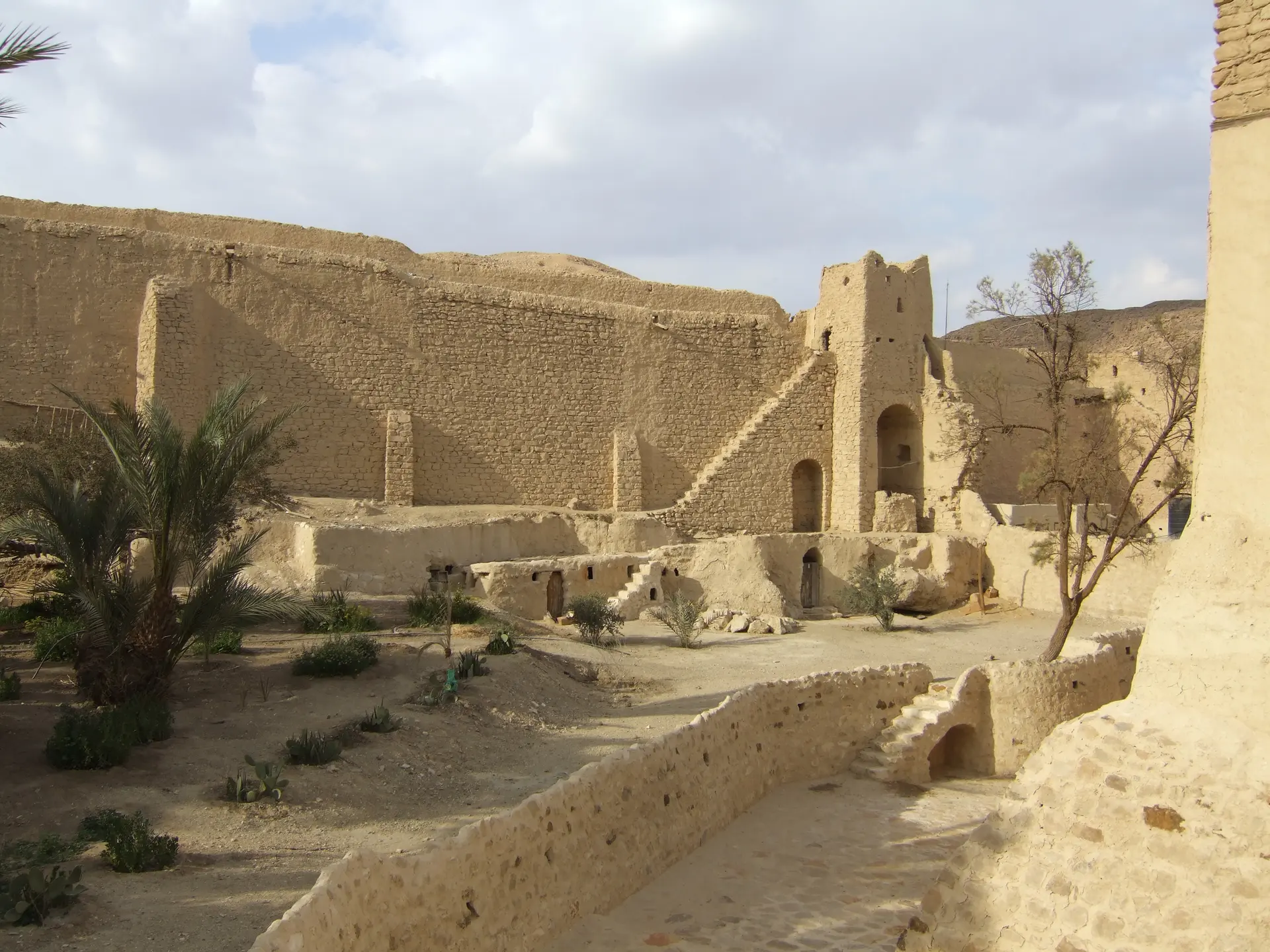
Foto LR - 2007. Image source · CC BY-SA 3.0
Visit essentials
A quick read before you go
- Etiquette
- Dress respectfully and follow the monks’ instructions about quiet, church entry and permitted…
Overview
Within the Monastery of Saint Paul in Egypt’s Eastern Desert, a spring is associated with the saint’s solitary life. The Coptic Orthodox Church identifies it as the water source Paul found and drank from. Its place beside the monastery’s churches and historic buildings connects the ordinary necessity of water with the religious memory of a hermit who made the desert his home.
Why this place is sacred
The spring belongs to a living Coptic monastic setting. Its significance is both practical and devotional: water sustains life in the desert, while the community remembers Paul through the places associated with him. This is the Red Sea monastery of Paul the Hermit, not a different monastery bearing the name Paul.
Context and lineage
In Jerome’s Life of Paul, preserved on CopticChurch.net, Anthony seeks out the older hermit. During their meeting a raven brings a whole loaf, where Paul had previously received only half. The two thank God and sit beside the spring. Each wishes the other to break the bread, until they agree to pull the loaf apart together. They drink from the water and spend the night in prayer.
Told as a saint’s life, the scene makes the spring a setting for hospitality and shared dependence on God, not merely a landmark in Paul’s biography.
Traditions and practice
The Coptic Church’s monastery account relates that Anthony told other monks about Paul after his death. They came to follow his example, and a community formed around the place. Today a visitor approaches the spring within that monastic inheritance. Let the monks’ guidance determine the visit rather than treating the water source as an independently accessible outdoor attraction.
Christianity
ActiveThe spring belongs to a living Coptic monastic setting. Its significance is both practical and devotional: water sustains life in the desert, while the community remembers Paul through the places associated with him. This is the Red Sea monastery of Paul the Hermit, not a different monastery bearing the name Paul.
Plan your visit
Arrange a visit to the Red Sea monastery through a current monastery or church contact before making the desert journey. Ask specifically whether the spring can be visited. Opening hours, retreat accommodation, mobile reception and emergency-access arrangements were not verified for this page. Plan transport and a return journey in advance; a published church description does not establish unrestricted access to the grounds.
Respectful visit
Dress respectfully and follow the monks’ instructions about quiet, church entry and permitted photography. Ask before photographing monks or worshippers. Do not enter residential areas or collect water without permission; the community’s daily life takes precedence over a visitor itinerary.
Location
Map loads as you approach this section.
Pilgrim reflections
A portrait of encounter, not a score
Pilgrims describe what they felt, how present they could become, and whether the place would shape a journey. There are no stars and no ranking of traditions.
No reviewed reflections yet
The first pilgrims can help describe the character of being here.
Share a reflection
Available after an account-backed “Been there.” Every reflection is reviewed before publication.
Nearby sacred places
Explore other sacred places in the region. Proximity does not establish access or travel time; check each place’s guidance.

References
Sources consulted for this page. Source categories describe the publication, not a guarantee that every claim is verified. Traditional accounts and outside interpretations may differ.
- 01Dayr Anba Bula — Claremont Coptic EncyclopediaacademicIndexed encyclopedia entry distinguishes Spring of Saint Paul from Pool of Miriam; viewer text not available in browser fetch.
- 02St Paul’s Monastery, Eastern Wilderness, Red Sea — Coptic Orthodox ChurchSource contextChurch identifies the spring with Paul and recounts the foundation after Anthony’s report.
- 03St Paul the Hermit: Life of Paulus — Jerome; hosted by CopticChurch.netSource contextSections 10–11: raven, shared loaf, drinking at spring and night vigil; hagiographic genre.
Share a photo
Help visitors recognize Deir Mari Bolos. Every submission is reviewed before publication.