Mt. Sinai
Where fire descended on the mountain and three faiths still climb toward dawn
Understand sacred places, explore living traditions, and learn how to engage respectfully with Pilgrim Map.
Access has not been verified. Check current local guidance before planning a visit.
Saint Catherine, South Sinai, Egypt
Read the sources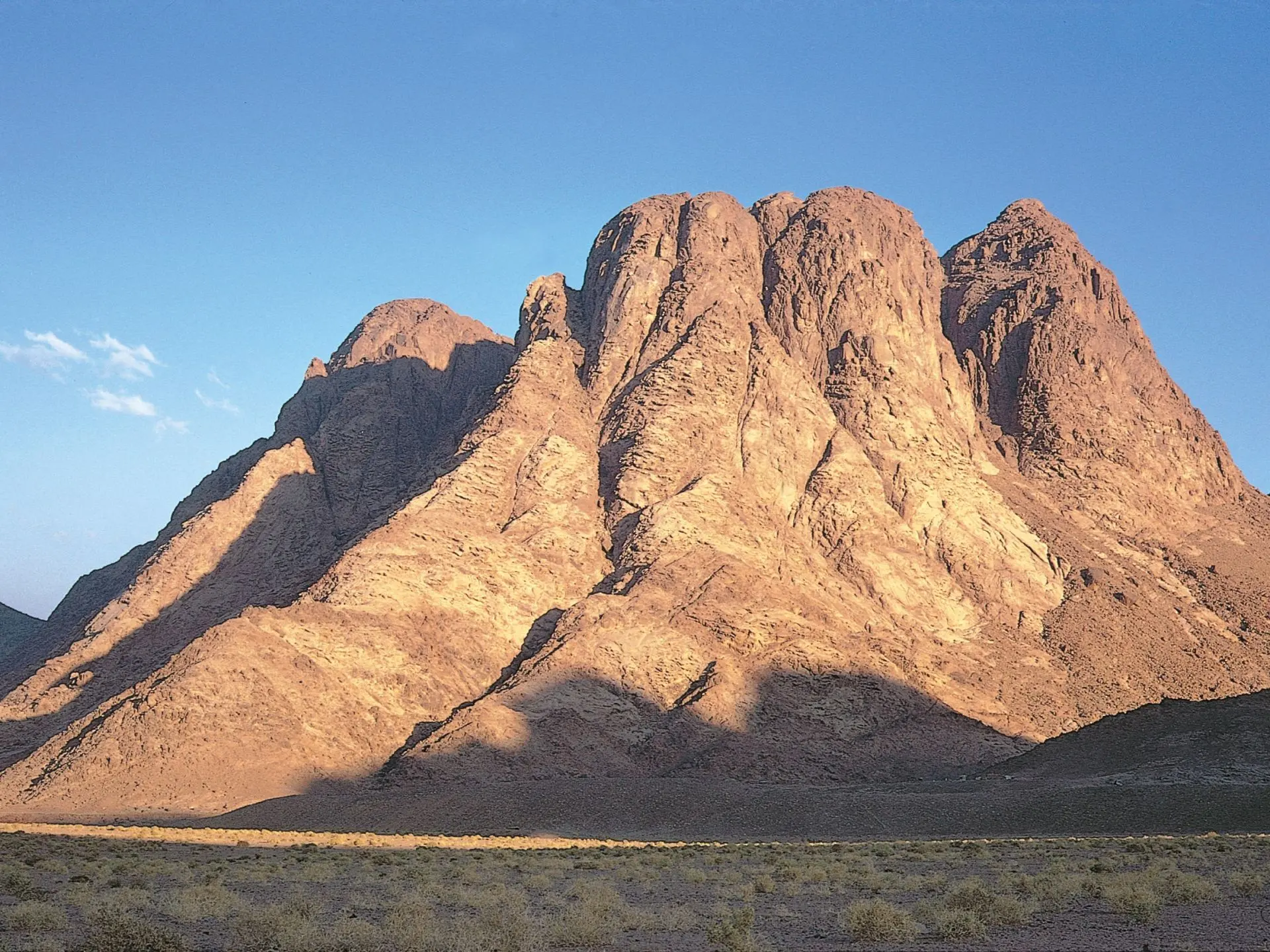
Visit essentials
A quick read before you go
- Duration
- The climb takes 2.5-3 hours up via the Camel Path, 3-4 hours via the Steps of Repentance.
- Access
- Saint Catherine's is approximately 3 hours from Sharm el-Sheikh and 2 hours from Dahab by road.
Overview
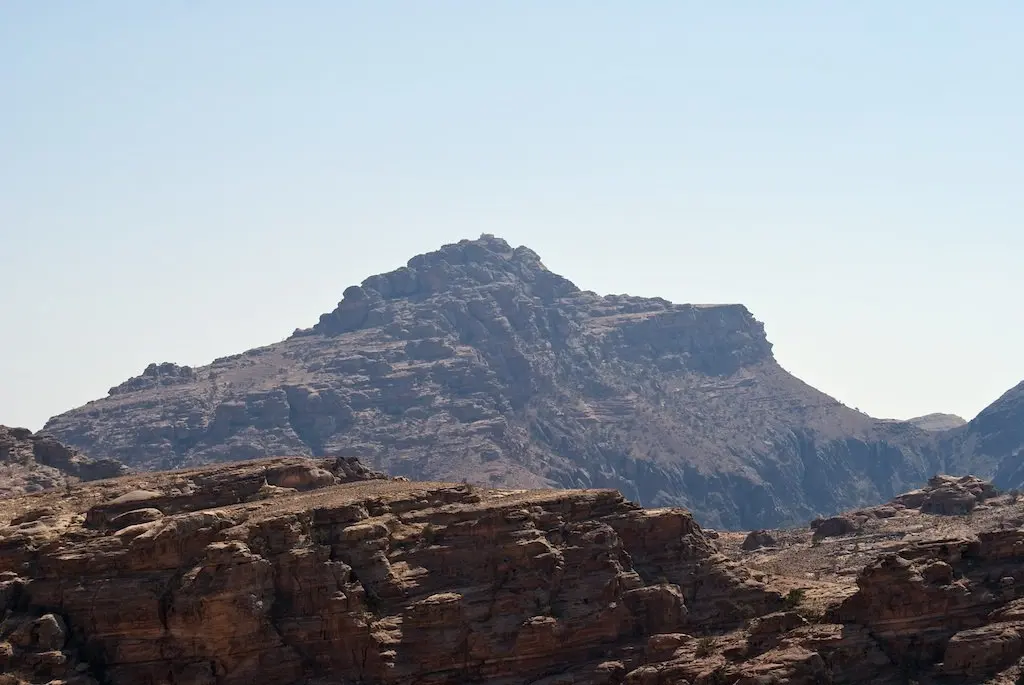
Jebel Musa, the Mountain of Moses, rises in bare red-and-gray granite from the Sinai desert. Jewish, Christian, and Islamic tradition identifies it as Mount Sinai, where God descended in fire and smoke, the mountain trembled, the people heard the Ten Commandments, and Moses spent forty days before returning with divinely inscribed tablets.
No archaeological evidence confirms this location, and scholars propose alternatives in Arabia, the Negev, and Saudi Arabia. Yet Jebel Musa has carried the traditional identification for at least seventeen centuries. Byzantine pilgrims in the 4th century and today's pre-dawn climbers join the same practice of seeking encounter where heaven was understood to touch earth.
Why this place is sacred
The Hebrew Bible describes thunder shaking the ground, the people seeing the visible divine manifestation and becoming afraid, and Moses approaching the thick darkness where God was. Sinai's theophany established the covenant between God and Israel: 'You shall be to me a kingdom of priests and a holy nation.'
Jewish tradition holds that Moses received not only the Ten Commandments—described as foundational to Western civilization's moral framework—but the entire written and oral Torah here, placing the mountain's theological coordinates at the center of Judaism, Christianity, and Islam even while its geographical identification remains debated.
At the mountain's foot, the burning-bush tradition remembers God revealing the divine name and commissioning Moses to lead the Israelites from bondage; Saint Catherine's Monastery encloses the associated site. Along the ascent, Elijah's cave recalls his forty-day journey and encounter with God not in wind, earthquake, or fire but in a 'still small voice.'
Seventeen centuries of pilgrimage add another layer. Monks carved the 3,750 Steps of Repentance in the 6th and 7th centuries for penitential ascent. Today's night climb turns exhaustion, darkness, stars, silence, and sunrise into spiritual preparation, connecting pilgrims across time.
Mount Sinai is the place of divine revelation. In Jewish, Christian, and Islamic understanding, this is where God chose to communicate the foundational moral law that would shape human civilization. The mountain itself became sacred through this encounter, a place where the boundary between divine and human became permeable. Pilgrimage to the mountain participates in this encounter, placing the pilgrim in the location where revelation occurred.
The identification of Jebel Musa as biblical Mount Sinai dates to at least the 4th century CE, when Christian pilgrims began documenting their journeys. The pilgrim Egeria recorded her visit in the 380s, describing local tradition that identified the peak as the mountain of Moses. Byzantine hermits settled the area from the 3rd century. Emperor Justinian I built Saint Catherine's Monastery at the mountain's foot in the 6th century, establishing the institutional presence that continues today.
Monks carved the Steps of Repentance during this period. A Fatimid-era mosque was built on the summit around the 10th-12th century and remains in use. The current Chapel of the Holy Trinity was constructed in 1934-1935 on the ruins of earlier structures. UNESCO inscribed the Saint Catherine Area as a World Heritage Site in 2002.
Experience and orientation
Climbs begin around midnight near Saint Catherine's Monastery. Jabaliya Bedouin guides—whose name means 'of the mountain'—lead groups as guardians of more than fourteen centuries. The mid-19th-century Camel Path climbs about seven kilometers and may include a camel ride; the monks' 6th- and 7th-century Steps of Repentance climb 3,750 stones. Both routes share the final 750 steps, though access to the penitential route has sometimes been restricted.
With little light pollution, the Milky Way, stars, moonlit granite, footsteps, breath, and darkness separate the climb from ordinary life. The Camel Path takes about three hours; the Steps route takes longer. Dawn moves from eastern gray through bands of color until granite glows gold and rose.
The small summit holds the Chapel of the Holy Trinity, usually closed to non-Orthodox visitors, and a Fatimid-period mosque. Just below, Moses's Cave is traditionally where he sheltered while awaiting the commandments. Daylight descent reveals the desert, mountain colors, distant monastery, and the chapel and cave of Elijah where tradition places the prophet's silent encounter.
Mount Sinai, known locally as Jebel Musa, rises to 2,285 meters (7,497 feet) in the Sinai Peninsula. Saint Catherine's Monastery sits at its base. Two paths ascend the mountain. The Camel Path begins behind the monastery and winds approximately 7 km to the summit, merging with the Steps of Repentance for the final 750 steps. The Steps of Repentance begin near the monastery and climb 3,750 stone steps directly.
The summit holds the Chapel of the Holy Trinity, a small mosque, and Moses's Cave below the peak. The Chapel of Elijah marks the cave where the prophet encountered God, located along the ascent.
Context and lineage
The Torah records the theophany at Sinai in detail. After the Israelites escaped Egypt, they traveled through the wilderness to this mountain. God descended upon it in fire and smoke. The mountain trembled. God spoke the Ten Commandments to the entire assembled people, then called Moses to ascend alone. Moses remained forty days and nights, receiving the stone tablets inscribed by God's hand. When he descended to find the people worshipping a golden calf, he broke the tablets in anger.
He later returned to the mountain and received a second set.
Before this, Moses had encountered God at the same mountain in the burning bush. While tending sheep near Mount Horeb, he saw a bush that burned without being consumed. From within it, God spoke, revealing the divine name YHWH and commissioning Moses to free the Israelites. The location where Moses stood was declared holy ground.
Elijah's encounter added another story to the mountain's significance. Fleeing Queen Jezebel's wrath, the prophet traveled forty days and nights to reach Mount Horeb. He sheltered in a cave. God sent wind, earthquake, and fire, but was not present in these dramatic manifestations. After them came 'a still small voice,' and in that silence Elijah encountered the divine.
Mount Sinai participates in the lineage of sacred mountains across religious traditions. Like Mount Zion, Mount Tabor, Mount Moriah, and others in Abrahamic geography, it marks a place where heaven and earth intersected. The concept of the sacred mountain, where the divine is encountered through ascent, appears across human cultures. Sinai's specific significance lies in its association with the giving of the Law, the foundation of moral order for billions.
Moses
Elijah
Emperor Justinian I
The Jabaliya Tribe
Traditions and practice
The sunrise pilgrimage has been the central practice at Mount Sinai for centuries. Pilgrims ascend in darkness to reach the summit before dawn, experiencing the transition from night to day as symbolic of the movement from darkness to divine light. The physical effort of the climb functions as spiritual discipline, stripping away distraction and creating openness to encounter.
Divine Liturgy is celebrated at the Chapel of the Holy Trinity on the summit by visiting Orthodox clergy. The chapel, built in 1934-1935 on the ruins of earlier structures, rests on the site where Moses is believed to have received the tablets. Orthodox pilgrims may receive communion here.
The Steps of Repentance were carved as a penitential practice. Monks climbing these 3,750 steps would confess sins and pray at each step, so that by the time they reached the summit, they had completed a full examination of conscience. The steps retain this function for pilgrims who choose the more challenging route.
The mosque on the summit, dating to the Fatimid period, provides space for Muslim prayer. Muslims venerate the mountain as the place where Prophet Musa received divine revelation from Allah.
The sunrise climb remains the primary practice. Groups depart between midnight and 2 AM, reaching the summit in approximately three hours. Professional tour operators organize most climbs, arranging Bedouin guides as required. Sunset climbs offer a quieter alternative with fewer crowds.
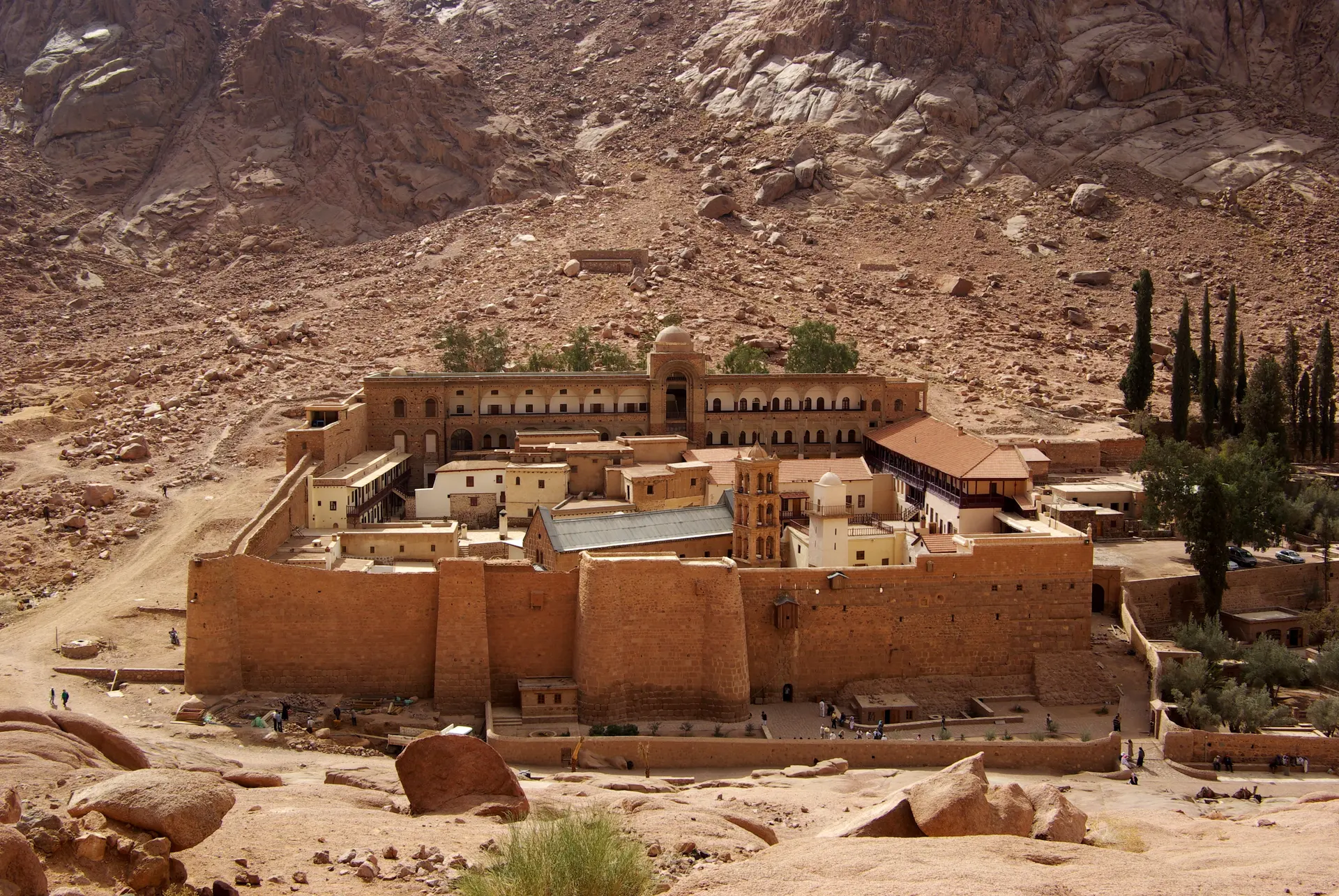
Saint Catherine's Monastery at the mountain's base welcomes visitors during limited hours. The Burning Bush, ancient icons, and the basilica can be visited when the monastery is open. The monastery is closed Fridays and Sundays for worship.
The Jabaliya Bedouin serve as required guides for all climbs, continuing their role as guardians of the mountain.
Begin the climb with clear intention. Whether you approach as believer or seeker, the journey benefits from some sense of purpose beyond tourism. The night and the effort create conditions for whatever interior work you bring.
Move slowly enough to remain present. The temptation is to push for the summit, but the journey itself matters. The stars, the silence, the physical sensation of climbing in darkness are part of the experience.
At the summit, stay long enough for the light to fully develop. The first moment of sunrise is dramatic, but the colors continue to shift and deepen as the sun rises. Allow at least thirty minutes to experience the full transition.
The descent reveals what the night concealed. Take time to observe the landscape that you climbed through blind. The chapel and cave of Elijah warrant a pause.
Judaism
ActiveMount Sinai is among Judaism's most sacred locations. According to the Torah, this is where God revealed Himself to the Israelites and gave Moses the Ten Commandments. Jewish tradition holds that not only the Decalogue but the entire Torah was revealed at Sinai. The Sinai covenant established the unique relationship between God and the Jewish people.
Pilgrimage to the mountain. Study of Torah passages related to the Sinai revelation. Observance of Shavuot as commemoration of the revelation. Recitation of the Ten Commandments.
Christianity (Orthodox)
ActiveMount Sinai is revered as the Mountain of God where Moses encountered the Divine through the burning bush and received the Law. The site represents the Old Covenant and prefigures Christ. Saint Catherine's Monastery at its base is the world's oldest continuously operating Christian monastery.
Divine Liturgy celebrated at the Chapel of the Holy Trinity. Pilgrimage climbing, often ascending for sunrise. Veneration of relics at Saint Catherine's Monastery. Visit to the Burning Bush and Chapel of the Burning Bush. Prayer and confession during the Steps of Repentance climb.
Islam
ActiveMount Sinai is mentioned multiple times in the Quran and sacred in Islamic tradition. Muslims revere it as where Prophet Musa received divine revelation from Allah. A Fatimid-period mosque on the summit remains in use.
Prayer at the summit mosque. Pilgrimage to the mountain. Reverence for Prophet Musa's encounter with Allah. Historical alternative pilgrimage for those unable to reach Mecca.
Bedouin (Jabaliya)
ActiveThe Jabaliya tribe has inhabited the Mount Sinai region for over 1,400 years. Descended from Byzantine guards and workers, they serve as protectors of the sacred land and guides for pilgrims.
Serving as required guides for mountain climbs. Protecting the sacred land and monastery. Celebrating feasts honoring prophets and saints. Maintaining traditional connection to the sacred landscape.
Perspectives and open questions
Mount Sinai invites multiple readings: as site of divine revelation, as pilgrimage destination, as interfaith meeting point, and as subject of scholarly debate about its biblical identification.
Scholarly perspective
Scholars recognize that Jebel Musa's identification as the biblical Mount Sinai developed in the early Byzantine period. The pilgrim Egeria recorded local tradition identifying the site in the 380s CE. While this identification has been accepted by Jewish, Christian, and Islamic traditions for centuries, there is no archaeological evidence directly confirming the biblical Exodus events at this location.
Alternative proposed locations include Har Karkom in the Negev and Jebel el-Lawz in Saudi Arabia, though these lack the traditional attestation of Jebel Musa. The earliest pilgrimage activity may predate Byzantine records; some evidence suggests Nabataean presence in the area from the 2nd-3rd centuries BCE.
The theological significance of the mountain is not dependent on its archaeological confirmation. The tradition of encounter that has accumulated here over seventeen centuries constitutes its own reality, regardless of whether the original Exodus events occurred at this precise location.
Living and traditional perspectives
In the understanding of the Abrahamic traditions, Mount Sinai is where God chose to reveal Himself most directly to humanity. Jewish tradition holds that not only the Ten Commandments but the entire Torah was given here. Christian understanding sees the mountain as prefiguring Christ and representing the Old Covenant. Islamic tradition reveres this as where Allah gave Prophet Musa divine guidance.
The Jabaliya Bedouin understand themselves as designated guardians of this holy place, a role they have maintained for over fourteen centuries since their ancestors were brought here to protect the monastery.
Alternative interpretations
Some spiritual seekers view Mount Sinai as a powerful earth energy node or ley line intersection point. The mountain's significance across multiple traditions is interpreted as evidence of inherent spiritual power that transcends any single religious framework. The physical ordeal of the night climb is understood to activate spiritual transformation. Some practitioners believe the mountain retains and transmits the accumulated energy of millennia of human devotion and divine encounter.
Open questions
No archaeological evidence has been found in the Sinai Peninsula dating to the traditional Exodus period that confirms the Israelite presence. The exact route of the Exodus remains unknown, making definitive identification of the biblical Mount Sinai impossible. How and when the identification of Jebel Musa with biblical Mount Sinai first arose is not definitively documented. Whether the site held sacred significance before the Abrahamic traditions remains unknown.
Plan your visit
Access and arrival
Saint Catherine's is approximately 3 hours from Sharm el-Sheikh and 2 hours from Dahab by road. Most visitors arrive by tour bus or private taxi. No commercial flights serve the area. Within the protected area, the climb begins near the monastery. Two routes are available. The Camel Path allows camel transport for part of the ascent. The Steps of Repentance is steeper and more direct.
Simple hotels and guesthouses in Saint Catherine village. Some tours depart from Sharm el-Sheikh or Dahab with overnight camping options. Book in advance during busy periods.
Respectful visit
Layered clothing is essential for the climb. Night temperatures at altitude can be very cold, even when days are warm. Wear modest, practical attire appropriate for physical exertion and sacred context. At the monastery, both upper arms and knees must be covered; shorts, short skirts, and sleeveless tops are prohibited.
Photography is generally permitted on the mountain and in exterior areas. Restrictions may apply during religious services. Do not photograph worshippers without permission. Drones are prohibited in the protected area.
At Saint Catherine's Monastery, candles may be lit and donations made. Tips for Bedouin guides are customary and appreciated.
A Jabaliya Bedouin guide is required for climbing; follow the guide's direction on route and pace. Permits for the region are typically arranged by tour operators. The monastery is closed Fridays and Sundays. The Chapel of the Holy Trinity is generally closed to non-Orthodox visitors. Do not remove stones, plants, or artifacts from the protected area.
The climb is physically demanding. Moderate fitness is required. The altitude (2,285 meters) can affect those unaccustomed. Night temperatures can be very cold; bring warm layers regardless of daytime heat. The path is uneven and rocky; sturdy footwear is essential. Bring water and snacks. Restroom facilities are minimal. Bedouin guides are required; respect their guidance.
Current practical details
Address
Jabal Mousa, Saint Catherine, South Sinai Governorate 8730062, Egypt
Hours, fees, and access can change — verify on the official source before you travel. Practical details last checked Jun 2026.
Location
Map loads as you approach this section.
Pilgrim reflections
A portrait of encounter, not a score
Pilgrims describe what they felt, how present they could become, and whether the place would shape a journey. There are no stars and no ranking of traditions.
No reviewed reflections yet
The first pilgrims can help describe the character of being here.
Share a reflection
Available after an account-backed “Been there.” Every reflection is reviewed before publication.
Nearby sacred places
Explore other sacred places in the region. Proximity does not establish access or travel time; check each place’s guidance.
References
Sources consulted for this page. Source categories describe the publication, not a guarantee that every claim is verified. Traditional accounts and outside interpretations may differ.
- 01Mount Sinai | Map, Location, Height, & Facts — BritannicaacademicAuthoritative reference source
- 02Jebel Musa - Mt. Sinai — BiblePlaces.comacademicAcademic biblical archaeology source
- 03Searching for Biblical Mt. Sinai — Biblical Archaeology SocietyacademicScholarly archaeological perspective
- 04Saint Catherine Area - UNESCO World Heritage Centre — UNESCOofficialOfficial UNESCO documentation
- 05Holy Summit - Mount Sinai Monastery — Saint Catherine's MonasteryofficialOfficial monastery source
- 06Pilgrimage - Friends of Mount Sinai Monastery — Friends of Mount Sinai MonasteryofficialOfficial monastery foundation
- 07In one of Egypt's most spiritual places, Bedouins find peace and resilience — National GeographicacademicQuality journalism on Bedouin community
- 089 Facts You Should Know About Mount Sinai — Chabad.orgspiritualJewish traditional perspective
- 09Mount Sinai - Wikipedia — Wikipedia contributorsacademicComprehensive overview with historical details and multiple perspectives
- 10Mount Sinai - See The Holy Land — See The Holy LandguideChristian pilgrimage resource
- 11Mount Sinai in Orthodox Christianity: Where Heaven Meets Earth — Lives of the Saints CalendarspiritualOrthodox Christian perspective
- 12Mount Sinai: Egypt's Sacred Mountain of Revelation — Egypt Tours PortalguideVisitor practical information
- 13Climbing Mount Sinai - 8 Things You Need To Know — A Little NomadguidePractical climbing guide
Share a photo
Help visitors recognize Mt. Sinai. Every submission is reviewed before publication.