Saint Catherine's Monastery, Mt. Sinai
The world's oldest monastery guards the Burning Bush where God first spoke to Moses
Understand sacred places, explore living traditions, and learn how to engage respectfully with Pilgrim Map.
Access has not been verified. Check current local guidance before planning a visit.
Saint Catherine, South Sinai, Egypt
Read the sources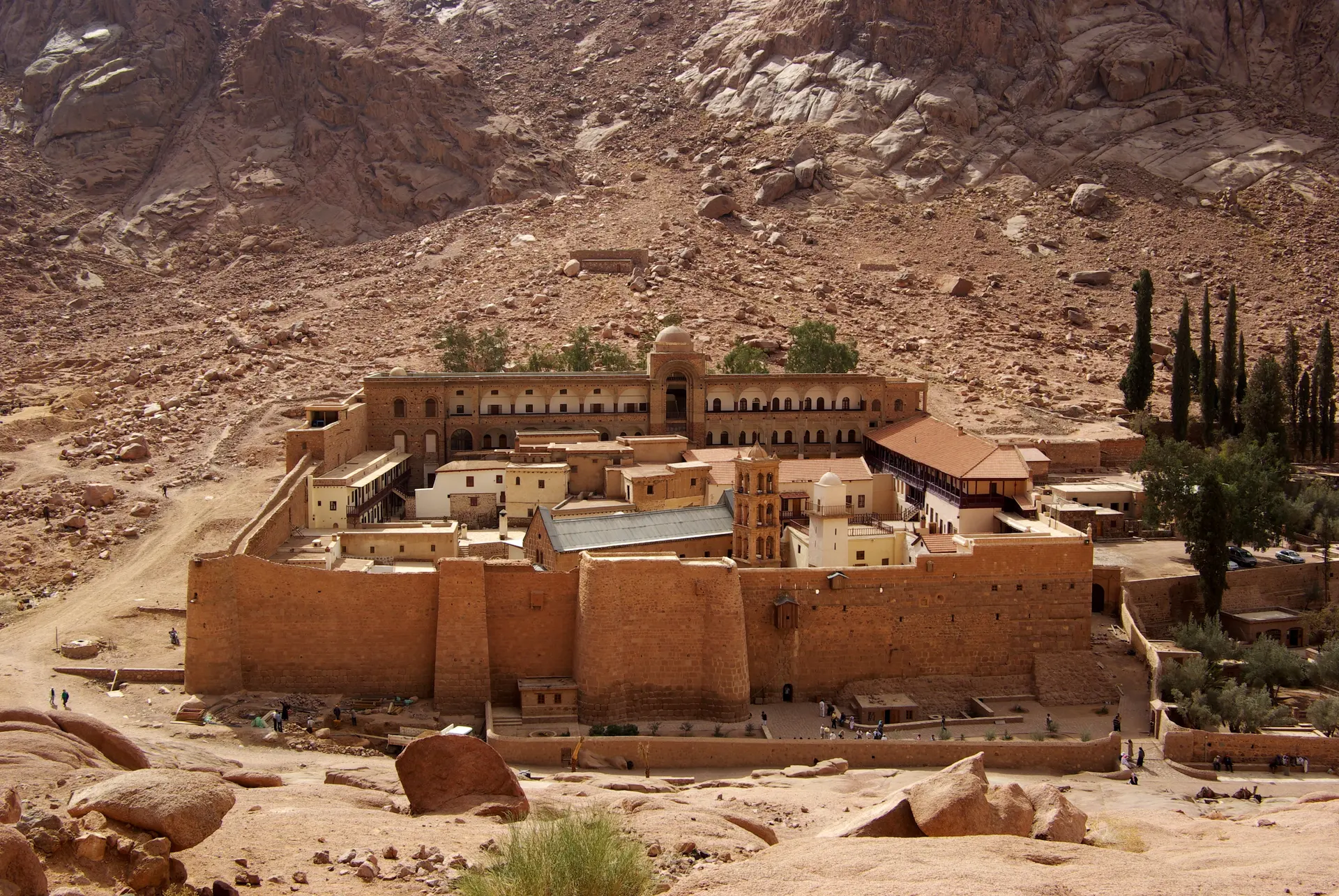
Visit essentials
A quick read before you go
- Duration
- 1-2 hours for the monastery visit, which is constrained by limited opening hours.
- Access
- Approximately 220 km from Sharm el-Sheikh (3 hours by road).
Overview
The monastery appears as you round a bend in the mountain road. Massive granite walls rise from the desert floor, built to protect this sacred place from raiders and time. Within them, the life of prayer has continued without interruption since Emperor Justinian ordered the fortress built in the mid-6th century. No other Christian monastery can claim such continuity.
The site was sacred before the walls existed. Here, according to tradition, Moses encountered the burning bush that was not consumed. From within it, God spoke, revealing the divine name and commissioning Moses to lead the Israelites from bondage. Christian hermits settled near this spot as early as the 3rd century, drawn by the same gravity that still draws pilgrims today.
The Burning Bush still grows within the monastery grounds. Whether or not it is the original plant, this Rubus sanctus bramble has been venerated here for at least fifteen centuries. The Chapel of the Burning Bush, built around the spot where the original bush stood, is the holiest space in the monastery. Visitors remove their shoes to enter, echoing Moses's gesture when God told him to remove his sandals because he stood on holy ground.
Why this place is sacred
The thinness at Saint Catherine's operates through layers of accumulated encounter. The foundational layer is biblical. Moses stood here, saw fire that did not consume, heard the voice of God revealing the divine name. He removed his sandals because he stood on holy ground. That ground remains marked. The Chapel of the Burning Bush occupies the spot. Visitors still remove their shoes.
The Burning Bush itself adds another dimension. The Rubus sanctus bramble growing in the monastery courtyard is claimed to be descended from, or even to be, the original bush. Whether this is literally true or not, the plant has been venerated here for at least fifteen centuries. A silver star marks the original location within the chapel. The bush was transplanted to its current courtyard position to preserve the sacred site for worship.
Fifteen centuries of continuous prayer have sanctified the space further. The monks who settled here in the 3rd century, the monastery Justinian built in the 6th, the community that has never abandoned this place, all contribute to what pilgrims describe as a palpable presence. The atmosphere is not merely historical but living. The Divine Liturgy celebrated today continues what has been celebrated for nearly one and a half millennia.
The icons and manuscripts intensify the experience. The Christ Pantocrator may be the oldest surviving icon of Christ, possibly a gift from Justinian's own court. The asymmetry of Christ's face, his two natures rendered visible in the different expressions of left and right, creates an encounter that has affected viewers for fifteen centuries. The manuscripts preserved here are among the oldest witnesses to the Christian scriptures.
The convergence of faiths adds yet another layer. Mount Sinai is sacred to Judaism as the site of the Law's giving, to Christianity as holy ground where God spoke, to Islam as where Prophet Musa received divine revelation. The mosque within the monastery walls, the charter of protection attributed to Muhammad, the Bedouin guardians whose ancestors were brought here by Byzantine emperors, all testify to shared veneration that transcends divisions.
The monastery was built to protect the monks who had gathered at the site of the Burning Bush and the base of Mount Sinai. Emperor Justinian I ordered its construction between 548 and 565 CE, providing massive fortress walls that could withstand raiders. Within those walls, the monks maintained the cult of the site, preserving the holy places associated with Moses and providing hospitality to pilgrims. The monastery has fulfilled this purpose without interruption for nearly fifteen centuries.
Christian hermits settled in the Sinai wilderness from the 3rd century onward, drawn by the biblical associations and the desert spirituality that Egypt pioneered. Empress Helena, mother of Constantine, ordered a chapel built at the Burning Bush site in the 330s. Emperor Justinian built the fortress monastery between 548 and 565, protecting the community that had gathered. The site was rededicated to Saint Catherine after her relics were discovered on the nearby mountain peak around 800 CE.
The Fatimid mosque was constructed in 1106. The library grew continuously, accumulating manuscripts from across the Christian world. The monastery survived under Byzantine, Arab, Ottoman, and modern Egyptian rule, adapting to each while maintaining its essential character. UNESCO inscribed it as a World Heritage Site in 2002.
Experience and orientation
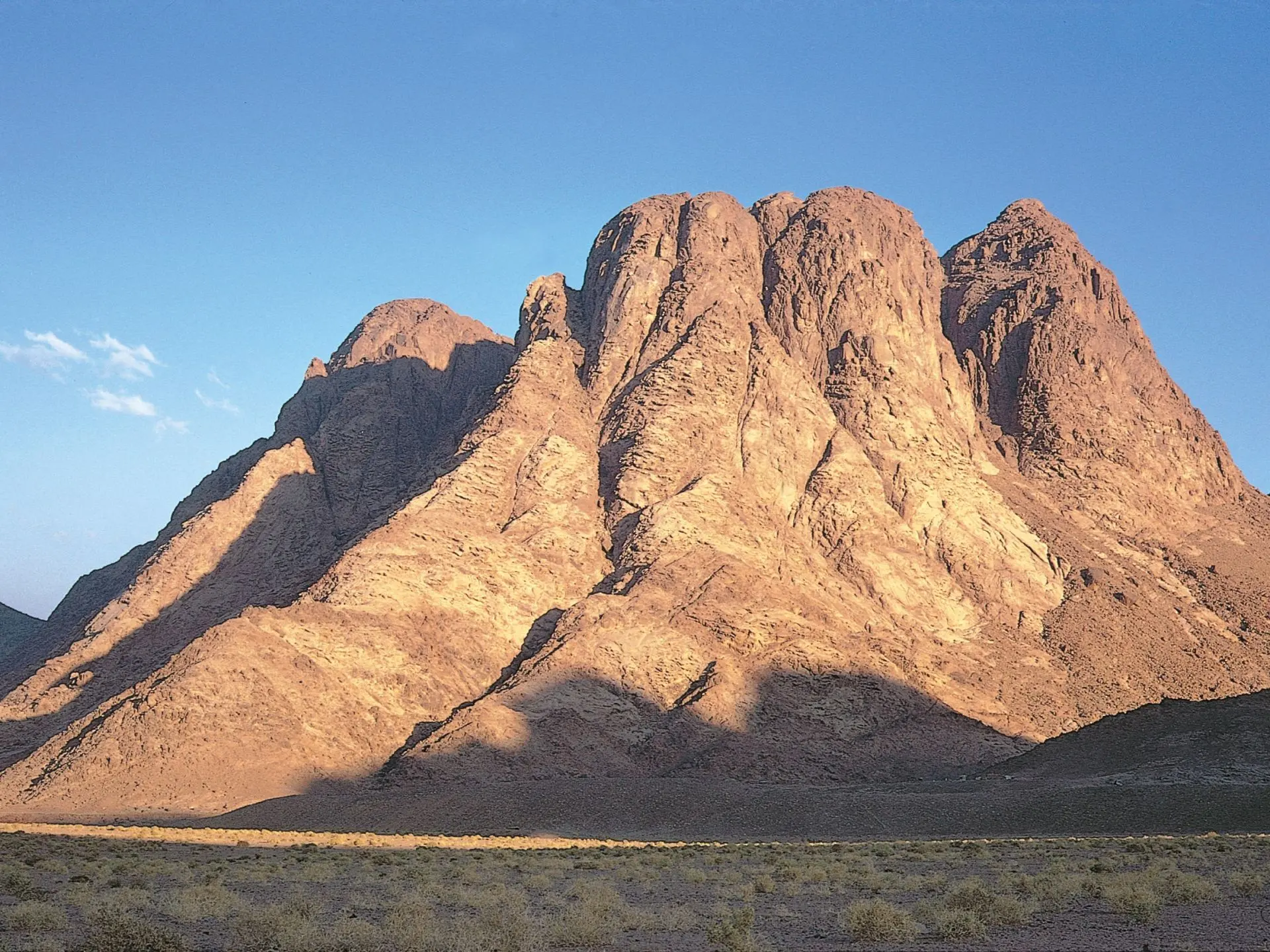
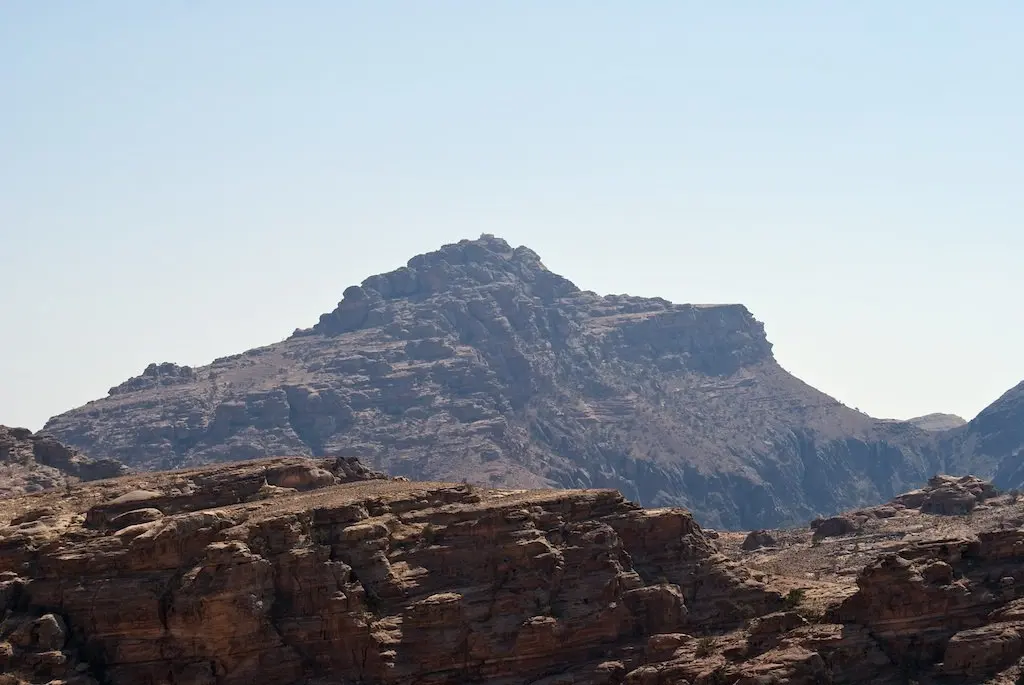
The approach to Saint Catherine's crosses desert that has not changed since the first hermits arrived. Mountains rise in bands of color. The monastery appears suddenly, fortress walls incongruous in the wilderness. These walls were built to protect, and they still do. What they protect has been continuous for nearly fifteen centuries.
Entry is through a small door in the massive wall. The original entrance was high in the wall, reached by rope basket, to prevent unwanted access. Today's door opens onto narrow passages, stone worn smooth by centuries of feet. The monastery is small and labyrinthine. Getting lost is easy and perhaps appropriate.
The Basilica of the Transfiguration is the monastery's primary church. The 6th-century apse mosaic of Christ's Transfiguration on Mount Tabor survives in remarkable condition. Christ stands in radiant white between Moses and Elijah, the figures who encountered God on this very mountain. The mosaic requires special permission to view, but even from the nave, its presence is felt.
The Chapel of the Burning Bush lies behind the main altar, requiring a brief passage through the sanctuary. Visitors must remove shoes before entering, following Moses's example. The chapel is small and ornate. A silver star marks the spot where the original bush stood before its transplantation. The overwhelming decorations, icons, lamps, and hangings, create an atmosphere of concentrated veneration.
The Burning Bush itself grows in a courtyard adjacent to the chapel. A low fence now protects it from visitors who once took cuttings as relics. The plant appears unremarkable, but its presence here, on the ground where God spoke, creates its significance. Whether this is the bush or a descendant of the bush or simply the bush that has been venerated here, it participates in the site's accumulated sanctity.
The Icon Gallery displays some of the monastery's 2,000 icons. The Christ Pantocrator dominates, its asymmetrical face presenting both the human and divine natures of Christ in a single image. Encaustic icons from the 6th century, surviving only here due to the monastery's isolation from Byzantine iconoclasm, reveal what early Christian art looked like.
The ossuary, if open, offers stark reminder of mortality. Skulls and bones of monks fill the charnel house, accumulated over centuries. A single complete skeleton, dressed in monastic robes, represents Saint Stephanos the Porter. The dead monks remain within the community, their bones gathered in this place.
Saint Catherine's Monastery sits at the foot of Mount Sinai, at approximately 1,586 meters elevation. The fortress walls enclose a compact complex of buildings including the Basilica of the Transfiguration, the Chapel of the Burning Bush, the Fatimid mosque, the refectory, living quarters for monks, the Icon Gallery, the library, and the ossuary. The Burning Bush grows in a courtyard near the chapel. The Well of Moses, where tradition says Moses met Zipporah, still provides water.
Entry is through a door in the massive walls, leading to narrow passages that connect the various structures.
Context and lineage
The monastery's origins lie in the encounter recorded in Exodus. Moses, tending sheep near Mount Horeb, saw a bush that burned but was not consumed. God spoke from within the bush, revealing the divine name 'I AM WHO I AM' and commissioning Moses to lead the Israelites from Egypt. Moses removed his sandals because he stood on holy ground.
Christian monks recognized that the Burning Bush prefigured the Virgin Mary, who bore divine fire in Christ without being consumed. The site attracted hermits from the 3rd century onward. Empress Helena ordered a chapel built at the Burning Bush in the 330s. By the 6th century, a community of monks had settled here permanently.
Saint Catherine of Alexandria was a learned noblewoman martyred in the early 4th century. According to hagiography, angels carried her body to the highest mountain in the Sinai, where monks discovered her incorrupt relics around 800 CE. The monastery was rededicated in her honor, and portions of her remains are displayed in the basilica today.
Saint Catherine's participates in the lineage of desert monasticism that began in Egypt in the 3rd century. The desert fathers and mothers who fled the cities to seek God in the wilderness established a tradition that Saint Catherine's continues. The monastery's architecture follows Byzantine patterns, and its liturgical practice maintains ancient Alexandrian forms. Its manuscripts connect it to the broader Christian manuscript tradition, while its isolation preserved texts and icons that were lost elsewhere.
Moses
Emperor Justinian I
Saint Catherine of Alexandria
Constantin von Tischendorf
Traditions and practice
The monastic community follows the Byzantine liturgical calendar and maintains the full cycle of daily prayer. The Divine Liturgy is celebrated regularly. Matins, vespers, and compline punctuate the day. The life of prayer that began here in the 3rd century continues in essentially the same form.
Pilgrims have visited Saint Catherine's for as long as the monastery has existed. The pilgrimage to the Burning Bush and Mount Sinai was documented by Egeria in the 380s. The Steps of Repentance, carved by monks in the 6th and 7th centuries, created a penitential path up the mountain. The veneration of Saint Catherine's relics became central after their discovery around 800 CE.
The monks also maintain a tradition of hospitality to travelers. In earlier centuries, pilgrims might stay for extended periods. The rope basket that once hauled visitors up the wall was a practical accommodation to dangerous times.
The monastic community of approximately 25-30 monks maintains the liturgical cycle. Services are not generally open to tourists, but pilgrims may sometimes be admitted. The monastery opens for limited visiting hours, typically 9:00-11:30 AM, when visitors can see the basilica, the Burning Bush, the Icon Gallery, and other accessible areas.
The library and the apse mosaic require special permission arranged through the monastery's official website. Scholars studying the manuscripts may apply for extended access. The digitization of manuscripts continues as a preservation project.
The Jabaliya Bedouin continue their role as guardians and guides for the Mount Sinai climb. Their presence bridges the monastery and the surrounding community.
Arrive early. The monastery opens at 9:00 AM, and the limited visiting hours fill quickly. Early arrival ensures sufficient time for the basilica, the Burning Bush, and the Icon Gallery.
Remove shoes at the Chapel of the Burning Bush. This is not just rule but reenactment. Moses removed his sandals because he stood on holy ground. You are standing where he stood.
Spend time with the Christ Pantocrator icon. The asymmetrical face reveals the two natures of Christ, human and divine. The eyes follow you. The image has been affecting viewers for fifteen centuries.
If combining with the Mount Sinai climb, consider staying in the area overnight. The climb traditionally begins around midnight; attempting it after a long drive is challenging.
Eastern Orthodox Christianity
ActiveSaint Catherine's Monastery is one of the most important centers of Orthodox Christianity. Governed by the autonomous Church of Sinai within the Greek Orthodox communion, it represents unbroken continuity of Christian worship since the 6th century. The monastery preserves the relics of Saint Catherine and maintains liturgical traditions unchanged for over 1,400 years.
Daily Divine Liturgy and canonical hours following the Byzantine rite. Veneration of Saint Catherine's relics. Annual celebration of Saint Catherine's feast day (November 25). Continuous prayer cycle maintained by the monastic community.
Judaism
HistoricalThe monastery sits at the foot of Mount Sinai and encloses the site of the Burning Bush. Both are foundational to Jewish faith. The Burning Bush is where God revealed the divine name to Moses. Mount Sinai is where the Torah was given.
No active Jewish worship occurs at the monastery. Jewish pilgrims visit to honor the sacred geography associated with Moses and the giving of the Law.
Islam
ActiveMount Sinai is sacred in Islam as where Moses received divine revelation. The monastery possesses the Ashtiname of Muhammad, a charter of protection allegedly granted by the Prophet. A Fatimid mosque built in 1106 CE stands within the monastery walls.
The Fatimid mosque within the monastery is still used on special occasions. Local Bedouin Muslims serve as guardians and guides.
Desert Monasticism
ActiveSaint Catherine's represents one of the earliest and best-preserved examples of desert monasticism, the ascetic movement that began in Egypt in the 3rd century. The monastery was home to Saint John Climacus, author of 'The Ladder of Divine Ascent,' and Gregory of Sinai, who spread Hesychast practices.
The monks maintain the Hesychast tradition of contemplative prayer, seeking theosis through ascetic discipline and the Jesus Prayer. The monastic rule emphasizes silence, prayer, fasting, and spiritual reading.
Perspectives and open questions
Saint Catherine's invites multiple readings: as site of biblical encounter, as repository of Christian antiquity, as testimony to interfaith coexistence, and as living continuation of desert monasticism.
Scholarly perspective
Historians and archaeologists confirm Saint Catherine's as one of the world's most significant religious heritage sites. The manuscript collection, second only to the Vatican's, preserves texts lost elsewhere. The Codex Sinaiticus, discovered here by Tischendorf, is the oldest nearly complete Bible. The icon collection provides unique evidence of early Christian art, particularly the encaustic icons that survived only here due to isolation from Byzantine iconoclasm.
The identification of Mount Sinai with Jebel Musa dates to at least the 4th century but remains debated among scholars. The monastery's architectural preservation offers insight into Byzantine monastic design. The Ashtiname of Muhammad, guaranteeing protection to the monks, is a document of historical significance regardless of questions about its exact provenance.
Living and traditional perspectives
In Orthodox Christian understanding, Saint Catherine's is where God first spoke to humanity, revealing the divine name in the burning bush. The monastery preserves not merely historical artifacts but living tradition. The liturgy celebrated today continues what has been celebrated for nearly fifteen centuries. The monks are not curators of a museum but participants in ongoing sacred reality.
The Burning Bush prefigures the Virgin Mary, who bore divine fire without being consumed. The Chapel of the Burning Bush is not merely memorial but threshold, a place where the encounter recorded in Exodus remains accessible.
The Jabaliya Bedouin understand themselves as guardians appointed to protect this holy place. Their ancestors were brought here by Justinian for this purpose. The relationship between monastery and tribe has survived fourteen centuries.
Alternative interpretations
Some researchers propose alternative locations for the biblical Mount Sinai. New Age spiritual seekers sometimes view the site's energy in terms of vortexes or ley lines. The site's associations with fire, revelation, and the divine feminine through Mary typology attract esoteric interpretations. The mystery of what remains undiscovered within the monastery's walls fuels speculation.
Open questions
Whether the Burning Bush plant is genuinely descended from the original biblical bush remains unknown. The exact mechanism by which Saint Catherine's relics arrived on Mount Catherine is hagiographic rather than historical. The full authenticity and provenance of the Ashtiname of Muhammad is debated. Whether Jebel Musa is definitively the biblical Mount Sinai cannot be archaeologically confirmed. The contents of manuscripts still awaiting full study and translation remain to be discovered.
Plan your visit
Access and arrival
Approximately 220 km from Sharm el-Sheikh (3 hours by road). Approximately 120 km from Nuweiba (1.5 hours). Approximately 450 km from Cairo (6-7 hours). No commercial flights to the area. Tour buses and private transfers from Sharm el-Sheikh are common. Guesthouses in Saint Catherine village provide basic accommodation.
Simple hotels and guesthouses in Saint Catherine village. Some tours include overnight camping. Book in advance during busy periods. The monastery itself does not offer accommodation to ordinary visitors.
Respectful visit
Modest dress is required for every visitor regardless of gender. Shoulders and knees must be covered; no shorts, short skirts, or sleeveless tops. Wraps may be available at the entrance, but arrive appropriately dressed. Wear comfortable walking shoes for uneven stone surfaces.
Always ask before photographing. Photography is permitted in some exterior areas, while restrictions apply inside buildings. Flash may be prohibited, video recording may require permission, and monks must not be photographed without asking.
Candles may be lit in the basilica. Donations support monastery maintenance and conservation. The monastery shop sells icons and religious items.
Remove shoes to enter the Chapel of the Burning Bush. Maintain silence and reverence, turn off phones, and avoid disruptive behavior. Do not touch icons, manuscripts, or artifacts. Do not take cuttings from the Burning Bush. Follow guides' instructions regarding restricted areas.
The monastery has very limited visiting hours, typically 9:00-11:30 AM, and is closed Fridays and Sundays. The apse mosaic and library require advance permission. Some areas are restricted to Orthodox clergy and pilgrims. Photography restrictions apply inside. The monastery is small; large tour groups can overwhelm the space.
Current practical details
Address
HX4G+4QV, Saint Catherine, South Sinai Governorate 8730062, Egypt
Phone
Hours
Hours, fees, and access can change — verify on the official source before you travel. Practical details last checked Jun 2026.
Location
Map loads as you approach this section.
Pilgrim reflections
A portrait of encounter, not a score
Pilgrims describe what they felt, how present they could become, and whether the place would shape a journey. There are no stars and no ranking of traditions.
No reviewed reflections yet
The first pilgrims can help describe the character of being here.
Share a reflection
Available after an account-backed “Been there.” Every reflection is reviewed before publication.
Nearby sacred places
Explore other sacred places in the region. Proximity does not establish access or travel time; check each place’s guidance.
References
Sources consulted for this page. Source categories describe the publication, not a guarantee that every claim is verified. Traditional accounts and outside interpretations may differ.
- 01Saint Catherine Area - UNESCO World Heritage Centre — UNESCO World Heritage CentreofficialOfficial UNESCO documentation of World Heritage status and significance
- 02Saint Catherine's Monastery | Location, History, & Facts — Encyclopaedia BritannicaacademicAuthoritative reference work
- 03Saint Catherine's Monastery - Official Website — Holy Monastery of Saint CatherineofficialPrimary source from the monastery itself
- 04Codex Sinaiticus — Codex Sinaiticus ProjectacademicOfficial digital project for the manuscript
- 05Manuscripts in St. Catherine's Monastery, Mount Sinai — Library of CongressacademicAcademic documentation of manuscript collection
- 06Art and architecture of Saint Catherine's Monastery at Mount Sinai — SmarthistoryacademicAcademic art historical analysis
- 07Saint Catherine's Monastery — Egypt Ministry of Tourism and AntiquitiesofficialOfficial Egyptian government source
- 08Saint Catherine — Holy Monastery of Saint CatherineofficialMonastery's own account of Saint Catherine
- 09Saint Catherine's Monastery — Wikipedia contributorsacademicComprehensive overview with extensive citations
- 10Christ Pantocrator (Sinai) — Wikipedia contributorsacademicDetailed information on the famous icon
- 11Codex Sinaiticus — Wikipedia contributorsacademicComprehensive history of the manuscript
- 12Ashtiname of Muhammad — Wikipedia contributorsacademicInformation on the Prophet's charter of protection
- 13The oldest continuously operating library in the world is in an Egyptian monastery — AleteiaguideArticle on the library's continuous operation
- 14Monastery - Friends of Mount Sinai Monastery — Friends of Mount Sinai MonasteryofficialSupporting organization documentation
Share a photo
Help visitors recognize Saint Catherine's Monastery, Mt. Sinai. Every submission is reviewed before publication.