Complesso Nuragico di Malchittu
Sardinia's oldest temple, hidden on a granite hill for 3,600 years
Understand sacred places, explore living traditions, and learn how to engage respectfully with Pilgrim Map.
Access has not been verified. Check current local guidance before planning a visit.
Alzachèna/Arzachena, Sassari, Italy
Read the sources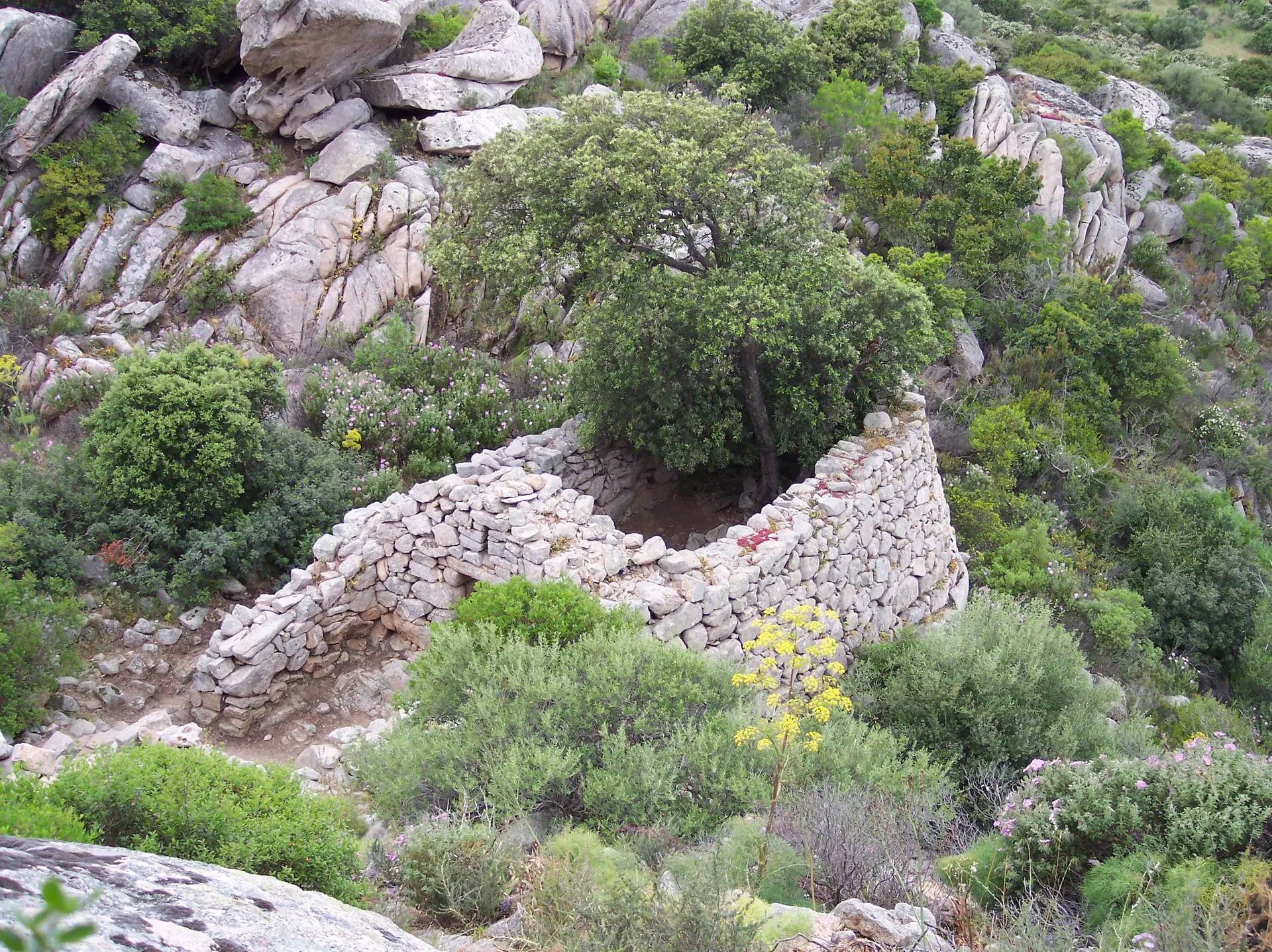
Visit essentials
A quick read before you go
- Duration
- 1.5-2 hours including walks
- Access
- By car on SS 125 between Arzachena and Olbia.
Overview
The path through granite, cork oaks, and Mediterranean scrub rises toward a Malchittu temple that has watched the landscape for 3,600 years; the separating climb becomes a ritual approach. The temple stands between two granite heights, once protected by a defensive wall and a nuraghe on the opposite rise. Its Nuragic builders treated it as guarded sacred space, but no artifacts or texts identify their deities or explain their beliefs.
Malchittu is a megaron temple “in antis,” with Aegean parallels: extended side walls form a vestibule before an apsidal chamber. Though its resemblance to Greek temple architecture is striking, it predates classical Greece by over a thousand years. Whether Bronze Age cultures shared religious ideas across the Mediterranean or similar needs produced similar forms remains unanswered.
Why this place is sacred
The Malchittu temple presents a profound mystery. Here is a religious building from the Bronze Age—older than the Parthenon by a millennium, older than Solomon's Temple by centuries. The structure survives in remarkable condition; only the wooden roof and pebbled floor have disappeared. But the religion it served has vanished entirely.
No artifacts survived to identify the gods worshipped here. No inscriptions explain the rituals performed. We have only the architecture, and it tells a partial story.
The megaron plan—an apsidal chamber with a vestibule formed by extended walls—has parallels in the Aegean world. Greek temples of later periods use similar arrangements. Did the Nuragic builders of Sardinia share religious ideas with their Aegean contemporaries? Were there connections across the Bronze Age Mediterranean that we have not fully understood? The temple suggests possibilities without confirming them.
The interior features speak more directly of ritual practice. Small niches cut into the walls could have held offerings, sacred objects, or images of deities. The seats arranged along the sides suggest regular gatherers—not just a priest, but a community present for ceremonies. The bench along the back may have been where leaders sat or where sacred objects were displayed. The central hearth, positioned for visibility from the entrance, was clearly the focal point of whatever rites occurred.
Radiocarbon dating of charcoal from this hearth provides a remarkable data point: the temple was still in use around 1000-900 BCE, more than six centuries after its construction. Whatever the Nuragic people did here, it retained its power for generations. Children worshipped where their great-great-great-grandparents had worshipped. The temple was not a moment but a tradition.
The protective architecture amplifies the sense of sacred significance. The temple was not casually placed but positioned between two granite heights, with a nuraghe standing guard on the opposite rise and a defensive wall encircling the sacred precinct. This was space that required protection—holy ground that could not be left vulnerable.
Scholars call Malchittu 'anachronistic' because it predates all other megaron temples in Sardinia by several centuries. The community that built it was innovating, creating a form that would become widespread only later. Whether they invented this architecture or imported it from elsewhere, they were pioneers of Bronze Age sacred space.
Religious temple of the Nuragic civilization. Megaron 'in antis' design for ritual activities. Central hearth as focal point. Protected by nuraghe and defensive wall. Specific deities and rituals unknown.
1600-1400 BCE: Temple constructed (Middle Bronze Age). 1000-900 BCE: Last documented use (radiocarbon dating). Modern era: Excavation and preservation as archaeological site.
Experience and orientation
The experience begins at the ticket office and parking area along SS 125. From here, the path climbs through landscape that the Nuragic people would recognize—granite outcrops, Mediterranean vegetation, the Sardinian sky. The 1.5 kilometers of walking take you progressively away from the modern world and upward toward something ancient.
The path is well-marked but challenging. Sturdy footwear is essential. The final portion involves some scrambling over rocks. This difficulty is part of the experience—you arrive at the temple having earned it, having made an effort that echoes the separation sacred space requires from ordinary life.
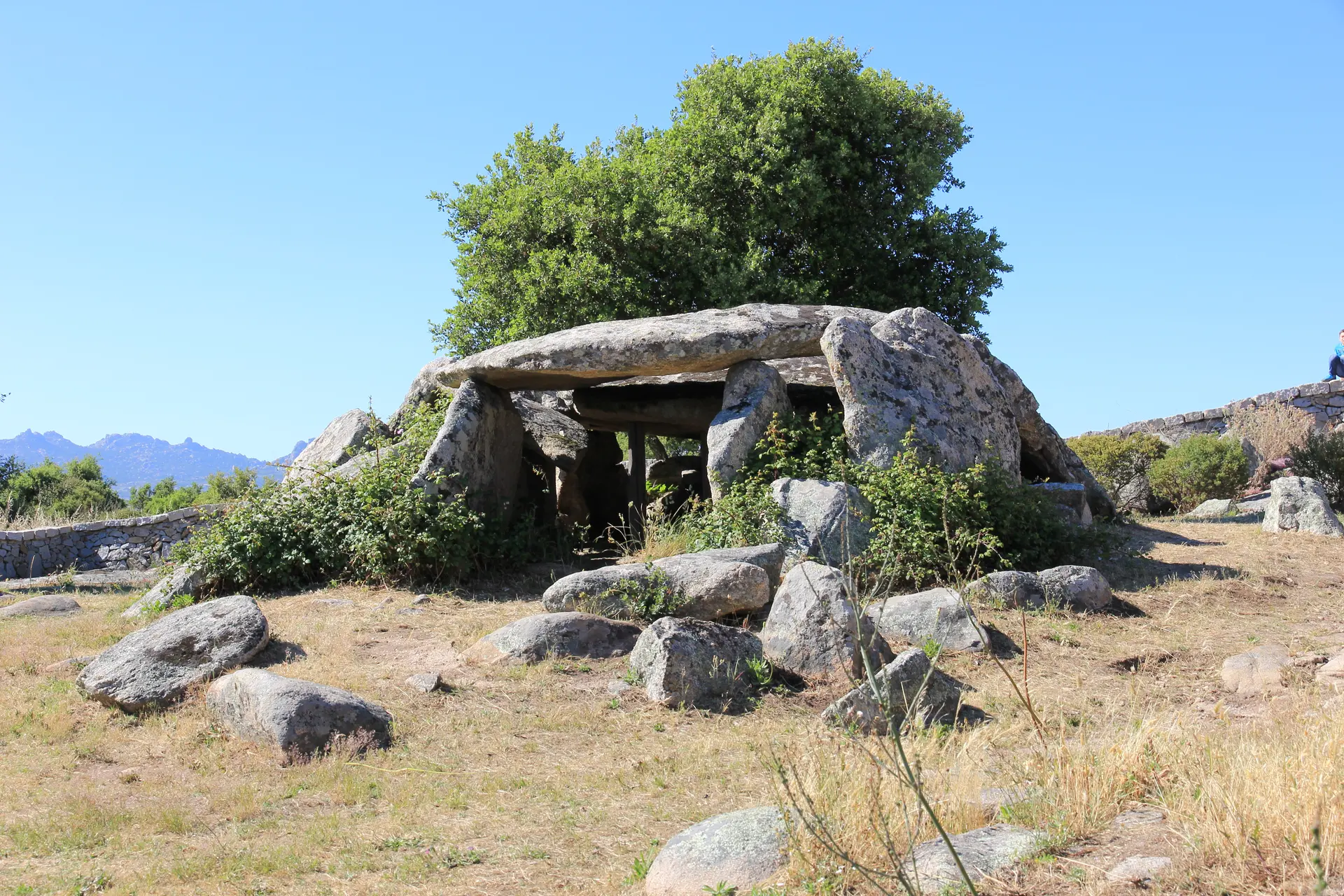
The temple appears between two granite heights, positioned for protection and prominence. The structure itself is remarkable for its preservation: walls of well-fitted stone, the entrance visible, the apsidal shape clear. Only the wooden gabled roof and pebbled floor are gone.
Approaching the entrance, you pass through the vestibule—the walls extending forward to create a transitional space. This is classic 'in antis' architecture, the design that connects Malchittu to temples across the ancient Mediterranean. Through the entrance with its architrave and window, the interior opens.
Inside, the features designed for ritual become visible. The small niches cut into walls. The seats arranged along sides. The bench at the back. The central hearth—the focal point around which ceremonies occurred, where charcoal from 3,000 years ago has been radiocarbon dated. Standing here, you occupy the same space Nuragic worshippers occupied for six centuries.
The views from the temple site extend across the Sardinian landscape. The nuraghe that protected this sacred precinct is visible on the opposite height. The defensive wall, though ruined, traces the boundary of consecrated ground. You are inside a Bronze Age sanctuary.
The Malchittu temple complex is located 2km from Arzachena on the SS 125 towards Olbia. The temple sits at 120m elevation, reached by a 1.5km uphill walk from the ticket office and parking area.
Context and lineage
Between 1600 and 1400 BCE, during the Middle Bronze Age, a community in what is now the Arzachena area of Sardinia constructed a temple unlike any other in the region. They chose a site between two granite heights, at 120 meters elevation, visible across the landscape. They built in the megaron 'in antis' style—an apsidal chamber with a vestibule formed by extended walls, a design with parallels in the Aegean world.
They protected their temple with a nuraghe standing guard on the opposite height and a defensive wall encircling the sacred precinct. Inside, they created spaces for ritual: niches, seats, a bench, and a central hearth that would burn for more than six centuries.
Built by the Nuragic civilization of Bronze Age Sardinia. Represents first phase Nuragic religious architecture. No descendant tradition preserves the original practices.
Traditions and practice
Unknown Nuragic rituals around central hearth. Use of niches for offerings or sacred objects. Seated gatherings for ceremonies. Protected by nuraghe and wall.
Archaeological site visitation. Part of Arzachena 7-site Nuragic circuit with combined ticketing.
Make the 1.5km walk slowly, treating it as pilgrimage. At the temple, note the 'in antis' design, the central hearth, the niches and seats. Consider what rituals might have occurred here for six centuries. Visit other sites on the Arzachena circuit for fuller context.
Nuragic Civilization
HistoricalMalchittu is the oldest megaron temple in Sardinia (1600-1400 BCE) and the only Nuragic religious building in the Arzachena area. The 'in antis' design parallels Aegean temple architecture. Interior features (hearth, niches, seats) indicate ritual use that continued for 600+ years.
No longer practiced. Archaeological evidence suggests ceremonies around central hearth, with seated gatherings and offerings in wall niches.
Perspectives and open questions
Malchittu offers encounter with the oldest megaron temple in Sardinia—a Bronze Age sanctuary whose specific rituals and deities remain unknown, but whose architecture speaks across 3,600 years.
Scholarly perspective
The temple is recognized as the oldest megaron in Sardinia (1600-1400 BCE), predating similar structures by centuries. The 'in antis' design parallels Aegean architecture. Radiocarbon dating of hearth charcoal indicates use until 1000-900 BCE. The absence of artifacts leaves deities and rituals unidentified.
Living and traditional perspectives
No living tradition preserves Nuragic religious practices. The temple's function is inferred from architecture alone.
Alternative interpretations
The Aegean parallels have attracted speculation about Mediterranean cultural connections. The isolated hilltop location suggests intentional separation of sacred and ordinary space.
Open questions
The deities worshipped. The rituals performed. The reason for Aegean architectural parallels. Why this temple predates others by centuries.
Plan your visit
Access and arrival
By car on SS 125 between Arzachena and Olbia. Ticket office and parking at trailhead. 1.5km uphill walk to temple. Car recommended; limited public transport.
Accommodations in Arzachena and along the Costa Smeralda. Agriturismos in the Gallura countryside.
Respectful visit
No dress code. Sturdy footwear essential.
Photography permitted throughout the site.
None; archaeological site.
Admission fee (€4 single; combined passes available) | 1.5km uphill walk required | Sturdy footwear essential | Do not climb on structures
1.5km uphill walk with some scrambling. Sturdy footwear essential. Summer very hot; go early. Bring water.
Current practical details
Address
Località Malchittu, 07021 Arzachena OT, Italy
Phone
Hours
Hours, fees, and access can change — verify on the official source before you travel. Practical details last checked Jun 2026.
Location
Map loads as you approach this section.
Pilgrim reflections
A portrait of encounter, not a score
Pilgrims describe what they felt, how present they could become, and whether the place would shape a journey. There are no stars and no ranking of traditions.
No reviewed reflections yet
The first pilgrims can help describe the character of being here.
Share a reflection
Available after an account-backed “Been there.” Every reflection is reviewed before publication.
Nearby sacred places
Explore other sacred places in the region. Proximity does not establish access or travel time; check each place’s guidance.
References
Sources consulted for this page. Source categories describe the publication, not a guarantee that every claim is verified. Traditional accounts and outside interpretations may differ.
- 01Temple of Malchittu | SardegnaTurismo — Regione Sardegna TourismofficialOfficial Sardinia tourism information
- 02The Nuragic temple of Malchittu in Arzachena — Sardegna Verso UNESCOSource contextDetailed archaeological analysis
- 03Tempietto di Malchittu - Idese — Italian Ministry of CultureofficialOfficial heritage documentation
- 04Tempietto Di Malchittu | Riviera Nuragica — Riviera NuragicaSource contextLocal tourism and archaeological information
- 05Malchittu Tempietto A - The Megalithic Portal — The Megalithic PortalSource contextMegalithic sites database
Share a photo
Help visitors recognize Complesso Nuragico di Malchittu. Every submission is reviewed before publication.