The Giants' Tomb of Li Lolghi
One of Sardinia's largest collective tombs rises from the hills of Gallura, its spirit portal facing the eternal
Understand sacred places, explore living traditions, and learn how to engage respectfully with Pilgrim Map.
Access has not been verified. Check current local guidance before planning a visit.
Alzachèna/Arzachena, Sassari, Italy
Read the sources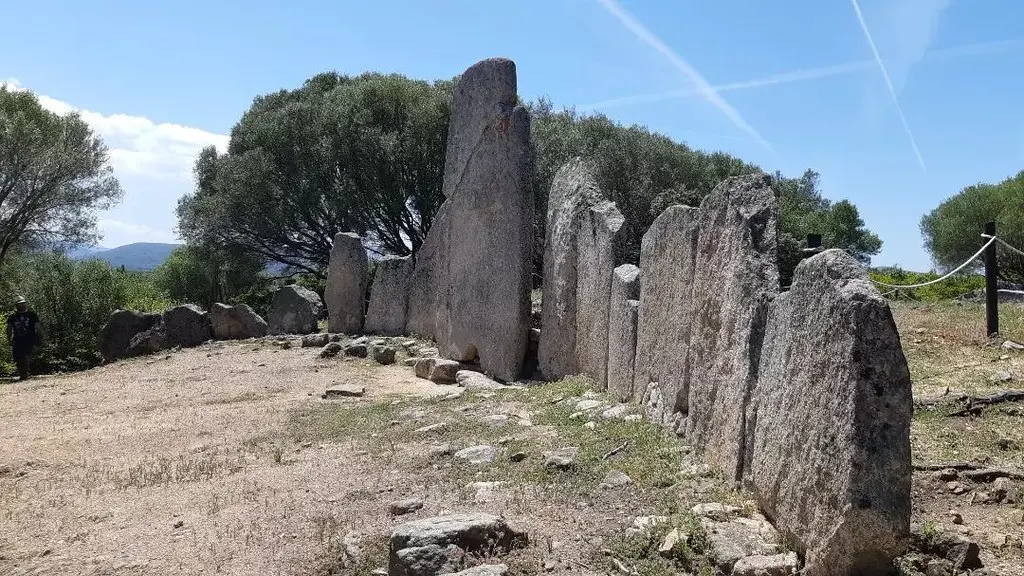
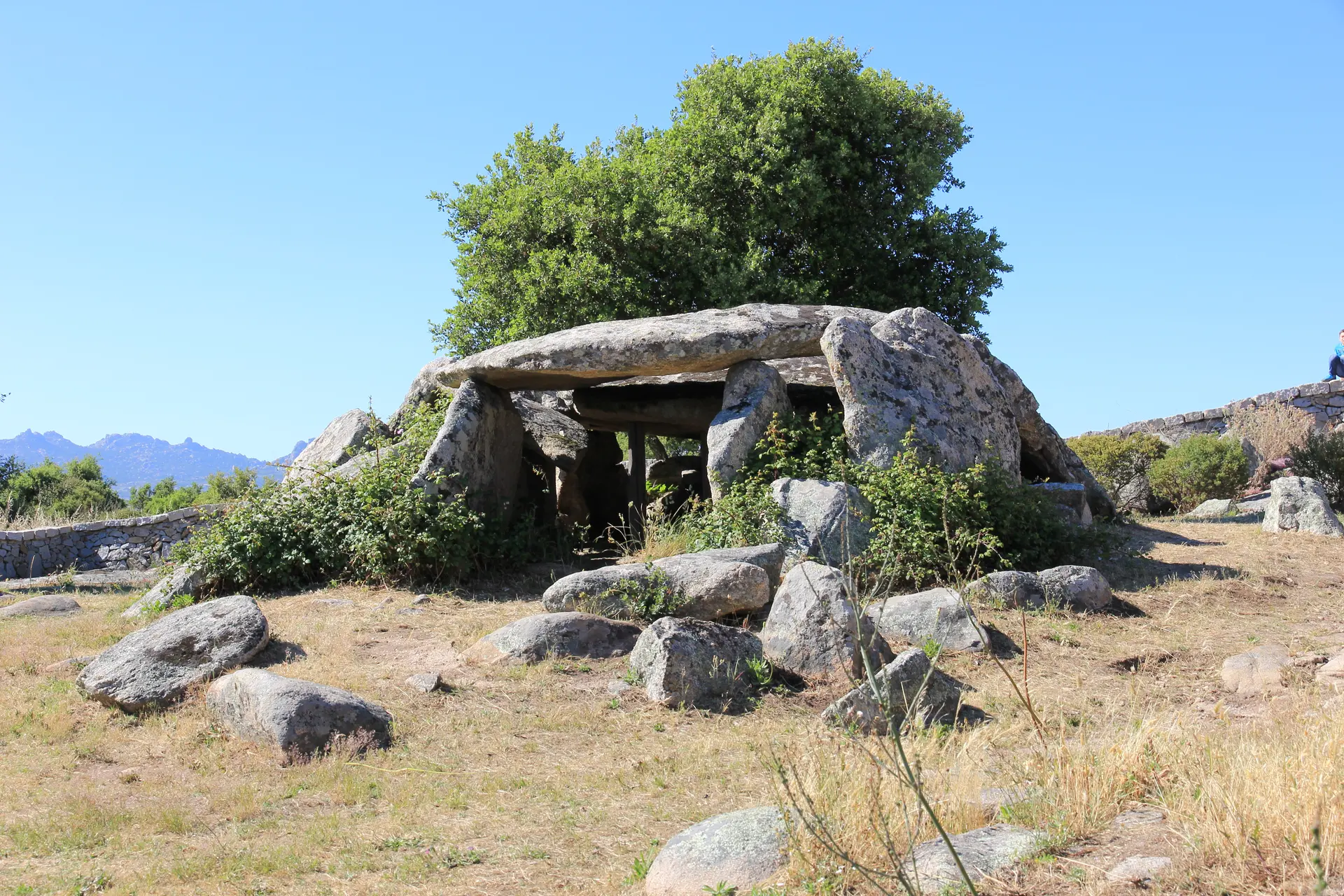
Image of The Giants' Tomb of Li Lolghi. Image source
Visit essentials
A quick read before you go
- Duration
- 30 minutes to 1 hour; longer if visiting entire Archaeological Park.
- Etiquette
- Respect the ancient burial site and archaeological park protocols through careful movement and…
Overview
On Li Muri hill in Gallura, Li Lolghi is one of Sardinia's largest Giants' Tombs. A simple cist grave built around 1800 BC was later transformed into a monumental tomb, its fourteen granite steles curving around the forecourt.
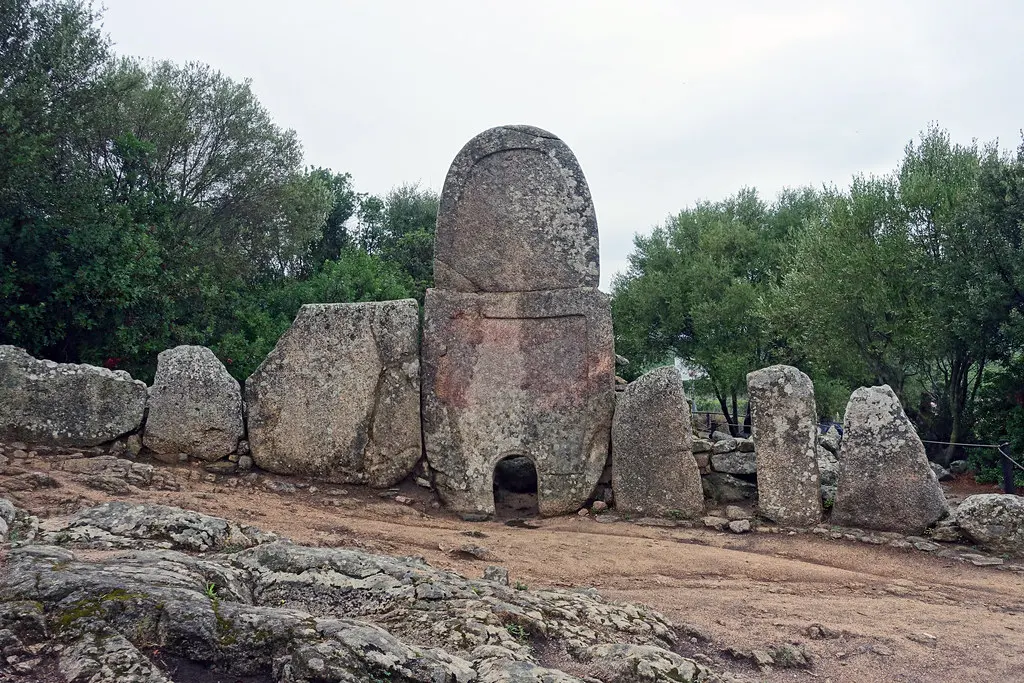
The central stele rises 3.75 meters. At its base, an arched opening too small for human passage served as a spirit portal between visible and invisible worlds. Fourteen orthostats decrease in height toward the exedra's edges, drawing the eye inward. Its bull's-horn shape connected burial with fertility and divine power: death as transformation within an ongoing cycle.
The Nuragic community used the corridor tomb collectively across generations, mingling bodies without apparent status distinctions. The living gathered in the exedra for funerary ceremonies and perhaps incubation—sleeping beside the dead for ancestral guidance. Now part of the Archaeological Park of Arzachena, Li Lolghi joins nearby Li Muri and Coddu Vecchiu in a Bronze Age sacred landscape where relationships with death and ancestors remain visible.
Why this place is sacred
The thinness at Li Lolghi crystallizes in the small arched portal at the stele's base. This opening—carefully carved, too small for bodies—was sized for spirits. The Nuragic builders created a physical threshold between worlds, a point where the boundary between living and dead could be crossed by those no longer embodied.
Standing before the stele, you confront Bronze Age theology made stone. The builders believed the dead needed a doorway, that the spirits of ancestors could pass through material barriers if provided with appropriate passage. This is not metaphor but architecture serving cosmology.
The fourteen granite steles that form the exedra create additional thinning. Each stone was selected, transported, shaped, and erected—an investment of labor that indicates the community's profound commitment to maintaining relationship with their dead. The bull's-horn shape connects burial to fertility, death to rebirth, ending to continuation.
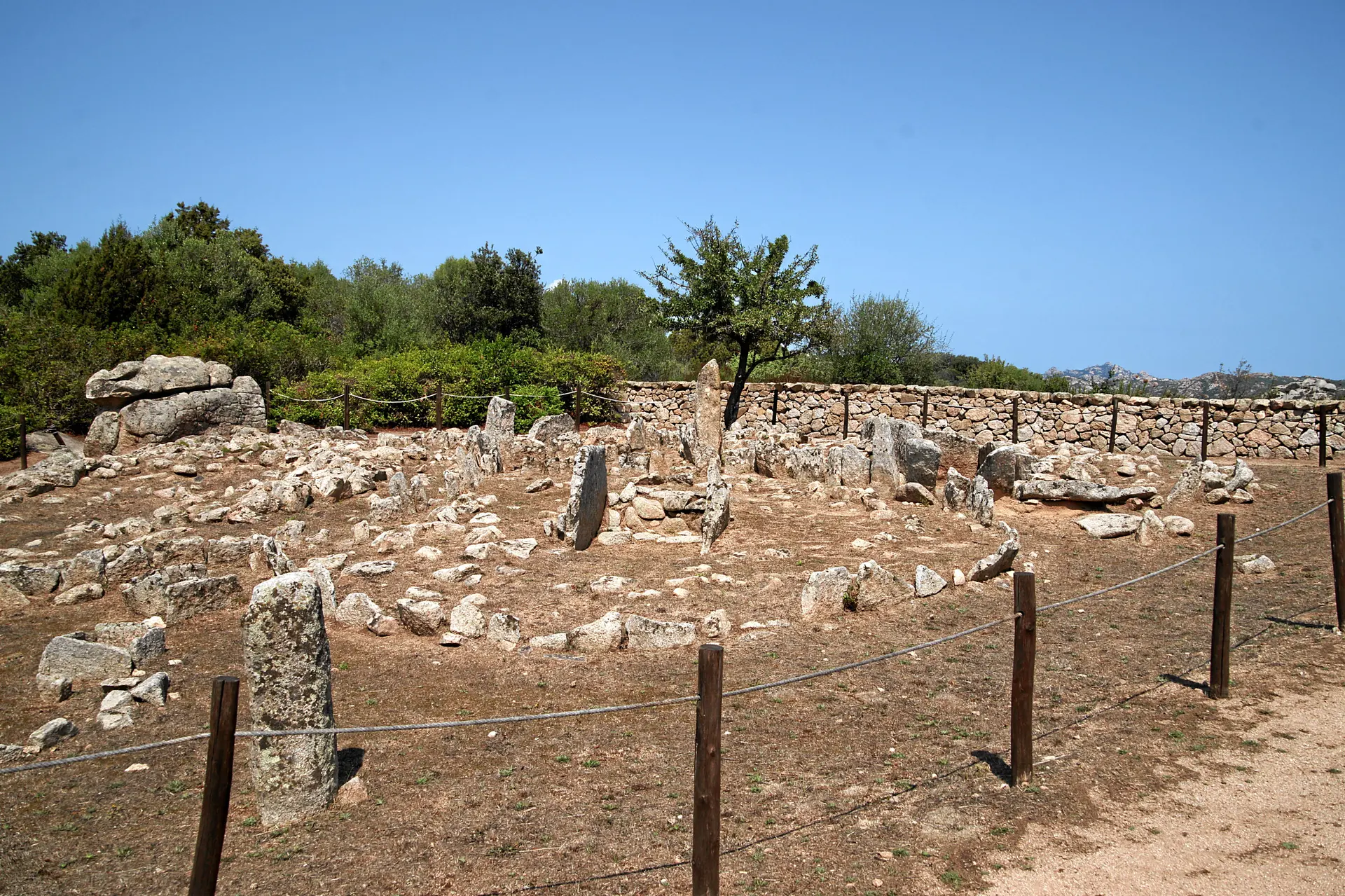
Li Lolghi exists within a sacred landscape. The necropolis of Li Muri lies one kilometer west, containing burial circles from an earlier tradition. The Giants' Tomb of Coddu Vecchiu stands 2.5 kilometers southeast. This concentration suggests the entire area held numinous significance for the Nuragic people—not a single thin place but a thin landscape.
The hilltop location adds to the effect. Li Muri hill offers views across Gallura, positioning the dead at an elevated point within the landscape they once inhabited. To be buried here was to remain visible, part of the territory, overlooking the land where descendants continued to live.
The thinness persists through the sense that something unfinished remains at such sites. The Nuragic religion ended, but the tombs endure. The spirits no longer pass through the portal, or perhaps they still do, unwitnessed by those who have forgotten how to see.
First phase built around 1800 BC (Bonnanaro culture) as cist grave. Second phase (1500-1200 BC) transformed the site into monumental Giants' Tomb with exedra and central stele. Used for collective burial and funerary ceremonies.
Used throughout Nuragic period for collective burial. Now part of Archaeological Park of Arzachena and proposed for UNESCO World Heritage status as part of Nuragic monuments nomination.
Experience and orientation
From the Arzachena–Luogosanto road, a signposted access route enters the Archaeological Park among Gallura's granite-strewn hills. Li Lolghi's scale appears first: fourteen steles rise against the sky, their curved, bull-horn exedra descending from the center toward its edges.
The 3.75-meter central stele commands the forecourt. Its small arched spirit portal was not built for bodies but sized for what Nuragic people believed could pass through it. Walk the curve slowly; if touching is permitted, feel the granite. Each stone was quarried, moved, shaped, and raised, expressing commitment to the dead. The forecourt held mourners and perhaps sleepers seeking guidance through incubation.
Behind the stele, a long, narrow corridor once held collective remains. Its darkness contrasts with the open exedra, separating the dead's realm from the space where living and dead could meet. Nearby Li Muri necropolis lies one kilometer west and Coddu Vecchiu 2.5 kilometers southeast; together they reveal Gallura's Nuragic sacred landscape.
From Arzachena, take SS 427 toward Luogosanto; after 3 km turn onto signposted asphalt road to Li Lolghi. Part of Archaeological Park of Arzachena. Entry approximately €4. Hours typically 9:00-19:00 in summer; check locally for current times.
Context and lineage
The history of Li Lolghi spans two construction phases reflecting the evolution of Nuragic burial practices. Around 1800 BC, during the Bonnanaro cultural phase, the site held a simple cist grave—a modest burial structure that served the early community.
Between 1500-1200 BC, this earlier structure was transformed into a monumental Giants' Tomb. The builders added the curved exedra of fourteen granite steles, the central stele with its spirit portal, and the extended corridor tomb. The transformation reflects changing beliefs about death and ancestral communion.
This evolution from simple to monumental burial characterizes many Giants' Tomb sites. The Nuragic people appear to have developed increasingly elaborate practices for maintaining relationship with their dead, eventually creating the distinctive architecture that gives these monuments their name.
Li Lolghi served the community for collective burial. Without apparent status distinctions, multiple generations were interred together, their bones mingling in the darkness of the corridor. The exedra provided space for funerary ceremonies and possibly for incubation—sleeping to receive ancestral guidance.
The site's position within a concentration of burial monuments—Li Muri, Coddu Vecchiu, and others—suggests this area of Gallura held particular sacred significance. The Nuragic dead were gathered here, creating a landscape marked by their accumulated presence.
First phase Bonnanaro culture (1800 BC), transformed during main Nuragic period (1500-1200 BC). Now part of Archaeological Park of Arzachena and proposed UNESCO nomination.
The Nuragic Community of Gallura
Builders and Users
Traditions and practice
Collective burial with funerary rites in the curved exedra. The spirit portal symbolized passage between living and dead worlds. Incubation practices may have allowed the living to receive ancestral guidance through sleep near the tomb.
Archaeological tourism provides primary engagement. The park context allows systematic exploration of Nuragic burial traditions across multiple sites.
Begin with the central stele and spirit portal, contemplating the beliefs that shaped this architecture. Walk the curve of the exedra, appreciating the labor invested. Visit connected sites—Li Muri, Coddu Vecchiu—to understand the sacred landscape.
Nuragic Burial Traditions
HistoricalLi Lolghi represents the Gallura tradition of monumental collective burial, evolved from earlier simpler forms. The spirit portal and bull's-horn exedra embody Nuragic beliefs about death as passage rather than ending.
Collective burial in corridor tomb. Funerary ceremonies in curved exedra. Spirit portal for passage between worlds. Possible incubation practices for receiving ancestral guidance.
Perspectives and open questions
Li Lolghi can be understood as monumental Bronze Age architecture, as evidence of Nuragic beliefs about death and spirit passage, or as part of a sacred landscape created through concentrated burial activity.
Scholarly perspective
Archaeologists recognize Li Lolghi as one of the largest and finest Giants' Tombs, with two construction phases demonstrating the evolution of Nuragic funerary practices. The site's inclusion in the Archaeological Park reflects its cultural importance.
Living and traditional perspectives
Sardinian folklore preserves the 'giants' tomb' concept—popular belief that only supernatural beings could have built such massive structures. The spirit portal maintains oral memory of the tombs' sacred function.
Alternative interpretations
Some researchers associate Giants' Tombs with earth energy and healing practices. The bull's-horn shape has attracted interest from those studying sacred geometry and fertility symbolism.
Open questions
The full inventory of burial goods originally deposited remains incomplete. The specific rituals performed at this tomb are not documented. The community relationship between Li Lolghi and nearby Li Muri invites further research.
Plan your visit
Access and arrival
Accommodation available in Arzachena and nearby Costa Smeralda area.
Respectful visit
No specific requirements. Comfortable walking shoes for outdoor terrain.
Photography permitted.
Not appropriate at archaeological sites.
Stay within designated areas. Do not climb on the stones. Respect archaeological site protocols.
Part of managed archaeological park with entrance fee. Some uneven terrain.
Current practical details
Address
Strada di Li Lolghi, 07021 Arzachena OT, Italy
Phone
Hours
Hours, fees, and access can change — verify on the official source before you travel. Practical details last checked Jun 2026.
Location
Map loads as you approach this section.
Pilgrim reflections
A portrait of encounter, not a score
Pilgrims describe what they felt, how present they could become, and whether the place would shape a journey. There are no stars and no ranking of traditions.
No reviewed reflections yet
The first pilgrims can help describe the character of being here.
Share a reflection
Available after an account-backed “Been there.” Every reflection is reviewed before publication.
Nearby sacred places
Explore other sacred places in the region. Proximity does not establish access or travel time; check each place’s guidance.
References
Sources consulted for this page. Source categories describe the publication, not a guarantee that every claim is verified. Traditional accounts and outside interpretations may differ.
- 01The giant graves of Li Lolghi and Moru - Arzachena — La Sardegna verso l'UnescoSource contextUNESCO candidacy documentation
- 02Tombs of the Giants and Sacred Wells in Sardinia — Italia.itofficialOfficial Italian tourism site
- 03Giants' Tomb Li Lolghi - My Sardinian Life — My Sardinian LifeguideDetailed visitor account
- 04Giants' grave - Wikipedia — Wikipedia contributorsencyclopediaGeneral reference on Giants' Tombs
- 05Tomba dei giganti di Li Lolghi - AroundUs — AroundUsSource contextLocation and historical details
Share a photo
Help visitors recognize The Giants' Tomb of Li Lolghi. Every submission is reviewed before publication.