Necropoli di Li Muri
Sardinia's first megaliths rise in concentric circles from the Gallura granite
Understand sacred places, explore living traditions, and learn how to engage respectfully with Pilgrim Map.
Access has not been verified. Check current local guidance before planning a visit.
Alzachèna/Arzachena, Sassari, Italy
Read the sources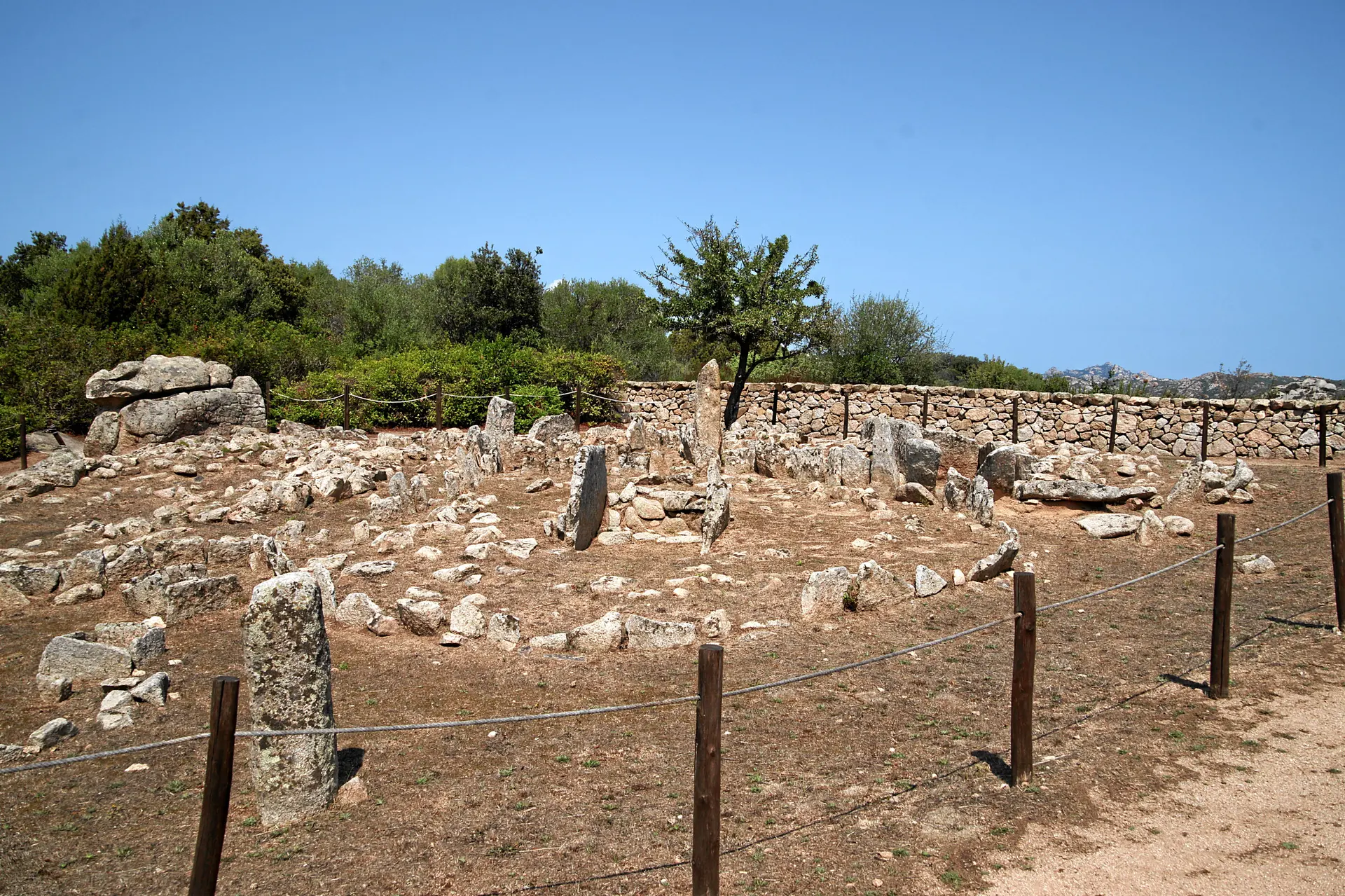
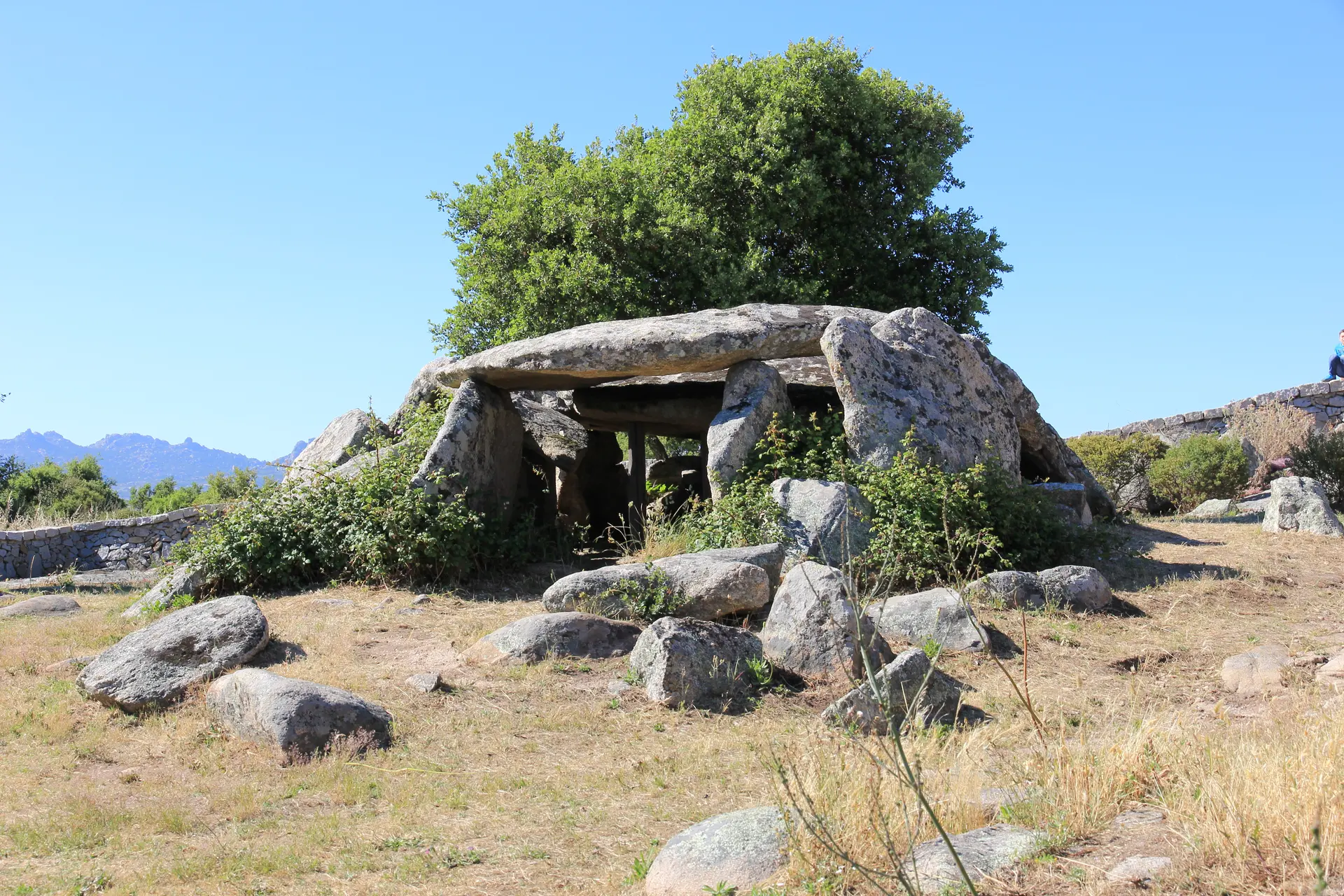
Image of Necropoli di Li Muri. Image source · CC-BY-SA-4.0
Visit essentials
A quick read before you go
- Duration
- 45 minutes to 1 hour
- Access
- From Arzachena, follow signs to Li Muri.
Overview
Five carefully fitted, concentric granite tombs at Li Muri mark the first megalithic monuments in Sardinia, an island that would later produce thousands. Their Neolithic builders, working around 3500–3000 BCE, established patterns that endured for millennia.
Unlike collective burials common elsewhere in Sardinia, Li Muri appears to have held individual interments. Each stone cist—a burial chamber encircled by rings of increasing diameter—housed a person given monumental commemoration. Pottery, stone vessels, hatchets, and necklaces of steatite and gemstones suggest individuals of status.
The architecture connects Sardinia with Corsica, Provence, and the Pyrenees, where similar structures suggest shared understanding among Neolithic communities. Crushed olive-shaped steatite beads also recall objects from Mochlos in Crete. Li Muri belonged to cultural and commercial networks spanning the Mediterranean.
Why this place is sacred
Six thousand years ago, Neolithic communities in what is now Gallura did something new: they built megalithic monuments. The concentric stone circles of Li Muri represent the first expression of a tradition that would continue across Sardinian prehistory—the use of large stones to mark and honor the dead.
The structure itself sets Li Muri apart. The stone cists are surrounded by circles of increasing diameter, from five to eight and a half meters, bordered by small slabs planted vertically. These circles originally marked the limits of earthen mounds that covered the burials. The effect was architectural—graves that rose from the landscape, visible markers of where significant individuals lay.
The individual burials are unusual for Sardinia, where collective interment was the norm. At Li Muri, each cist appears to have held a single person, distinguished by grave goods that speak of status: pottery, stone vessels, hatchets, necklaces. The bead necklaces—crushed olive-shaped steatite and gemstones—recall similar objects from Crete, suggesting participation in Mediterranean-wide trade.
Red ochre on the burial stones indicates regeneration ritual. The pigment symbolized blood; its application connected to beliefs about rebirth. The Neolithic people who used ochre at Li Muri understood death as transition, not termination—a passage that required symbolic marking.
The architectural parallels with contemporary sites in Corsica, Provence, and the Pyrenees suggest that Li Muri was not local innovation but participation in broader Neolithic understanding. The 'Arzachena culture' or 'culture of the megalithic circles' extends beyond Sardinia to encompass Mediterranean communities who shared similar burial practices.
The 1939 discovery and subsequent excavation revealed a site of exceptional importance. Li Muri became the type site for its culture, the reference point for understanding Neolithic Gallura. The concentric circles that mark individual burials of six thousand years ago continue to invite questions about the earliest sacred architecture in Sardinia.
Neolithic necropolis with individual burials in stone cists surrounded by concentric circles. Red ochre regeneration rituals. Grave goods indicating status and Mediterranean connections.
First half 4th millennium BCE: Necropolis constructed. 1939: Discovered by Michele Ruzittu. 1939-1940: Excavated by Salvatore Puglisi.
Experience and orientation
The approach to Li Muri leads through the Gallura landscape that defines northeastern Sardinia—granite outcrops, Mediterranean vegetation, the particular light of the Costa Smeralda region. The Neolithic builders chose this terrain for their first megalithic experiments.
The concentric circles appear as ordered arrangement amid the natural granite. The five cists, each surrounded by circular stone borders of varying diameter, create a pattern that announces intentional design. These are not random stones but fitted monuments, the first megalithic structures in Sardinian prehistory.
Approaching the individual cists, the construction becomes clearer. The central burial chambers—small stone boxes that held individual bodies—are encircled by rings of vertically placed slabs. The largest circles reach eight and a half meters in diameter, substantial monuments for individuals who warranted such commemoration.
The granite material is local, but the significance extends far beyond Gallura. Similar structures in Corsica, Provence, and the Pyrenees suggest that the builders of Li Muri participated in Mediterranean-wide Neolithic networks. The grave goods found here—including steatite beads resembling Cretan objects—confirm connections that spanned the great sea.
The red ochre that marked burial elements is no longer visible, but understanding it adds dimension to the encounter. The Neolithic people who built Li Muri applied the pigment of blood to the context of death, speaking of regeneration, of transition, of beliefs about what happened to those who lay beneath the circles.
Li Muri is part of the Arzachena archaeological circuit, alongside Nuragic monuments from later periods. Visiting the necropolis offers encounter with the earliest layer of Sardinia's sacred landscape—the beginning of a tradition that would produce thousands of megalithic monuments across the island.
Li Muri is located near Arzachena in northeastern Sardinia (Gallura region), part of the Arzachena archaeological circuit.
Context and lineage
In the first half of the fourth millennium BCE, Neolithic communities in what is now Gallura created something new in Sardinian prehistory. They built stone circles—concentric rings surrounding cists that held individual burials. Li Muri became the first megalithic expression in Sardinia, establishing patterns that would continue for millennia. The builders used local granite but participated in Mediterranean-wide networks, as grave goods connected to Corsica, Provence, and Crete demonstrate. Red ochre applied to burial elements spoke of regeneration beliefs.
When discovered in 1939, Li Muri gave its name to the 'Arzachena culture' or 'culture of the megalithic circles.'
Built by Arzachena/megalithic circles culture of Neolithic Sardinia. Connected to contemporary sites in Corsica, Provence, Pyrenees. No descendant tradition preserves original practices.
Michele Ruzittu
Salvatore Puglisi
Traditions and practice
Individual burials in stone cists. Red ochre rituals symbolizing regeneration. Deposition of grave goods (pottery, stone vessels, hatchets, necklaces).
Archaeological site visitation. Part of Arzachena archaeological circuit.
Observe the concentric pattern of the circles. Consider the individual burials—unusual for Sardinia—and what they suggest about the status of those interred. Connect Li Muri to the broader Mediterranean network it belonged to.
Arzachena/Megalithic Circles Culture
HistoricalLi Muri represents the first megalithic expression in Sardinia and gave its name to the 'culture of the megalithic circles.' The individual burials with concentric stone circles connect to similar practices in Corsica, Provence, and the Pyrenees.
No longer practiced. Archaeological evidence indicates individual burials with red ochre regeneration rituals and status-indicating grave goods.
Perspectives and open questions
Li Muri offers encounter with Sardinia's first megalithic monuments—concentric circles from the 4th millennium BCE that mark the beginning of a tradition lasting millennia.
Scholarly perspective
First megalithic expression in Sardinia, type site for 'Arzachena culture.' Built first half 4th millennium BCE. Individual burials unusual for Sardinia. Red ochre regeneration rituals. Mediterranean connections (Corsica, Provence, Pyrenees, Crete).
Living and traditional perspectives
No living tradition preserves Arzachena culture practices.
Alternative interpretations
The concentric circles have attracted interest in sacred geometry and astronomical alignments.
Open questions
The specific burial rituals. The meaning of the concentric patterns. The identity of those buried. The full extent of Mediterranean connections.
Plan your visit
Access and arrival
From Arzachena, follow signs to Li Muri. Part of 7-site Nuragic circuit with combined tickets. Car recommended.
Accommodations in Arzachena and Costa Smeralda.
Respectful visit
No dress code.
Photography permitted.
None; archaeological site.
Respect archaeological structures | Stay on paths
Check locally for hours and admission.
Current practical details
Address
Strada di Li Lolghi, 07021 Arzachena OT, Italy
Phone
Hours
Hours, fees, and access can change — verify on the official source before you travel. Practical details last checked Jun 2026.
Location
Map loads as you approach this section.
Pilgrim reflections
A portrait of encounter, not a score
Pilgrims describe what they felt, how present they could become, and whether the place would shape a journey. There are no stars and no ranking of traditions.
No reviewed reflections yet
The first pilgrims can help describe the character of being here.
Share a reflection
Available after an account-backed “Been there.” Every reflection is reviewed before publication.
Nearby sacred places
Explore other sacred places in the region. Proximity does not establish access or travel time; check each place’s guidance.
References
Sources consulted for this page. Source categories describe the publication, not a guarantee that every claim is verified. Traditional accounts and outside interpretations may differ.
- 01Circoli di Li Muri | SardegnaTurismo — Regione Sardegna TourismofficialOfficial tourism
- 02Arzachena, Li Muri Necropolis | SardegnaCultura — Regione SardegnaofficialOfficial cultural heritage
- 03Necropolis Li Muri at Arzachena | Sardegna verso UNESCO — Sardegna verso UNESCOSource contextUNESCO candidacy
- 04Necropolis of Li Muri - Wikipedia — Wikipedia contributorsencyclopediaArchaeological overview
Share a photo
Help visitors recognize Necropoli di Li Muri. Every submission is reviewed before publication.