Bangudae Petroglyphs
A sourced encounter with Bangudae Petroglyphs
Understand sacred places, explore living traditions, and learn how to engage respectfully with Pilgrim Map.
Access has not been verified. Check current local guidance before planning a visit.
Ulsan, Ulsan, South Korea
Read the sources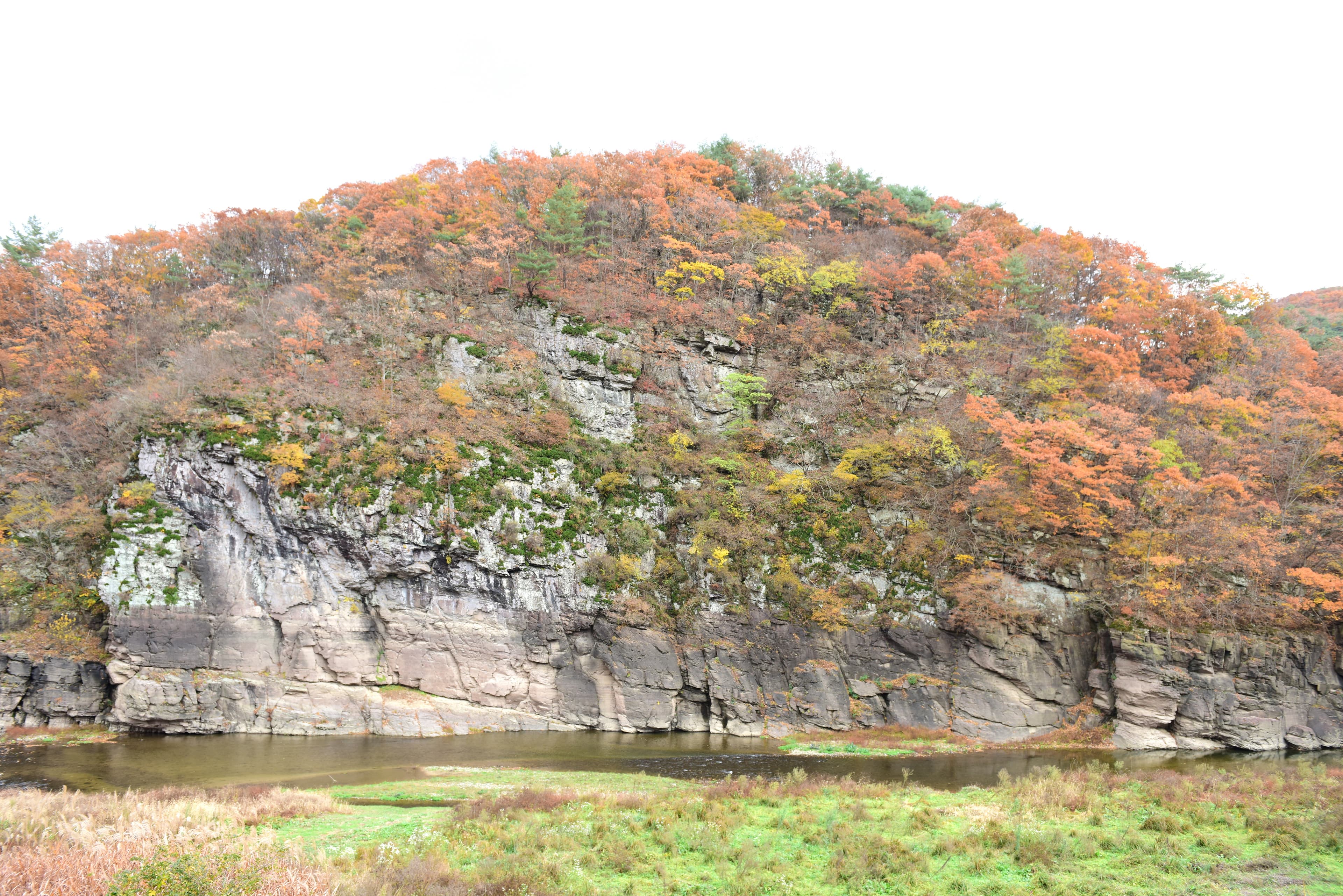
Bangudae Petroglyphs in Ulsan, Ulju County, South Korea. Image source · CC BY-SA 4.0
Visit essentials
A quick read before you go
- Duration
- Allow an unhurried circuit appropriate to Bangudae Petroglyphs.
- Access
- 991-3 Daegok-ri, Eonyang-eup, Ulju-gun, Ulsan, South Korea
Overview
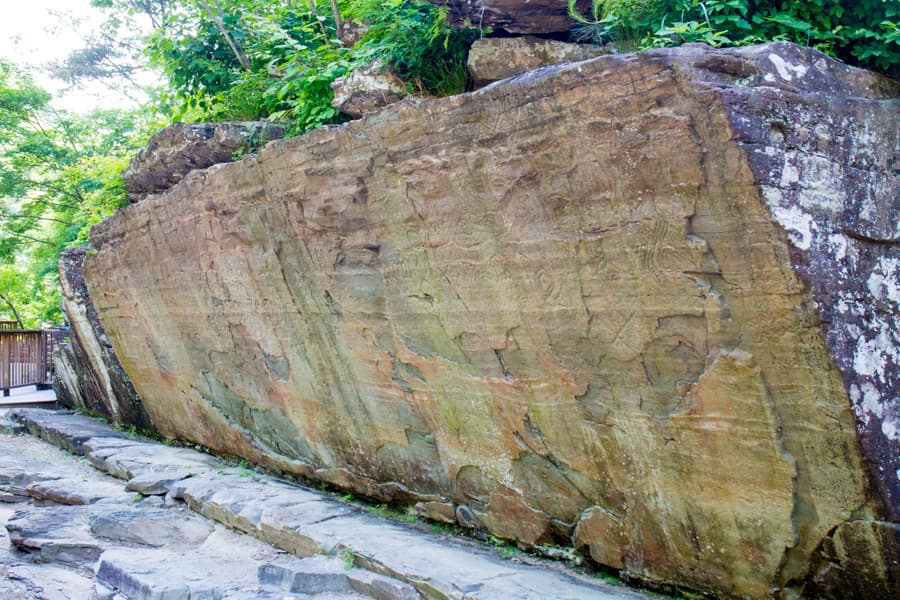
Bangudae occupies a rock face along the Daegokcheon, a tributary in the Bangucheon stream landscape west of Ulsan. Engravings show whales, deer, wild boar, tigers, people, boats, and hunting. Concentrated cetaceans and apparent whaling scenes give the panel global importance, but overlapping figures record repeated observation and engraving rather than one maritime story made at a single moment. In 2025 UNESCO inscribed Bangudae with Cheonjeon-ri as the Petroglyphs along the Bangucheon Stream.
Viewed across water or through managed interpretation, its remoteness protects fine lines unable to withstand touching, tracing, rubbing, or uncontrolled close access.
Why this place is sacred
Bangudae may have carried ritual, social, practical, or commemorative meanings for its makers, yet the carvings do not supply a complete spoken explanation. Animals vary in scale and treatment; some carry details that suggest close knowledge of behavior and hunting. It is reasonable to discuss ancient relationships among people, water, prey, and place. It is not responsible to declare a precise shamanic ceremony or metaphysical function for every figure without evidence.
The stream setting adds another layer because changing water levels have repeatedly affected the panel. Sacred regard here can mean refusing to fill silence with an attractive invention. The rock art deserves protection as cultural testimony even where its original intentions remain unresolved.
The panel records repeated carving of whales, land animals, boats, and hunting scenes, while its makers' exact intentions remain unknown.
Overlapping carving episodes, later rediscovery, reservoir flooding, and modern protection have successively altered the panel's context.
Experience and orientation
Expect Bangudae to require distance. Visibility changes with light, weather, water level, and the condition of the viewing equipment, so a dramatic close view is never guaranteed. Begin with diagrams or reproductions that locate major figures, then compare them with the actual cliff from the authorized position. Binoculars may help if permitted. Do not descend toward the stream, cross barriers, launch a drone, wet the rock, or attempt a rubbing. Quiet also protects the surrounding habitat.
Confirm current access and interpretation arrangements through the matched Places record and official heritage notices.
Use diagrams to locate animal groups before comparing them with the cliff from the authorized position across the water.
Context and lineage
Bangudae became known to modern scholarship in the twentieth century and has since been studied through archaeology, zoology, rock-art analysis, hydrology, and conservation science. UNESCO's 2025 property links it with Cheonjeon-ri inside a long-lived stream corridor, while recognizing that the two panels contain different imagery and chronologies. At Bangudae, whales and hunting equipment have supported debate about prehistoric maritime life on the Korean peninsula.
Dating individual engravings remains difficult, and overlapping marks caution against assigning the entire face to one event. Dam-related fluctuations and seasonal inundation have made protection a public policy question as well as a technical one. Current management should therefore be read as part of the site's history, not as a distraction from archaeology.
Bangudae Petroglyphs belongs within prehistoric and historic rock-carving traditions.
Traditions and practice
Bangudae is archaeological rather than a documented site of continuing public ritual, so this page does not prescribe an ancient ceremony or encourage modern offerings. Leaving stones, food, incense, ribbons, coins, or written messages would add material the custodians did not authorize. A suitable contemporary practice is disciplined looking: select one animal group in an interpretive drawing, find its approximate location on the panel, and note what distance prevents you from claiming. That gap is informative.
It makes the visitor dependent on conservation research and discourages the illusion of immediate access to prehistoric intention.
Current activity centers on archaeological study, interpretation, habitat care, and protection of a flood-sensitive rock surface.
Choose one engraved animal in an interpretive drawing, locate its region on the panel, and note what distance leaves uncertain.
prehistoric and historic rock-carving traditions
HistoricalBangudae joins rare whale imagery, animal knowledge, and layered prehistoric mark-making within a stream corridor used by communities over long periods.
Historical carving practices are studied through the panel; contemporary visitation is observational and conservation-led, not ceremonial.
Perspectives and open questions
Archaeology, animal knowledge, stream ecology, and conservation offer strong readings without reconstructing a single prehistoric creed.
Scholarly perspective
Archaeologists ask when the images were made, how engraving episodes relate, and what technologies or subsistence patterns they record. Marine researchers compare the whale forms with species and behavior. Indigenous and comparative rock-art scholarship can raise useful questions about ritual and social meaning, but analogies from distant communities cannot simply be assigned to Bangudae. Hydrologists and conservators focus on water exposure, rock condition, monitoring, and long-term protection.
UNESCO frames Bangudae and Cheonjeon-ri as evidence of cultural development along one stream landscape. These lenses should remain distinct. The most honest account combines their evidence while stating that the makers' full cosmology is not recoverable from the images alone.
Living and traditional perspectives
The carvings testify to long human relationships with animals and water, but no living custodial tradition supplies one definitive ritual reading.
Open questions
Specific social, ceremonial, or spiritual meanings remain unresolved; possibility is not presented as proof of an active rite.
Plan your visit
Access and arrival
991-3 Daegok-ri, Eonyang-eup, Ulju-gun, Ulsan, South Korea
No accommodation claim was verified for Bangudae Petroglyphs.
Respectful visit
Wear modest, practical clothing suitable for Bangudae Petroglyphs.
Photograph only from authorized viewpoints; do not launch a drone or cross barriers in pursuit of a closer image.
Do not leave incense, coins, food, ribbons, stones, or written messages at the panel or along its protected approach.
Never touch, wet, chalk, trace, rub, or cast the carvings, and do not descend toward the cliff without authorization.
Never improvise rites or offerings at Bangudae Petroglyphs.
Current practical details
Address
991-3 Daegok-ri, Eonyang-eup, Ulju-gun, Ulsan, South Korea
Phone
Hours
Hours, fees, and access can change — verify on the official source before you travel. Practical details last checked Jul 2026.
Location
Map loads as you approach this section.
Pilgrim reflections
A portrait of encounter, not a score
Pilgrims describe what they felt, how present they could become, and whether the place would shape a journey. There are no stars and no ranking of traditions.
No reviewed reflections yet
The first pilgrims can help describe the character of being here.
Share a reflection
Available after an account-backed “Been there.” Every reflection is reviewed before publication.
Nearby sacred places
Explore other sacred places in the region. Proximity does not establish access or travel time; check each place’s guidance.


References
Sources consulted for this page. Source categories describe the publication, not a guarantee that every claim is verified. Traditional accounts and outside interpretations may differ.
- 01Petroglyphs along the Bangucheon Stream — UNESCO World Heritage CentreofficialAuthoritative World Heritage property record, dossier 1740; component scope preserved.
- 02Bangudae Petroglyphs — World Heritage nomination dossier — State Party of the Republic of Korea / UNESCOofficialPrimary nomination documentation for UNESCO property 1740, including serial-component identity, mapping, and heritage context.
- 03Petroglyphs of Bangudae Terrace in Daegok-ri — Korea Tourism OrganizationofficialLive official tourism record used for site identity, heritage context, and visitor logistics; time-sensitive details require rechecking.
- 04Bangudae Petroglyphs — Google Maps place record — GoogleSource contextStrong identity match used only for current practical fields and coordinates.
Share a photo
Help visitors recognize Bangudae Petroglyphs. Every submission is reviewed before publication.