Tongdosa
The Korean temple with no Buddha statue, because the Buddha is already here
Understand sacred places, explore living traditions, and learn how to engage respectfully with Pilgrim Map.
Access has not been verified. Check current local guidance before planning a visit.
Yangsan, Gyeongsangnam-do, South Korea
Read the sources
On this pilgrimage
Three Jewel Temples of KoreaVisit essentials
A quick read before you go
- Duration
- A basic visit to the main grounds and museum takes roughly 1.5 to 3 hours; seeing the 13…
- Access
- Located at 108 Tongdosa-ro, Habuk-myeon, Yangsan-si, Gyeongsangnam-do.
Overview
Tongdosa's main hall contains no large gilded Buddha because, within its tradition, the real shrine stands behind it: the Geumgang Gyedan, a granite platform holding sarira, bodily relics of the historical Buddha Śākyamuni brought from Tang China by the monk Jajang in 646 CE. Where relics are regarded as the Buddha's literal presence, a statue would be a lesser representation.
This relic-centered authority makes Tongdosa the "Buddha Jewel" among Korea's Three Jewel Temples, alongside Haeinsa, which holds the printed Dharma, and Songgwangsa, which embodies the living Sangha. With 65 buildings and 13 hermitages, it is Korea's largest single monastic complex and one of seven mountain monasteries inscribed in UNESCO's 2018 "Sansa" listing.
The tradition remains active: ordinations continue, sarira are venerated from a respectful distance, and Buddha's Birthday fills the pine-lined approach with lanterns and chanting. The inscription recognizes a living monastery, not a preserved ruin, and does not include every comparable Korean mountain temple—Songgwangsa among them.
Why this place is sacred
Tradition holds that Jajang traveled to Tang China in 636 CE to study at Mount Wutai, sacred to the bodhisattva Manjusri. There, in a vision, Manjusri gave him relics of the Buddha — accounts vary on the exact list, some naming a robe, a begging bowl, and a bone fragment from the skull, others adding roughly a hundred sarira — along with instructions to find a five-peaked mountain in Korea resembling Wutai Shan and build a temple there.
Jajang returned in 646 CE, found such a mountain, and enshrined the relics inside a granite reliquary platform he named the Geumgang Gyedan, the Diamond Altar.
Most sources treat this transmission story as devotional narrative rather than verified history, while accepting 646 CE and Jajang's founding role as reasonably well-established within the Silla Buddhist record. What can't be independently verified is the relics themselves — their provenance sits entirely within Coptic-style ecclesiastical tradition, so to speak, transmitted rather than authenticated, and the exact enumeration of what Jajang brought back still varies between retellings.
That ambiguity isn't a gap research is likely to close; it's inherent to how relic traditions get passed down.
Silla and Goryeo dynasties patronized the temple as it grew to its present scale; the same living tradition led to its inclusion in the 2018 UNESCO 'Sansa, Buddhist Mountain Monasteries in Korea' inscription, alongside Buseoksa, Bongjeongsa, Beopjusa, Magoksa, Seonamsa, and Daeheungsa — a listing that documents unbroken practice rather than an abandoned or ruined site.
Experience and orientation
The approach itself is part of the experience: the Iljumun gate, then the Gate of the Four Heavenly Kings, then Purimun, each marking a threshold before the visitor reaches the Geumgang Gyedan.
Visitors commonly describe the pine-lined approach path and river crossing as building a quiet anticipation, so that arriving at a hall with no central statue lands as a deliberate absence rather than an oversight — once it's explained that the relics themselves are considered the 'real shrine,' the empty space behind the altar tends to register more, not less.
During Buddha's Birthday (Seokgatansinil), the grounds fill with lanterns, chanting, bell resonance, and a free communal vegetarian meal prepared by resident monks; photographers and pilgrims alike describe an immersive, crowded atmosphere quite different from an ordinary weekday visit.
A basic walk through the main grounds and museum takes roughly 1.5 to 3 hours; those wanting the fuller monastic rhythm — the 13 hermitages, a templestay night — should plan for a half-day to overnight stay, and weekdays offer a noticeably quieter version of the same walk.
Context and lineage
Tongdosa developed under continuous Silla, Goryeo, and Joseon-period state and monastic patronage into a 65-building, 13-hermitage complex — Korea's largest single monastic site — and remains an active Jogye Order center for ordination, precept-conferral, and lay templestay practice.
Jajang-yulsa (Jajang)
founder
Silla monk who studied at Mount Wutai in Tang China, returned in 646 CE with relics attributed to Śākyamuni Buddha, and founded Tongdosa to enshrine them, under the patronage of Queen Seondeok.
Manjusri (Munsu-bosal)
deity
Bodhisattva of wisdom associated with Mount Wutai; tradition holds he appeared to Jajang and gave him the relics that would be enshrined at Tongdosa.
Traditions and practice
The Geumgang Gyedan historically served as a platform for conferring Buddhist precepts and monastic ordination, one of the most significant ritual functions in Korean Buddhism, alongside major liturgical calendar events including Buddha's Birthday and Ullambana.
Daily monastic life continues with chanting services, meditation, and ceremonial observance; Buddha's Birthday remains the major annual event, with lantern decoration, communal chanting, meditation sessions open to visitors, and a free vegetarian meal.
The templestay Rest Program (self-directed, 2 days/1 night, weekdays year-round) and the more immersive Experience Program (monthly, booked at least three days ahead) are the structured ways lay visitors can join the monastic schedule rather than observing it from outside.
Korean Buddhism (Jogye Order)
ActiveTongdosa is the 'Buddha Jewel' of Korea's Three Jewel Temples, enshrining sarira of the historical Buddha in the Geumgang Gyedan behind the main hall. It is Korea's largest monastic complex and a functioning center of monastic training, ordination, and lay devotion.
Daily monastic liturgy and chanting, veneration of the relics at the Diamond Altar, historic precept-conferral ceremonies, templestay retreat programs, and Buddha's Birthday lantern festival and ceremonies.
Perspectives and open questions
Tongdosa's founding is treated by historians as well-documented; what resists outside verification is the relic tradition itself, held with full confidence inside Korean Buddhism and necessarily bracketed as devotional transmission by scholarship.
Scholarly perspective
Historians and art historians treat the 646 CE founding by Jajang as reasonably well-established within the Silla Buddhist historical record, and situate the temple within Silla and Goryeo state patronage of Buddhism. Its 2018 UNESCO inscription reflects heritage-body consensus that the seven Sansa monasteries collectively demonstrate outstanding, continuously living examples of Korean Buddhist mountain monastic culture, valued for that continuity rather than as archaeological ruins.
Living and traditional perspectives
Within Korean Buddhist tradition, Tongdosa's authority rests on its role as the Buddha Jewel among the Three Jewel Temples and on the belief that it physically houses Śākyamuni's sarira, received by Jajang from a vision of Manjusri. The absence of a large Buddha statue in the main hall is treated as doctrinally meaningful within this view — the relics are considered the literal, superior shrine compared to a representational image.
Alternative interpretations
Popular and devotional retellings sometimes embellish the Jajang-Manjusri narrative with additional miraculous detail — visions, direct bodhisattva speech, exact relic counts — that vary between tellings; these are best read as hagiographic elaboration layered onto the core historical account.
Open questions
The precise provenance and authenticity of the relics enshrined in the Geumgang Gyedan cannot be independently verified by outside scholarship, and the exact enumeration of what Jajang brought back varies between sources. This ambiguity is inherent to the devotional transmission history, not a gap further research is likely to close.
Plan your visit
Access and arrival
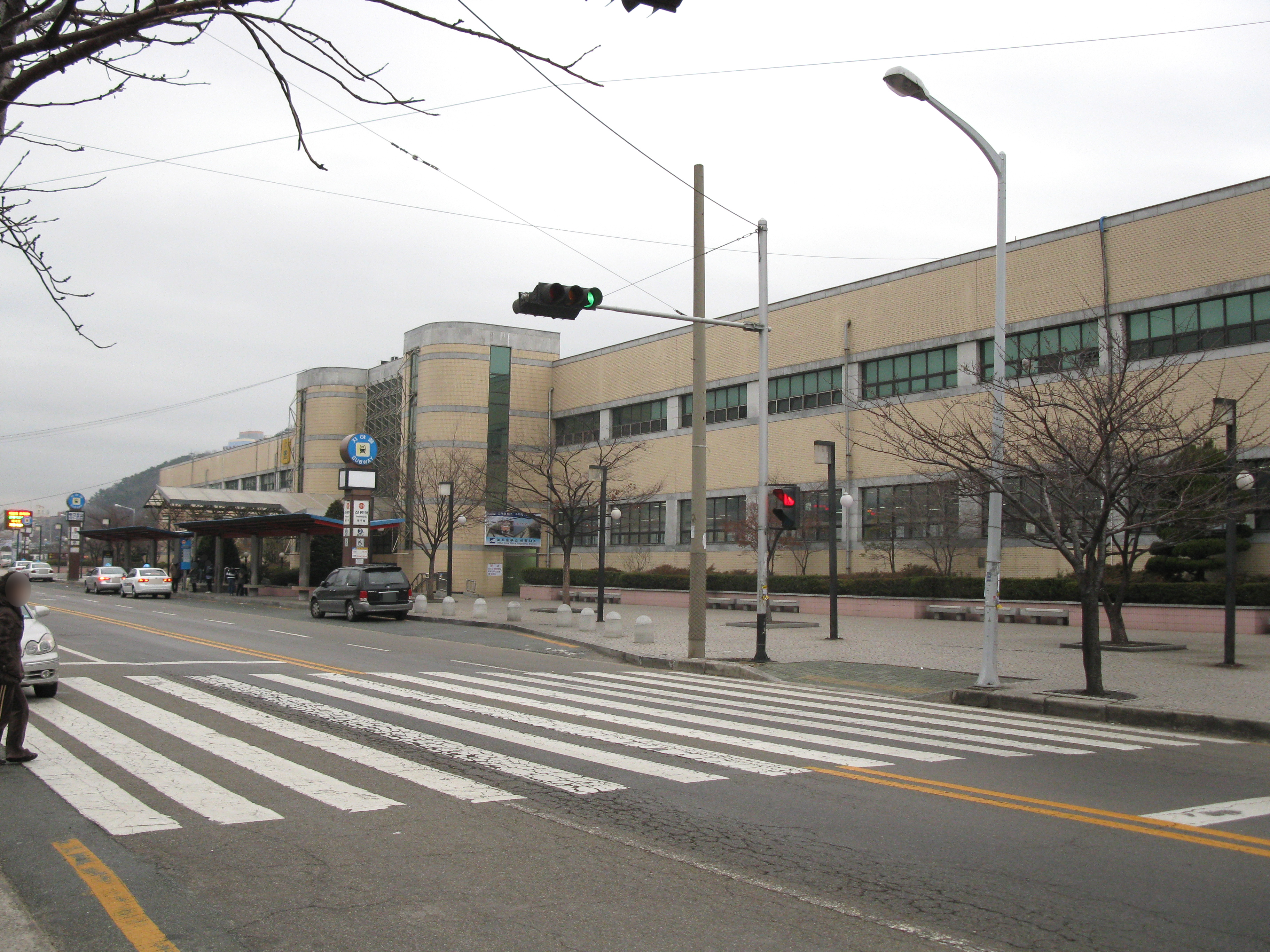
Located at 108 Tongdosa-ro, Habuk-myeon, Yangsan-si, Gyeongsangnam-do. From Busan, take Subway Line 1 to Nopo Station (Exit 3), then a local bus (such as Bus 1010) or taxi, roughly 30 minutes; intercity buses also run from Busan Central Bus Terminal. The walking approach from the outer gate to the main complex is about 1.2 km along a river and pine forest path. Adult admission is approximately 3,000 KRW; the on-site Buddhist museum is closed Mondays, Seollal, and Chuseok.
Respectful visit
Shoulders and knees should be covered; overly casual or revealing clothing is discouraged given the site's active religious function.
Outdoor photography of the grounds is generally fine, but interior photography inside prayer halls and the main worship hall is usually discouraged; check posted signage or ask staff, and never photograph monks or worshippers at prayer without permission.
Visitors may light incense and offer prayers in designated areas; formal offerings tied to ceremonies, such as lantern offerings during Buddha's Birthday, follow temple-directed procedures.
Maintain a quiet demeanor throughout the grounds, especially near the main hall and Geumgang Gyedan; avoid loud conversation or disruptive behavior; close approach to or entry into the Diamond Altar precinct is generally restricted to monastics and ceremonial occasions.
Close approach to or entry into the Diamond Altar precinct enshrining the relics is generally restricted to monastics and ceremonial occasions; visitors venerate from a respectful distance rather than up close.
Location
Map loads as you approach this section.
Pilgrim reflections
A portrait of encounter, not a score
Pilgrims describe what they felt, how present they could become, and whether the place would shape a journey. There are no stars and no ranking of traditions.
No reviewed reflections yet
The first pilgrims can help describe the character of being here.
Share a reflection
Available after an account-backed “Been there.” Every reflection is reviewed before publication.
Nearby sacred places
Explore other sacred places in the region. Proximity does not establish access or travel time; check each place’s guidance.

References
Sources consulted for this page. Source categories describe the publication, not a guarantee that every claim is verified. Traditional accounts and outside interpretations may differ.
- 01Tongdosa — Wikipedia — Wikipedia contributorsacademicFounding date (646 CE), founder Jajang, Three Jewel Temple role, relics housed in Geumgang Gyedan, UNESCO 2018 inscription, National Treasure #290 (Daeungjeon), 65 buildings/13 hermitages.
- 02UNESCO World Heritage Centre — Decision 42 COM 8B.23 (Sansa, Buddhist Mountain Monasteries in Korea) — UNESCO World Heritage CommitteeofficialOfficial record of 2018 (42nd session) inscription of seven Buddhist mountain monasteries, including Tongdosa, under Criterion (iii); direct WHC list page (whc.unesco.org/en/list/1562/) returned 403 on fetch, so this decision record and secondary summaries were used instead.
- 03Tongdosa Temple — Sansa, Buddhist Mountain Monasteries in Korea (official inscription committee site) — Korean Sansa World Heritage Promotion CommitteeofficialOfficial nomination-committee page for Tongdosa as one of the seven Sansa monasteries; used to corroborate founding narrative and monastic continuity claims.
- 04Tongdosa Temple [UNESCO World Heritage] — VisitKorea — Korea Tourism OrganizationofficialGovernment tourism-body page; used for practical visitor information (location, general access).
- 05Tongdosa — Temple Information, Templestay.com — Templestay (Jogye Order of Korean Buddhism)officialOfficial Jogye Order templestay program platform; confirms Rest Program and Experience Program offerings at Tongdosa.
- 06Tongdosa — New World Encyclopedia — New World Encyclopedia contributorsacademicCorroborates Jajang's 636 CE journey to Tang China, relics received from Manjusri Bodhisattva vision, and founding narrative.
- 07Tongdosa Temple: The Korean Temple with No Buddha Statue — The Soul of Seoul — The Soul of SeoulSource contextTravel-journalism piece; used for the 'temple without a Buddha statue' framing, gate symbolism (Iljumun, Four Heavenly Kings Gate, Purimun), continuously-burning Beopdeung candle claim.
- 08Tongdo Temple — The Korea Times — The Korea TimesSource contextNational English-language newspaper travel feature; used to corroborate Jajang/Mount Wutai/Manjusri origin legend.
- 09Tongdosa Temple in South Korea — Busanpedia — BusanpediaSource contextRegional travel guide; used to corroborate access directions from Busan (Nopo Station, local bus) and general practicalities.
- 10Beneath the Lanterns: A Photographer's Journey Through Buddha's Birthday at Tongdosa Temple — Jason Teale (The Sajin)Source contextPhotographer's first-person blog account of the Buddha's Birthday (Seokgatansinil) lantern festival at Tongdosa; used only for atmospheric/experiential description of the festival, flagged as a personal account rather than an authoritative source.
Photo gallery
4 curated photos
Pilgrim glossary
- Bodhisattva
- An enlightened being who postpones full nirvana to help others toward awakening.
- Sangha
- The community of Buddhist practitioners, traditionally monks and nuns.
- Dharma
- The teachings of the Buddha; also the universal law underlying them.
Share a photo
Help visitors recognize Tongdosa. Every submission is reviewed before publication.