Badrulchau Stone Monoliths, Palau
Palau's basalt monoliths, still unexplained after a century of looking
Understand sacred places, explore living traditions, and learn how to engage respectfully with Pilgrim Map.
Access has not been verified. Check current local guidance before planning a visit.
Ngebei, Ngarchelong, Palau
Read the sources
Visit essentials
A quick read before you go
- Duration
- Not specified in available sources; comparable small heritage sites are typically visited in…
- Access
- Located in Ngarchelong State at the northernmost point of Babeldaob Island, approximately 25 km…
Overview
Palau's Ministry of Human Resources, Culture, Tourism and Development says plainly that few archaeologists have visited Badrulchau and that findings remain provisional. On this Ngarchelong hillside at Babeldaob's northernmost point stand one or perhaps two rows of basalt columns—thirty-some, thirty-four, or fifty-two by differing counts—some carved with human faces. Radiocarbon evidence suggests roughly the second century CE, though even the ministry treats that estimate cautiously.
Palauan oral tradition says a supreme figure assigned gods to build a bai, or meeting house, for thousands, but a trickster deity made them abandon it unfinished by convincing them dawn had come. Archaeology's leading working theory, close in spirit but not identical, makes the columns foundation pillars for a large bai. This is unsettled; ceremonial-platform and astronomical-marker proposals also circulate.
On the Palau Register of Historic Places since 1989 and restored in 1994, Badrulchau is now a protected, ticketed heritage site rather than an active devotional place. Palauan oral tradition nevertheless regards it as ground where, in traditional understanding, earth once met the divine.
Why this place is sacred
Certainty would not improve this story. In traditional Palauan belief, Badrulchau was sacred ground precisely because divine and mortal realms were understood to meet there, expressed through the legend of a bai — a traditional Palauan meeting house — that gods began building at a supreme figure's command, quarrying stone from a place called Lukes and working toward a structure large enough to house thousands.
A trickster deity, Medechii Belau, fashioned an enchanted rooster to crow a false dawn, and the gods, believing their night's labor had run out, abandoned the project. Sources connect this to the scattered, unfinished bai components said to exist elsewhere in Palau — physical evidence, in traditional understanding, of a project literally left incomplete.
A separate and distinct legend, associated with Palauan stone carvings more broadly and reported via the Belau National Museum, tells of a woman from Ngarekesauaol shunned while trying to watch a men's ceremonial dance, who in anger turned herself and her nursing infant to stone; Palauans call such stone carvings klidm, meaning face.
Whether this second legend specifically explains any of Badrulchau's carved faces, or refers to other stone-face carvings elsewhere in Palau, is not established in available sources, and this content does not merge the two stories into one.
What makes Badrulchau distinctive among megalithic sites is how openly its purpose remains contested: the bai-foundation theory is the leading candidate, but ceremonial-platform and even astronomical-purpose theories circulate in parallel, none confirmed, and the site's own government describes archaeological attention to it as still minimal.
Disputed. The leading archaeological theory holds the basalt columns served as foundation or support pillars for a large bai, a traditional Palauan meeting house; ceremonial or religious platform and astronomical-purpose theories have also been proposed but are not confirmed. Palauan oral tradition holds the site as sacred ground where a divine bai-building project was begun and abandoned.
Radiocarbon evidence cited by multiple sources suggests construction activity around 150-161 CE, though the official Palau Ministry of HRCTD describes this dating as provisional given how little archaeological fieldwork the site has received. Broader monolith-building activity across Palau, of which Badrulchau is the largest known example, is generally placed between roughly 100 and 1600 CE. The site functions today as a protected heritage and tourism site, listed on the Palau Register of Historic Places since 1989 and restored in 1994.
Experience and orientation
The site sits apart from Palau's more visited southern attractions, reached by road along Babeldaob's Compact Road to the island's northernmost point, in Ngarchelong State. What greets a visitor is scale without explanation: rows of basalt columns, some upright and some fallen, several bearing carved human faces, arranged across roughly five acres of hillside with a panoramic coastal view.
Travel writers consistently describe a sense of mystery and quiet awe here, driven as much by the unanswered engineering question — how were columns of this weight moved and erected without modern tools — as by the columns' age. Walk the rows slowly, noting how the carved faces differ from column to column rather than repeating a single template; this variation is part of what fuels ongoing archaeological curiosity about whether these stones represent individuals, ancestors, or something else.
The setting itself, elevated and relatively isolated compared to the tourist routes around Koror, contributes to what several sources describe as a serene atmosphere, though this framing appears mainly in travel and spiritual-genre writing rather than ethnographic documentation, and should be received as one register of description among others rather than a settled fact about the site.
Located approximately 25 km north of Koror in Ngarchelong State, reachable by road via Babeldaob's Compact Road; some tourism sources describe a hillside entrance and ticket arrangement, though this was not independently confirmed against an official fee schedule.
Context and lineage
Palauan oral tradition, as documented by the Ministry of Human Resources, Culture, Tourism and Development, holds that a supreme figure assigned gods to mine stone from a place called Lukes and build a great bai capable of housing thousands.
A trickster deity, Medechii Belau, created an enchanted rooster to crow a false dawn, and the gods, believing the night's work-time had ended, abandoned the project mid-construction — an explanation offered in tradition for why unfinished bai components are said to be scattered elsewhere in Palau as well.
No historically documented builder or group is confirmed by archaeology; some tourism sources speculate the stones were imported rather than quarried locally and erected under the authority of ruling elites to display political power, though this claim was not traced to a primary geological sourcing study.
Medechii Belau
Trickster deity
Deity credited in tradition with fashioning an enchanted rooster to crow a false dawn, tricking the gods building the divine bai into abandoning their work — the traditional explanation for Badrulchau's unfinished state.
Douglas Osborne
Archaeologist, typological survey
Attributed in secondary reporting with typological work on Palau's anthropomorphic stone monoliths, including observations about which carvings likely predate 1400 CE based on absence of associated oral tradition; the primary document could not be directly accessed in this research.
Ngarchelong State Government
Site steward
The state government body responsible for maintaining Badrulchau as a listed historic site since its 1989 registration and 1994 restoration.
Traditions and practice
No source documents a specific historical ritual or ceremony performed at the site itself; its sacred status is expressed through oral tradition and legend rather than a recorded ceremonial practice. The broader Palauan tradition of interpreting anthropomorphic stone carvings as klidm, or faces, tied to ancestral or mythic figures, situates Badrulchau within an archipelago-wide practice of stone-carving significance.
No current ceremonial or ritual practice at the site is documented. The active 'practice' today is heritage stewardship — state maintenance by Ngarchelong State Government, documentation through Bureau of Cultural and Historical Preservation survey reports, and continued oral transmission of the origin legends, which the Belau National Museum treats as a primary rather than supplementary source of historical knowledge.
Walk the rows without rushing toward a conclusion about what they were for — the site rewards attention to the carved faces' individual variation more than a search for a single unifying answer. Consider the hillside setting itself, and the coastal view it commands, as part of why this location was chosen for whatever it was meant to become.
Let the government's own candor about how little has been studied here inform your visit: this is one of relatively few heritage sites where standing in genuine uncertainty is the historically accurate response, not a failure of interpretation.
Traditional Palauan belief / indigenous oral tradition
ActiveBadrulchau is regarded in Palauan oral tradition as sacred ground — described in several sources as a place where earth met the divine — and as physical evidence of a mythic, unfinished divine construction project. Oral tradition remains an active mode of historical interpretation for the site: the Belau National Museum treats oral histories from elders and traditional leaders as a primary source for interpreting Palauan heritage generally.
No documented ongoing ritual practice at the site itself; the living tradition consists of oral transmission of the origin legend across generations and continued cultural stewardship by Ngarchelong State and national heritage bodies.
Archaeological and heritage-preservation stewardship
ActiveBadrulchau is Palau's most prominent megalithic archaeological site and a cornerstone of the country's pre-colonial historical record, listed on the Palau Register of Historic Places since 1989 and restored in 1994.
Ongoing site maintenance by Ngarchelong State Government; documentation via Bureau of Cultural and Historical Preservation survey reports; interpretation for visitors and heritage education.
Perspectives and open questions
Badrulchau resists a single account of what it was for — Palauan oral tradition holds it as a divine, unfinished meeting house; archaeology holds mainly open questions; and the site's own government is unusually candid about how far both are from certainty.
Scholarly perspective
There is no firm scholarly consensus on Badrulchau's original purpose or precise age. The leading working theory among available sources is that the basalt columns served as foundation or support pillars for a large bai, but this remains a theory rather than a confirmed finding.
The official Palau Ministry of HRCTD states plainly that 'few archaeologists have visited this site' and that findings clarifying early Palauan history remain pending — an unusually candid acknowledgment of evidentiary limits from a government source. Radiocarbon estimates place activity around 150-161 CE, within a broader 100-1600 CE window during which monolith and earthwork construction occurred across Palau.
Living and traditional perspectives
Palauan oral tradition holds Badrulchau as sacred ground where mortal and divine realms met, tied to the legend of gods constructing, and through a trickster deity's intervention failing to complete, a great bai capable of housing thousands. The Belau National Museum treats such oral traditions as a primary, not secondary, source of historical knowledge for interpreting Palauan heritage sites, reflecting the historically oral transmission of Palauan history.
Alternative interpretations
A minority of spiritual-travel sources suggest the stones may have served ceremonial or astronomical purposes, though this claim is not corroborated by the archaeological or official sources reviewed and should be treated as speculative. A fringe, unsubstantiated theory attributing construction to Portuguese visitors also circulates in at least one low-reliability source but has no supporting evidence in the material reviewed.
Open questions
The central open questions are genuinely open, not merely stated for effect: the true original purpose of the site — bai foundation, ceremonial platform, or something else — remains unresolved; how multi-ton basalt stones, possibly sourced off-site, were quarried, transported, and erected without modern machinery is undetermined; the exact construction date is uncertain given how little archaeological fieldwork has been conducted; and even the number of monoliths is reported inconsistently across sources, from 52 to 34-plus to 'over 30.'
This content does not resolve any of these in favor of narrative convenience.
Plan your visit
Access and arrival
Located in Ngarchelong State at the northernmost point of Babeldaob Island, approximately 25 km north of Koror. Reachable by road via Babeldaob's Compact Road. Some tourism sources describe a hillside entrance and ticket arrangement, though this was not independently confirmed against an official fee schedule.
No specific on-site or nearby accommodations are documented in available sources; visitors typically base themselves in or near Koror.
Respectful visit
No specific dress code documented in available sources; general respectful outdoor attire for a heritage site is a reasonable inference.
Photography is permitted and implicitly encouraged; multiple sources use the phrasing 'take nothing but photos and leave nothing but footprints' to describe appropriate visitor conduct.
No tradition of offerings at the site is documented in available sources.
Visitors are asked not to touch or disturb the stones, to follow any on-site guide instructions, and to remove nothing from the site.
Do not touch or move the stones. Follow any on-site guide instructions and take nothing from the site; general heritage-site courtesy applies throughout.
Current practical details
Address
PJ5J+WPX, Ngarchelong, Palau
Phone
Hours
Hours, fees, and access can change — verify on the official source before you travel. Practical details last checked Jul 2026.
Location
Map loads as you approach this section.
Pilgrim reflections
A portrait of encounter, not a score
Pilgrims describe what they felt, how present they could become, and whether the place would shape a journey. There are no stars and no ranking of traditions.
No reviewed reflections yet
The first pilgrims can help describe the character of being here.
Share a reflection
Available after an account-backed “Been there.” Every reflection is reviewed before publication.
Nearby sacred places
Explore other sacred places in the region. Proximity does not establish access or travel time; check each place’s guidance.

Mangyol Stone Money Bank
Makiy, Gagil, Yap State, Yap, Federated States of Micronesia
436.1 km away

Simala Shrine — Monastery of the Holy Eucharist
Lindogon, Sibonga, Cebu, Philippines
1238.1 km away

As Nieves Latte Stone Quarry
Songsong / Sinapalo area, Rota, Northern Mariana Islands, Northern Mariana Islands, United States
1353.5 km away
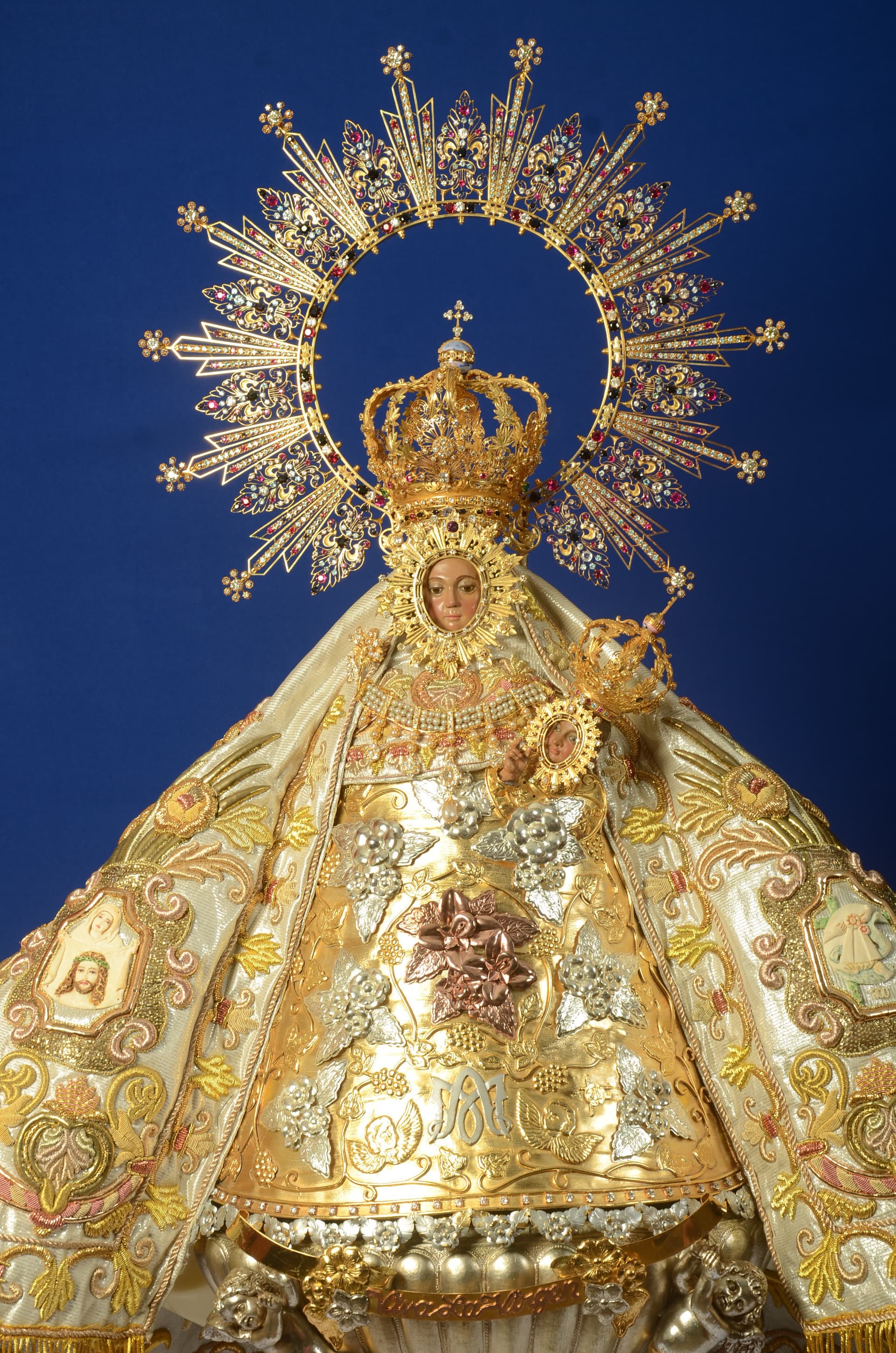
Our Lady of Peñafrancia, Naga City, Bicol
Naga, Camarines Sur, Philippines
1410.8 km away
References
Sources consulted for this page. Source categories describe the publication, not a guarantee that every claim is verified. Traditional accounts and outside interpretations may differ.
- 01Badrulchau — Ministry of Human Resources, Culture, Tourism and Development, Republic of PalauofficialOfficial Palau government ministry source; cites Ngarchelong State Government Brochure, Bureau of Cultural and Historical Preservation Survey Report, and Palau Register of Historic Places Nomination Form as its underlying documentation. Reports the bai/trickster-deity origin legend, radiocarbon estimate of c. 150 A.D., site dimensions, 1989 register listing, and 1994 restoration. Notably candid that 'few archaeologists have visited this site' and findings remain provisional.
- 02Palau monoliths: stories in stones — Pacific Island TimesSource contextRegional Pacific journalism outlet (not government-affiliated, but locally based and reporting on Palauan cultural heritage). Describes site scale (five acres, 34+ columns between Ollei and Mengellang hamlets), references Belau National Museum's role in oral history preservation, and recounts the 'ruk dance' woman-turned-to-stone legend and the term 'klidm' (face) for Palauan stone carvings generally.
- 03Badrulchau Stone Monoliths in Ngarchelong — Atlas ObscuraSource contextDescribes 52 basalt megaliths in two rows with carved faces, estimated construction c. 161 CE, and the bai-meeting-house theory with associated giant/divine-construction legend.
- 04Stone Monoliths | Babeldaob | Discover the Heart of Palau — Palau.co (Palau Visitors Authority-affiliated tourism site)Source contextTourism-board-adjacent source describing the monoliths as sacred prayer grounds where 'earth met the divine' in traditional Palauan belief, and framing the site within a broader pattern of carved monoliths across the Palauan archipelago.
- 05Explore Badrulchau — Palau ExplorerSource contextLocal Palau-based travel/cultural storytelling site; repeats the divine bai-construction legend and 52-monolith count, framing Badrulchau within 'island stories.'
- 06Badrulchau Stone Monoliths — Lonely PlanetSource contextStandard guidebook publisher entry; corroborates general site description and location approximately 25 km north of Koror in Ngarchelong State.
- 07Anthropomorphic Stone Monoliths on the Islands of Oreor and Babeldaob, Republic of Belau (Palau), Micronesia — Bishop Museum Occasional Papers (attributed in secondary reporting to archaeologist Douglas Osborne's typological work)academicPrimary academic source exists but the PDF could not be parsed as readable text in this research session; its contents are known only via a secondary paraphrase (evendo.com) describing a 'Fanged Mouth' sculptural type at Badrulchau and Osborne's observation that monoliths lacking associated oral traditions were likely pre-1400 A.D. This citation is retained for completeness but its claims should be treated as unverified secondhand paraphrase pending direct access to the primary document.
- 08Sacred Sites of Palau — World Pilgrimage Guide (sacredsites.com)spiritualSpiritual/esoteric travel-guide framing; asserts the stones were erected 'for ceremonial or astronomical purposes' without citation. Useful for capturing the alternative/esoteric interpretive angle but not a reliable factual source on its own; claims here are not corroborated elsewhere in this research.
- 09Biggest Historical Mysteries In Palau: Unraveling The Island's Unsolved Secrets — Mystoric.comSource contextBlog-style mystery/curiosity site; only source encountered that raises a (fringe, unsubstantiated) theory attributing construction to the Portuguese, alongside the more common divine/spirit theory. Included only to document the range of theories in circulation, not as evidence of their merit.
Share a photo
Help visitors recognize Badrulchau Stone Monoliths, Palau. Every submission is reviewed before publication.