Mangyol Stone Money Bank
Yap's foremost stone money ground, where value lives in memory, not metal
Understand sacred places, explore living traditions, and learn how to engage respectfully with Pilgrim Map.
Access has not been verified. Check current local guidance before planning a visit.
Makiy, Gagil, Yap State, Yap, Federated States of Micronesia
Read the sources
Visit essentials
A quick read before you go
- Duration
- Not specified in sources found.
- Access
- Located in Makiy village, Gagil municipality, Yap State, FSM; recommended to visit with a local…
Overview
No bank vault holds currency quite like Mangyol, in Yap's Gagil municipality. Seventy-one disc-shaped limestone pieces are documented across a cross-shaped ceremonial ground once used for chiefly dances and inter-village exchange. A stone's worth derives not from weight or metal purity but from its size, the danger and distance of the ocean voyage to quarry it in Palau, and the oral history of every title holder—a genealogy passed alongside the stone rather than inscribed on it.
Yap Historic Preservation Office documentation calls Mangyol the most significant of the island's seven registered stone money banks. It is also the centerpiece of a joint Yap-Palau nomination on UNESCO's tentative World Heritage list, linking the money to its Palauan quarry sources. The physical site now functions primarily as a preserved heritage and tourism ground, with no confirmed ceremonial dancing continuing there specifically.
Stone money itself remains a living Yapese institution, used for dowries, land transactions, and settling disputes, its worth carried in memory rather than mere presence.
Why this place is sacred
What Mangyol asks a visitor to reckon with is a different kind of value than the kind coins or bills represent. Oral tradition holds that the site was one of seven original stone money banks, created in a mythic era 'when spirits and humans still existed together,' with its Bleyrach section specifically attributed to a female spirit's design; the later Mangyol section is said to be the last such bank built before Spanish occupation of Yap in the sixteenth century.
That mythic layer sits alongside a very physical history: the stones themselves were quarried at sites near present-day Koror in Palau and paddled back to Yap across open ocean, traditionally traced to voyagers led by a figure named Anagumang roughly five to six hundred years ago.
A stone's worth was never separable from that voyage's danger, nor from the unbroken oral record of who has held its title since — ownership transferred by community consensus and spoken announcement, not by moving the stone an inch. Mangyol carried a second layer of significance as the primary dancing ground, or malal, for allied chiefly lineages from Bilef'iy, Nimath, Pebinaw, and Miriyang villages, hosting ceremonial gift exchange between villages and specialized dances, including the Tamargiy, reserved for high-caste participants.
Historical accounts describe low-caste individuals and post-menarche young women as excluded from parts of the grounds — a restriction whose continuation into the present is not confirmed one way or the other in available sources, and this content does not assume it either persists or has lapsed.
A stone money storage ground and the primary malal, or ceremonial dancing ground, for allied chiefly lineages of Bilef'iy, Nimath, Pebinaw, and Miriyang villages in Yap's Gagil municipality.
No absolute archaeological date has been established. Oral tradition places the older Bleyrach section among Yap's seven original, mythically-originated stone money banks, while the Mangyol section is described as the last constructed prior to sixteenth-century Spanish occupation. The site's ceremonial dancing function is treated in sources as historical; its role today centers on heritage preservation, UNESCO tentative-list nomination, and guided tourism, while the underlying stone money economy continues to function elsewhere in Yapese life.
Experience and orientation
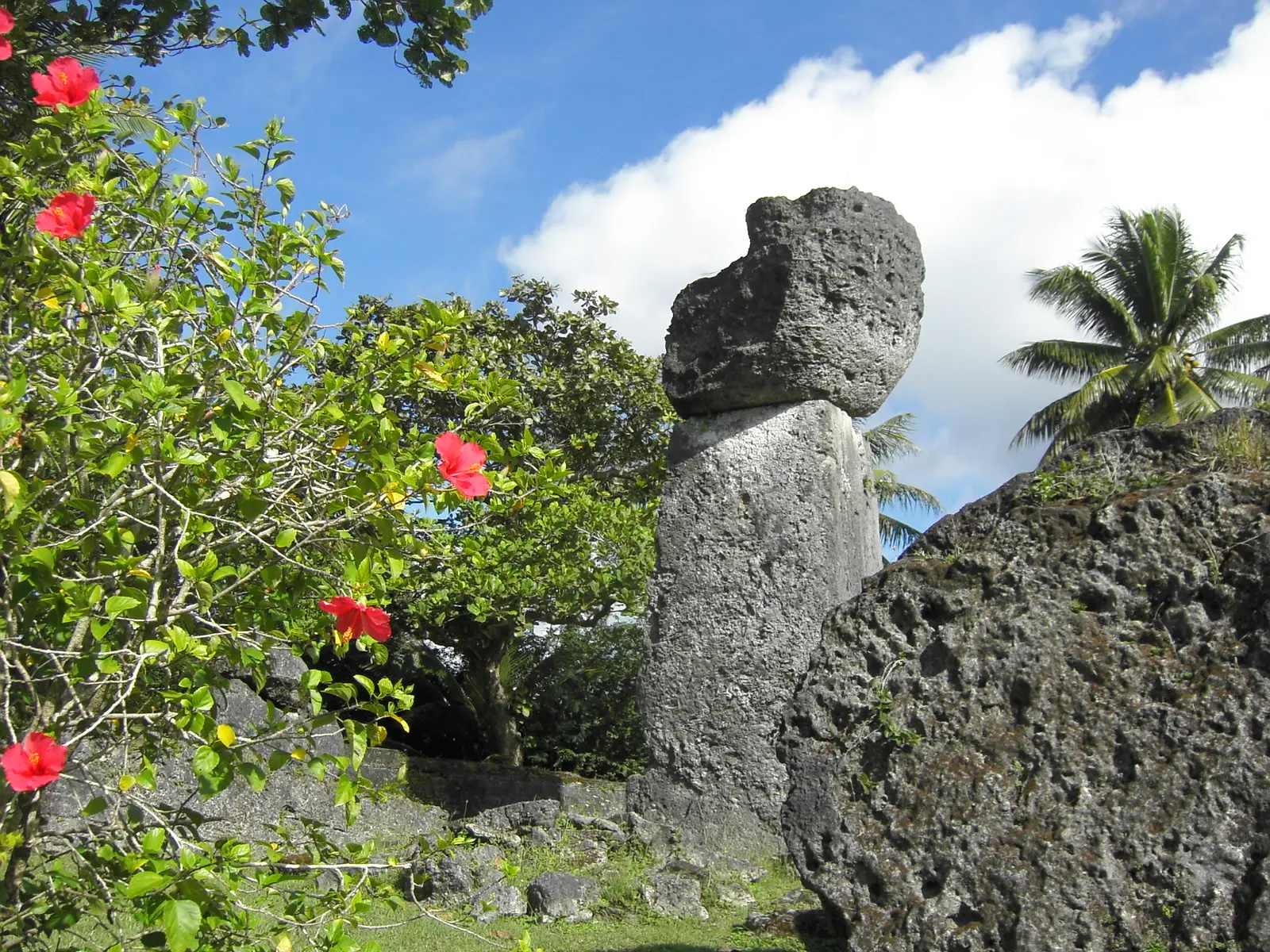
The stones themselves say little without an interpreter. Arriving at Mangyol, visitors find a cross-shaped clearing holding dozens of limestone discs of markedly different sizes, some small enough to lean against a shoulder, others considerably larger, each set upright against wooden backrests along the two axes of the ceremonial ground. A modern restroom facility, added by the Yap Visitors Bureau, marks the site's shift toward accommodating steady tourist visitation.
What the physical stones cannot convey on their own is the social machinery that gave them worth: a guide's account of ownership history, quarrying voyages, and chiefly alliance is where the site's real weight becomes legible, since none of that is inscribed on the stone itself.
Sources describe the setting as lush and well-maintained rather than derelict, consistent with active heritage-preservation investment, though no first-person visitor testimonial describing a personally transformative encounter was located in available research — an honest gap rather than an assumption that no one has felt one.
Located in Makiy village, Gagil municipality, Yap State; visiting with a local guide is recommended given the site's layered cultural and historical context.
Context and lineage
Yapese oral legend holds that around five to six hundred years ago, explorers led by a figure named Anagumang discovered sparkling limestone on a distant island near Palau and began quarrying it into disc-shaped money. Separately, local oral history specific to Mangyol holds that the site was one of seven original stone money banks, created in an ancient era when spirits and humans still coexisted, with the Bleyrach section attributed to a female spirit's design.
Chiefly ownership of the Mangyol ceremonial ground is attributed to allied lineages from the villages of Bilef'iy, Nimath, Pebinaw, and Miriyang.
Anagumang
Legendary voyage leader
Credited in Yapese legend with leading the explorers who discovered Palau's limestone and began quarrying it into stone money roughly five to six hundred years ago.
Adam Thompson
FSM archaeologist, 2012 inventory author
Authored the 2012 inventory of Yap's seven registered stone money banks in direct collaboration with the Yap Historic Preservation Office, the most detailed source located on Mangyol's physical layout and stone count.
David O'Keefe
Nineteenth-century trader
American trader whose later commercial involvement in stone money quarrying and transport is documented in general Yapese stone money history, though not specifically tied to Mangyol in available sources.
Traditions and practice
Historically, the malal hosted ceremonial gift exchange between allying villages, sitting dances, and the specialized Tamargiy dance reserved for high-caste participants; low-caste individuals and post-menarche young women were historically excluded from parts of the grounds. Ownership of stone money was — and remains — transferred through oral announcement and community consensus rather than physical relocation of the stone.
No source confirms that dances or ceremonies are still actively performed at Mangyol specifically today; current documented activity at the site centers on heritage preservation, archaeological inventory, and guided tourism. Stone money itself continues in active use across Yap more broadly for dowries, land purchases, alliance-building, and dispute settlement, with pedigree naming and oral ownership history still culturally significant practices.
Approach the stones as records rather than relics — pause at a few of varying size and ask a guide for what's known of their history, since the site's real content is oral, not carved. Notice the cross-shaped layout of the ground itself before focusing on individual stones; the site's two named sections, Mangyol and Bleyrach, were built centuries apart and carry distinct origin traditions worth holding separately rather than blending into one story.
Yapese stone money (rai) exchange and ownership tradition
ActiveStone money is a repository of social memory rather than mere currency: value derives from a stone's size, the difficulty of its acquisition, and the oral history of every owner who has held its title.
Ownership transferred through oral announcement and community consensus rather than physical movement of the stone; used today for dowries, land purchases, alliance-building, and dispute settlement.
Malal (dancing ground) ceremonial exchange
HistoricalThe malal was the customary venue where gifts were ceremonially exchanged between allying villages, reinforcing inter-village political bonds and chiefly status.
Sitting dances and chief-specific Tamargiy dances performed by high-caste individuals; grounds historically restricted from low-caste members and post-menarche young women.
Oral tradition of spirit origin
HistoricalOral history holds that Mangyol and Bleyrach were among seven original stone money banks in Yap, created in a mythic era when spirits and humans coexisted, with Bleyrach specifically attributed to a female spirit's design.
Preserved as oral narrative rather than an enacted ritual; recounted in heritage documentation and World Heritage nomination materials.
Perspectives and open questions
Mangyol reads differently depending on the frame applied — archaeologists documenting its unique cross-shaped design and stone count, Yapese tradition locating its origin in a spirit-inhabited past, and a persistent open question about whether any of its ceremonial life continues on-site today.
Scholarly perspective
Archaeologists and heritage researchers, including the Yap HPO-commissioned Thompson inventory and academic surveys of Yap's malal complexes, treat Mangyol as the most prominent of the island's seven registered stone money bank and dancing ground sites, notable for its unusual cross-shaped design and high concentration of stones and backrests. Scholars generally frame stone money's significance as social and economic rather than religious in a conventional sense, even as oral tradition assigns it a mythic, spirit-linked origin.
Living and traditional perspectives
Yapese oral tradition holds Mangyol and its Bleyrach section among the earliest, spirit-created stone money banks, predating most others, with a stone's worth and legitimacy resting on communally-held oral history rather than on physical possession. Yap HPO framing treats the site as a flagship of Yapese cultural patrimony worthy of international recognition through the UNESCO tentative-list nomination.
Alternative interpretations
No distinct alternative or esoteric interpretive tradition was found in available sources; most non-academic sources largely restate the same origin narrative involving Anagumang's voyage and O'Keefe's later trade history without offering a competing spiritual framework.
Open questions
The precise construction date of the complex, the exact accounting of how many stones the site held historically versus today, and the specific nature of the female spirit attributed to Bleyrach's creation remain undocumented in accessible English-language sources. Whether any customary access restrictions around caste or gender are still observed today, or persist only as historical memory, is also unclear.
Plan your visit
Access and arrival
Located in Makiy village, Gagil municipality, Yap State, FSM; recommended to visit with a local guide. A modern restroom facility has been added by the Yap Visitors Bureau to support visitor access.
Not specified in sources found.
Respectful visit
Not specified in sources found; general Yap cultural norms favoring modest dress are documented elsewhere in the islands' tourism guidance but not confirmed specifically for Mangyol.
Not specified in sources found.
Not specified in sources found; no evidence of an offerings tradition at this site was located.
Historical restriction of ceremonial grounds to high-caste individuals, excluding low-caste members and post-menarche young women, is documented for the past; whether this is still observed is unconfirmed. Visiting with a local guide is the consistent recommendation across tourism sources.
Historical restrictions barred low-caste individuals and post-menarche young women from parts of the ceremonial grounds; whether any such customary sensitivity still applies to visitors today is not confirmed in available sources, so a respectful, guided approach rather than casual unaccompanied exploration is the more careful choice.
Location
Map loads as you approach this section.
Pilgrim reflections
A portrait of encounter, not a score
Pilgrims describe what they felt, how present they could become, and whether the place would shape a journey. There are no stars and no ranking of traditions.
No reviewed reflections yet
The first pilgrims can help describe the character of being here.
Share a reflection
Available after an account-backed “Been there.” Every reflection is reviewed before publication.
Nearby sacred places
Explore other sacred places in the region. Proximity does not establish access or travel time; check each place’s guidance.

Badrulchau Stone Monoliths, Palau
Ngebei, Ngarchelong, Palau
436.1 km away

As Nieves Latte Stone Quarry
Songsong / Sinapalo area, Rota, Northern Mariana Islands, Northern Mariana Islands, United States
919.5 km away
House of Taga
San Jose, Tinian, Northern Mariana Islands, Northern Mariana Islands, United States
1008.7 km away

Simala Shrine — Monastery of the Holy Eucharist
Lindogon, Sibonga, Cebu, Philippines
1594.8 km away
References
Sources consulted for this page. Source categories describe the publication, not a guarantee that every claim is verified. Traditional accounts and outside interpretations may differ.
- 01An Inventory of the Stone Money Banks on the island of Yap: the 7 registered sites — Adam Thompson (FSM Archaeologist, produced during assistance to Yap Historic Preservation Office)academicMost detailed and authoritative source found; produced in direct collaboration with Yap HPO (an official/indigenous-government body) in August 2012 to support World Heritage nomination. Content accessed via AI-summarized web fetch rather than direct PDF read, so exact wording/tables could not be independently verified.
- 02Report on an Archaeological Survey of Five Malal Complexes, Yap Island, Micronesia — NagaokaacademicRigorous academic archaeological survey, but Mangyol is only mentioned once in passing as a comparative example (Type IV malal spatial pattern); no dedicated Mangyol data.
- 03Yap HPO – FSM Office of National Archives, Culture & Historic Preservation — FSM National Government / Yap State Historic Preservation OfficeofficialOfficial FSM national government page for the Yap Historic Preservation Office; confirms YSHPO's role and regulatory framework (Yap State Law No. 2-56 and No. 4-33) but page itself does not mention Mangyol by name. Included as the clearest indigenous/official government institutional source located.
- 04Yapese Disk Money Regional Sites - UNESCO World Heritage Centre — UNESCO / FSM National Government (nomination submitted jointly with Palau HPO)officialOfficial UNESCO tentative World Heritage list entry confirming Mangyol's status as the centerpiece of a trans-boundary Yap-Palau nomination; direct page fetch returned HTTP 403, so details are drawn from search-result snippets referencing this listing rather than the full page text.
- 05Yapease Quarry Sites - UNESCO World Heritage Centre — UNESCO / Palau Historic Preservation OfficeofficialCompanion tentative-list entry for the Palau quarry sites that supplied Mangyol's stones; not independently fetched in full, referenced via search snippet only.
- 06Banking on Stone Money — Unknown (academia.edu upload)academicProvides useful detail on ownership/transfer traditions and pedigree naming of stones; does not specifically discuss Mangyol/Makiy. Author not identified in the accessible summary.
- 07Rai stones — Wikipedia contributorsacademicGeneral encyclopedic overview of Rai/stone money origins, quarrying in Palau, and ownership-transfer customs. Does not mention Mangyol, Baleyrach, or Bleyrach at all; useful for general cultural background only.
- 08Ancient Stone Money Bank Receives Modern Addition — MicronesiaTour.comSource contextRegional tourism news source; direct fetch returned HTTP 403, so only the search-result snippet confirming Yap Visitors Bureau's visitor-facility addition at the site was usable.
- 09The History of Stone Money — Manta Ray Bay Resort (Yap, Micronesia)Source contextLocal Yap-based dive resort/tourism operator page; provides good general background on quarrying, value determination, and O'Keefe trade history, but is a commercial tourism site rather than an academic or government source and does not mention Mangyol by name specifically.
- 10Points of Interest / Yap Men's Stone Money 'Rai' Presentation and related Yap Visitors Bureau pages — Yap Visitors BureauofficialYap Visitors Bureau is a state-affiliated tourism board (quasi-official, culturally embedded local institution); confirms the cross-shaped design, 71-stone figure, north-south 'Bleyrach' / east-west 'Mangyol' naming, and UNESCO tentative-list status. Treated as official/local-institutional rather than generic travel-blog content given its state-board affiliation.
- 11Stone money disks in Yap found at Mangyol (photo by Scott M. Fitzpatrick) — Scott M. FitzpatrickacademicFigure caption from an academic publication by archaeologist Scott M. Fitzpatrick confirming Mangyol as a documented site with stone money disks; full paper text and caption context could not be retrieved (403 error), so this is included only as corroborating evidence that credentialed archaeologists have documented the site by name.
- 12Mangyol Stone Money Bank in Colonia, Yap — Mindtrip.aiSource contextAI-aggregated travel-attraction listing; likely derivative of other sources rather than primary research. Used only for cross-referencing, not as a primary fact source.
Share a photo
Help visitors recognize Mangyol Stone Money Bank. Every submission is reviewed before publication.