Amphiaraion of Oropos
Dream incubation beside a sacred spring
Understand sacred places, explore living traditions, and learn how to engage respectfully with Pilgrim Map.
Access has not been verified. Check current local guidance before planning a visit.
Oropos, Attica, Greece
Read the sources
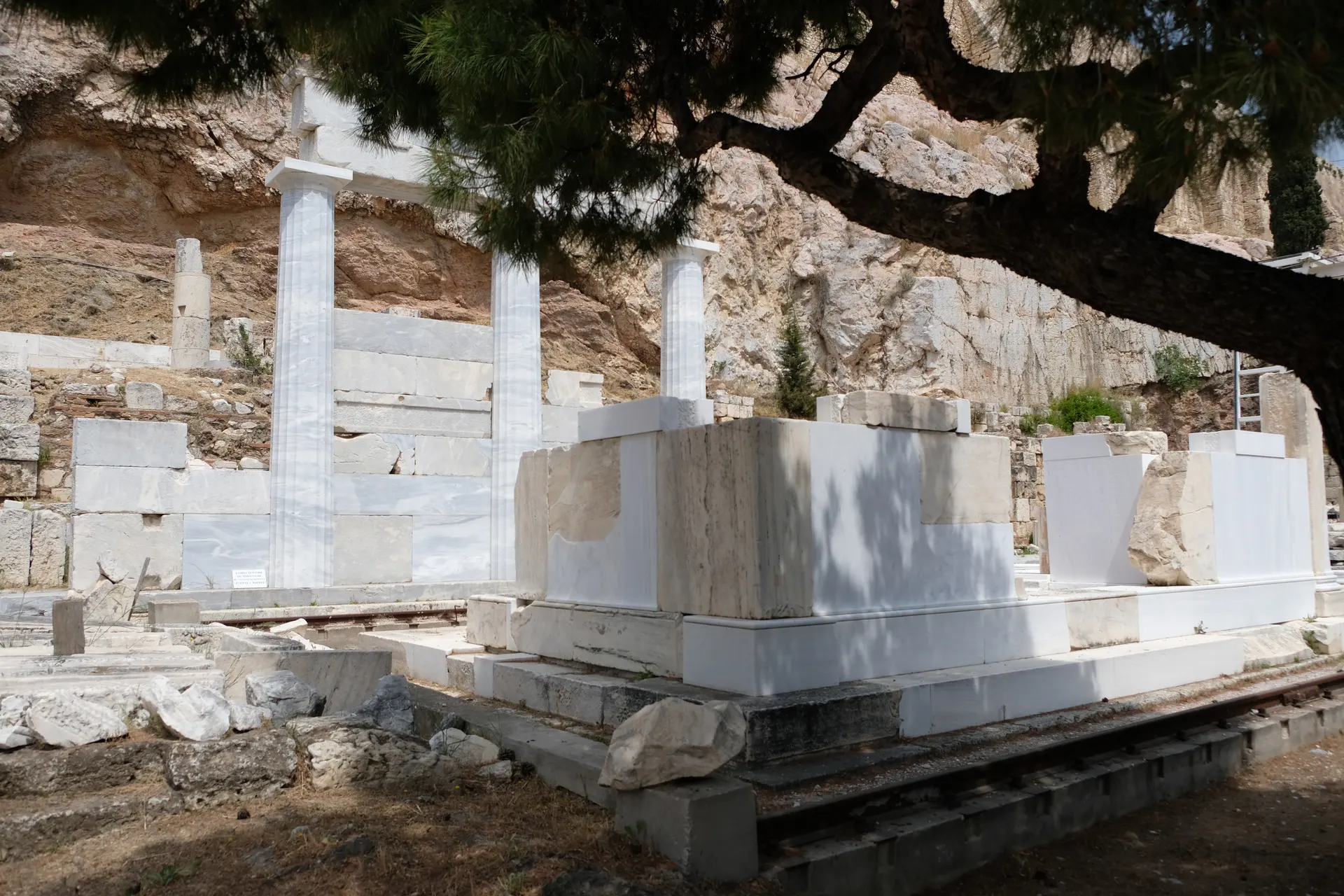
Amphiaraion of Oropos in Greece. Image source · CC0
Featured in this guide
98 Sacred Springs and Holy Wells Around the World
Sacred water, community stories and spring sanctuaries worldwide
Featured in this guide
100 Sacred Sites of Healing and Pilgrimage
100 places of healing devotion, sacred water, and ancient sanctuary traditions
Visit essentials
A quick read before you go
- Duration
- Allow 1–2 hours at a bounded archaeological site and substantially longer for mountain…
- Access
- The valley plan is unusually readable because major buildings stretch along the torrent.
Overview
Founded in the late fifth century BCE, the sanctuary became the principal cult centre of Amphiaraos, a hero with chthonic, oracular, and healing roles. The monuments line the bank of a seasonal watercourse: baths, a long stoa, theatre, inscribed statue bases, temple, altar, and sacred spring. Municipal and Ministry accounts trace its growth through the Classical and Hellenistic periods and its continued importance under Rome.
Systematic excavation beginning in 1884 recovered inscriptions that illuminate administration, festivals, benefactors, and the movement of visitors from across the Greek world.
Why this place is sacred
Ancient consultation could concern more than illness, and the details of incubation changed across time. The page therefore describes the Amphiaraion as both oracular and healing rather than reducing it to a dream clinic.
Incubation was central to the sanctuary's fame. After prescribed preparation, a visitor slept in the sanctuary seeking a dream in which Amphiaraos might offer counsel or healing. A relief now in the National Archaeological Museum presents stages of such religious healing. This is evidence for an ancient ritual system, not a recommendation for medical care and not permission to sleep among the ruins today.
The sacred spring also carried specific rules; ancient sources and inscriptions distinguish its ritual use from ordinary washing. Modern visitors can attend to the relationship among spring, stoa, temple, and dream without reenacting sacrifice or incubation.
Founded in the late fifth century BCE, the sanctuary became the principal cult centre of Amphiaraos, a hero with chthonic, oracular, and healing roles. The monuments line the bank of a seasonal watercourse: baths, a long stoa, theatre, inscribed statue bases, temple, altar, and sacred spring. Municipal and Ministry accounts trace its growth through the Classical and Hellenistic periods and its continued importance under Rome.
Systematic excavation beginning in 1884 recovered inscriptions that illuminate administration, festivals, benefactors, and the movement of visitors from across the Greek world.
Healing traditions
Ancient votive healing account
A relief from the Amphiaraion names Archinos as the patient who dedicated it in gratitude for a cure. The sculpture shows him approaching in prayer, sleeping while a serpent represents the god's healing presence, and receiving treatment for his shoulder from Amphiaraos. The National Archaeological Museum interprets these scenes as stages of religious healing. The object preserves a specific ancient testimony of gratitude.
Ways to participate
Explore the sanctuary's remains and learn about the relief through the museum's interpretation. A quiet reflection on the relationship between trust and care fits the place without reproducing its rites. Ancient incubation, sacrifice, and contact with snakes are historical subjects, not instructions for visitors.
These accounts describe religious traditions and reported experiences. They do not promise a cure or replace medical care.
Experience and orientation
The valley plan is unusually readable because major buildings stretch along the torrent. Begin near the baths and stoa, then notice the theatre behind, the processional line of statue bases, the temple and altar, and the spring. Seasonal vegetation and water can change the character of the visit. Archaeological stones are not benches, and the spring is not a place for coins, washing, drinking, or modern offerings.
Check official hours and road conditions; public transport is limited, summer heat can be strong, and the wooded setting does not remove fire risk.
The sanctuary in the wooded valley near Oropos, including its temple, spring, stoa, theatre, and associated remains; it is not the modern town of Oropos.
Context and lineage
Ancient consultation could concern more than illness, and the details of incubation changed across time. The page therefore describes the Amphiaraion as both oracular and healing rather than reducing it to a dream clinic.
Incubation was central to the sanctuary's fame. After prescribed preparation, a visitor slept in the sanctuary seeking a dream in which Amphiaraos might offer counsel or healing. A relief now in the National Archaeological Museum presents stages of such religious healing. This is evidence for an ancient ritual system, not a recommendation for medical care and not permission to sleep among the ruins today.
The sacred spring also carried specific rules; ancient sources and inscriptions distinguish its ritual use from ordinary washing. Modern visitors can attend to the relationship among spring, stoa, temple, and dream without reenacting sacrifice or incubation.
Amphiaraos
ancient cult association
Traditions and practice
Historic practices at Amphiaraion of Oropos are described from evidence and ancient testimony; they are not instructions for reenactment.
No universal contemporary devotional practice is claimed for Amphiaraion of Oropos as a protected heritage place.
At Amphiaraion of Oropos, walk slowly, read the site, notice landscape and material evidence, and leave no physical trace.
Ancient Greek and Roman
HistoricalIncubation was central to the sanctuary's fame. After prescribed preparation, a visitor slept in the sanctuary seeking a dream in which Amphiaraos might offer counsel or healing. A relief now in the National Archaeological Museum presents stages of such religious healing. This is evidence for an ancient ritual system, not a recommendation for medical care and not permission to sleep among the ruins today. The sacred spring also carried specific rules; ancient sources and inscriptions distinguish its ritual use from ordinary washing. Modern visitors can attend to the relationship among spring, stoa, temple, and dream without reenacting sacrifice or incubation.
Historic practices are described, not recreated.
Perspectives and open questions
For Amphiaraion of Oropos, three kinds of meaning should remain distinct. Archaeology documents structures, deposits, inscriptions, and changes over time. Ancient literary and cult traditions interpret the place through Amphiaraos. Modern responses to Amphiaraion of Oropos may include beauty, grief, inspiration, or spiritual resonance, but those responses are personal rather than proof of a recovered rite. Ancient consultation could concern more than illness, and the details of incubation changed across time.
The page therefore describes the Amphiaraion as both oracular and healing rather than reducing it to a dream clinic. Keeping those categories distinct protects the complexity of Amphiaraion of Oropos and lets readers value uncertainty instead of filling it with spectacle.
Scholarly perspective
Founded in the late fifth century BCE, the sanctuary became the principal cult centre of Amphiaraos, a hero with chthonic, oracular, and healing roles. The monuments line the bank of a seasonal watercourse: baths, a long stoa, theatre, inscribed statue bases, temple, altar, and sacred spring. Municipal and Ministry accounts trace its growth through the Classical and Hellenistic periods and its continued importance under Rome.
Systematic excavation beginning in 1884 recovered inscriptions that illuminate administration, festivals, benefactors, and the movement of visitors from across the Greek world.
Living and traditional perspectives
Incubation was central to the sanctuary's fame. After prescribed preparation, a visitor slept in the sanctuary seeking a dream in which Amphiaraos might offer counsel or healing. A relief now in the National Archaeological Museum presents stages of such religious healing. This is evidence for an ancient ritual system, not a recommendation for medical care and not permission to sleep among the ruins today.
The sacred spring also carried specific rules; ancient sources and inscriptions distinguish its ritual use from ordinary washing. Modern visitors can attend to the relationship among spring, stoa, temple, and dream without reenacting sacrifice or incubation.
Alternative interpretations
Some modern visitors interpret Amphiaraion of Oropos through personal spirituality, landscape, or wellness. Readings of Amphiaraion of Oropos can be meaningful when clearly identified as contemporary and when they do not overwrite evidence or custodial rules.
Open questions
Ancient consultation could concern more than illness, and the details of incubation changed across time. The page therefore describes the Amphiaraion as both oracular and healing rather than reducing it to a dream clinic.
Plan your visit
Access and arrival
The valley plan is unusually readable because major buildings stretch along the torrent. Begin near the baths and stoa, then notice the theatre behind, the processional line of statue bases, the temple and altar, and the spring. Seasonal vegetation and water can change the character of the visit. Archaeological stones are not benches, and the spring is not a place for coins, washing, drinking, or modern offerings.
Check official hours and road conditions; public transport is limited, summer heat can be strong, and the wooded setting does not remove fire risk.
Use established services in or near Oropos; no on-site accommodation is assumed.
Respectful visit
Wear clothing and footwear suited to weather, rough terrain, and a public heritage setting.
Follow posted rules; do not photograph people closely without consent or use drones without explicit authorization.
Leave no objects or substances. Use only official donation or ticket channels.
Barriers, locked gates, fragile surfaces, caves, conservation works, and habitat limits must be obeyed.
Ancient consultation could concern more than illness, and the details of incubation changed across time. The page therefore describes the Amphiaraion as both oracular and healing rather than reducing it to a dream clinic.
Location
Map loads as you approach this section.
Pilgrim reflections
A portrait of encounter, not a score
Pilgrims describe what they felt, how present they could become, and whether the place would shape a journey. There are no stars and no ranking of traditions.
No reviewed reflections yet
The first pilgrims can help describe the character of being here.
Share a reflection
Available after an account-backed “Been there.” Every reflection is reviewed before publication.
Nearby sacred places
Explore other sacred places in the region. Proximity does not establish access or travel time; check each place’s guidance.



References
Sources consulted for this page. Source categories describe the publication, not a guarantee that every claim is verified. Traditional accounts and outside interpretations may differ.
- 01Amphiaraion: the sanctuary of a healing hero — Hellenic HeritageofficialSupports only the identity, history, sacred context, conservation, or visitor information stated by this source.
- 02Amphiaraion at Oropos — Hellenic Ministry of CultureofficialSupports only the identity, history, sacred context, conservation, or visitor information stated by this source.
- 03Amphiaraion — Municipality of OroposofficialSupports only the identity, history, sacred context, conservation, or visitor information stated by this source.
- 04The grateful patient — National Archaeological MuseumSource contextSupports only the identity, history, sacred context, conservation, or visitor information stated by this source.
- 05Incubation — Oxford Classical DictionaryacademicSupports only the identity, history, sacred context, conservation, or visitor information stated by this source.
- 06Image provenance for Amphiaraion of Oropos — George E. KoronaiosSource contextImage identity and reuse rights only: CC0.
- 07Amphiareion of Oropos — Wikidata contributorsSource contextSupports only the identity, history, sacred context, conservation, or visitor information stated by this source.
- 08The grateful patient — National Archaeological Museum, AthensofficialSupports the attributed account or visitor practice in the healing section; not evidence of clinical efficacy.
- 09Amphiaraion — Greek Ministry of CultureofficialSupports the attributed account or visitor practice in the healing section; not evidence of clinical efficacy.
Share a photo
Help visitors recognize Amphiaraion of Oropos. Every submission is reviewed before publication.