Sanctuary of Artemis at Brauron
Artemis, childhood transitions, and a wetland sanctuary
Understand sacred places, explore living traditions, and learn how to engage respectfully with Pilgrim Map.
Access has not been verified. Check current local guidance before planning a visit.
Vravrona, East Attica, Greece
Read the sources
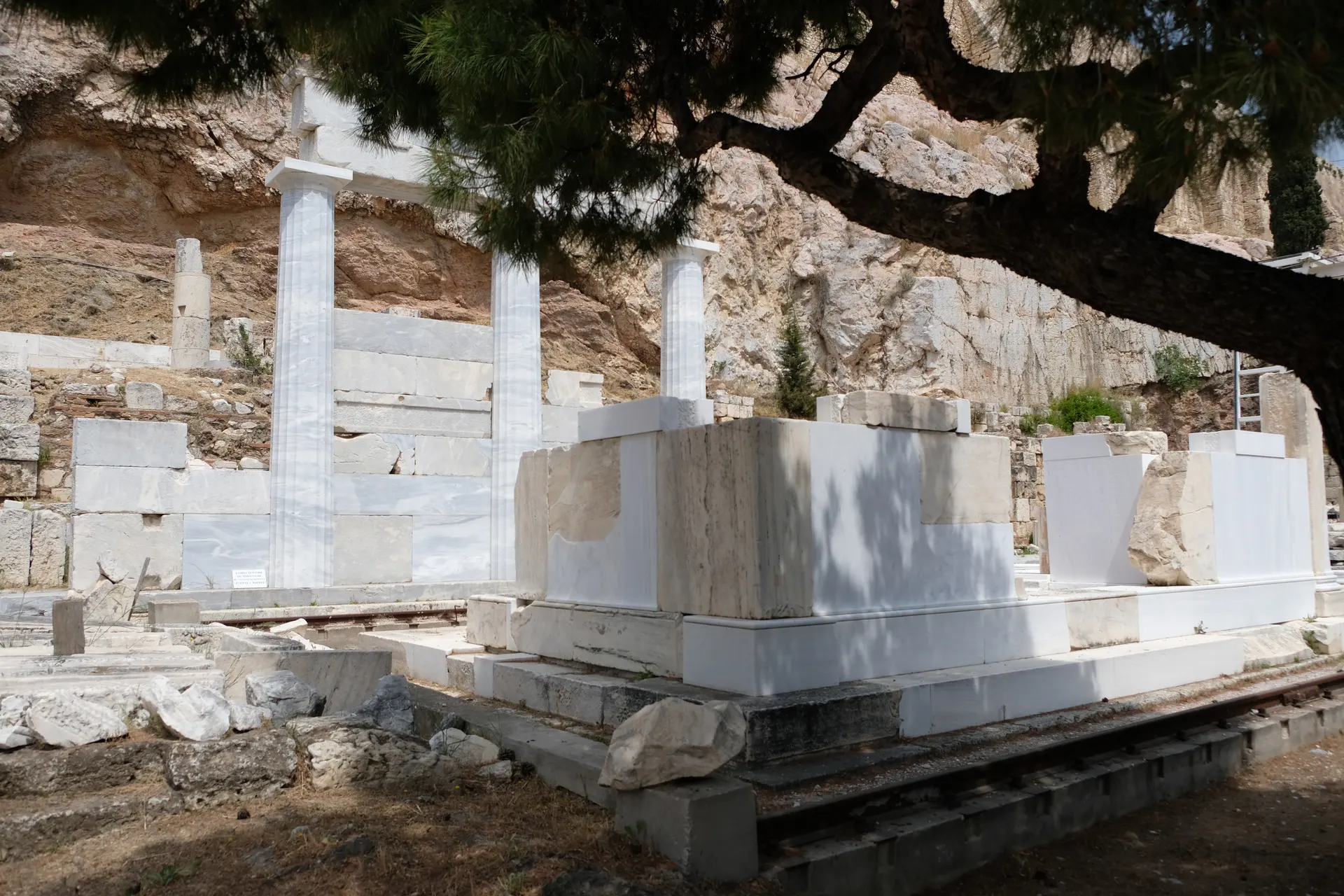
Sanctuary of Artemis at Brauron in Greece. Image source · CC BY-SA 4.0
Visit essentials
A quick read before you go
- Duration
- Allow 1–2 hours at a bounded archaeological site and substantially longer for mountain…
- Access
- The setting is quieter and greener than many Attic archaeological sites.
Overview
Brauron developed in a low coastal landscape shaped by water, hill, and wetland. The sanctuary's surviving remains include the temple area, a stoa, bridge, and later church, while the nearby archaeological museum holds finds that make ritual and daily activity more legible. The Ministry describes the museum collection as spanning from the third millennium BCE to late antiquity and emphasizes the sanctuary's importance within Attica.
The Persian destruction of 480 BCE and later rebuilding belong to a layered history rather than a single intact Classical plan.
Why this place is sacred
The arkteia is often described confidently in popular accounts, but interpretations depend on literary passages, vase imagery, inscriptions, and contested reconstruction. The page presents the rite as an important scholarly interpretation without claiming a complete ceremony.
Artemis Brauronia was associated with children, pregnancy, childbirth, and transitions in female life. Literary and archaeological evidence has been used to interpret the arkteia, in which girls 'played the bear,' but age, sequence, frequency, and meaning remain debated. Avoid presenting a modern scripted initiation as settled fact. Votive objects and dedications show families negotiating vulnerability and change through the goddess's cult.
The stories of Iphigenia also belong to Brauron's sacred memory, yet myth, cult practice, and excavated structure are different kinds of evidence and should remain distinguishable.
Brauron developed in a low coastal landscape shaped by water, hill, and wetland. The sanctuary's surviving remains include the temple area, a stoa, bridge, and later church, while the nearby archaeological museum holds finds that make ritual and daily activity more legible. The Ministry describes the museum collection as spanning from the third millennium BCE to late antiquity and emphasizes the sanctuary's importance within Attica.
The Persian destruction of 480 BCE and later rebuilding belong to a layered history rather than a single intact Classical plan.
Experience and orientation
The setting is quieter and greener than many Attic archaeological sites. Move between the wetland edge, the stoa, temple platform, and museum, using the museum's objects to understand what low foundations alone cannot show. Seasonal water, reeds, mosquitoes, heat, and slippery paths can affect a visit. The wetland is habitat, not scenery to enter for a shortcut. Stay on provided walkways, keep voices low, and do not leave ribbons, toys, food, or offerings.
Current hours should be confirmed through the Ministry, particularly because museum and site arrangements may change together.
The rural sanctuary at Vravrona in East Attica; it is distinct from the Brauronion branch sanctuary on the Athenian Acropolis and from the modern settlement as a whole.
Context and lineage
The arkteia is often described confidently in popular accounts, but interpretations depend on literary passages, vase imagery, inscriptions, and contested reconstruction. The page presents the rite as an important scholarly interpretation without claiming a complete ceremony.
Artemis Brauronia was associated with children, pregnancy, childbirth, and transitions in female life. Literary and archaeological evidence has been used to interpret the arkteia, in which girls 'played the bear,' but age, sequence, frequency, and meaning remain debated. Avoid presenting a modern scripted initiation as settled fact. Votive objects and dedications show families negotiating vulnerability and change through the goddess's cult.
The stories of Iphigenia also belong to Brauron's sacred memory, yet myth, cult practice, and excavated structure are different kinds of evidence and should remain distinguishable.
Artemis Brauronia
ancient cult association
Traditions and practice
Historic practices at Sanctuary of Artemis at Brauron are described from evidence and ancient testimony; they are not instructions for reenactment.
No universal contemporary devotional practice is claimed for Sanctuary of Artemis at Brauron as a protected heritage place.
At Sanctuary of Artemis at Brauron, walk slowly, read the site, notice landscape and material evidence, and leave no physical trace.
Ancient Greek and Roman
HistoricalArtemis Brauronia was associated with children, pregnancy, childbirth, and transitions in female life. Literary and archaeological evidence has been used to interpret the arkteia, in which girls 'played the bear,' but age, sequence, frequency, and meaning remain debated. Avoid presenting a modern scripted initiation as settled fact. Votive objects and dedications show families negotiating vulnerability and change through the goddess's cult. The stories of Iphigenia also belong to Brauron's sacred memory, yet myth, cult practice, and excavated structure are different kinds of evidence and should remain distinguishable.
Historic practices are described, not recreated.
Perspectives and open questions
For Sanctuary of Artemis at Brauron, three kinds of meaning should remain distinct. Archaeology documents structures, deposits, inscriptions, and changes over time. Ancient literary and cult traditions interpret the place through Artemis Brauronia. Modern responses to Sanctuary of Artemis at Brauron may include beauty, grief, inspiration, or spiritual resonance, but those responses are personal rather than proof of a recovered rite.
The arkteia is often described confidently in popular accounts, but interpretations depend on literary passages, vase imagery, inscriptions, and contested reconstruction. The page presents the rite as an important scholarly interpretation without claiming a complete ceremony. Keeping those categories distinct protects the complexity of Sanctuary of Artemis at Brauron and lets readers value uncertainty instead of filling it with spectacle.
Scholarly perspective
Brauron developed in a low coastal landscape shaped by water, hill, and wetland. The sanctuary's surviving remains include the temple area, a stoa, bridge, and later church, while the nearby archaeological museum holds finds that make ritual and daily activity more legible. The Ministry describes the museum collection as spanning from the third millennium BCE to late antiquity and emphasizes the sanctuary's importance within Attica.
The Persian destruction of 480 BCE and later rebuilding belong to a layered history rather than a single intact Classical plan.
Living and traditional perspectives
Artemis Brauronia was associated with children, pregnancy, childbirth, and transitions in female life. Literary and archaeological evidence has been used to interpret the arkteia, in which girls 'played the bear,' but age, sequence, frequency, and meaning remain debated. Avoid presenting a modern scripted initiation as settled fact. Votive objects and dedications show families negotiating vulnerability and change through the goddess's cult.
The stories of Iphigenia also belong to Brauron's sacred memory, yet myth, cult practice, and excavated structure are different kinds of evidence and should remain distinguishable.
Alternative interpretations
Some modern visitors interpret Sanctuary of Artemis at Brauron through personal spirituality, landscape, or wellness. Readings of Sanctuary of Artemis at Brauron can be meaningful when clearly identified as contemporary and when they do not overwrite evidence or custodial rules.
Open questions
The arkteia is often described confidently in popular accounts, but interpretations depend on literary passages, vase imagery, inscriptions, and contested reconstruction. The page presents the rite as an important scholarly interpretation without claiming a complete ceremony.
Plan your visit
Access and arrival
The setting is quieter and greener than many Attic archaeological sites. Move between the wetland edge, the stoa, temple platform, and museum, using the museum's objects to understand what low foundations alone cannot show. Seasonal water, reeds, mosquitoes, heat, and slippery paths can affect a visit. The wetland is habitat, not scenery to enter for a shortcut. Stay on provided walkways, keep voices low, and do not leave ribbons, toys, food, or offerings.
Current hours should be confirmed through the Ministry, particularly because museum and site arrangements may change together.
Use established services in or near Vravrona; no on-site accommodation is assumed.
Respectful visit
Wear clothing and footwear suited to weather, rough terrain, and a public heritage setting.
Follow posted rules; do not photograph people closely without consent or use drones without explicit authorization.
Leave no objects or substances. Use only official donation or ticket channels.
Barriers, locked gates, fragile surfaces, caves, conservation works, and habitat limits must be obeyed.
The arkteia is often described confidently in popular accounts, but interpretations depend on literary passages, vase imagery, inscriptions, and contested reconstruction. The page presents the rite as an important scholarly interpretation without claiming a complete ceremony.
Location
Map loads as you approach this section.
Pilgrim reflections
A portrait of encounter, not a score
Pilgrims describe what they felt, how present they could become, and whether the place would shape a journey. There are no stars and no ranking of traditions.
No reviewed reflections yet
The first pilgrims can help describe the character of being here.
Share a reflection
Available after an account-backed “Been there.” Every reflection is reviewed before publication.
Nearby sacred places
Explore other sacred places in the region. Proximity does not establish access or travel time; check each place’s guidance.



References
Sources consulted for this page. Source categories describe the publication, not a guarantee that every claim is verified. Traditional accounts and outside interpretations may differ.
- 01Archaeological Museum of Vravrona — Directorate of Archaeological MuseumsofficialSupports only the identity, history, sacred context, conservation, or visitor information stated by this source.
- 02The archaeological site of the Sanctuary of Artemis Brauronia — Ephorate of Antiquities of East AtticaofficialSupports only the identity, history, sacred context, conservation, or visitor information stated by this source.
- 03The Sanctuary of Artemis Brauronia — Acropolis MuseumSource contextSupports only the identity, history, sacred context, conservation, or visitor information stated by this source.
- 04Mirrors from the Sanctuary of Artemis at Brauron — Archaeological Society at AthensacademicSupports only the identity, history, sacred context, conservation, or visitor information stated by this source.
- 05Image provenance for Sanctuary of Artemis at Brauron — C messierSource contextImage identity and reuse rights only: CC BY-SA 4.0.
- 06Brauron — Wikidata contributorsSource contextSupports only the identity, history, sacred context, conservation, or visitor information stated by this source.
Share a photo
Help visitors recognize Sanctuary of Artemis at Brauron. Every submission is reviewed before publication.