Wat Yai Chai Mongkhon
A victory chedi rises above an active monastery and reclining Buddha
Understand sacred places, explore living traditions, and learn how to engage respectfully with Pilgrim Map.
Access has not been verified. Check current local guidance before planning a visit.
Phra Nakhon Si Ayutthaya, Phra Nakhon Si Ayutthaya, Thailand
Read the sources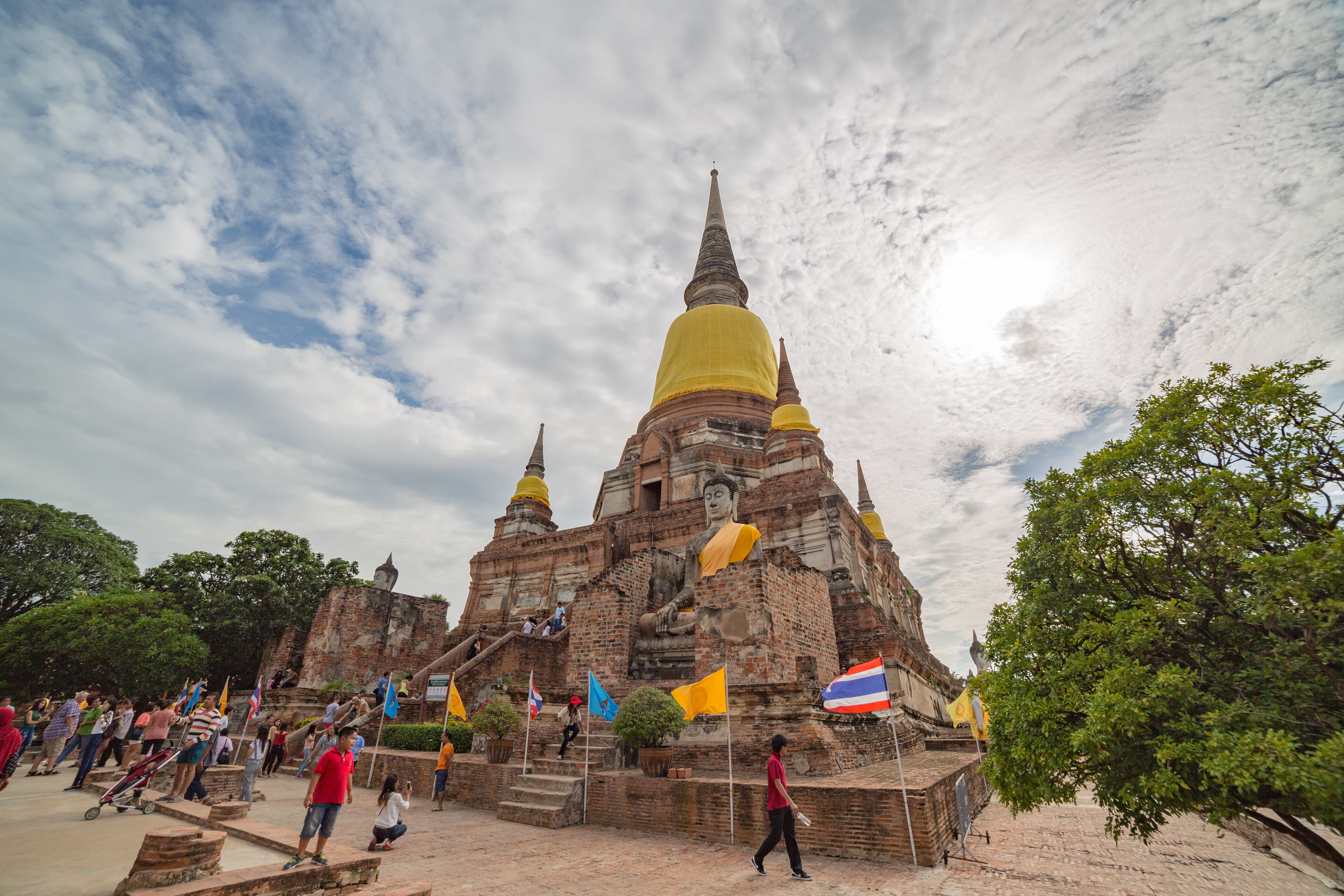
Wat Yai Chai Mongkhon in Phra Nakhon Si Ayutthaya, Phra Nakhon Si Ayutthaya, Thailand. Image source · CC BY-SA 4.0
Visit essentials
A quick read before you go
- Etiquette
- Respect stairs, Buddha images, shoe rules, prayer privacy, and authorized offering points.
Overview
The tall chedi gives the monastery a public silhouette, but devotion occurs across several linked settings. Buddha images line the approach, a reclining Buddha recalls the Teacher's final passing, and the main image focuses prayer inside active halls. The victory monument adds royal memory: later tradition associates its enlargement with Naresuan's triumph. These layers do not make the Buddha an emblem of military conquest. Buddhist merit, monastic life, royal commemoration, and modern pilgrimage remain distinguishable.
The temple's continuing sangha is crucial, because the complex is not merely a restored Ayutthaya ruin and visitors enter space organized around worship.
Why this place is sacred
Climbing beside the chedi can produce exhilaration and a wide view, yet height is not proof of spiritual force. The monument's defensible meaning comes from victory commemoration, Buddhist merit, and sustained monastic custody. At the reclining Buddha and Sitthichai shrine, visitors commonly make personal petitions, including requests connected with fertility or children. Official tourism material reports that reputation, and user accounts repeat it.
The page therefore includes the claim as a prevalent devotional practice while stating that no pregnancy, health result, or other supernatural outcome is independently verified or guaranteed.
Experience and orientation
Begin with the living temple areas rather than treating the chedi stair as the entire visit. Remove shoes where posted, give prayer groups priority, and walk around Buddha images without turning their bases into seats. On steep steps, keep both hands free and obey closures. At the reclining Buddha, avoid photographing another person's vow or intimate petition. The official temple social page and Google Places provide current practical signals, but ceremonies can change access.
The named nine-temple route supports intentional pilgrimage; completing it is not a competition or a guaranteed accumulation of merit.
Context and lineage
Official provincial material traces the monastery to Wat Pa Kaeo, founded for monks returning from study in Sri Lanka. The great chedi became associated with King Naresuan and the memory of military victory. After periods of abandonment and damage following Ayutthaya's fall, restoration allowed monastic life to resume in 1957. That renewed custody explains the mixture of ancient fabric, repaired images, and functioning halls.
Although Wat Yai is central to popular Ayutthaya itineraries, it stands outside the core island of UNESCO property 576 and is not claimed here as an inscribed component.
Traditions and practice
Current practice includes bowing, offerings, chanting, merit-making, visits to the reclining Buddha, and participation in temple ceremonies. Tourism Authority material names Wat Yai as one stop on its Nine Temples in Ayutthaya pilgrimage. Pilgrims should follow the monastery's sequence and restrictions rather than inventing a required number of stairs or offerings. Petitioning at Sitthichai may be meaningful to devotees, but it does not replace medical care and does not guarantee fertility.
Use only authorized incense or gold-leaf points and do not place objects on historic masonry.
Theravada Buddhism
ActiveTheravada practice centers Buddha refuge, monastic life, merit, chanting, and mindful visitation.
Perspectives and open questions
Theravada worship, royal history, restoration, pilgrimage, and attributed fertility testimony coexist.
Scholarly perspective
Theravada interpretation centers Buddha refuge, merit, and the living sangha. Royal history reads the chedi through Naresuan and Ayutthaya memory. Restoration history distinguishes ancient fabric from twentieth-century renewal. Pilgrimage studies attends to the official nine-temple route and the choices of present devotees. Fertility testimony belongs to attributed lived religion rather than scientific fact. Keeping these frames separate makes the temple's spiritual importance clearer: it is a working monastery where royal memory and modern petitions remain subordinate to Buddhist worship.
Plan your visit
Strong Places and the temple page give ordinary guidance subject to ceremonies.
Respectful visit
Respect stairs, Buddha images, shoe rules, prayer privacy, and authorized offering points.
Current practical details
Address
40 หลวงพ่อขาว ซ. 3 Tambon Phai Ling, Amphoe Phra Nakhon Si Ayutthaya, Chang Wat Phra Nakhon Si Ayutthaya 13000, Thailand
Phone
Hours
Hours, fees, and access can change — verify on the official source before you travel. Practical details last checked Jul 2026.
Location
Map loads as you approach this section.
Pilgrim reflections
A portrait of encounter, not a score
Pilgrims describe what they felt, how present they could become, and whether the place would shape a journey. There are no stars and no ranking of traditions.
No reviewed reflections yet
The first pilgrims can help describe the character of being here.
Share a reflection
Available after an account-backed “Been there.” Every reflection is reviewed before publication.
Nearby sacred places
Explore other sacred places in the region. Proximity does not establish access or travel time; check each place’s guidance.

Wat Phanan Choeng
Phra Nakhon Si Ayutthaya, Phra Nakhon Si Ayutthaya, Thailand
1.5 km away
Wat Mahathat, Ayutthaya
Phra Nakhon Si Ayutthaya, Phra Nakhon Si Ayutthaya, Thailand
3.0 km away
Wat Ratchaburana, Ayutthaya
Phra Nakhon Si Ayutthaya, Phra Nakhon Si Ayutthaya, Thailand
3.1 km away

Wat Phutthaisawan
Phra Nakhon Si Ayutthaya, Phra Nakhon Si Ayutthaya, Thailand
3.8 km away
References
Sources consulted for this page. Source categories describe the publication, not a guarantee that every claim is verified. Traditional accounts and outside interpretations may differ.
- 01Wat Yai Chai Mongkol Worawihan — Google PlacesofficialExact-entity practical metadata accepted only after strong name, country, locality, and coordinate review.
- 02Wat Yai Chai Mongkhon — Tourism Authority of ThailandofficialExact-site identity, Buddha images, chedi, history, and visitor context.
- 03Wat Yai Chai Mongkhon — Phra Nakhon Si Ayutthaya ProvinceofficialActive monastic status, Wat Pa Kaeo origin, Naresuan chedi, restoration, and reclining Buddha.
- 04Nine Temples in Ayutthaya — Tourism Authority of ThailandofficialDirect evidence for the named nine-temple pilgrimage route.
- 05Wat Yai Chai Mongkhon — Tourism Authority of Thailand, JapanofficialExact-site devotional context, including the reported fertility-petition reputation.
Pilgrim glossary
- Sangha
- The community of Buddhist practitioners, traditionally monks and nuns.
Share a photo
Help visitors recognize Wat Yai Chai Mongkhon. Every submission is reviewed before publication.