Wat Suan Dok
A relic monastery, open-air royal cemetery, and Buddhist university share an old flower garden
Understand sacred places, explore living traditions, and learn how to engage respectfully with Pilgrim Map.
Access has not been verified. Check current local guidance before planning a visit.
Chiang Mai, Chiang Mai, Thailand
Read the sources
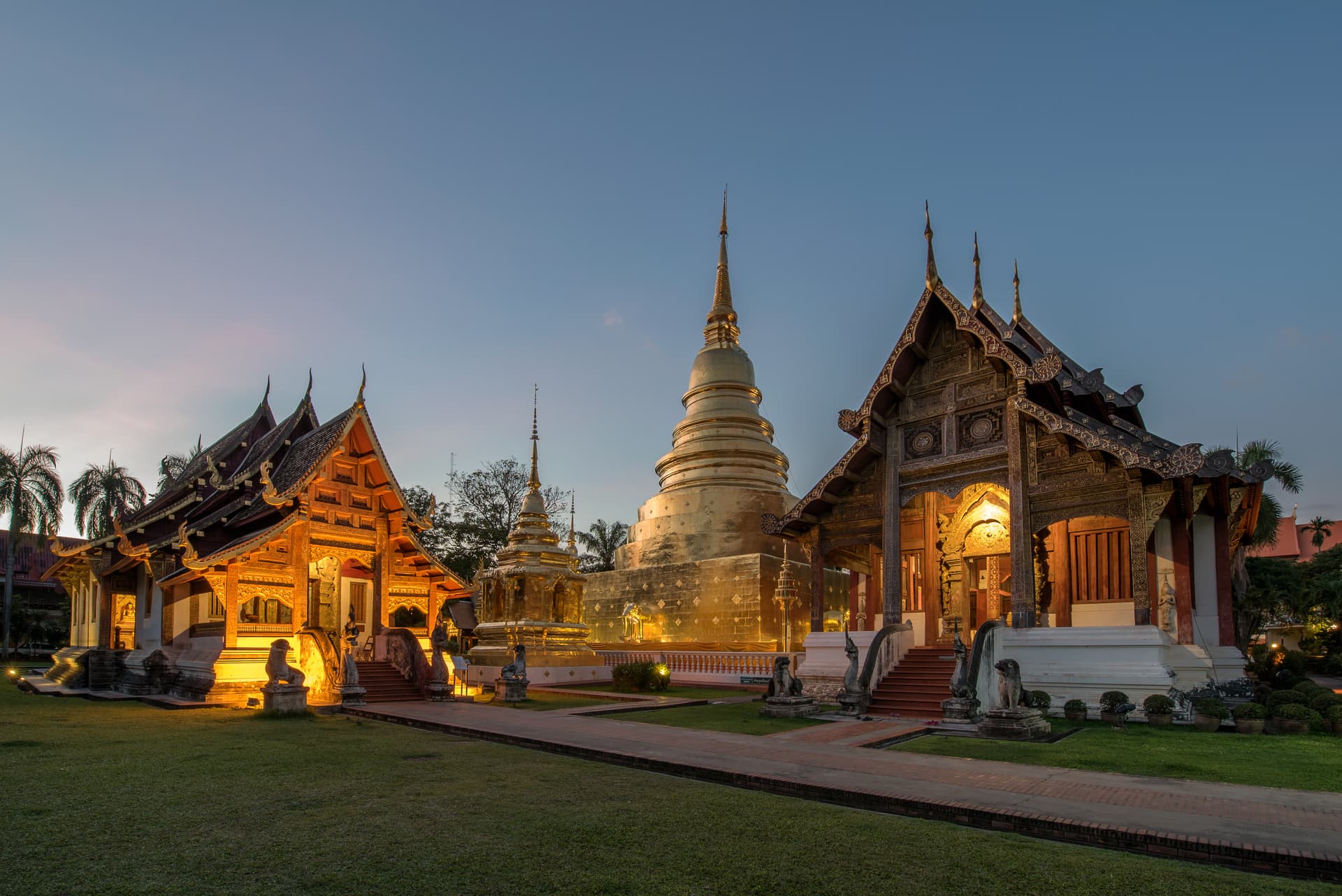
Wat Suan Dok in Chiang Mai, Chiang Mai, Thailand. Image source · CC BY-SA 3.0
Visit essentials
A quick read before you go
- Etiquette
- Stay off the white mausoleum bases and give grieving families, students, and worshippers…
Overview
The large Sri Lankan-style chedi gives Wat Suan Dok a distant profile, but the compound becomes more complex at ground level. Whitewashed mausoleums hold ashes of Chiang Mai's royal family; the open assembly hall aligns Buddha images in opposite directions; Phra Chao Kao Tue occupies the ordination hall; and a Buddhist university campus brings formal education into present life. The monastery's founding story also reaches beyond its walls.
A relic brought by Sumana Thera was said to divide, with one portion enshrined here and another carried to Doi Suthep. The narrative makes Wat Suan Dok a hinge between city, mountain, relic, and kingship.
Why this place is sacred
Wat Suan Dok is a place of distribution rather than a single visual climax. Relic memory extends from the central chedi toward Doi Suthep; royal ashes gathered from other parts of Chiang Mai are held together in one cemetery; teaching moves outward through a university; paired images face different directions in the assembly hall. These arrangements give spiritual meaning to connection and continuity. The reported miraculous division of the relic belongs to Buddhist tradition, not to a laboratory-verifiable event.
It can be presented as sacred narrative while the chedi, mausoleums, and institutions supply independently observable histories.
Experience and orientation
Begin with the great chedi, then cross the open compound without treating the royal mausoleums as decorative props. Names and enclosures mark places of burial memory; keep off foundations and avoid posed photographs among them. In the assembly hall, notice the two principal orientations and stay clear of active worship. Phra Chao Kao Tue in the ubosot deserves a separate, quiet approach.
University activity may place students and teachers in the same grounds, so not every building is a visitor facility. Sun and rain can be intense in the open precinct, but shade should be used without occupying monastic or ceremonial space.
Context and lineage
King Kue Na founded the monastery in 1370 for Sumana Thera on land associated with the royal flower garden. The location also lay within Wiang Suan Dok, an older walled settlement whose traces predate Chiang Mai. According to temple tradition, Sumana Thera brought a Buddha relic from Sukhothai. One portion was housed here and another was carried by a white elephant to the site of Wat Phra That Doi Suthep.
The great chedi, later halls, and images belong to successive campaigns. In the twentieth century Princess Dara Rasmi gathered royal ashes into the cemetery, and Khruba Siwichai directed important construction and restoration.
Traditions and practice
Relic veneration, homage to Buddha images, chanting, merit-making, memorial attention, education, and monastic routine coexist here. Visitors should avoid assuming that the royal cemetery is separate from sacred practice merely because it is outdoors. At the chedi, use established paths and never attach objects to the structure. Inside the ubosot or assembly hall, sit below image platforms and keep feet away from sacred focal points. University programs and public exchanges should be joined only through current official arrangements.
During rites for the dead, relic festivals, or ordinations, family and community needs take precedence over a visitor itinerary.
Theravada Buddhism
ActiveLanna Theravada Buddhism connects Sumana Thera's relic tradition, Buddha images, royal commemoration, sangha, and education.
Perspectives and open questions
The relic's reported duplication is sacred narrative; the chedi, cemetery, and teaching institutions have independently traceable histories.
Scholarly perspective
Historians place Wat Suan Dok within Kue Na's patronage and the expansion of Lanna Buddhism. Devotional tradition centers the relic and its reported division, connecting the monastery to Doi Suthep. Art history studies the chedi, Phra Chao Kao Tue, and the mixture of Lanna, Sri Lankan, Sukhothai, and Ayutthaya features. Dynastic history reads the mausoleums through Princess Dara Rasmi's work of consolidation. Institutional history includes present Buddhist education.
The relic miracle remains a traditional account; the page neither dismisses it nor claims to verify a supernatural duplication.
Plan your visit
The exposed precinct requires weather planning, while university and ceremonial activity can close individual buildings.
Respectful visit
Stay off the white mausoleum bases and give grieving families, students, and worshippers priority over photography.
Current practical details
Address
139 Suthep Rd, Tambon Su Thep, Amphoe Mueang Chiang Mai, Chang Wat Chiang Mai 50200, Thailand
Phone
Hours
Hours, fees, and access can change — verify on the official source before you travel. Practical details last checked Jul 2026.
Location
Map loads as you approach this section.
Pilgrim reflections
A portrait of encounter, not a score
Pilgrims describe what they felt, how present they could become, and whether the place would shape a journey. There are no stars and no ranking of traditions.
No reviewed reflections yet
The first pilgrims can help describe the character of being here.
Share a reflection
Available after an account-backed “Been there.” Every reflection is reviewed before publication.
Nearby sacred places
Explore other sacred places in the region. Proximity does not establish access or travel time; check each place’s guidance.

References
Sources consulted for this page. Source categories describe the publication, not a guarantee that every claim is verified. Traditional accounts and outside interpretations may differ.
- 01Wat Suan Dok — Wikipedia — Wikipedia contributorsacademicCorroborates identity, location, and basic historical context; key claims require higher-tier corroboration.
- 02Q2552404 — Wikidata — Wikidata contributorsacademicStructured identity and coordinate corroboration; not used alone for spiritual or historical claims.
- 03Wat Suan Dok — Google Maps — Google PlacesSource contextStrong name, country, locality, and coordinate match; used only for practical visitor data and identity corroboration.
Share a photo
Help visitors recognize Wat Suan Dok. Every submission is reviewed before publication.