Wat Phra Singh
Phra Buddha Sihing, Lanna murals, and royal memory meet inside Chiang Mai's walls
Understand sacred places, explore living traditions, and learn how to engage respectfully with Pilgrim Map.
Access has not been verified. Check current local guidance before planning a visit.
Chiang Mai, Chiang Mai, Thailand
Read the sources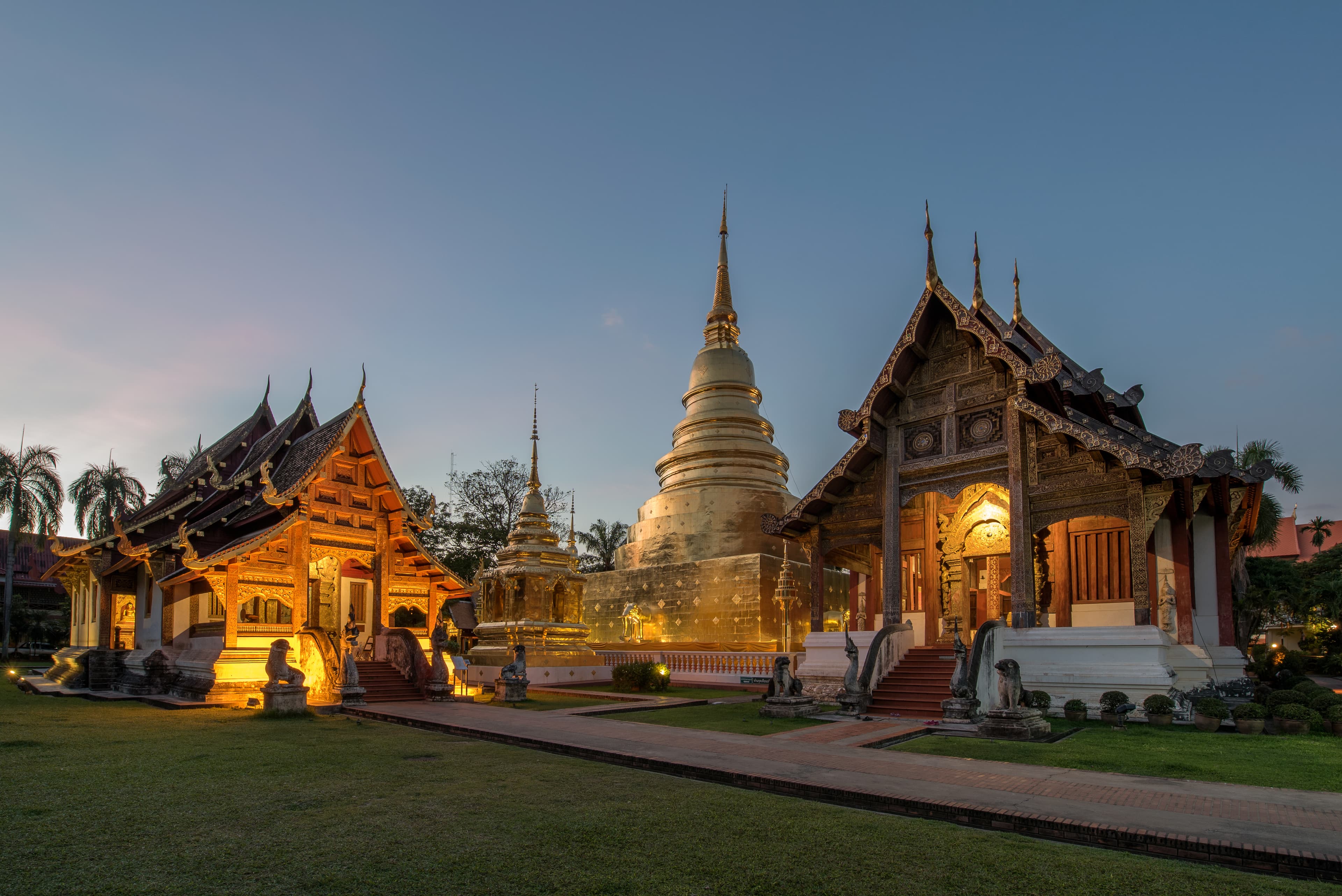
Wat Phra Singh in Chiang Mai, Chiang Mai, Thailand. Image source · CC BY-SA 4.0
Visit essentials
A quick read before you go
- Etiquette
- Lai Kham's confined interior requires smaller movements, low voices, and exceptional care around…
Overview
Phra Buddha Sihing is housed in the comparatively intimate Wihan Lai Kham, not in the largest building of the precinct. That distinction changes the visit. The main wihan establishes public scale, while Lai Kham draws attention toward a revered image and a dense interior of lacquer, gilding, timber, and narrative murals. The temple's recorded history begins with King Phayu's foundation for his father's ashes, then shifts when the Buddha image reached Chiang Mai and changed the monastery's name.
Burial remembrance, image veneration, royal patronage, and monastic life therefore overlap without becoming interchangeable. A careful circuit keeps each relationship visible.
Why this place is sacred
The spiritual weight of Wat Phra Singh rests on acts of transmission. Ashes were brought to a new stupa; a Buddha image moved across northern polities; damaged halls were rebuilt; murals continued to carry stories; and modern custodians maintain a place where people still bow and make merit. None of this requires claiming that the precinct has an objectively measurable energy. Its intensity is historically legible in the effort repeatedly invested in one image and its setting.
The contrast between the open compound and Lai Kham's concentrated interior makes attention itself part of the experience.
Experience and orientation
Enter slowly enough to distinguish the main wihan from Wihan Lai Kham. In Lai Kham, give worshippers the clearest approach to Phra Buddha Sihing and resist using the narrow interior as a portrait studio. Look beyond the principal image to the murals and carved surfaces, but do not lean on painted walls or timber. Outside, the chedi, Ho Trai, and smaller structures reveal different periods of care. Posted photography and access rules outrank older travel advice.
During ceremonies or busy festival periods, circulation may change; follow monastic and lay stewards rather than forcing a planned route.
Context and lineage
King Phayu established the monastery in 1345 after bringing the ashes of his father, King Khamfu, from Chiang Saen for interment. It was first known as Wat Lee Chiang Phra, a name associated with the nearby market. Around 1400 the Phra Buddha Sihing image was installed, and local usage gradually attached the image's name to the temple. War, political change, and periods of neglect altered the fabric.
Restoration resumed under Chiang Mai rulers, and Khruba Siwichai led major work in the early twentieth century, including replacement of the deteriorated principal wihan. First-class royal-temple status followed in 1935.
Traditions and practice
Theravada Buddhist life here includes homage to Buddha images, chanting, merit-making, almsgiving, teaching, and the ordinary schedule of a resident monastery. Phra Buddha Sihing receives particular reverence, but visitors should not assume that every person approaches it with the same private intention. Bow only if the gesture is meaningful and understood; otherwise quiet stillness is respectful. Keep feet directed away from images when seated, leave offering areas free, and never touch sculpture or mural surfaces.
When an active rite is underway, observe from the margin unless a custodian explicitly welcomes participation.
Theravada Buddhism
ActiveLanna Theravada practice gives Phra Buddha Sihing, the chedi, murals, ordination, and merit their living framework.
Perspectives and open questions
The image's devotional biography and its art-historical dating answer different questions and should not be forced into certainty.
Scholarly perspective
Lanna art history emphasizes the temple's sequence of patronage, Wihan Lai Kham's architecture and murals, and the relationship between the principal images and their buildings. Devotional interpretation emphasizes Phra Buddha Sihing as an object of homage rather than merely an artwork whose travels establish provenance. Political history adds the Mangrai dynasty, later restoration, and royal classification. These accounts can support one another without proving every legend attached to the image's earlier journey.
Reports of special blessings belong to the testimony of devotees; they are not independently verified effects and should never be presented as guaranteed outcomes.
Plan your visit
Royal-temple observances and old-city festival traffic may affect entry even when the wider compound appears open.
Respectful visit
Lai Kham's confined interior requires smaller movements, low voices, and exceptional care around murals and gilded timber.
Current practical details
Address
2 Samlarn Rd Old City Tambon Si Phum, Amphoe Mueang Chiang Mai, Chang Wat Chiang Mai 50200, Thailand
Phone
Hours
Hours, fees, and access can change — verify on the official source before you travel. Practical details last checked Jul 2026.
Location
Map loads as you approach this section.
Pilgrim reflections
A portrait of encounter, not a score
Pilgrims describe what they felt, how present they could become, and whether the place would shape a journey. There are no stars and no ranking of traditions.
No reviewed reflections yet
The first pilgrims can help describe the character of being here.
Share a reflection
Available after an account-backed “Been there.” Every reflection is reviewed before publication.
Nearby sacred places
Explore other sacred places in the region. Proximity does not establish access or travel time; check each place’s guidance.


References
Sources consulted for this page. Source categories describe the publication, not a guarantee that every claim is verified. Traditional accounts and outside interpretations may differ.
- 01Wat Phra Singh — Wikipedia — Wikipedia contributorsacademicCorroborates identity, location, and basic historical context; key claims require higher-tier corroboration.
- 02Q1657130 — Wikidata — Wikidata contributorsacademicStructured identity and coordinate corroboration; not used alone for spiritual or historical claims.
- 03Wat Phra Singh Woramahawihan — Google Maps — Google PlacesSource contextStrong name, country, locality, and coordinate match; used only for practical visitor data and identity corroboration.
Pilgrim glossary
- Stupa
- A dome-shaped Buddhist monument that holds relics or marks a sacred place.
Share a photo
Help visitors recognize Wat Phra Singh. Every submission is reviewed before publication.