Wat Umong
Tunnels, forest practice, and a modern meditation revival reshape a Mangrai-era monastery
Understand sacred places, explore living traditions, and learn how to engage respectfully with Pilgrim Map.
Access has not been verified. Check current local guidance before planning a visit.
Chiang Mai, Chiang Mai, Thailand
Read the sources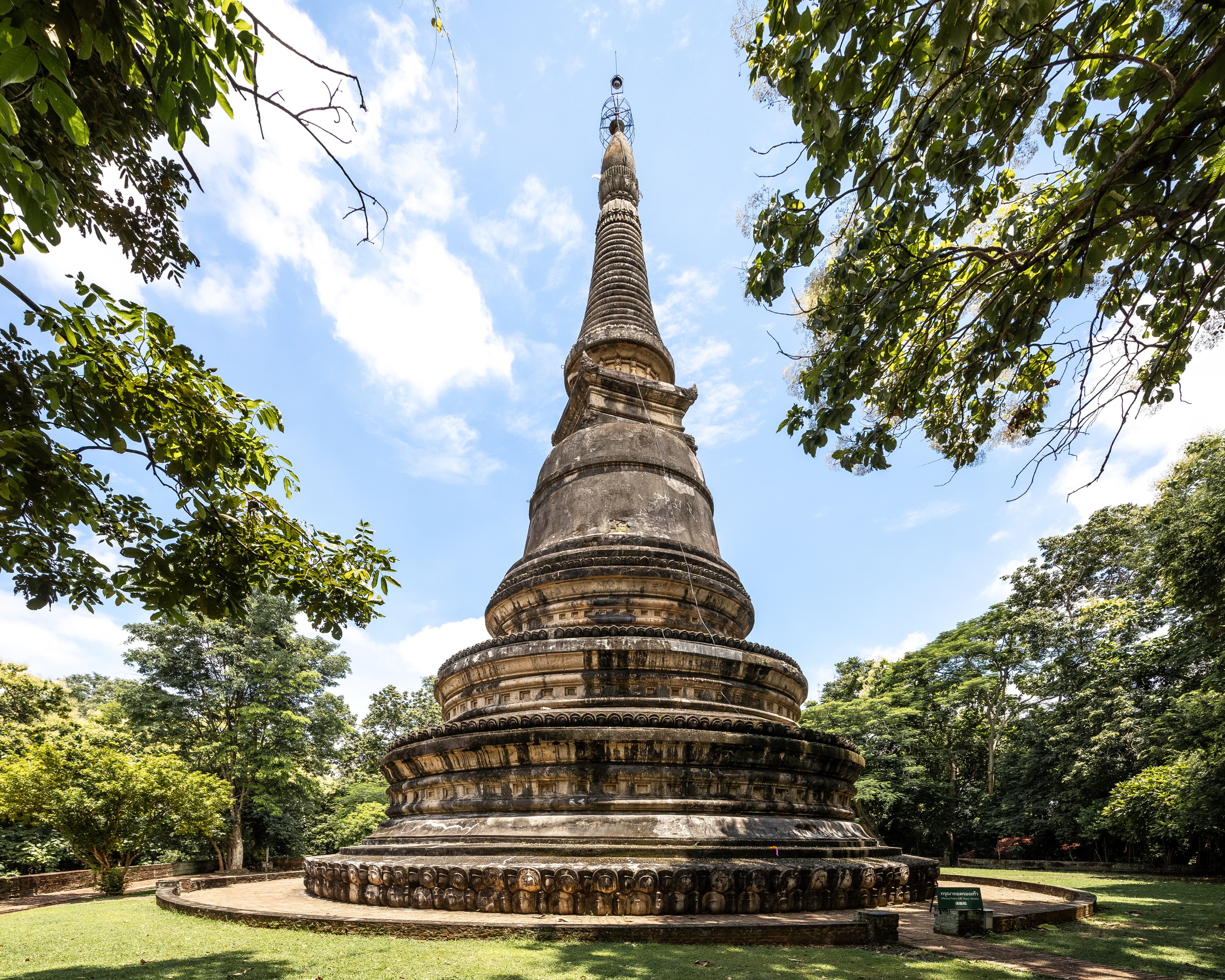
Wat Umong in Chiang Mai, Chiang Mai, Thailand. Image source · CC BY 4.0
Visit essentials
A quick read before you go
- Etiquette
- Protect brick, surviving paint, sculpture fragments, silence, and seated practitioners…
Overview
The tunnels organize Wat Umong through compression and partial light. Passages lead beneath the chedi toward Buddha images, reducing the visual field and changing how sound carries. Outside, wooded grounds reopen the body to distance, footpaths, water, and monastic dwellings. This movement between enclosure and forest is central to the monastery's identity.
Historical accounts connect the tunnels to King Kue Na and the monk Maha Thera Chan; the modern institution was renewed in 1949 as a meditation center influenced by Buddhadasa Bhikkhu's Suan Mokkh. Ancient fabric and twentieth-century Buddhist reform therefore meet without becoming the same story.
Why this place is sacred
Wat Umong's atmosphere is produced by material conditions that are easy to romanticize: shade, brick, echo, dampness, trees, and reduced light. These can support concentration, but they do not prove that the tunnels emit spiritual energy. The more grounded sacred relationship is between place and practice. A monastery initially associated with forest-dwelling monks was abandoned, then deliberately reclaimed for meditation. Even the site's replicas and displayed fragments demand discrimination; the Ashokan-style pillar is modern, not a thirteenth-century Mauryan object.
Attention here includes noticing where devotional history ends and later interpretation begins.
Experience and orientation
Approach the tunnel entrances without loud conversation and allow people already seated or praying to remain undisturbed. Do not touch brickwork, images, old paint, or displayed sculpture. Under the chedi, move slowly through narrow passages and yield rather than bunching at an image. The wooded grounds contain monastic zones as well as visitor paths; a quiet-looking track is not automatically public. The bilingual sayings attached to trees belong to the modern teaching landscape.
Feeding animals, where permitted, should never displace meditation or create litter. Recent controversy over restoration is a reminder that old surfaces cannot be treated as infinitely renewable scenery.
Context and lineage
Mangrai founded the monastery under an earlier name connected with eleven bamboo clumps and intended it for monks invited from Sri Lanka. During King Kue Na's reign, the stupa was repaired and tunnels were constructed in four directions for Maha Thera Chan, giving rise to the name associated with an umong, or tunnel. The site later lost its resident community during the period of Burmese rule.
In 1949 Chao Chuen Siroros established a meditation center there, drawing inspiration from Buddhadasa Bhikkhu's Suan Mokkh. That revival explains the present name Wat Umong Suan Puthatham and its continuing emphasis on practice.
Traditions and practice
Meditation is not a themed activity added to the ruins; it is part of the monastery's modern religious purpose. Visitors who wish to learn should use programs and guidance actually offered by monks or authorized staff rather than inventing a tunnel ritual. Quiet sitting may be appropriate in designated places, but tunnels must remain passable and images accessible to worshippers. Walking attentively through the forest can complement formal practice when it does not intrude on monastic residences.
Refrain from touching heads of images, arranging found fragments, marking walls, or interpreting every natural sensation as a supernatural message.
Theravada Buddhism
ActiveThai forest-oriented Theravada practice connects seclusion, meditation, Buddha images, teaching, and care for the wooded precinct.
Perspectives and open questions
The Ashokan-style pillar is modern, and romantic tunnel stories should not displace evidence about the monastery's actual fabric.
Scholarly perspective
Religious history connects Mangrai, Kue Na, Maha Thera Chan, and the twentieth-century meditation revival. Architectural and conservation study distinguish original fabric, later repairs, replicas, and contested intervention. Forest-monastery interpretation emphasizes seclusion and discipline rather than picturesque wilderness. Popular stories about a wandering monk explain the tunnels in memorable terms, but should be identified as received narrative where documentation is uncertain. Visitor reports often describe unusual calm or energy; those are personal experiences, not verified properties.
The strongest claim supported here is that carefully designed enclosure and woodland have long served changing Buddhist practices.
Plan your visit
Rain, low light, uneven tunnel floors, restoration work, and meditation programs can alter the appropriate circuit.
Respectful visit
Protect brick, surviving paint, sculpture fragments, silence, and seated practitioners throughout the underground route.
Current practical details
Address
135, Tambon Su Thep, Amphoe Mueang Chiang Mai, Chang Wat Chiang Mai 50200, Thailand
Phone
Hours
Hours, fees, and access can change — verify on the official source before you travel. Practical details last checked Jul 2026.
Location
Map loads as you approach this section.
Pilgrim reflections
A portrait of encounter, not a score
Pilgrims describe what they felt, how present they could become, and whether the place would shape a journey. There are no stars and no ranking of traditions.
No reviewed reflections yet
The first pilgrims can help describe the character of being here.
Share a reflection
Available after an account-backed “Been there.” Every reflection is reviewed before publication.
Nearby sacred places
Explore other sacred places in the region. Proximity does not establish access or travel time; check each place’s guidance.



References
Sources consulted for this page. Source categories describe the publication, not a guarantee that every claim is verified. Traditional accounts and outside interpretations may differ.
- 01Wat Umong — Wikipedia — Wikipedia contributorsacademicCorroborates identity, location, and basic historical context; key claims require higher-tier corroboration.
- 02Q1369391 — Wikidata — Wikidata contributorsacademicStructured identity and coordinate corroboration; not used alone for spiritual or historical claims.
- 03Wat Umong Suan Putthatham — Google Maps — Google PlacesSource contextStrong name, country, locality, and coordinate match; used only for practical visitor data and identity corroboration.
Pilgrim glossary
- Stupa
- A dome-shaped Buddhist monument that holds relics or marks a sacred place.
Share a photo
Help visitors recognize Wat Umong. Every submission is reviewed before publication.