Temple of the Emerald Buddha
Thailand's palladium presides over a royal chapel without resident monks
Understand sacred places, explore living traditions, and learn how to engage respectfully with Pilgrim Map.
Access has not been verified. Check current local guidance before planning a visit.
Bangkok, Bangkok, Thailand
Read the sources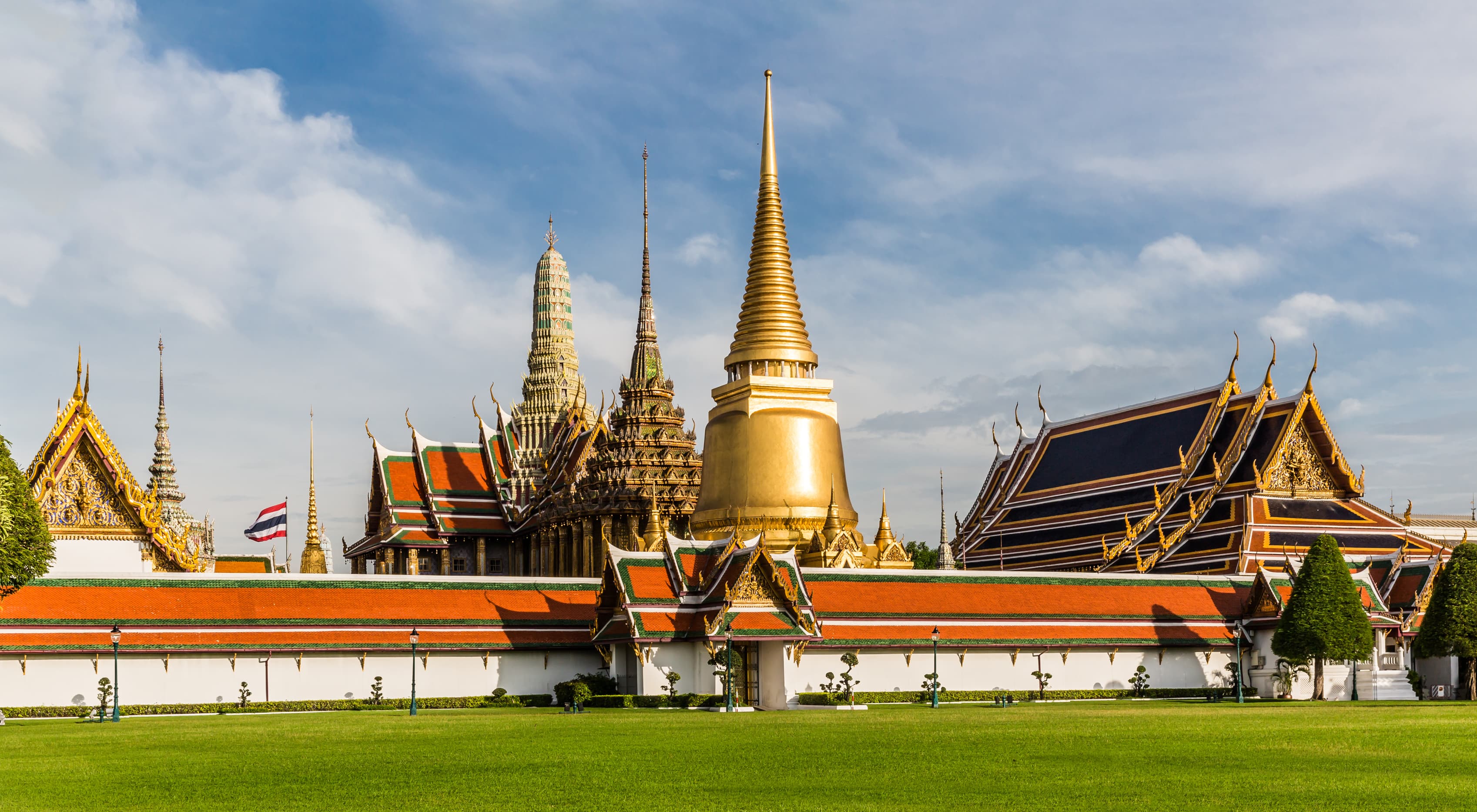
Temple of the Emerald Buddha in Bangkok, Bangkok, Thailand. Image source · CC BY 4.0
Visit essentials
A quick read before you go
- Etiquette
- Protect prayer sight lines, dress rules, shoe boundaries, photography controls, and…
Overview
The small seated image commands an immense ceremonial setting. Phra Kaeo Morakot occupies the high altar of the ordination hall, surrounded by guardian figures, gilded architecture, offerings, and the concentrated attention of worshippers. Its material is traditionally described as emerald but is generally understood as green stone; spiritual importance does not depend on mineral identification. As a palladium, the image embodies protection, Buddhist legitimacy, and continuity for the Thai kingdom.
The chapel's lack of monastic residences distinguishes it from a resident monastery: this is a consecrated royal temple whose ritual centre is the Buddha image itself.
Why this place is sacred
Sacred authority accumulates here through custody, ceremony, and repeated acts of homage. The image's journeys through northern Thailand and Laos are told through chronicles and tradition, while its Bangkok installation belongs securely to the founding of the present capital. Three seasonal costumes are changed in a royal rite, making the calendar visible on the body of the palladium. Devotees may describe the image as protective or exceptionally powerful.
Those are religious understandings and reported beliefs, not evidence that proximity guarantees safety, luck, or a measurable energy. The page preserves devotion without converting it into a promise.
Experience and orientation
Enter knowing that the ordination hall is a place of worship before it is a sightseeing interior. Shoes must be removed where directed, clothing rules are enforced, and photography restrictions inside the chapel should be obeyed without negotiation. Sit with feet tucked away from the altar, keep the central sight line open, and avoid standing over people at prayer. The image is much smaller than many first-time visitors expect, so let scale and distance work gradually rather than pushing forward.
Outside, the Ramakien murals and guardian figures broaden the royal-cosmological setting without replacing the Buddha as the devotional focus.
Context and lineage
Rama I established the Grand Palace after moving the capital to Bangkok in 1782. The official palace history describes a chapel royal modeled on earlier capitals and records the installation of the Emerald Buddha under the formal temple name Wat Phra Si Rattana Satsadaram. The image had reached Thonburi from Vientiane before its transfer across the river. Later kings expanded and restored the ensemble, while royal costume-changing rites maintained a living relation between image, season, and state.
The site is not a UNESCO World Heritage property; national and royal importance should not be mislabeled as UNESCO status.
Traditions and practice
Current practice includes bowing, quiet prayer, offerings at authorized points, listening to sermons on Buddhist holy days, and participation in royal or national observances when access permits. Visitors should not imitate a full rite without understanding it, touch images, leave unauthorized objects, or treat monks and worshippers as scenery. The royal changing of the Emerald Buddha's seasonal attire is performed by the monarch or a royal representative and is not a visitor activity.
A respectful visit can include silent recollection of the Buddha's teaching without making requests for guaranteed worldly outcomes.
Theravada Buddhism
ActiveTheravada veneration centers the Emerald Buddha as an image of awakening and refuge.
Thai royal Buddhist ceremony
ActiveRoyal Buddhist ceremony places the palladium within seasonal rites governed by palace custodians.
Perspectives and open questions
Theravada refuge, palladium history, regional chronicles, art history, and living devotion carry different claims.
Scholarly perspective
Theravada Buddhism interprets the seated Buddha through awakening, teaching, and refuge. Royal history reads the image as a palladium bound to the legitimacy and protection of the kingdom. Art history examines the image's style, material, regalia, and changing settings, while chronicles trace contested movements across regional polities. Living devotion may speak of blessing and protective presence.
These views should not be collapsed: royal symbolism is historical, devotional efficacy is a matter of belief, and material scholarship does not settle spiritual meaning. No reviewed evidence supports commercial claims of automatic luck or energy transfer.
Plan your visit
The exact royal custodian and refreshed strong Places record provide current access fields that still require day-of confirmation.
Respectful visit
Protect prayer sight lines, dress rules, shoe boundaries, photography controls, and Buddha-facing posture.
Current practical details
Address
Na Phra Lan Rd, Khwaeng Phra Borom Maha Ratchawang, Khet Phra Nakhon, Krung Thep Maha Nakhon 10200, Thailand
Hours
Hours, fees, and access can change — verify on the official source before you travel. Practical details last checked Jul 2026.
Location
Map loads as you approach this section.
Pilgrim reflections
A portrait of encounter, not a score
Pilgrims describe what they felt, how present they could become, and whether the place would shape a journey. There are no stars and no ranking of traditions.
No reviewed reflections yet
The first pilgrims can help describe the character of being here.
Share a reflection
Available after an account-backed “Been there.” Every reflection is reviewed before publication.
Nearby sacred places
Explore other sacred places in the region. Proximity does not establish access or travel time; check each place’s guidance.

References
Sources consulted for this page. Source categories describe the publication, not a guarantee that every claim is verified. Traditional accounts and outside interpretations may differ.
- 01History: The Temple of the Emerald Buddha — The Grand PalaceofficialOfficial exact-site history, chapel function, installation, sermons, hours, and visitor information.
- 02The Grand Palace and Temple of the Emerald Buddha — The Grand PalaceofficialOfficial custodian website returned by the strong Google Places match.
- 03Temple of the Emerald Buddha — Google Maps — Google PlacesSource contextStrong name, country, locality, and type match; used only for identity and practical visitor fields.
Share a photo
Help visitors recognize Temple of the Emerald Buddha. Every submission is reviewed before publication.