Wat Kalayanamit
Luang Pho To joins Thai and Chinese devotion beside the Chao Phraya
Understand sacred places, explore living traditions, and learn how to engage respectfully with Pilgrim Map.
Access has not been verified. Check current local guidance before planning a visit.
Bangkok, Bangkok, Thailand
Read the sources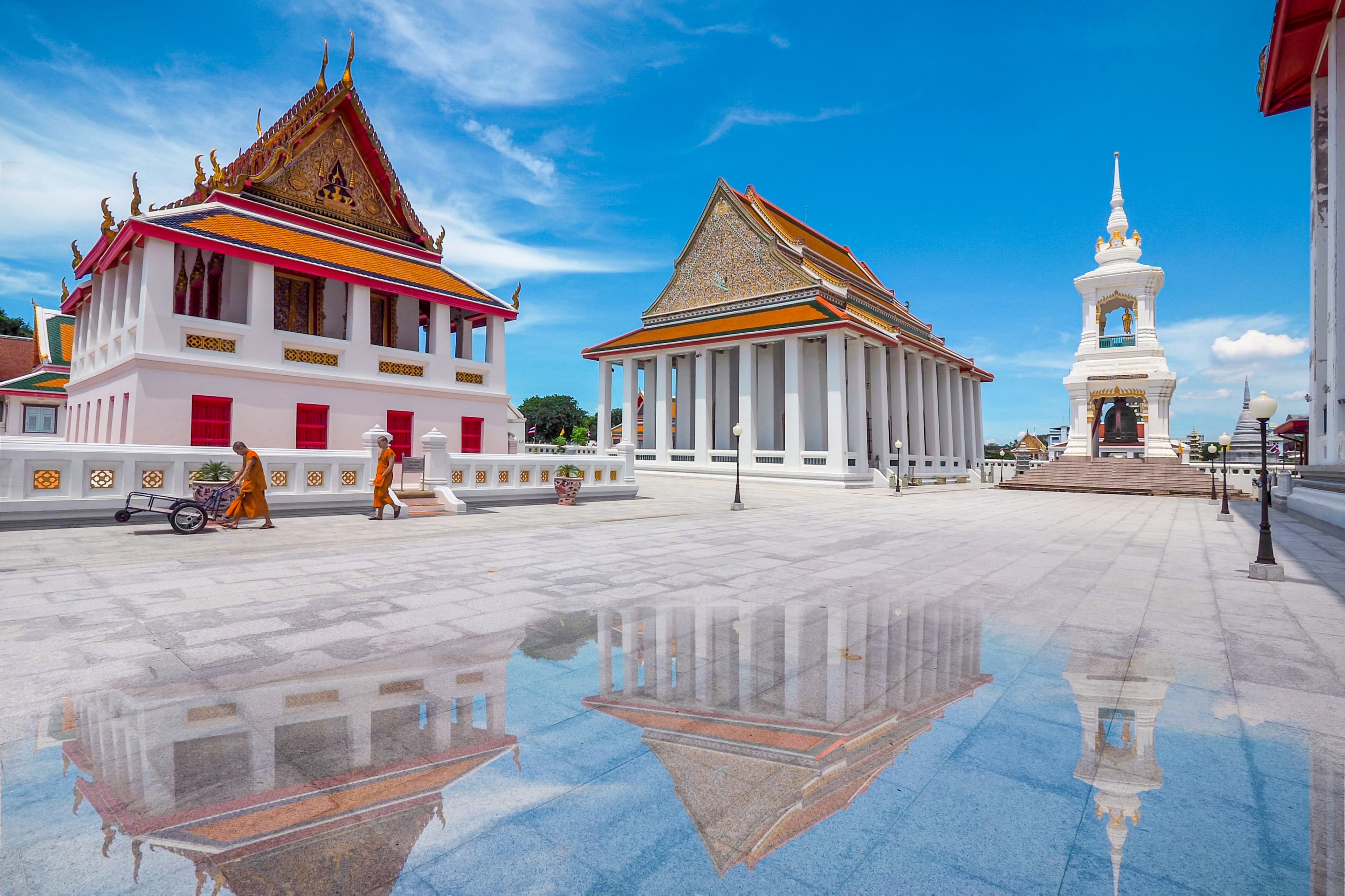
Wat Kalayanamit in Bangkok, Bangkok, Thailand. Image source · CC BY-SA 4.0
Visit essentials
A quick read before you go
- Etiquette
- Yield to monks and devotees, use authorized offerings, and keep the monumental image free of…
Overview
The great seated Buddha fills the principal viharn with a scale that recalls the revered image at Wat Phanan Choeng in Ayutthaya. Thai worshippers call the image Luang Pho To, while Sam Po Kong carries a Chinese devotional vocabulary that has helped make the temple a shared sacred landmark. The ordination hall preserves a less common Buddha in the Palileyyaka posture, receiving offerings from an elephant and monkey.
These two images support different contemplative registers: communal awe before the monumental Buddha and recollection of the forest episode in which animals cared for the solitary Buddha.
Why this place is sacred
The temple's sacred character is inseparable from river movement and neighborhood exchange. Boats arrive at the temple pier, bells and chanting carry across the compound, and worshippers from Thai and Chinese families address one image through several names. This is not evidence of a generalized supernatural field. It is evidence that a living image can gather distinct languages, migration histories, and practices of merit around itself.
Some devotees request auspiciousness or safe travel before continuing a journey; such hopes are religious petitions reported in official tourism accounts, not guarantees that a visit changes external events.
Experience and orientation
Approach from the river if conditions allow, then orient yourself to the monumental viharn before looking for the ordination hall. Give active worship priority, especially near Luang Pho To, and avoid photographing faces during prayer. Shoes, dress, and interior photography rules should be confirmed on arrival. The surrounding Kudi Chin route includes a Catholic church, a Chinese shrine, and a historic mosque; visiting them as separate communities is more respectful than calling the district a blended religion.
At Wat Kalayanamit, notice how Chinese naming and Theravada forms coexist without making the Buddha image into a tourism mascot.
Context and lineage
Official Tourism Authority accounts identify Chao Phraya Nikon Bodin as the founder who offered the temple to Rama III. The riverside monastery became a royal temple and an anchor within the Kudi Chin district. Its monumental Buddha was modeled in relation to Wat Phanan Choeng's famous image, strengthening a devotional bridge with Ayutthaya. Later community history made Sam Po Kong particularly important to Chinese-Thai residents.
Current festival routes on the Chao Phraya demonstrate continuing public life, but temporary light shows or river events should not be mistaken for the temple's founding religious purpose.
Traditions and practice
Worship may include flowers, incense, candles, bowing, chanting, and merit-making at designated places. Follow temple instructions because fire controls and permitted offering points can change. A visitor can sit quietly, offer a wai, or observe without copying another person's petition. Do not climb image bases, touch sacred surfaces, ring bells without permission, or interrupt monks. Requests for protection, good fortune, or safe passage should be described as devotees' hopes rather than reliable outcomes.
The monastery is active, so any public festival schedule must be checked against current temple announcements.
Theravada Buddhism
ActiveTheravada practice centers Buddha homage, teaching, merit, and monastic life.
Chinese-Thai Buddhist devotion
ActiveChinese-Thai devotees address Luang Pho To as Sam Po Kong while participating in the monastery's Buddhist life.
Perspectives and open questions
Theravada teaching, Chinese-Thai naming, royal architecture, and plural urban history illuminate separate layers.
Scholarly perspective
Theravada interpretation centers the Buddha's awakening and the Palileyyaka story. Thai-Chinese community history explains why the great Buddha is also addressed as Sam Po Kong. Architectural history connects the principal viharn with royal patronage in Rama III's Bangkok, while urban history situates it among Kudi Chin's multiple religious communities. Tourism sources emphasize auspicious visitation; the page treats that language as lived devotion rather than empirical proof.
The temple is not a UNESCO World Heritage site, and its cultural importance should stand on precise local evidence instead of borrowed status.
Plan your visit
Strong Places provides hours, phone, and custodian social page; current temple announcements take priority.
Respectful visit
Yield to monks and devotees, use authorized offerings, and keep the monumental image free of staged poses.
Current practical details
Address
371 ซอย อรุณอมรินทร์ 6 เเขวง วัดกัลยาณ์ วัดกัลยานิมิตร 371/2 Soi Wat Kanlaya, Khwaeng Wat Kanlaya, Khet Thon Buri, Krung Thep Maha Nakhon 10600, Thailand
Phone
Hours
Hours, fees, and access can change — verify on the official source before you travel. Practical details last checked Jul 2026.
Location
Map loads as you approach this section.
Pilgrim reflections
A portrait of encounter, not a score
Pilgrims describe what they felt, how present they could become, and whether the place would shape a journey. There are no stars and no ranking of traditions.
No reviewed reflections yet
The first pilgrims can help describe the character of being here.
Share a reflection
Available after an account-backed “Been there.” Every reflection is reviewed before publication.
Nearby sacred places
Explore other sacred places in the region. Proximity does not establish access or travel time; check each place’s guidance.

References
Sources consulted for this page. Source categories describe the publication, not a guarantee that every claim is verified. Traditional accounts and outside interpretations may differ.
- 01Wandering through Kudi Chin — Tourism Authority of ThailandofficialExact-site veneration of Luang Pho To or Sam Po Kong and current neighborhood context.
- 02Reliving the Kudi Chin History Through Your Eyes — Tourism Authority of ThailandofficialOfficial founding, royal-temple status, Buddha imagery, and access context.
- 03Wat Kalayanamit official social page — Wat Kalayanamit WoramahawihanofficialCustodian page supplied by the strong Google Places record; use for changing announcements only.
- 04Wat Kalayanamit — Google Maps — Google PlacesSource contextStrong name, country, locality, and type match; used only for identity and practical visitor fields.
Share a photo
Help visitors recognize Wat Kalayanamit. Every submission is reviewed before publication.