Wat Phra That Doi Kham
A hilltop hair-relic tradition meets guardian stories and renewed popular devotion
Understand sacred places, explore living traditions, and learn how to engage respectfully with Pilgrim Map.
Access has not been verified. Check current local guidance before planning a visit.
Chiang Mai, Chiang Mai, Thailand
Read the sources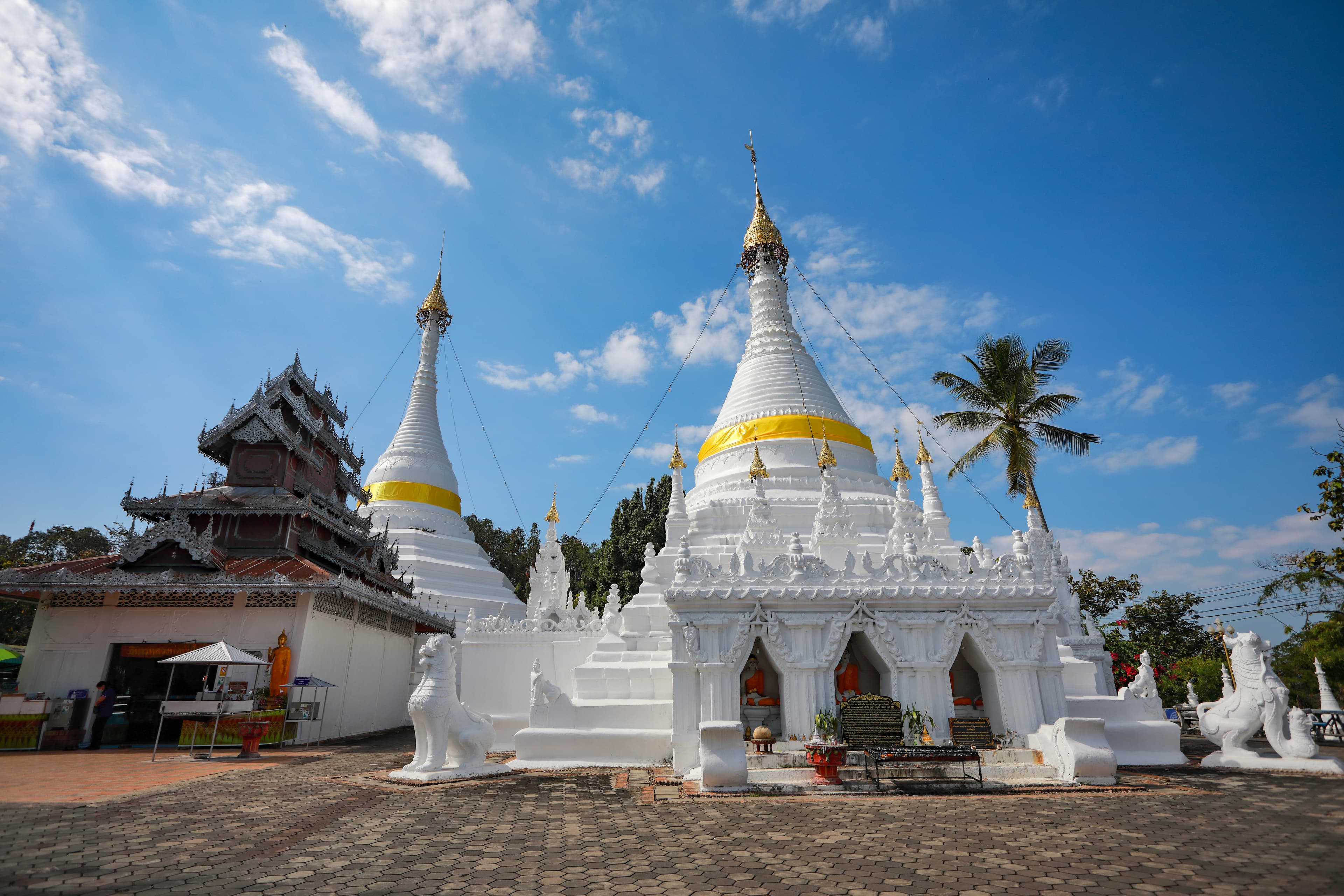
Wat Phra That Doi Kham in Chiang Mai, Chiang Mai, Thailand. Image source · CC BY-SA 4.0
Visit essentials
A quick read before you go
- Etiquette
- Use only accepted vow offerings and never enter Pu Sae–Ya Sae observance as though it were…
Overview
Doi Kham means Golden Mountain, and the temple's sacred geography joins elevation, relic, and guardian narrative. The chedi is traditionally said to enshrine a hair of the Buddha and to have been founded by sons of Queen Camadevi. A large seated Buddha marks the skyline, while popular devotion to Luang Pho Than Chai draws people making petitions and returning with offerings.
At the hill's foot, Pu Sae and Ya Sae belong to a local guardian tradition whose annual rite cannot be reduced to temple tourism. These strands are related through place but retain different ritual authorities and histories.
Why this place is sacred
The mountain invites panoramic language, yet Doi Kham's spiritual force is better located in obligation. Relic tradition asks devotees to remember the Buddha; vows to Luang Pho Than Chai create a cycle of request and return; guardian rites maintain a local relationship older than a casual visit; restoration after the chedi's collapse became community work. Claims that prayers here reliably produce luck or rapid results are widespread devotional testimony, not independently proven effects. The appropriate disclaimer does not erase belief.
It clarifies that visitors are hearing what devotees report, while historical and material claims require separate evidence.
Experience and orientation
On arrival, identify the relic chedi and principal worship areas before moving toward viewpoints. Queues and offering practices around Luang Pho Than Chai can be dense; do not block people completing vows, and use only the designated flowers or materials accepted by the temple. The large seated Buddha and newer guardian imagery should not eclipse the older chedi.
At the foot of the hill, the Pu Sae–Ya Sae shrine and annual ceremony belong to local custodians; do not improvise participation or photograph sensitive acts without permission. Steps, terraces, heat, and changing access require a current practical check.
Context and lineage
Temple chronicles place the foundation in 687 during the Hariphunchai period and associate it with two sons of Queen Camadevi. The stated purpose was to enshrine a Buddha hair relic connected with the local Lawa people. The temple later declined. In 1966 heavy rain was followed by collapse of the old chedi, revealing Buddha images and other objects and prompting a community-led restoration. Annual relic bathing is observed after Visakha Bucha.
Recent additions have generated public debate about scale and the historical character of the hill, showing that stewardship remains contested rather than complete.
Traditions and practice
Buddhist practice includes homage at the chedi, chanting, offerings, merit-making, and the annual bathing of relics on dates governed by the lunar calendar. Devotion to Luang Pho Than Chai often involves petitions and promised return offerings. These should be described as practiced beliefs, never as guaranteed transactions. The Pu Sae and Ya Sae ceremony reflects a distinct local guardian relationship and should be encountered only under community guidance.
Visitors can sit quietly where permitted, support approved temple activities, and keep ritual routes open. Attaching unauthorized objects to monuments or expanding a personal vow into public advice is inappropriate.
Theravada Buddhism
ActiveNorthern Thai Theravada devotion centers the Buddha relic and Luang Pho Than Chai while respecting distinct guardian traditions.
Perspectives and open questions
Rapidly answered prayers are prevalent devotee reports, while their claimed outcomes remain unverified and never guaranteed.
Scholarly perspective
Hariphunchai history, Buddhist relic devotion, popular vow practice, and local guardian tradition all contribute to Doi Kham. Their coexistence should not be flattened into a vague category of supernatural energy. The foundation date and guardian stories come through chronicles and tradition, while the 1966 collapse and restoration belong to modern historical reporting. Recent criticism of a monumental Thao Wessuwan project illustrates differing views of heritage and contemporary devotion.
Reports of quick blessings or fulfilled petitions are prevalent enough to note, but they remain user and devotee claims without independent verification.
Plan your visit
Hill access, heavy crowds, heat, relic ceremonies, and newer construction make current temple guidance essential.
Respectful visit
Use only accepted vow offerings and never enter Pu Sae–Ya Sae observance as though it were visitor theatre.
Current practical details
Address
Suthep, Mueang Chiang Mai District, Chiang Mai 50100, Thailand
Hours
Hours, fees, and access can change — verify on the official source before you travel. Practical details last checked Jul 2026.
Location
Map loads as you approach this section.
Pilgrim reflections
A portrait of encounter, not a score
Pilgrims describe what they felt, how present they could become, and whether the place would shape a journey. There are no stars and no ranking of traditions.
No reviewed reflections yet
The first pilgrims can help describe the character of being here.
Share a reflection
Available after an account-backed “Been there.” Every reflection is reviewed before publication.
Nearby sacred places
Explore other sacred places in the region. Proximity does not establish access or travel time; check each place’s guidance.


References
Sources consulted for this page. Source categories describe the publication, not a guarantee that every claim is verified. Traditional accounts and outside interpretations may differ.
- 01Wat Phra That Doi Kham — Wikipedia — Wikipedia contributorsacademicCorroborates identity, location, and basic historical context; key claims require higher-tier corroboration.
- 02Q13020753 — Wikidata — Wikidata contributorsacademicStructured identity and coordinate corroboration; not used alone for spiritual or historical claims.
- 03Wat Phra That Doi Kham — Google Maps — Google PlacesSource contextStrong name, country, locality, and coordinate match; used only for practical visitor data and identity corroboration.
Share a photo
Help visitors recognize Wat Phra That Doi Kham. Every submission is reviewed before publication.