Wat Phra That Doi Tung
Buddha relics and a recurrent Lanna ascent crown Doi Tung
Understand sacred places, explore living traditions, and learn how to engage respectfully with Pilgrim Map.
Access has not been verified. Check current local guidance before planning a visit.
Mae Sai, Chiang Rai, Thailand
Read the sources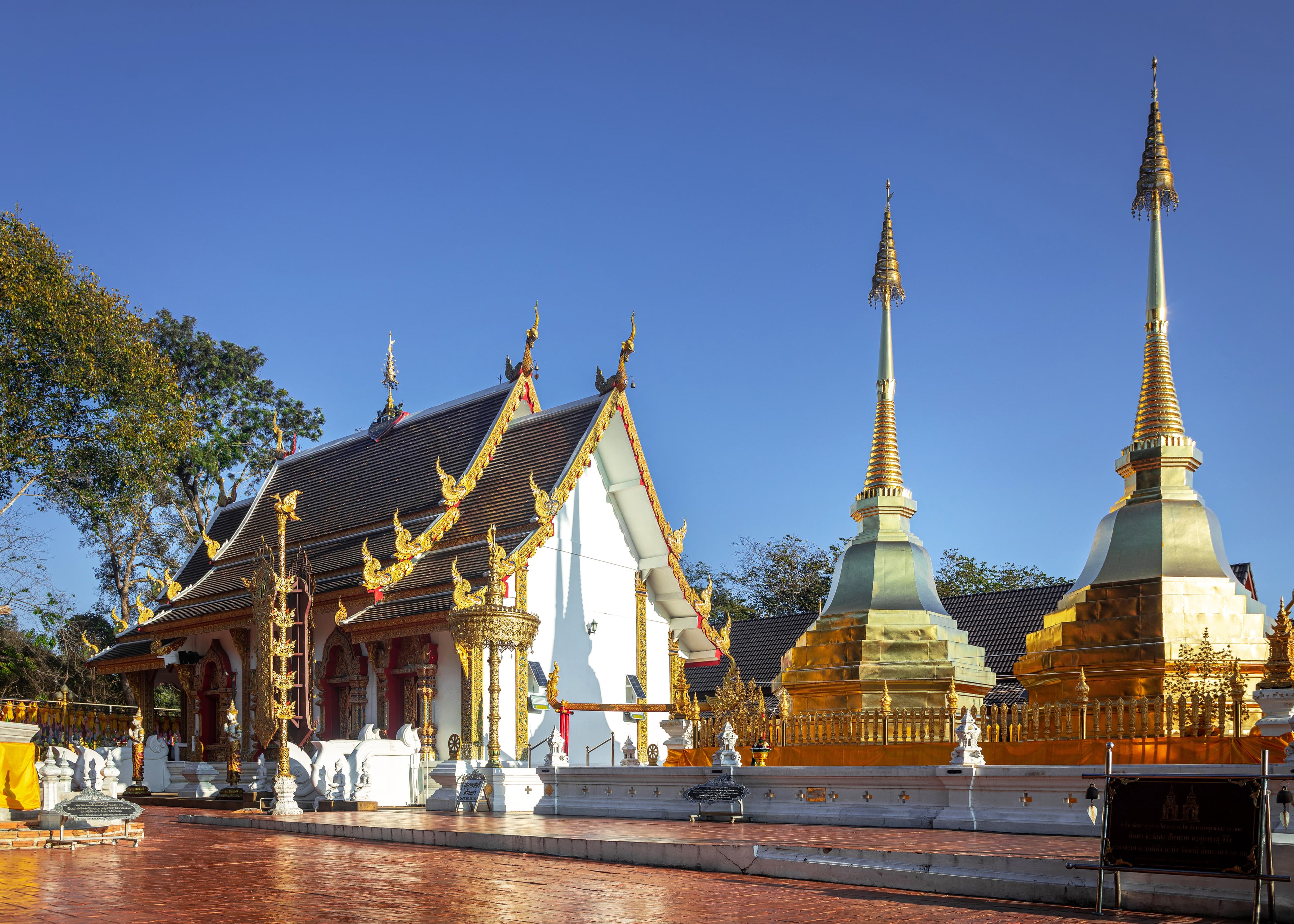
Wat Phra That Doi Tung in Mae Fa Luang, Chiang Rai, Thailand. Image source · CC BY 4.0
Visit essentials
A quick read before you go
- Etiquette
- Protect chedis, processions, bells, offering stations, and the boundary with nearby temples.
Overview
Twin golden chedis focus devotion on relics attributed by tradition to the Buddha. Mountain ascent gives the shrine a regional horizon, but the destination is not sacred only because it is high. Worshippers gather for relic homage, bells, offerings, procession, alms, and a bathing ceremony that renews Lanna relationships with the monument. Official accounts also associate Doi Tung with people born in the Year of the Pig.
That birth-year bond turns an ancient relic site into a recurring personal destination while remaining a devotional tradition rather than an empirically guaranteed source of fortune.
Why this place is sacred
Mountain weather, distance, bells, and the effort of ascent can intensify attention. These observable conditions do not establish that the summit radiates a measurable force. The collarbone identification of the relic is presented as religious tradition, not forensic fact. Claims that Pig-year visitors receive exceptional luck or that wishes are fulfilled are culturally prevalent and appear in official tourism accounts.
They are reported with a clear limit: blessing and efficacy belong to belief and personal testimony and are not independently verified.
Experience and orientation
Prepare for changing mountain weather and road conditions, then confirm access through the TAT-linked temple page or official tourism contacts. Do not transfer hours from another temple on the mountain. At the shrine, keep processional routes open, remove shoes where directed, and do not ring bells indiscriminately. During bathing rites, join only through an organized sequence; never pour liquids on protected fabric without instruction. Give local worshippers time at the twin chedis before moving closer.
Context and lineage
Official Thai sources identify Phra That Doi Tung as an ancient and highly revered Lanna monument. Traditional accounts say Buddha relics were enshrined here, and successive rulers and communities renewed the chedis. The site became a major northern religious landmark and retains particular meaning within the devotional observance associated with Pig-year births. A named annual ascent and bathing ceremony demonstrates current pilgrimage continuity.
Precise foundation dates and relic provenance vary across retellings, so the guide preserves those elements as tradition instead of converting them into uncontested archaeological facts.
Traditions and practice
Living practice includes relic homage, flowers, incense at authorized places, alms, chanting, procession, temple bells, and a recurrent official ascent honoring the relic shrine. The bathing ceremony is governed by custodians and should not be improvised. Pig-year visitors may understand the shrine as their birth-year relic destination. That relationship can be honored without promising protection, prosperity, or fulfilled wishes. Pilgrimage is an ethical practice of effort and attention, not a purchasable result.
Lanna Theravada Buddhism
ActiveLanna Theravada practice centers Buddha relics, merit, birth-year homage, and communal ascent.
Perspectives and open questions
Lanna relic devotion, pilgrimage, monument history, tourism, and exact-entity research qualify one another.
Scholarly perspective
Lanna Buddhism interprets the chedis through relic presence, merit, and regional guardianship. Pilgrimage studies considers ascent, procession, annual recurrence, and birth-year affiliation. Art and conservation history examines repeated rebuilding of the ancient monument. Tourism foregrounds the mountain view and auspicious reputation. Exact-entity research also matters: a nearby listing cannot supply hours for the relic shrine. These perspectives jointly sustain reverence and practical caution while rejecting both fabricated precision and unqualified supernatural claims.
The physical effort of reaching Doi Tung can become part of devotion without becoming a test of worthiness; older people, disabled visitors, and those using vehicles remain legitimate worshippers. Accessibility and spiritual seriousness should never be treated as opposites.
Plan your visit
Use the sourced monument point, but confirm current access through official government or tourism guidance because no exact Places record passed review.
Respectful visit
Protect chedis, processions, bells, offering stations, and the boundary with nearby temples.
Location
Map loads as you approach this section.
Pilgrim reflections
A portrait of encounter, not a score
Pilgrims describe what they felt, how present they could become, and whether the place would shape a journey. There are no stars and no ranking of traditions.
No reviewed reflections yet
The first pilgrims can help describe the character of being here.
Share a reflection
Available after an account-backed “Been there.” Every reflection is reviewed before publication.
Nearby sacred places
Explore other sacred places in the region. Proximity does not establish access or travel time; check each place’s guidance.

References
Sources consulted for this page. Source categories describe the publication, not a guarantee that every claim is verified. Traditional accounts and outside interpretations may differ.
- 01Phra That Doi Tung worship and bathing ceremony — Royal Thai GovernmentofficialSeparates Phra That Doi Tung from Wat Noi and documents the named ascent, relic homage, alms, procession, and bathing rites.
- 02Wat Phra That Doi Tung — Tourism Authority of Thailand, JapanofficialExact shrine identity, Buddha-relic tradition, Mae Sai location, continuing devotion, and Pig-year association.
- 03Phra That Doi Tung — Fine Arts Department of ThailandofficialRegistered-monument identity and cultural context.
- 04Wat Phra That Doi Tung 20250117 — Supanut ArunoprayoteacademicExact-monument photograph, reusable licence, and camera coordinates 20.324327, 99.832763.
- 05Phra That Doi Tung mapped monument — OpenStreetMap contributorsSource contextCorroborates the exact relic-monument footprint rather than nearby Wat Noi.
Share a photo
Help visitors recognize Wat Phra That Doi Tung. Every submission is reviewed before publication.