Wat Phra Kaew, Chiang Rai
The Emerald Buddha's discovery site now joins royal-temple worship to northern Buddhist education
Understand sacred places, explore living traditions, and learn how to engage respectfully with Pilgrim Map.
Access has not been verified. Check current local guidance before planning a visit.
Chiang Rai, Chiang Rai, Thailand
Read the sources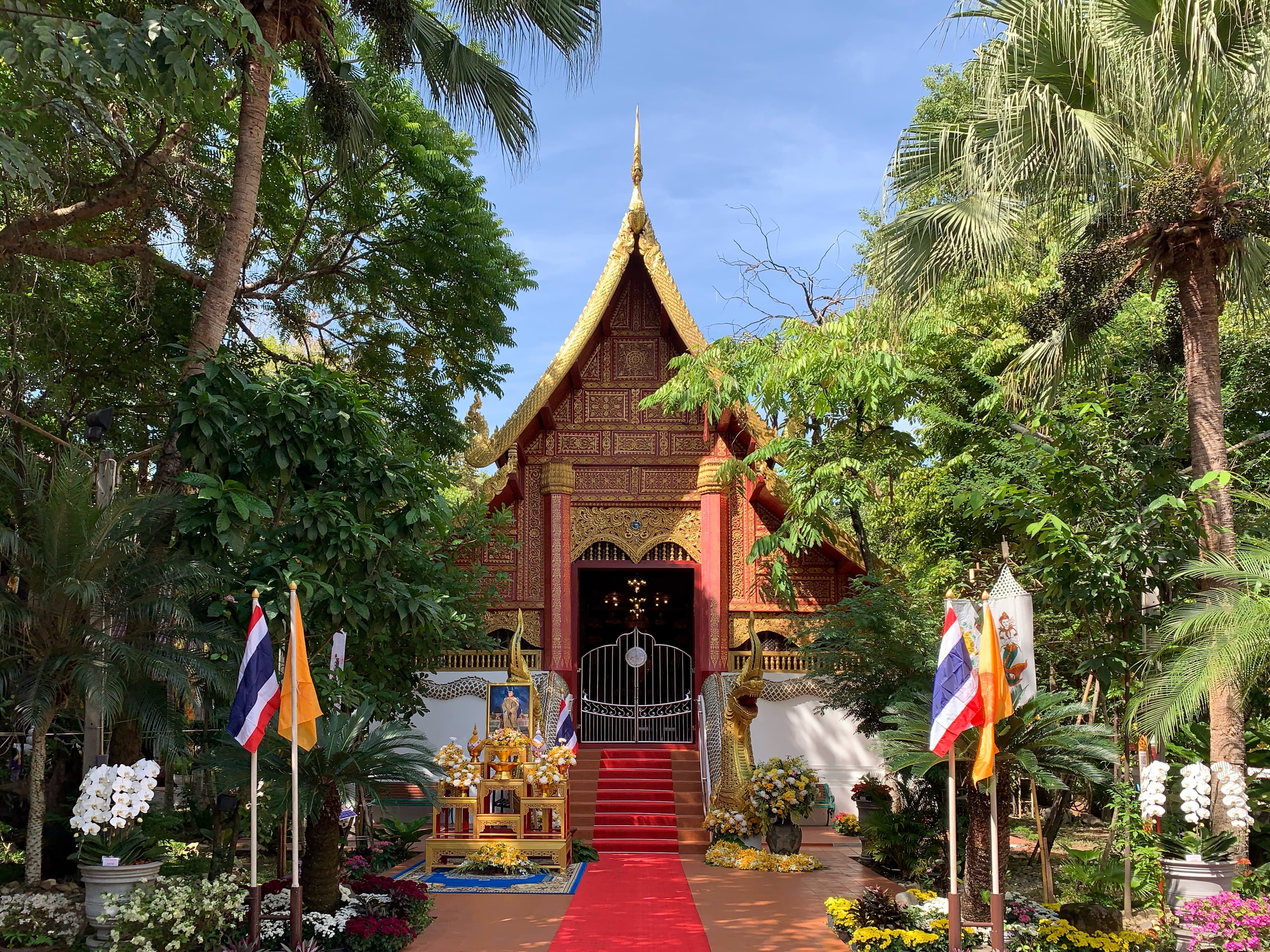
Wat Phra Kaew, Chiang Rai in Chiang Rai, Chiang Rai, Thailand. Image source · CC BY-SA 4.0
Visit essentials
A quick read before you go
- Etiquette
- Never tell worshippers they are viewing the Bangkok image, and keep educational or…
Overview
The most important object in Wat Phra Kaew's history is absent, and that absence must be described accurately. The Emerald Buddha associated with the damaged chedi moved through Lampang, Chiang Mai, and later capitals before reaching Bangkok. Chiang Rai's monastery did not become a mere former address. Phra Yok Chiang Rai, created in the twentieth century, now gives devotees a green-stone image rooted in the province, while Phra Jao Lan Thong and the resident community sustain other devotional relationships.
Discovery memory, present worship, education, and ecclesiastical administration therefore share the compound without requiring a replica to become the original.
Why this place is sacred
Wat Phra Kaew asks visitors to distinguish continuity from substitution. Reverence for the Emerald Buddha's discovery continues, but the historical image is not physically here. Phra Yok Chiang Rai is honored on its own terms as a later donation, not as a concealed duplicate with identical authority. The monastery's educational and administrative roles further anchor sacredness in living institutions.
Lightning appears in the discovery narrative as the event exposing the image, yet this should not become evidence that the site is supernaturally charged. The religious significance lies in how the discovery was interpreted and remembered.
Experience and orientation
Read labels closely enough to identify Phra Yok Chiang Rai, Phra Jao Lan Thong, and the chedi linked to the discovery narrative. Do not repeat the common error that the Bangkok Emerald Buddha is still housed here. Allow current worshippers the direct approach to the jade image and principal hall. Educational or administrative buildings are not automatically open attractions. The official regional tourism source supplies a current orientation, but posted temple rules govern photography, shoes, dress, and access.
A coherent visit follows the journey of one image historically while attending to different images present today.
Context and lineage
The temple was formerly known by another name before the fifteenth-century event that made it famous. According to the received account, lightning damaged a chedi and revealed a plaster-covered Buddha image whose green material became visible. The Emerald Buddha then moved to Lampang and Chiang Mai before later journeys took it to Laos, Thonburi, and Bangkok. Chiang Rai's Wat Phra Kaew received royal-temple status in 1978.
A new jade image, Phra Yok Chiang Rai, was created for the Princess Mother's ninetieth birthday and installed in a dedicated hall in the 1990s.
Traditions and practice
Theravada Buddhist practice now centers the images actually present, including Phra Yok Chiang Rai and Phra Jao Lan Thong, through homage, offerings, chanting, merit-making, education, and monastic observance. Historical respect for the Emerald Buddha's discovery does not justify pretending to worship the absent original. Use designated offering places, keep hall entrances open, and defer to the monastery's educational and ecclesiastical work.
If a guide or review promises the same blessing as Bangkok's image, treat that as personal or promotional interpretation rather than an authorized, verifiable guarantee.
Theravada Buddhism
ActiveTheravada Buddhism connects Phra Yok Chiang Rai, Phra Jao Lan Thong, monastic education, homage, and merit.
Perspectives and open questions
Discovery memory and palladium history remain powerful without making the later jade image materially identical to the original.
Scholarly perspective
Religious and political history follows the Emerald Buddha as a palladium whose movement marked changing centers of authority. Chiang Rai history emphasizes the discovery site and the temple's later royal and educational status. Art history distinguishes the original image, Phra Yok Chiang Rai, and Phra Jao Lan Thong rather than treating green material as identity. Popular accounts may attribute exceptional luck to the discovery ground or its later jade image. Those are reported devotional claims, not independently established outcomes.
Accurate naming is itself a form of respect at a site frequently confused with Bangkok.
Plan your visit
The central Chiang Rai setting is accessible, but hall openings and institutional work govern the useful visiting window.
Respectful visit
Never tell worshippers they are viewing the Bangkok image, and keep educational or administrative buildings free of casual intrusion.
Current practical details
Address
19 หมู่ที่ 1 Trairat Rd, Tambon Wiang, Amphoe Mueang Chiang Rai, Chang Wat Chiang Rai 57000, Thailand
Hours
Hours, fees, and access can change — verify on the official source before you travel. Practical details last checked Jul 2026.
Location
Map loads as you approach this section.
Pilgrim reflections
A portrait of encounter, not a score
Pilgrims describe what they felt, how present they could become, and whether the place would shape a journey. There are no stars and no ranking of traditions.
No reviewed reflections yet
The first pilgrims can help describe the character of being here.
Share a reflection
Available after an account-backed “Been there.” Every reflection is reviewed before publication.
Nearby sacred places
Explore other sacred places in the region. Proximity does not establish access or travel time; check each place’s guidance.

References
Sources consulted for this page. Source categories describe the publication, not a guarantee that every claim is verified. Traditional accounts and outside interpretations may differ.
- 01Wat Phra Kaeo — Tourism Authority of Thailand, Chiang Rai OfficeofficialOfficial regional tourism source reviewed for the discovery tradition, exact Chiang Rai identity, and Emerald Buddha journey.
- 02Wat Phra Kaew, Chiang Rai — Wikipedia — Wikipedia contributorsacademicCorroborates identity, location, and basic historical context; key claims require higher-tier corroboration.
- 03Q842276 — Wikidata — Wikidata contributorsacademicStructured identity and coordinate corroboration; not used alone for spiritual or historical claims.
- 04Wat Phra Kaew — Google Maps — Google PlacesSource contextStrong name, country, locality, and coordinate match; used only for practical visitor data and identity corroboration.
Pilgrim glossary
- Sangha
- The community of Buddhist practitioners, traditionally monks and nuns.
Share a photo
Help visitors recognize Wat Phra Kaew, Chiang Rai. Every submission is reviewed before publication.