Wat Phra That Doi Suthep
Relic, mountain ascent, and Lanna devotion overlook Chiang Mai
Understand sacred places, explore living traditions, and learn how to engage respectfully with Pilgrim Map.
Access has not been verified. Check current local guidance before planning a visit.
Chiang Mai, Chiang Mai, Thailand
Read the sources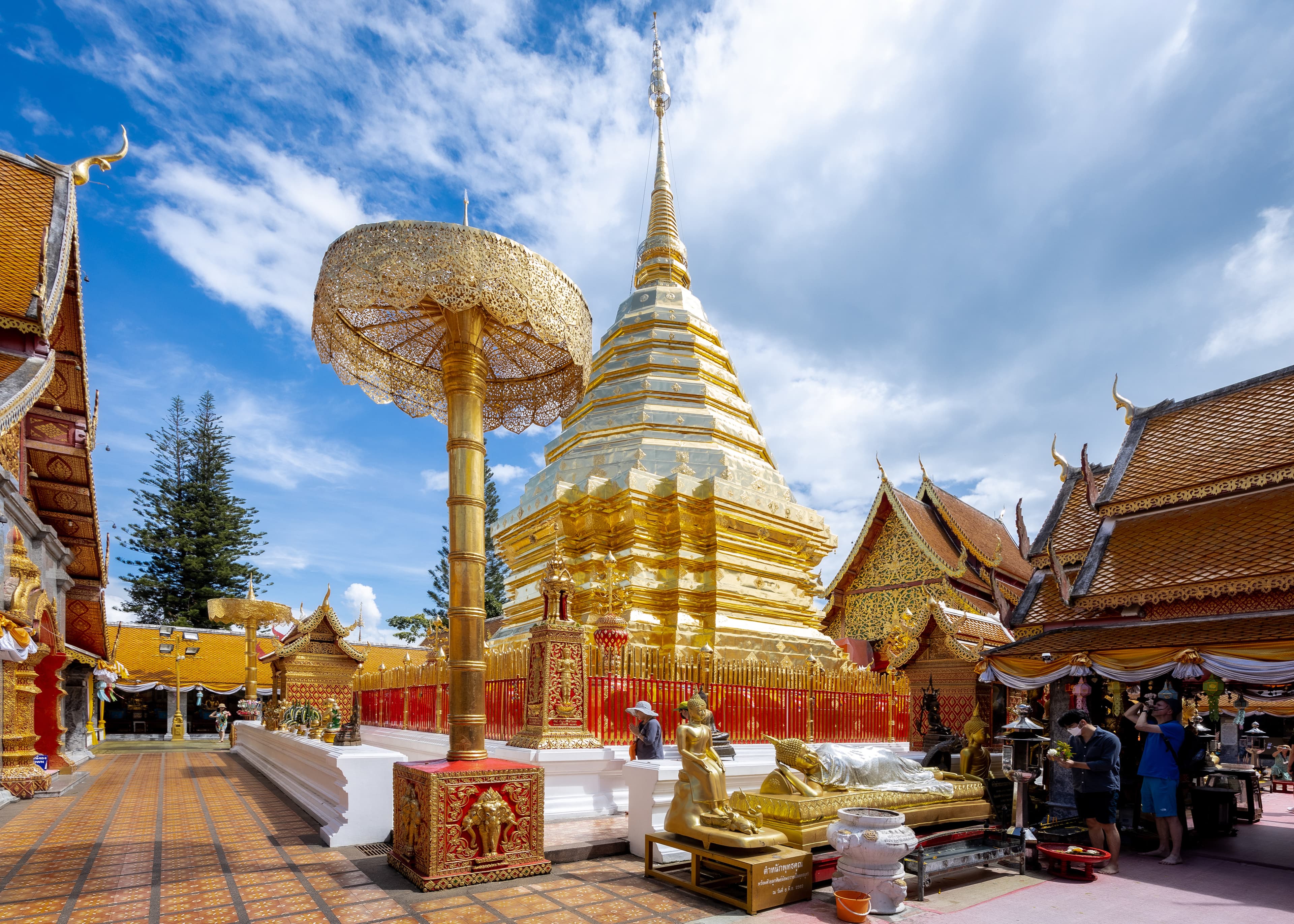
Wat Phra That Doi Suthep in Chiang Mai, Chiang Mai, Thailand. Image source · CC BY 4.0
Visit essentials
A quick read before you go
- Etiquette
- The 306-step naga stair is an approach, not a race or portrait set, and the terrace remains…
Overview
The mountain is visible from Chiang Mai long before its temple details can be seen. Arrival reverses that relationship: from the upper terrace, the city spreads below while the golden chedi draws worship inward. Devotees circumambulate, carry flowers, bow, chant, and pray at different sides of the reliquary. The official Tourism Authority account records distinct aspirations associated with the four directions, while the relic remains the central sacred focus.
The 306-step Naga stair gives ascent a bodily measure; a lift provides another route without reducing spiritual legitimacy. Doi Suthep's importance comes from durable Lanna veneration and the way the mountain shrine orients Chiang Mai, not from a requirement that every visitor climb.
Why this place is sacred
Relic devotion binds absence and presence. The Buddha is not physically alive at Doi Suthep, yet the enshrined relic makes recollection materially focused within Buddhist tradition. Mountain elevation adds separation from ordinary traffic, but should not be described as evidence of stronger cosmic energy. The route, forest, stair, bells, terraces, and view shape attention through ordinary perception.
Khruba Siwichai's role in the road's construction adds modern communal memory: easier access was created through collective labor and religious leadership, not by dissolving pilgrimage. The site remains sacred to Chiang Mai people because repeated worship connects the mountain to the city's identity across generations.
Experience and orientation
Begin at the Khruba Siwichai monument below the mountain if your route allows, then approach the upper temple with the distinction between memorial and relic shrine in mind. On the Naga stair, keep one side open and do not turn the balustrade into a seat. At the terrace, remove shoes where required and join circumambulation only in the indicated direction. Bells and devotional objects are not sound effects.
When visibility is clear, look down toward Chiang Mai after attending to the chedi; this order keeps the viewpoint from displacing worship. Fog, rain, heat, festival crowds, and road traffic can alter access substantially.
Context and lineage
Traditional accounts connect the foundation with a Buddha relic carried by a white elephant that climbed Doi Suthep, stopped, and died at the chosen place. Within Lanna Buddhist memory, the narrative explains sacred selection; it should be presented as tradition rather than zoological proof. Historical sources place the relic foundation in the late fourteenth century. Successive rulers and communities enlarged the temple.
In the 1930s, the revered northern monk Khruba Siwichai mobilized construction of the road from Chiang Mai, transforming practical access and becoming part of the mountain's sacred history. Modern transport, lifts, repairs, and visitor management continue that pattern of adaptation around an unchanged devotional center.
Traditions and practice
Common practice includes offerings, prayer at the chedi's sides, clockwise circumambulation where directed, chanting, meditation, ringing designated bells, and merit-making. The Tourism Authority describes hopes associated with four directions; these are traditional devotional meanings, not guaranteed results. An official provincial guide also identifies the recurrent Doi Suthep Pilgrimage on the night of Visakha Bucha, when worshippers walk from Chiang Mai toward the relic temple.
Visitors can carry flowers or join a circuit by following local examples, but should not step ahead of a group chanting or touch relic structures. Monks may offer blessings in authorized spaces. A non-Buddhist contemplative practice can be simple: walk one circuit without photographing, noticing when attention shifts between gold surface, repeated movement, mountain air, and the people whose devotion gives each element context.
Theravada Buddhism
ActiveLanna Theravada practice connects the Buddha relic, golden chedi, circumambulation, merit, and Chiang Mai's civic devotion.
Perspectives and open questions
The white elephant belongs to sacred foundation tradition; the relic's importance is devotional rather than scientific proof of mountain energy.
Scholarly perspective
Lanna Buddhist interpretation centers the relic and the merit of approaching it. Regional history sees Doi Suthep as a landmark through which Chiang Mai recognizes itself. Infrastructure history adds Khruba Siwichai and communal road building; environmental interpretation asks how forest, traffic, water, and crowd pressure affect the mountain. Popular visitors often describe peace, power, or answered prayers. These accounts show experiential and devotional prevalence but do not independently verify a metaphysical field. The page therefore keeps its language grounded.
Height can change breathing, weather can alter sound, and repeated worship can intensify attention. None of those observable conditions diminishes traditional sacred meaning when they are distinguished from proof claims.
Plan your visit
Mountain weather, transport congestion, stair access, and festival crowds all require a fresh check before leaving Chiang Mai.
Respectful visit
The 306-step naga stair is an approach, not a race or portrait set, and the terrace remains active worship space.
Current practical details
Address
Suthep, Mueang Chiang Mai District, Chiang Mai 50200, Thailand
Phone
Hours
Hours, fees, and access can change — verify on the official source before you travel. Practical details last checked Jul 2026.
Location
Map loads as you approach this section.
Pilgrim reflections
A portrait of encounter, not a score
Pilgrims describe what they felt, how present they could become, and whether the place would shape a journey. There are no stars and no ranking of traditions.
No reviewed reflections yet
The first pilgrims can help describe the character of being here.
Share a reflection
Available after an account-backed “Been there.” Every reflection is reviewed before publication.
Nearby sacred places
Explore other sacred places in the region. Proximity does not establish access or travel time; check each place’s guidance.


References
Sources consulted for this page. Source categories describe the publication, not a guarantee that every claim is verified. Traditional accounts and outside interpretations may differ.
- 01Chiang Mai-Lamphun: Hotspots for Digital Nomads — Tourism Authority of ThailandofficialOfficial account of the Naga stair, relic chedi, directional prayer, Lanna significance, and access from Chiang Mai.
- 02Chiang Mai 2022 — Doi Suthep Pilgrimage — Ministry of Foreign Affairs, Kingdom of ThailandofficialOfficial provincial guide identifying the recurrent Doi Suthep Pilgrimage on the night of Visakha Bucha, when worshippers walk from Chiang Mai to the temple.
- 03Wat Phra That Doi Suthep — Wikipedia — Wikipedia contributorsacademicCorroborates identity, location, and basic historical context; key claims require higher-tier corroboration.
- 04Q1517698 — Wikidata — Wikidata contributorsacademicStructured identity and coordinate corroboration; not used alone for spiritual or historical claims.
- 05Wat Phra That Doi Suthep — Google Maps — Google PlacesSource contextStrong name, country, locality, and coordinate match; used only for practical visitor data and identity corroboration.
Share a photo
Help visitors recognize Wat Phra That Doi Suthep. Every submission is reviewed before publication.