Wat Pa Maha Chedi Kaeo
Discarded bottles become a living Buddhist material ethic
Understand sacred places, explore living traditions, and learn how to engage respectfully with Pilgrim Map.
Access has not been verified. Check current local guidance before planning a visit.
Khun Han, Si Sa Ket, Thailand
Read the sources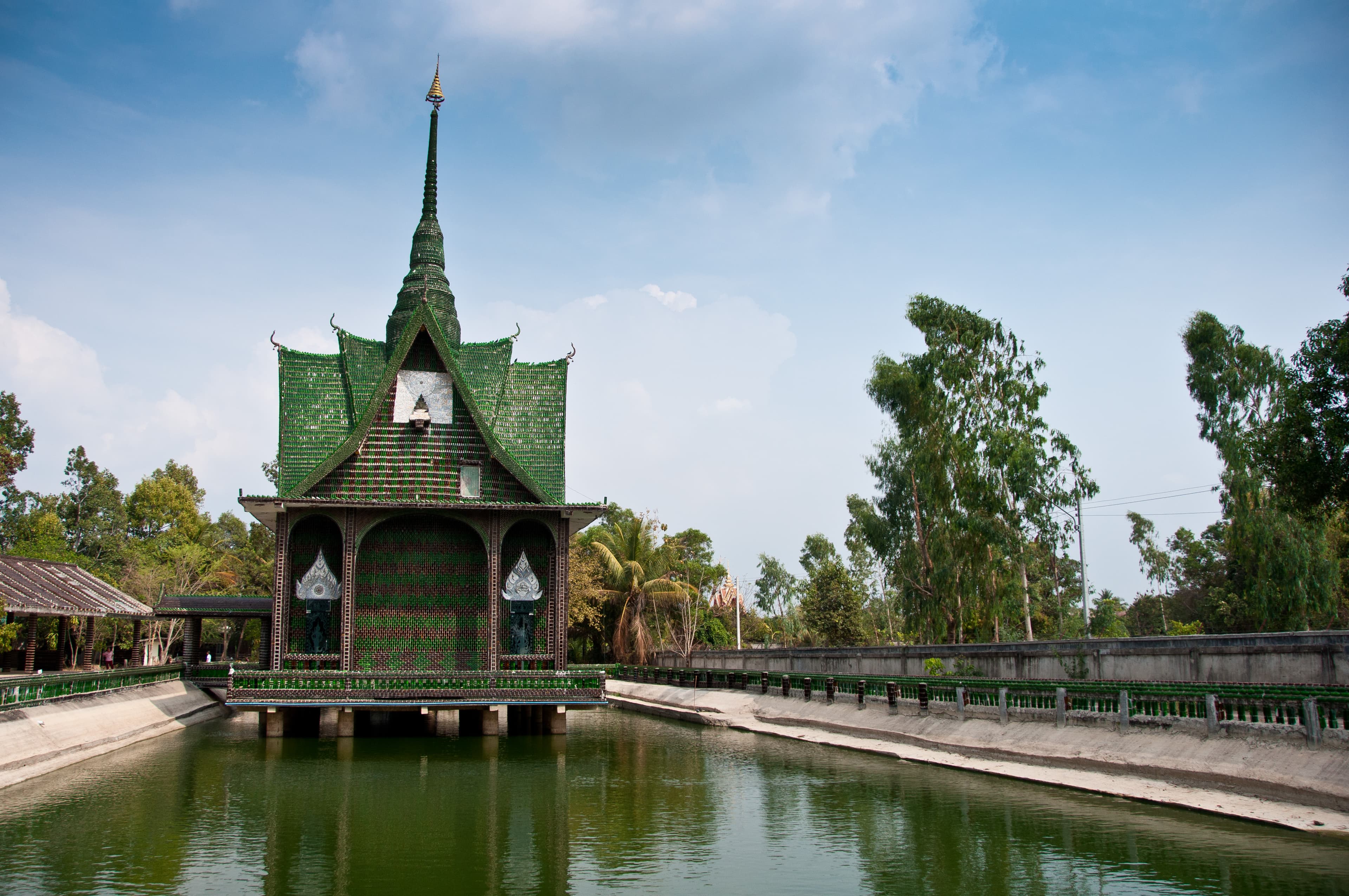
Wat Pa Maha Chedi Kaeo in Khun Han, Si Sa Ket, Thailand. Image source · CC BY-SA 2.0
Visit essentials
A quick read before you go
- Etiquette
- Protect worshippers, historic fabric, and closed thresholds.
Overview
Bottle walls catch light differently from conventional plaster, making ordinary containers impossible to ignore. In a Buddhist context, that material choice can prompt reflection on consumption, reuse, labor, and impermanence. The temple is not sacred because a round number of bottles confers power; even the popular million-bottle label functions as a name rather than an audited inventory. Buddha images and monastic practice remain the devotional focus, while recycled glass gives the community's material ethic a distinctive architectural form.
Why this place is sacred
Colored light and repeated glass patterns can make interiors feel jewel-like. That sensory effect is architectural, not proof that bottles store spiritual energy. The accessible provincial record connects bottle reuse with Buddhist art and teaching, but no widespread miracle claim is included. The guide also avoids treating the popular million-bottle name as an audited inventory or supplying a precise construction chronology unsupported by the reviewed sources.
Experience and orientation
Look closely without touching bottle walls, picking at mortar, or placing candles against glass. Sun-heated surfaces, reflections, and narrow passages require ordinary care. Remove shoes where directed and remember that this remains a monastery rather than a recycling exhibit. The strong Google Places record supplies the exact listing and address, but no phone, opening hours, or temple-controlled website was confirmed.
Context and lineage
The reviewed Tourism Authority pages identify Wat Pa Maha Chedi Kaeo in Si Sa Ket and its Wat Lan Khuat name. The accessible provincial record adds a specific local account: Luang Pu Lod encountered discarded bottles at the site and adopted them as decorative material and a vehicle for Buddhist instruction. It specifically names the entrance arch, parking area, ordination hall, pavilion, bell tower, monastic quarters, and washrooms among the bottle-decorated parts of the compound.
This supports a founder context without establishing a complete phased construction timeline. The reuse of discarded material is directly visible and culturally meaningful, yet it should not be romanticized as eliminating all environmental costs. The temple is not UNESCO-listed.
Traditions and practice
Visitors may bow before Buddha images, make merit through authorized donations, observe monastic spaces, and reflect on the relation between consumption and care. Bringing an unsolicited bottle does not automatically constitute an offering; construction materials should be accepted only through current temple channels. The official pages name no recurring pilgrimage, so popularity alone cannot set that metadata. Treat the glass surfaces as religious fabric and let worshippers, not photography, set the pace in halls.
Thai Theravada Buddhism
ActiveDocumented tradition layer 1.
Material reuse stewardship
ActiveDocumented tradition layer 2.
Perspectives and open questions
Religious, historical, and environmental evidence remain distinct.
Scholarly perspective
Theravada Buddhism provides the devotional frame of Buddha, sangha, and merit. Environmental interpretation examines reuse and the afterlife of consumer materials; architectural study considers how bottles become walls, pattern, and filtered light. Tourism popularizes the Million Bottle name, which is memorable but not a scientific count. The available official pages establish identity and material character more strongly than a detailed building chronology, so the latter remains limited. The bottle-covered complex is a modern monastic project; no ancient foundation is asserted.
Glass also complicates the easy language of sustainability. Reuse diverts containers and creates memorable surfaces, but it does not make construction impact-free or authorize visitors to deliver arbitrary waste. The responsible lesson is narrower and stronger: a monastic community redirected familiar discarded material into durable religious fabric. Current custodians decide what repairs require. Visitors honor that choice by protecting mortar joints, using authorized donation channels, and avoiding unsupported totals presented as precise fact.
Bottle colors, brands, and counts must never be inferred from one photograph. Repairs may introduce different materials without weakening the original ethical lesson.
Plan your visit
Day-of authority overrides routine listing data.
Respectful visit
Protect worshippers, historic fabric, and closed thresholds.
Current practical details
Address
JC99+9M9, Si, Khun Han District, Si Sa Ket 33150, Thailand
Hours, fees, and access can change — verify on the official source before you travel. Practical details last checked Jul 2026.
Location
Map loads as you approach this section.
Pilgrim reflections
A portrait of encounter, not a score
Pilgrims describe what they felt, how present they could become, and whether the place would shape a journey. There are no stars and no ranking of traditions.
No reviewed reflections yet
The first pilgrims can help describe the character of being here.
Share a reflection
Available after an account-backed “Been there.” Every reflection is reviewed before publication.
Nearby sacred places
Explore other sacred places in the region. Proximity does not establish access or travel time; check each place’s guidance.
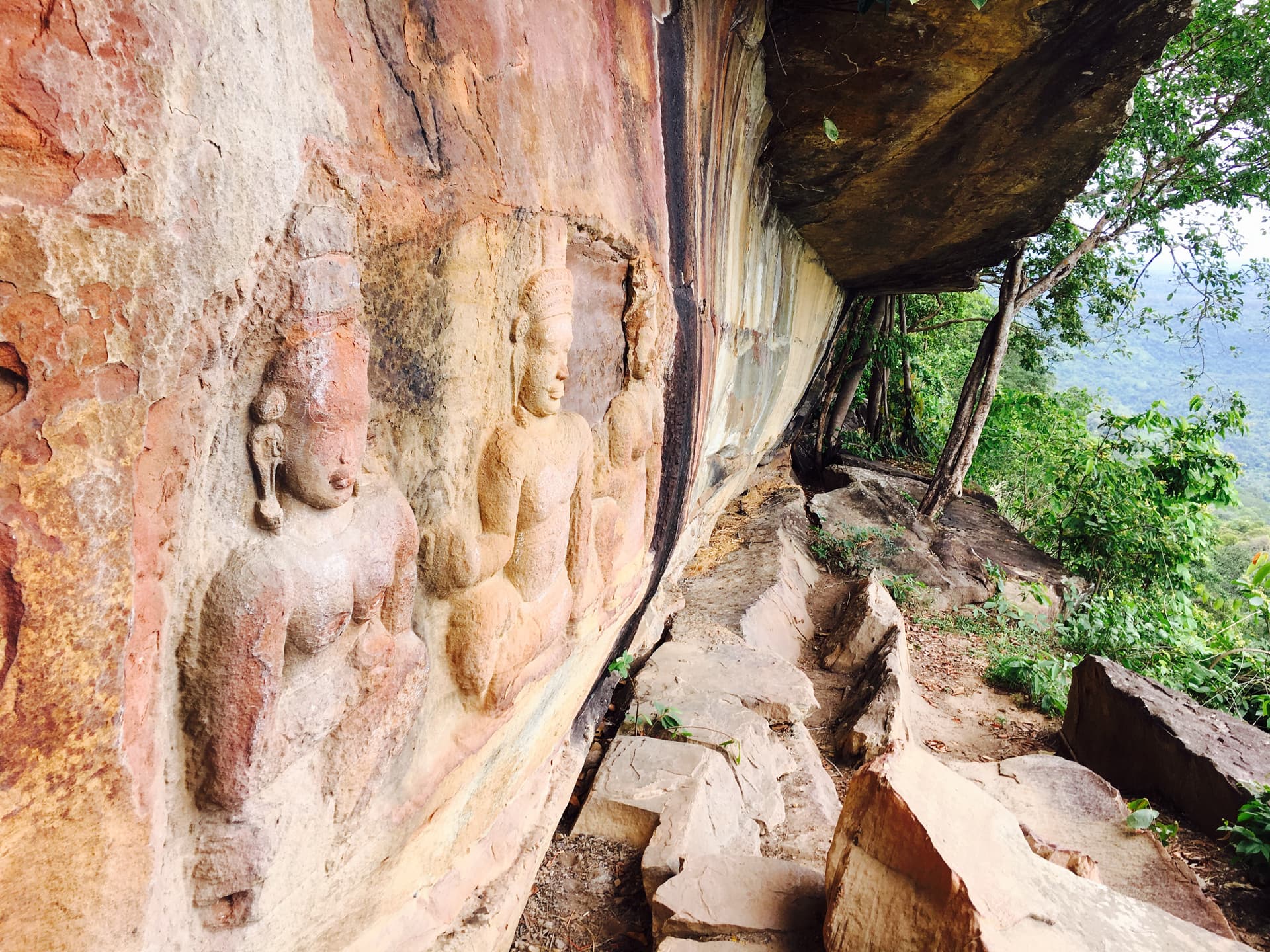
Prasat Khao Phra Wihan Viewpoint and Thai Sacred Approach
Kantharalak, Si Sa Ket, Thailand
36.8 km away
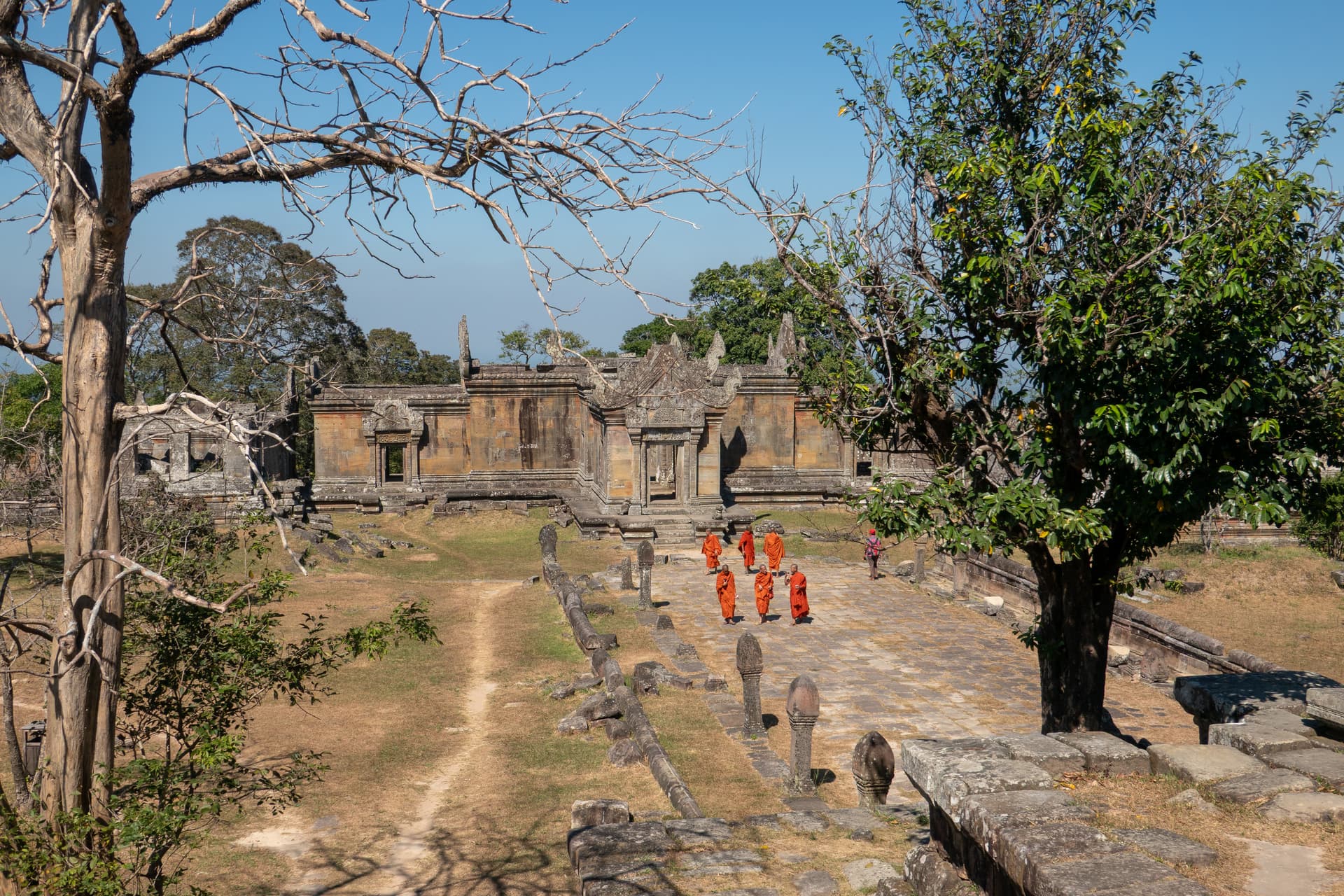
Prasat Preah Vihear
Choam Ksant, Preah Vihear, Cambodia
37.8 km away
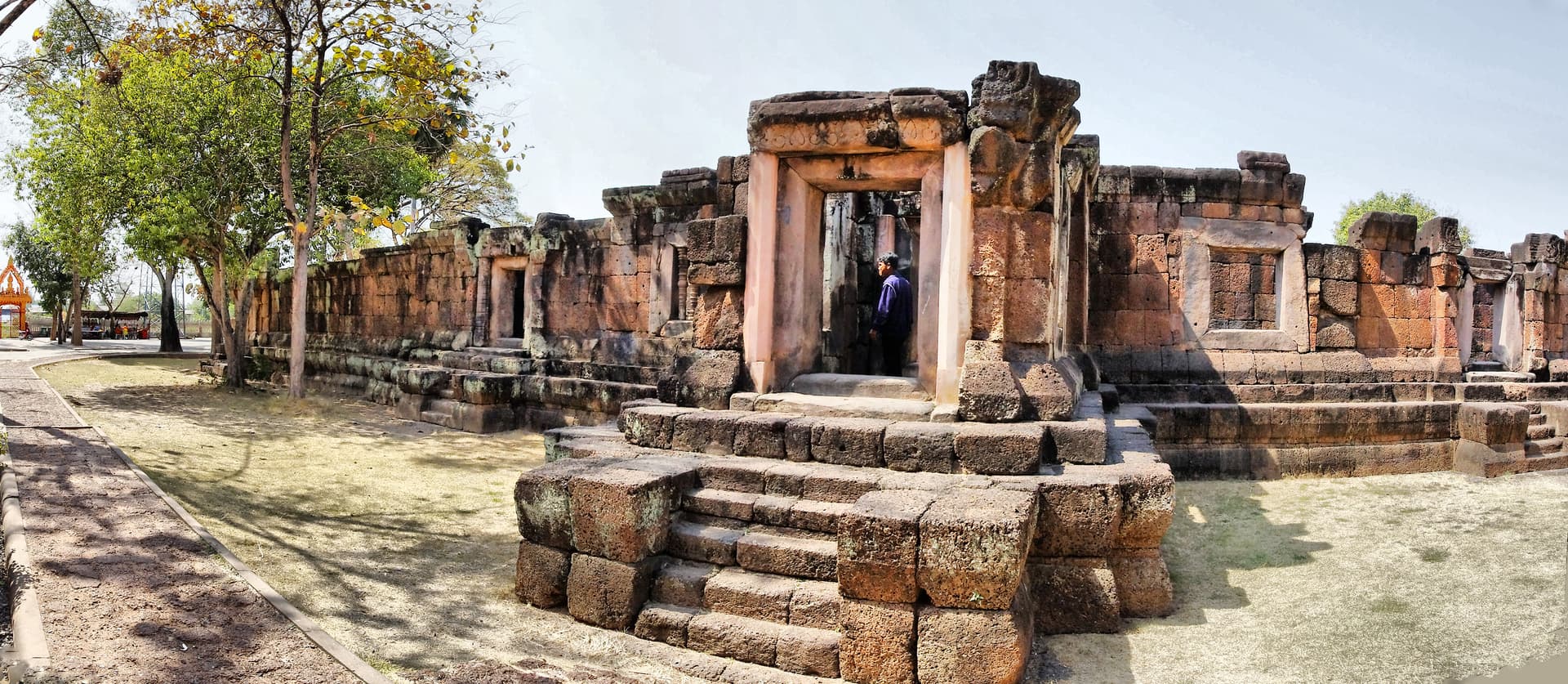
Prasat Sa Kamphaeng Yai
Uthumphon Phisai, Si Sa Ket, Thailand
62.2 km away

Koh Ker Archaeological Site
Srayang, Preah Vihear, Cambodia
93.7 km away
References
Sources consulted for this page. Source categories describe the publication, not a guarantee that every claim is verified. Traditional accounts and outside interpretations may differ.
- 01Wat Pa Maha Chedi Kaew (Wat Lan Khuad) — Google PlacesofficialExact practical metadata accepted after strong name, country, locality, and coordinate review.
- 02Wat Pa Maha Chedi Kaeo or Wat Lan Khuat — Tourism Authority of ThailandofficialExact official identity, alternate name, and bottle-built visitor context.
- 03Si Sa Ket — Tourism Authority of ThailandofficialOfficial province page names Wat Pa Maha Chedi Kaeo among Si Sa Ket highlights.
- 04Si Sa Ket attractions: Wat Lan Khuat — Si Sa Ket Provincial Local Administration OfficeofficialAccessible provincial-government record confirms the exact formal and popular names, Khun Han location, glass-bottle construction, monastic founder context, and Buddhist teaching purpose.
Pilgrim glossary
- Sangha
- The community of Buddhist practitioners, traditionally monks and nuns.
Share a photo
Help visitors recognize Wat Pa Maha Chedi Kaeo. Every submission is reviewed before publication.