Prasat Khao Phra Wihan Viewpoint and Thai Sacred Approach
A Thai cliff approach faces a Shiva temple inscribed in Cambodia
Understand sacred places, explore living traditions, and learn how to engage respectfully with Pilgrim Map.
Access has not been verified. Check current local guidance before planning a visit.
Kantharalak, Si Sa Ket, Thailand
Read the sources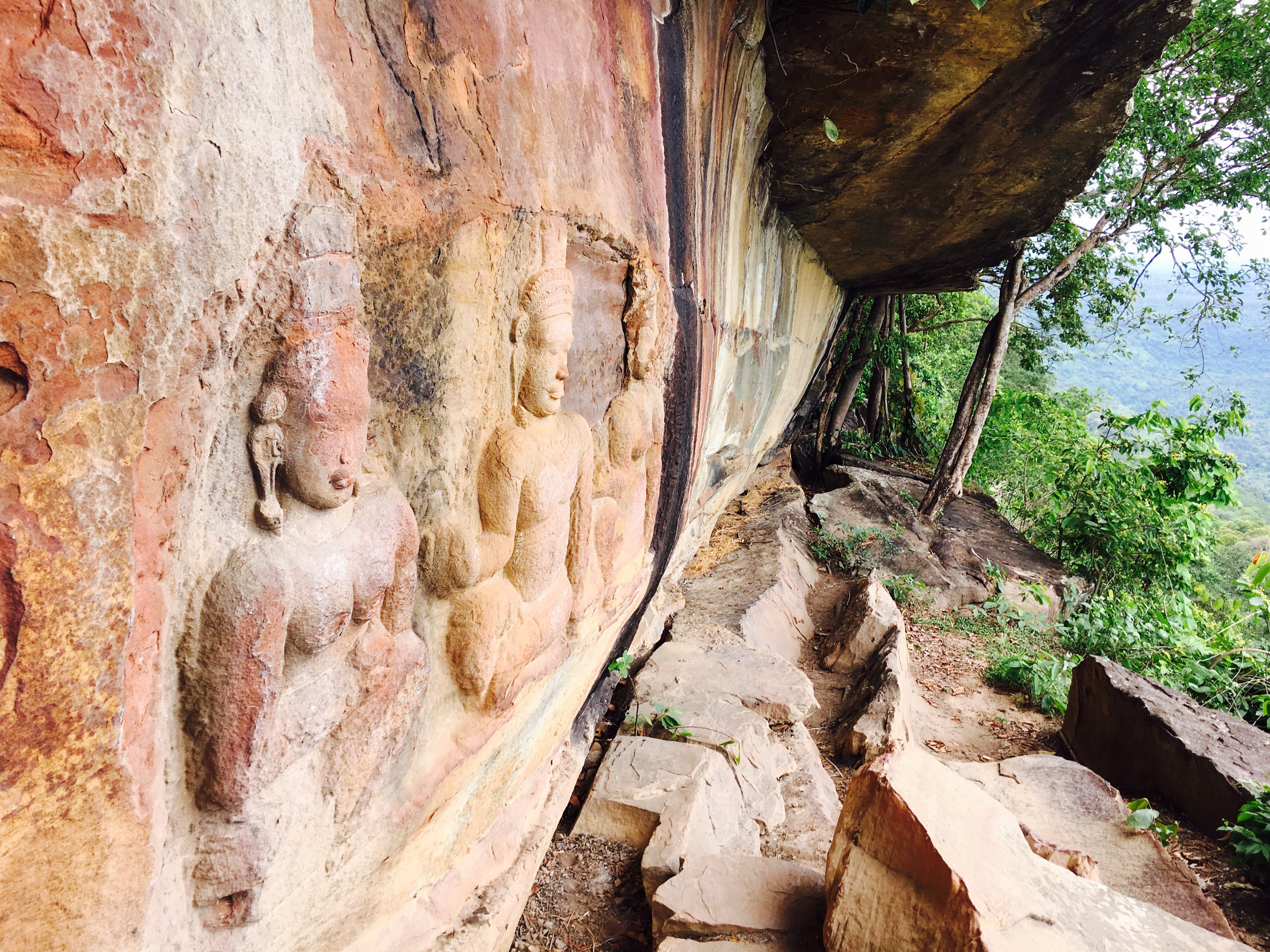
Prasat Khao Phra Wihan Viewpoint and Thai Sacred Approach in Kantharalak, Si Sa Ket, Thailand. Image source · CC BY-SA 4.0
Visit essentials
A quick read before you go
- Etiquette
- Protect worshippers, historic fabric, and closed thresholds.
Overview
From the Thai escarpment, the sacred complex is understood through distance, topography, and a border that has shaped modern access. UNESCO describes the Cambodian temple as an eight-hundred-metre axial sequence adapted to a cliff and dedicated to Shiva. The Thai approach participates in the wider landscape history, but legal location and inscription scope remain clear.
Spiritual significance derives from orientation toward a major Khmer sanctuary and from older cultural marks on the Thai plateau; it does not authorize claiming ownership, current temple custody, or unrestricted passage.
Why this place is sacred
Mist and the dramatic drop can make the plateau feel otherworldly. UNESCO records a local paradise legend around the temple's halo, yet that belongs to the Cambodian sacred complex and is not proof of supernatural geography on the Thai viewpoint. The legend is reported as tradition and is not independently verified. Border tension, closures, and memory can also intensify emotion.
Visitors should distinguish that historical weight from claims of energy, and should never treat a contested frontier as a stage for nationalist performance.
Experience and orientation
Confirm the national park and border situation on the day of travel; access can change rapidly and a visible temple does not imply permission to cross. Stay behind barriers, carry water, protect yourself from heat and lightning, and do not approach cliff edges for photographs. The exact strong Places match identifies the Thai national-park area and supplies practical fields, while UNESCO supplies temple history only.
No website candidate is promoted as the temple's official site, and Cambodian entry rules are outside this record.
Context and lineage
UNESCO places the Temple of Preah Vihear in Cambodia and traces its history from a ninth-century hermitage to an eleventh-century architectural masterpiece dedicated to Shiva. Its 2008 inscription is dossier 1224rev. Tourism Authority material describes Si Sa Ket as a Thai gateway and notes that border conflict can close access. The Thai viewpoint and approach are therefore historically related but outside the inscribed property.
This page records that precise boundary rather than reproducing older tourism language that blurs viewpoint, crossing, and temple.
Traditions and practice
There is no verified current Hindu rite at the Thai viewpoint that visitors should imitate. Respectful practice consists of learning the Shiva dedication, protecting rock art and park ecology, observing border instructions, and approaching the distant temple without appropriation. Do not leave offerings on natural cliffs, carve symbols, fly drones near security zones, or perform political gestures. The sources do not establish a named contemporary pilgrimage on the Thai side, so no pilgrimage metadata is assigned.
The approach is marked sacred pathway only in a historical-landscape sense.
Historic Khmer Shaivism
HistoricalDocumented tradition layer 1.
Protected landscape stewardship
ActiveDocumented tradition layer 2.
Perspectives and open questions
Religious, historical, and environmental evidence remain distinct.
Scholarly perspective
Khmer religious history reads the axis, sanctuaries, stairways, and Shiva dedication. UNESCO heritage law fixes the inscribed property in Cambodia. Thai national-park interpretation addresses viewpoint, cliff, access, and local cultural traces, while diplomatic history explains why practical status may change. Holding these perspectives together is essential: landscape relationship does not erase national or heritage boundaries. The site can be spiritually resonant from Thailand without being mislabeled as a Thai temple or UNESCO component.
The Cambodian temple developed from a ninth-century hermitage and principally dates to the first half of the eleventh century; the Thai viewpoint is a separate managed landscape. Map precision carries ethical weight at this border. Coordinates for the Thai park listing locate a viewpoint and managed approach; UNESCO's coordinates locate the Cambodian property. Combining them would misstate custody, visitor rights, and inscription scope. The separated metadata is therefore not bureaucratic trivia.
It protects cultural accuracy, supports safer travel decisions, and acknowledges that admiration for Khmer sacred architecture need not be expressed through territorial ambiguity or unauthorized crossing.
Plan your visit
Day-of authority overrides routine listing data.
Respectful visit
Protect worshippers, historic fabric, and closed thresholds.
Current practical details
Address
Sao Thong Chai, Kantharalak District, Si Sa Ket 33110, Thailand
Phone
Hours
Hours, fees, and access can change — verify on the official source before you travel. Practical details last checked Jul 2026.
Location
Map loads as you approach this section.
Pilgrim reflections
A portrait of encounter, not a score
Pilgrims describe what they felt, how present they could become, and whether the place would shape a journey. There are no stars and no ranking of traditions.
No reviewed reflections yet
The first pilgrims can help describe the character of being here.
Share a reflection
Available after an account-backed “Been there.” Every reflection is reviewed before publication.
Watch deeper
Films, episodes, and recorded talks for visitors who want more context before or after a visit. Speculative and alternative-history entries are labelled as perspectives, not as sources for established claims.
Nearby sacred places
Explore other sacred places in the region. Proximity does not establish access or travel time; check each place’s guidance.


References
Sources consulted for this page. Source categories describe the publication, not a guarantee that every claim is verified. Traditional accounts and outside interpretations may differ.
- 01Khao Phra Wihan National Park Area — Google PlacesofficialExact practical metadata accepted after strong name, country, locality, and coordinate review.
- 02Temple of Preah Vihear — UNESCO World Heritage CentreofficialCambodian property 1224rev, Shiva dedication, date, axis, architecture, and landscape.
- 03Si Sa Ket — Tourism Authority of ThailandofficialThai gateway, national-park setting, and access warning tied to border conflict.
- 04Preparatory assistance for Preah Vihear — UNESCO World Heritage CentreofficialTemple orientation, divine landscape interpretation, mist legend, and Cambodia scope.
Share a photo
Help visitors recognize Prasat Khao Phra Wihan Viewpoint and Thai Sacred Approach. Every submission is reviewed before publication.