Wat Nang Phaya, Si Satchanalai
Delicate stucco vines survive on a Si Satchanalai image hall
Understand sacred places, explore living traditions, and learn how to engage respectfully with Pilgrim Map.
Access has not been verified. Check current local guidance before planning a visit.
Si Satchanalai, Sukhothai, Thailand
Read the sources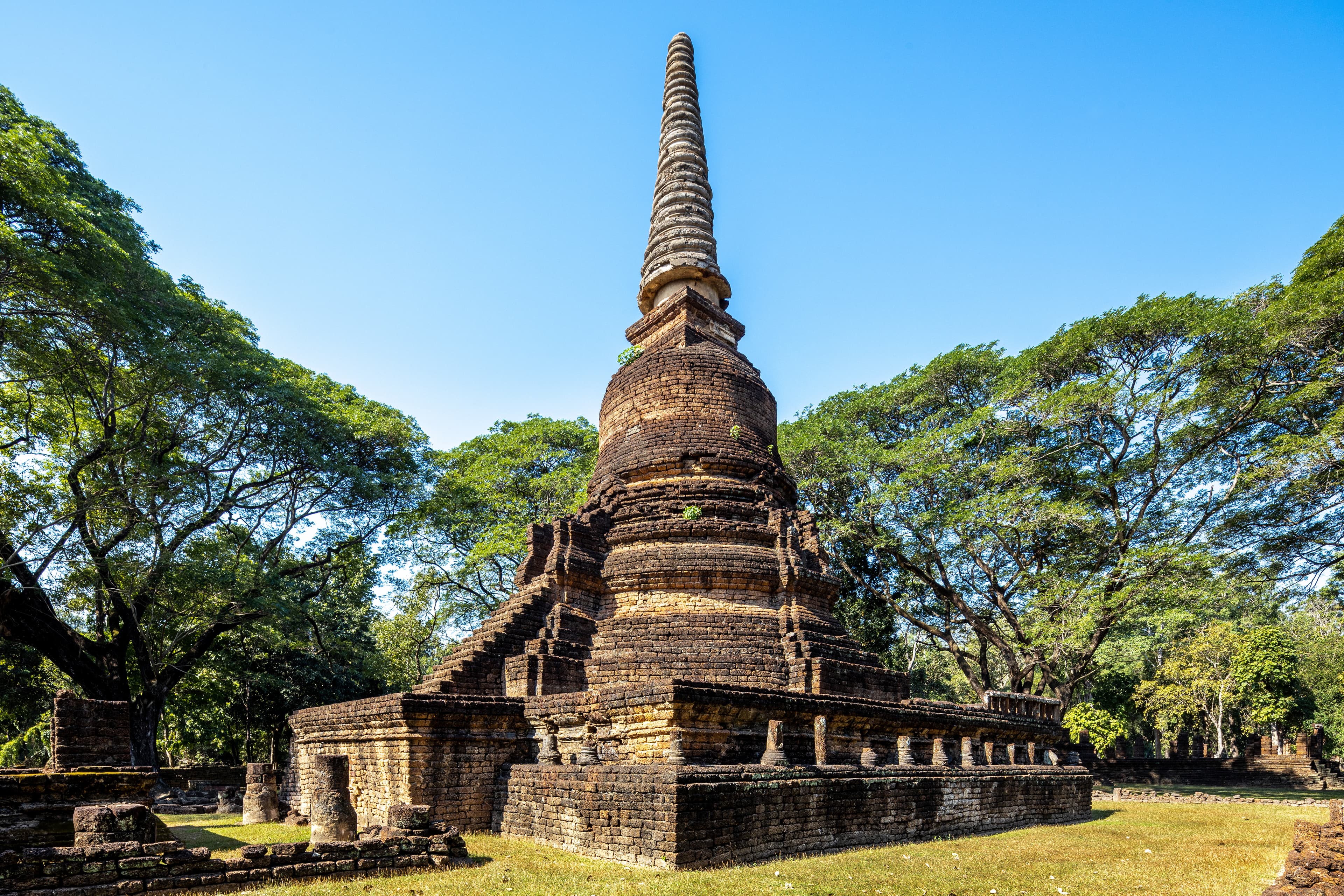
Wat Nang Phaya, Si Satchanalai in Si Satchanalai, Sukhothai, Thailand. Image source · CC BY 4.0
Visit essentials
A quick read before you go
- Etiquette
- Protect friable stucco, laterite, barriers, treatment zones, and the dignity of surviving Buddha…
Overview
The temple's most fragile testimony survives not in monumental scale but on the exterior of the principal hall. Stucco vines, floral forms, celestial or human figures, and architectural motifs once turned a masonry wall into a living ornamental skin. Within that frame, a Buddha image and the relation between hall and chedi ordered worship. The name Nang Phaya, often rendered 'queen,' encourages romantic stories, but exact patronage remains uncertain in the reviewed evidence.
Sacred significance is strongest where architecture is clear: image hall, reliquary form, boundary, and the care invested in ornament around Buddhist practice.
Why this place is sacred
Ornament invites close looking, which also creates the site's central ethical test. The nearer a visitor moves, the greater the risk to friable stucco. Spiritual attention here should therefore become restraint. Floral surfaces may suggest growth and abundance, yet they do not prove goddess worship, feminine energy, or a supernatural queen cult. Those interpretations circulate easily from the name, but the official evidence supports a Buddhist temple with refined decorative work.
Uncertainty about patronage remains visible rather than being filled by metaphysical language.
Experience and orientation
Approach the decorated wall from the marked viewing position and use optical zoom instead of stepping over barriers. Compare surviving stucco with the plain laterite where surfaces have vanished; loss is part of the evidence. Then locate the hall's Buddha image and the principal chedi to restore ritual orientation. Do not touch, trace, or wet ornament to improve photographs. Shade can obscure shallow relief, but artificial contact is never justified.
Follow park guidance around scaffolding or treatment zones, and leave narrow paths clear for other visitors.
Context and lineage
Fine Arts places Wat Nang Phaya within the walled city of Si Satchanalai and documents a principal chedi, hall, Buddha imagery, and noted stucco decoration. Comparative style connects the complex with late Sukhothai and early Ayutthaya artistic exchange. The identity of a royal woman implied by the popular name is not established strongly enough to present as fact. Conservation has been essential because stucco survives unevenly on exposed laterite.
UNESCO property 574, inscribed in 1991, includes Si Satchanalai with Sukhothai and Kamphaeng Phet as associated historic towns.
Traditions and practice
Historical activity centered Buddha worship, stupa reverence, monastic life, and merit expressed through building and ornament. The protected ruin does not support improvised offerings on old surfaces or claims to revive a queen's rite. Visitors may bow from the path, but incense, gold leaf, food, and water must stay away from conserved masonry. There is no verified resident sangha or recurring pilgrimage for this exact monument. Present practice is the disciplined protection of evidence that once framed devotion.
Theravada Buddhism
HistoricalHistoric Theravada devotion centered the Buddha image, chedi, merit, and monastic community.
Heritage stewardship
ActiveFine Arts care prioritizes rare stucco whose surviving surface is especially vulnerable to contact and moisture.
Perspectives and open questions
Buddhist function, art history, archaeology, conservation science, and naming tradition remain differentiated.
Scholarly perspective
Buddhist history reads hall, image, and chedi as a functional sacred ensemble. Art history studies the plant scrolls, figures, and regional exchanges visible in stucco. Archaeology considers chronology and plan; conservation science addresses salts, moisture, biological growth, and visitor contact. Feminine readings prompted by the name may be culturally interesting but remain speculative without stronger sources. UNESCO adds a landscape and governance frame.
These perspectives support a distinctive page while excluding unsupported claims of goddess identity, queenly haunting, or transferable energy.
Plan your visit
Strong Places supports the exact monument; conservation work can change access without notice.
Respectful visit
Protect friable stucco, laterite, barriers, treatment zones, and the dignity of surviving Buddha imagery.
Current practical details
Address
CQHQ+FCQ, Si Satchanalai, Si Satchanalai District, Sukhothai 64190, Thailand
Hours
Hours, fees, and access can change — verify on the official source before you travel. Practical details last checked Jul 2026.
Location
Map loads as you approach this section.
Pilgrim reflections
A portrait of encounter, not a score
Pilgrims describe what they felt, how present they could become, and whether the place would shape a journey. There are no stars and no ranking of traditions.
No reviewed reflections yet
The first pilgrims can help describe the character of being here.
Share a reflection
Available after an account-backed “Been there.” Every reflection is reviewed before publication.
Nearby sacred places
Explore other sacred places in the region. Proximity does not establish access or travel time; check each place’s guidance.

References
Sources consulted for this page. Source categories describe the publication, not a guarantee that every claim is verified. Traditional accounts and outside interpretations may differ.
- 01Sukhothai and Si Satchanalai Historical Parks guide — Fine Arts DepartmentofficialOfficial exact-site layout, Buddha imagery, stucco decoration, chronology, and park context.
- 02Historic Town of Sukhothai and Associated Historic Towns — UNESCO World Heritage CentreofficialAuthoritative inscription, component scope, criteria, and management context.
- 03Wat Nang Phaya, Si Satchanalai — Google Maps — Google PlacesSource contextStrong name, country, locality, and type match; used only for identity and practical visitor fields.
Pilgrim glossary
- Stupa
- A dome-shaped Buddhist monument that holds relics or marks a sacred place.
- Sangha
- The community of Buddhist practitioners, traditionally monks and nuns.
Share a photo
Help visitors recognize Wat Nang Phaya, Si Satchanalai. Every submission is reviewed before publication.