Wat Chedi Chet Thaeo
Thirty-three stupas hold royal memory inside Si Satchanalai
Understand sacred places, explore living traditions, and learn how to engage respectfully with Pilgrim Map.
Access has not been verified. Check current local guidance before planning a visit.
Si Satchanalai, Sukhothai, Thailand
Read the sources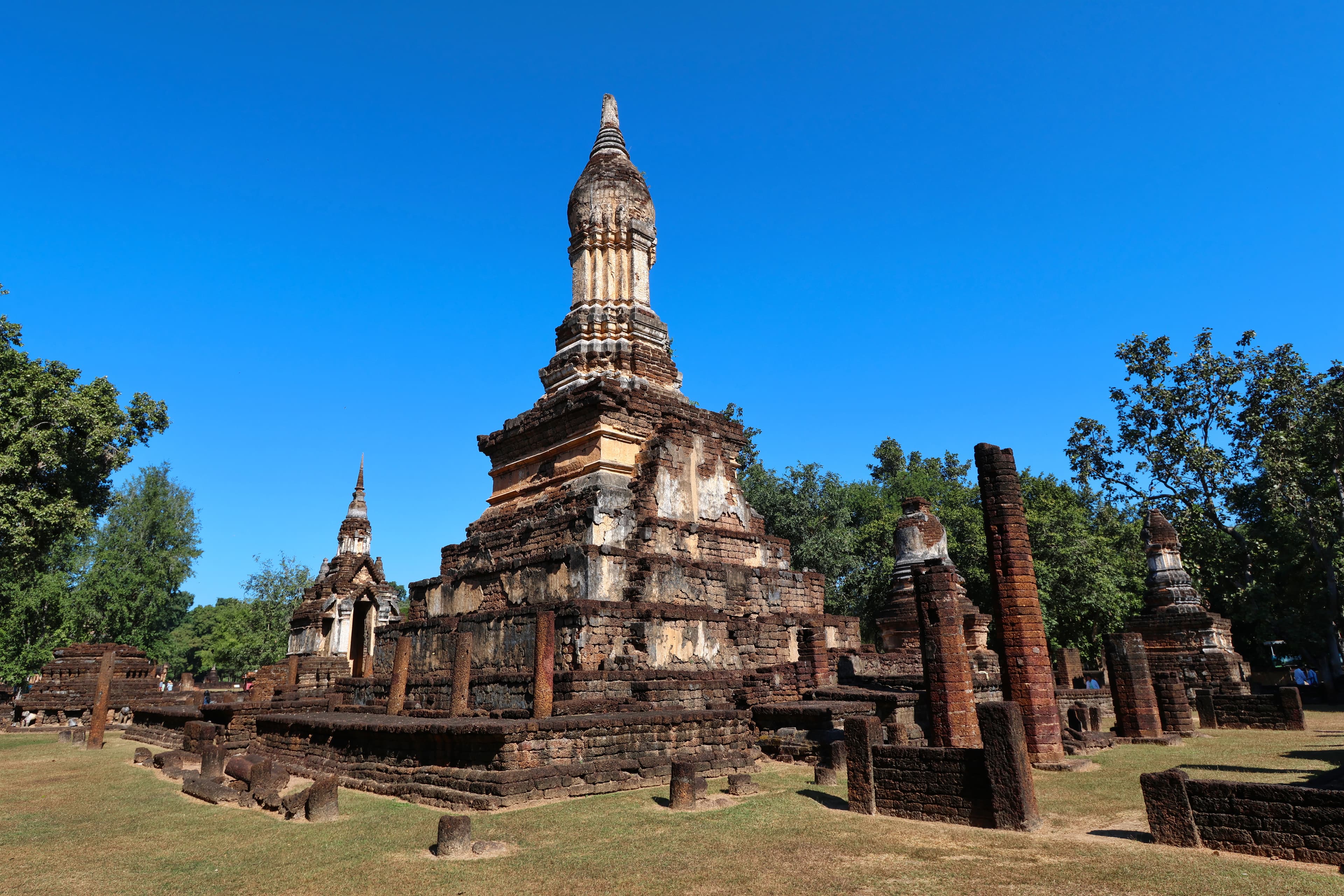
Wat Chedi Chet Thaeo in Si Satchanalai, Sukhothai, Thailand. Image source · CC BY-SA 4.0
Visit essentials
A quick read before you go
- Etiquette
- Protect brick, stucco, Buddha fragments, memorial dignity, and every park barrier.
Overview
The temple is less a single monument than a field of concentrated memory. Thirty-three stupas use lotus-bud, bell, tower, and other forms that reflect artistic exchange across the Sukhothai world. The principal lotus-bud chedi establishes a center, while smaller reliquary and funerary monuments create many points of attention. Fine Arts interpretation links the complex with royal cremated remains, making ancestry and Buddhist merit inseparable from its layout. The variety should not be treated as an architectural sample book alone.
Each structure participated in acts of commemoration, and their proximity creates a sacred community of the dead around Buddha-oriented forms.
Why this place is sacred
Repeated stupas can make the compound feel like a stone mandala, but the exact historical plan should not be converted into a universal energy diagram. Archaeology supports a royal funerary role, Buddhist imagery, and stylistic diversity; it cannot reconstruct every name, deposit, or rite. The absence of a living sangha changes the encounter. Silence now comes partly from protected ruin status, while original sacredness came from burial, merit, images, processions, and community.
A careful visitor lets missing information remain missing and resists assigning each chedi to an imagined prince or mystical direction.
Experience and orientation
Walk the perimeter before choosing a route among the stupas. Compare profiles and materials without stepping onto bases or squeezing behind barriers. The compound sits opposite Wat Chang Lom, so preserve enough time to understand their different spatial emphases. Open-24-hours data in Google Places should not override Fine Arts park controls; use the custodian's current ticketing and closure information. Do not leave incense on ancient brick or pose against Buddha fragments.
The most useful pace is slow enough to distinguish the principal lotus-bud chedi from surrounding memorial forms.
Context and lineage
Wat Chedi Chet Thaeo developed inside the royal center of Si Satchanalai during the Sukhothai period. Its name refers to rows of chedis, although the surviving count is commonly given as thirty-three. Fine Arts guidance interprets the compound as a place where members of the Sukhothai royal family were cremated or memorialized. Stylistic variety reflects regional religious and artistic contacts rather than one building campaign.
Si Satchanalai forms component 002 of the Historic Town of Sukhothai and Associated Historic Towns, UNESCO property 574, inscribed in 1991.
Traditions and practice
Historical practice likely included Buddha homage, relic or memorial deposition, royal funerary observance, merit transfer, and movement among stupas. The exact choreography is not recoverable from the reviewed sources. Contemporary visitors should not improvise cremation rites, place offerings in cavities, or climb for circumambulation. A bow from the path and careful remembrance of unnamed dead are appropriate if they do not interfere with conservation.
Heritage stewardship is now the continuous public practice: obey routes, leave brick and stucco untouched, and distinguish documented royal association from invented genealogy.
Historic Sukhothai Theravada Buddhism
HistoricalHistoric Sukhothai Buddhism organized royal remembrance through stupas, merit, and Buddha homage.
Heritage stewardship
ActiveUNESCO component stewardship protects the temple within Si Satchanalai's historic urban landscape.
Perspectives and open questions
Theravada funerary thought, art history, archaeology, dynastic memory, and UNESCO management converge.
Scholarly perspective
Theravada funerary traditions place death within merit, impermanence, and remembrance of the Buddha. Art history compares lotus-bud and other chedi forms across regional networks. Archaeology investigates deposits and building sequence, while royal history asks how a dynasty monumentalized ancestry. UNESCO management protects the temple as part of a serial urban property. None of these perspectives proves occult geometry. Together they explain a spiritually specific site where many monuments made royal mortality visible within Buddhist sacred order.
Plan your visit
Fine Arts park controls override generic continuous-access reporting from Places.
Respectful visit
Protect brick, stucco, Buddha fragments, memorial dignity, and every park barrier.
Current practical details
Address
CQJP+9GG, Si Satchanalai, Si Satchanalai District, Sukhothai 64190, Thailand
Hours
Hours, fees, and access can change — verify on the official source before you travel. Practical details last checked Jul 2026.
Location
Map loads as you approach this section.
Pilgrim reflections
A portrait of encounter, not a score
Pilgrims describe what they felt, how present they could become, and whether the place would shape a journey. There are no stars and no ranking of traditions.
No reviewed reflections yet
The first pilgrims can help describe the character of being here.
Share a reflection
Available after an account-backed “Been there.” Every reflection is reviewed before publication.
Nearby sacred places
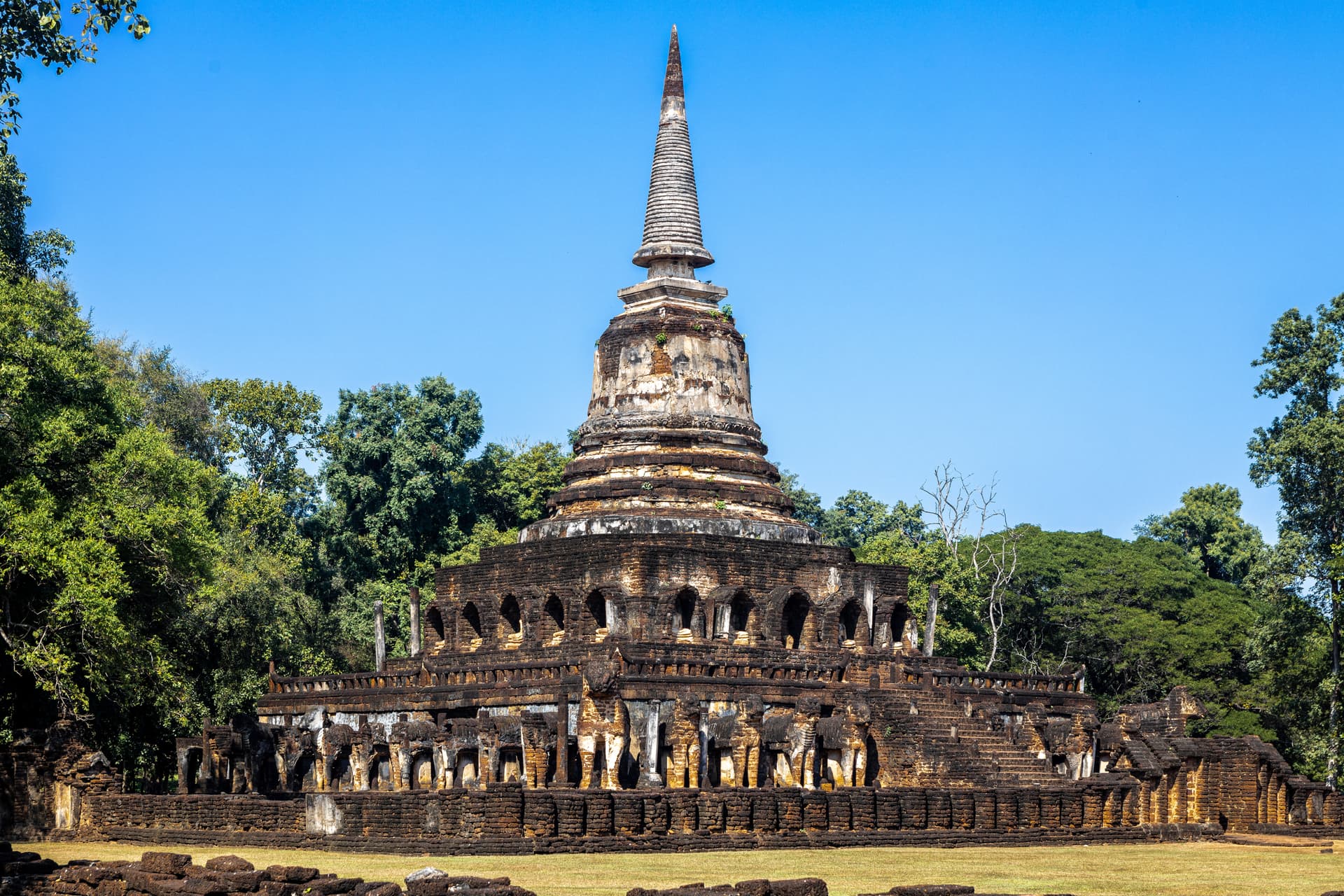
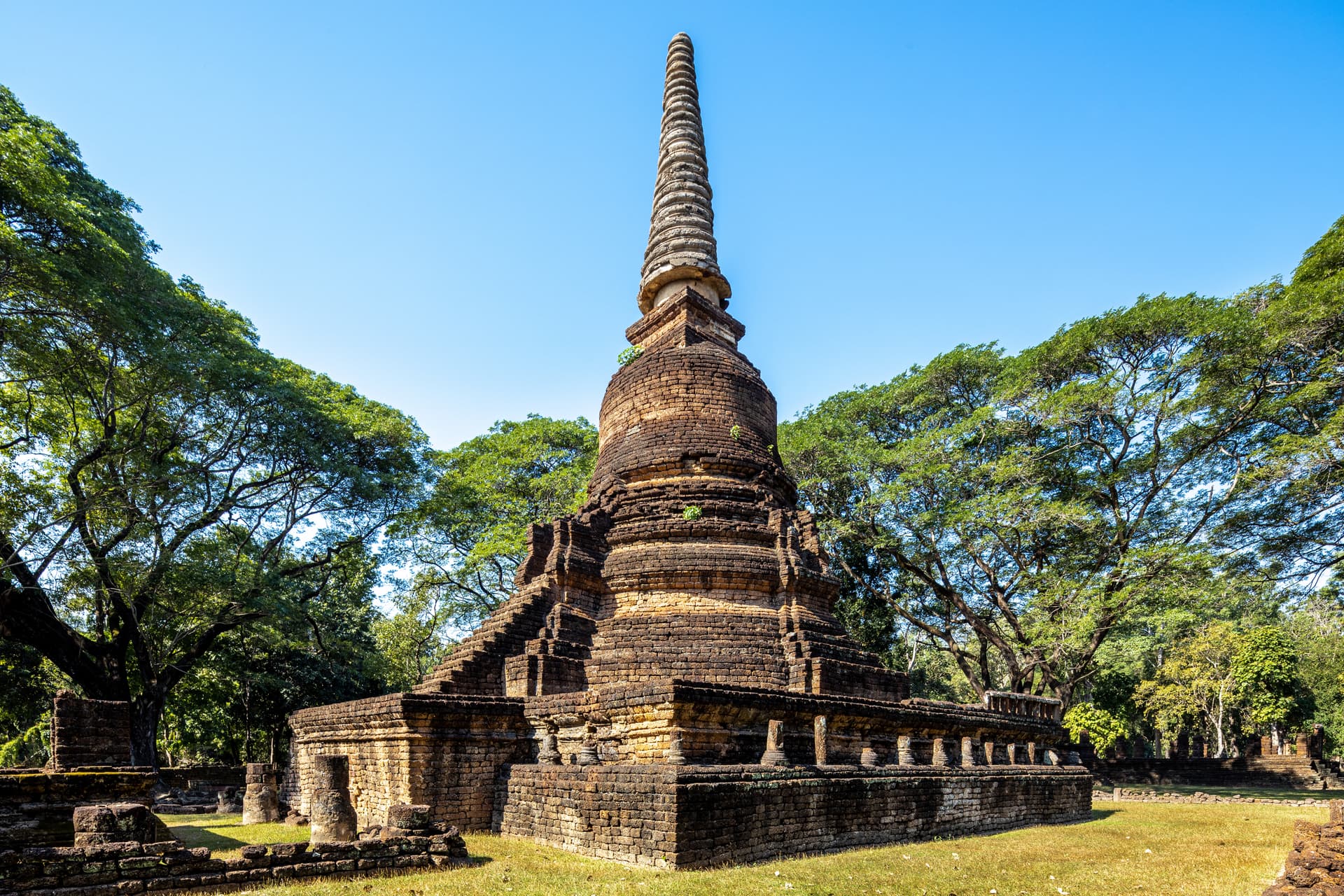
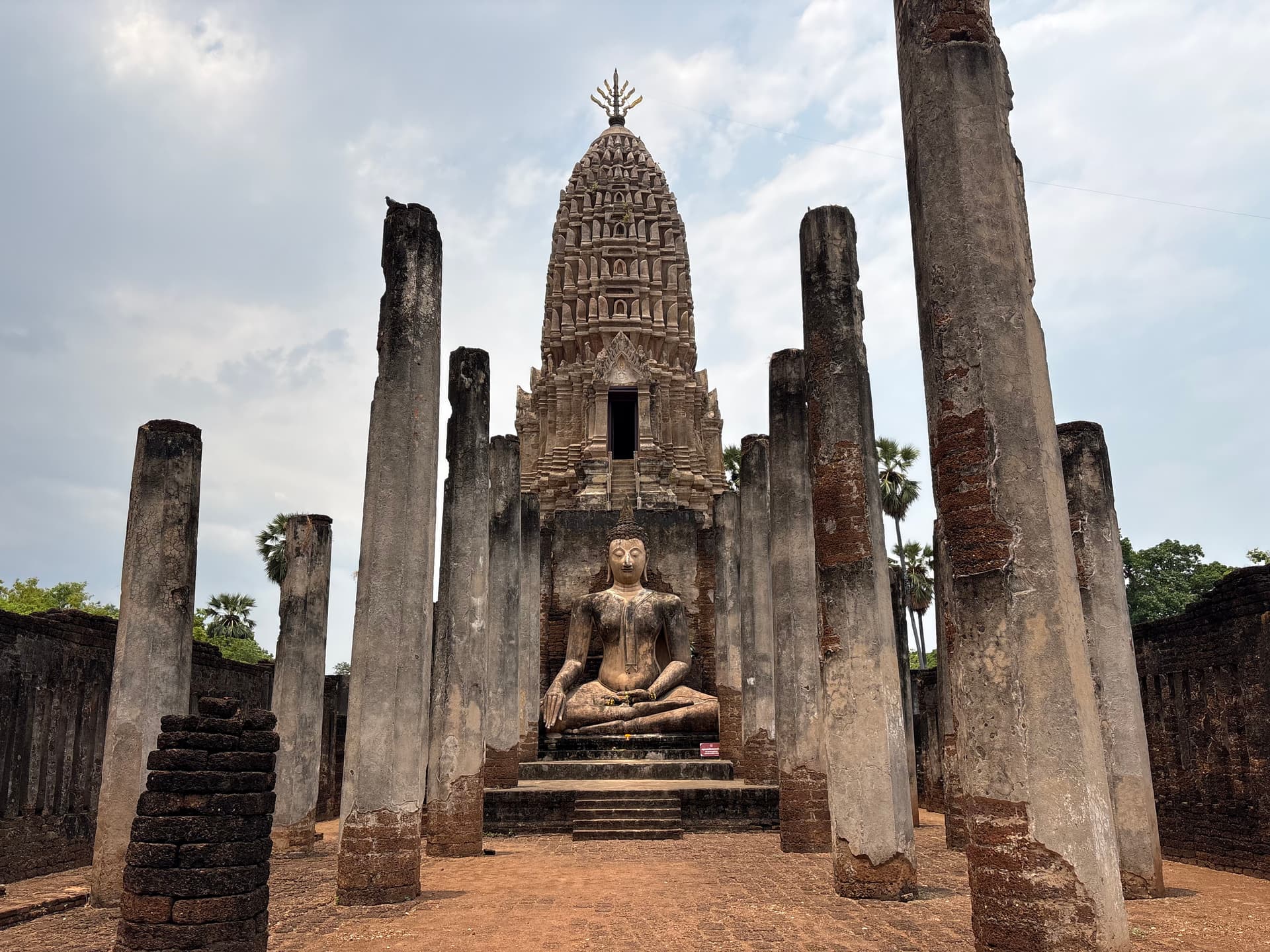
Explore other sacred places in the region. Proximity does not establish access or travel time; check each place’s guidance.

References
Sources consulted for this page. Source categories describe the publication, not a guarantee that every claim is verified. Traditional accounts and outside interpretations may differ.
- 01Wat Chedi Chet Thaew — Google PlacesofficialExact-entity practical metadata accepted only after strong name, country, locality, and coordinate review.
- 02Si Satchanalai Historical Park Guide — Fine Arts DepartmentofficialExact-site plan, thirty-three stupas, royal cremated remains, and park context.
- 03Wat Chedi Chet Thaeo — Tourism Authority of Thailand, JapanofficialExact-site identity, principal chedi, and visitor orientation.
- 04Historic Town of Sukhothai and Associated Historic Towns — UNESCO World Heritage CentreofficialAuthoritative serial-property identity, inscription year, and Si Satchanalai component scope.
Pilgrim glossary
- Stupa
- A dome-shaped Buddhist monument that holds relics or marks a sacred place.
- Mandala
- A symbolic diagram of the cosmos used in meditation and ritual.
- Sangha
- The community of Buddhist practitioners, traditionally monks and nuns.
Share a photo
Help visitors recognize Wat Chedi Chet Thaeo. Every submission is reviewed before publication.