Wat Prayurawongsawat
A white relic chedi and Mount Meru garden sustain Thonburi worship
Understand sacred places, explore living traditions, and learn how to engage respectfully with Pilgrim Map.
Access has not been verified. Check current local guidance before planning a visit.
Bangkok, Bangkok, Thailand
Read the sources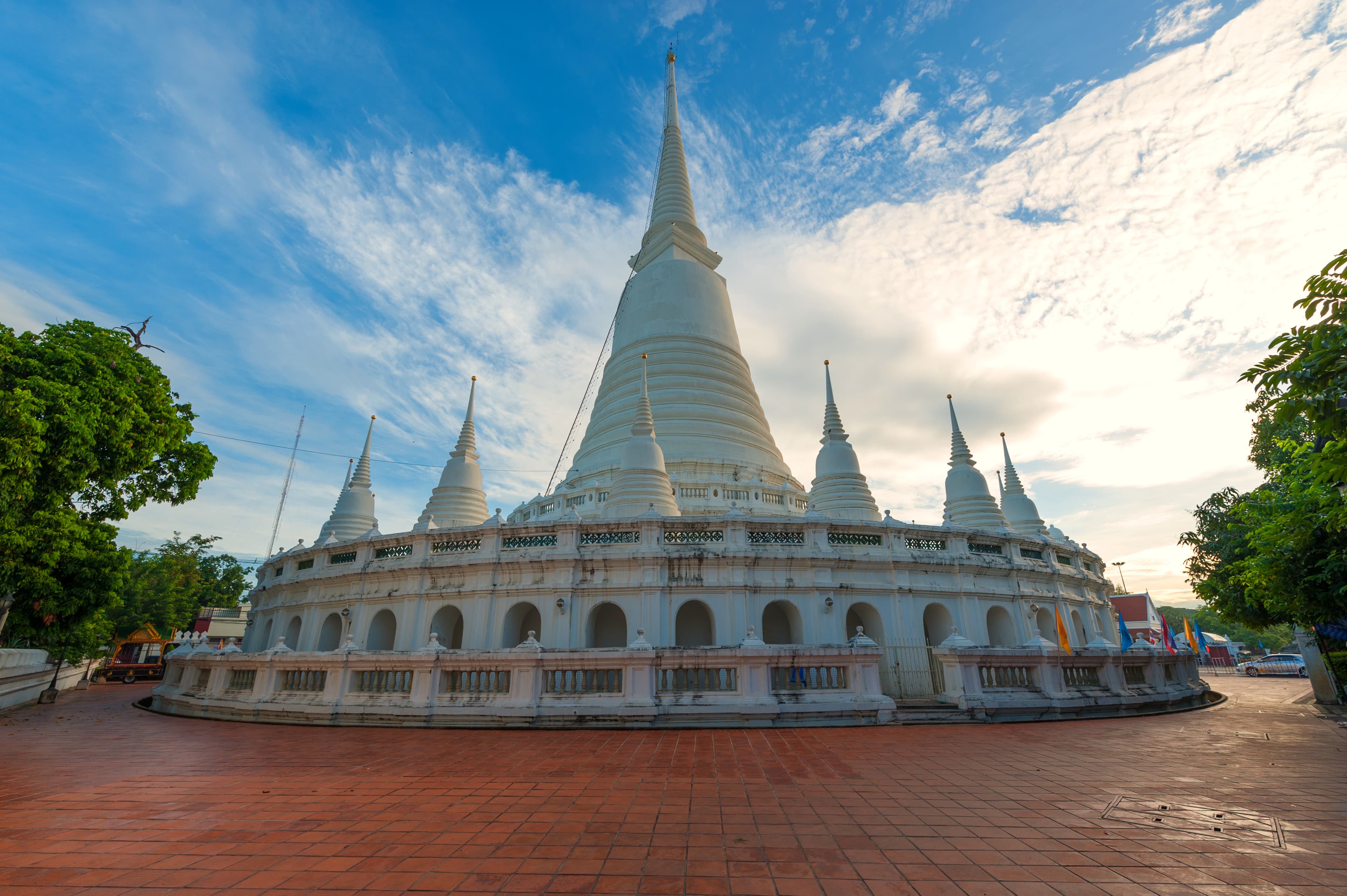
Wat Prayurawongsawat in Bangkok, Bangkok, Thailand. Image source · CC BY-SA 4.0
Visit essentials
A quick read before you go
- Etiquette
- Protect plaster, prayer routes, animal welfare, shoe boundaries, and worshipper privacy.
Overview
The great white chedi dominates the compound without exhausting its meaning. The hollow structure holds a smaller reliquary and invites clockwise attention to the Buddha's continuing presence through relic tradition. Nearby, Khao Mo translates Mount Meru cosmology into an artificial hill of rock, shrines, plants, and water. Turtles in the pond have become a familiar part of the visit, yet the garden is not merely picturesque. It joins Buddhist cosmography with nineteenth-century Thai experimentation in constructed landscapes.
The active monastery, reliquary, ordination spaces, and garden therefore offer distinct ways of recollecting the Buddha and the ordered universe of Buddhist teaching.
Why this place is sacred
Wat Prayoon can feel like two sacred places joined together: a luminous reliquary open to the sky and a shaded miniature mountain surrounded by water. That contrast is produced by architecture, vegetation, ritual use, and conservation, not evidence of a measurable energy field. UNESCO's award honored the restoration process and community participation. It did not declare the temple a World Heritage property or certify supernatural power.
The strongest spiritual account stays with relic veneration, Mount Meru symbolism, monastic continuity, and the care required to stabilize a historic chedi while keeping it meaningful to worshippers.
Experience and orientation
Enter as a guest of an active monastery and orient first to the white chedi. Follow any marked direction around the reliquary and leave the prayer axis open. At Khao Mo, use the paths rather than climbing rocks or feeding animals outside posted rules. The pond edge can be slippery and crowded. Remove shoes where instructed, keep voices low near chanting, and ask before photographing ceremonies.
Current hours, closures, and access inside the chedi should be confirmed through the temple because conservation and religious activity may change the ordinary schedule reported by Places.
Context and lineage
The temple developed under the patronage of Chao Phraya Borom Maha Prayurawong during the reign of Rama III. Its name and riverside location connect it with a powerful nineteenth-century family and the expanding Thonburi side of Bangkok. Phra Borommathat Maha Chedi became the principal monumental and devotional focus. After structural concern and deterioration, a conservation program strengthened the monument and engaged local knowledge. UNESCO granted that work an Asia-Pacific Award of Excellence in 2013.
The distinction is regional recognition for conservation, not inscription on the World Heritage List, and the page preserves that boundary explicitly.
Traditions and practice
Living practice includes bowing, chanting, flowers, incense at authorized stations, merit-making, and relic recollection around the chedi. Khao Mo may support contemplation of Mount Meru and Buddhist cosmology, but visitors should not invent rites at its rocks, pond, or animal enclosures. Do not touch fragile plaster, enter restricted restoration areas, or treat turtles as ritual instruments.
A quiet circuit can connect monumental scale with attentive care: observe how worship continues around repaired fabric and how community stewardship becomes a practical expression of respect.
Theravada Buddhism
ActiveTheravada life centers Buddha refuge, relic recollection, merit, chanting, and monastic community.
Perspectives and open questions
Theravada relic practice, cosmography, architectural history, and conservation qualify one another.
Scholarly perspective
Theravada practice understands relics as supports for recollecting the Buddha and generating merit. Architectural history reads the chedi, iron reinforcement, and Khao Mo within early Bangkok-period experimentation. Conservation studies emphasizes the collaboration that returned a vulnerable monument to stable use. Landscape interpretation connects the artificial mountain with Mount Meru cosmology. These perspectives converge without requiring miracle claims.
The temple's sacred significance is neither reduced to an award nor inflated into World Heritage status; it rests in a living community maintaining Buddhist devotion through historic forms.
Plan your visit
Strong Places supplies ordinary hours and contact; temple ceremonies and conservation can alter access.
Respectful visit
Protect plaster, prayer routes, animal welfare, shoe boundaries, and worshipper privacy.
Current practical details
Address
24 Thanon Prajadhipok, Khwaeng Wat Kanlaya, Khet Thon Buri, Krung Thep Maha Nakhon 10600, Thailand
Phone
Hours
Hours, fees, and access can change — verify on the official source before you travel. Practical details last checked Jul 2026.
Location
Map loads as you approach this section.
Pilgrim reflections
A portrait of encounter, not a score
Pilgrims describe what they felt, how present they could become, and whether the place would shape a journey. There are no stars and no ranking of traditions.
No reviewed reflections yet
The first pilgrims can help describe the character of being here.
Share a reflection
Available after an account-backed “Been there.” Every reflection is reviewed before publication.
Nearby sacred places
Explore other sacred places in the region. Proximity does not establish access or travel time; check each place’s guidance.


References
Sources consulted for this page. Source categories describe the publication, not a guarantee that every claim is verified. Traditional accounts and outside interpretations may differ.
- 01Wat Prayurawongsawas Worawihan — Google PlacesofficialExact-entity practical metadata accepted only after strong name, country, locality, and coordinate review.
- 02Wat Prayurawongsawat Worawihan — Wat PrayurawongsawatofficialExact custodian source for temple identity, sacred structures, and current announcements.
- 03Wat Prayurawongsawat Worawihan — Tourism Authority of ThailandofficialExact-site history, chedi, Khao Mo, and visitor context.
- 04Harnessing Heritage at Wat Prayoon — UNESCOofficialConservation process and 2013 Asia-Pacific award; not World Heritage inscription.
Share a photo
Help visitors recognize Wat Prayurawongsawat. Every submission is reviewed before publication.