Sligo Abbey
Sligo Abbey: sacred memory and practice in Republic of Ireland
Understand sacred places, explore living traditions, and learn how to engage respectfully with Pilgrim Map.
Access has not been verified. Check current local guidance before planning a visit.
Sligo, Sligo, Ireland
Read the sources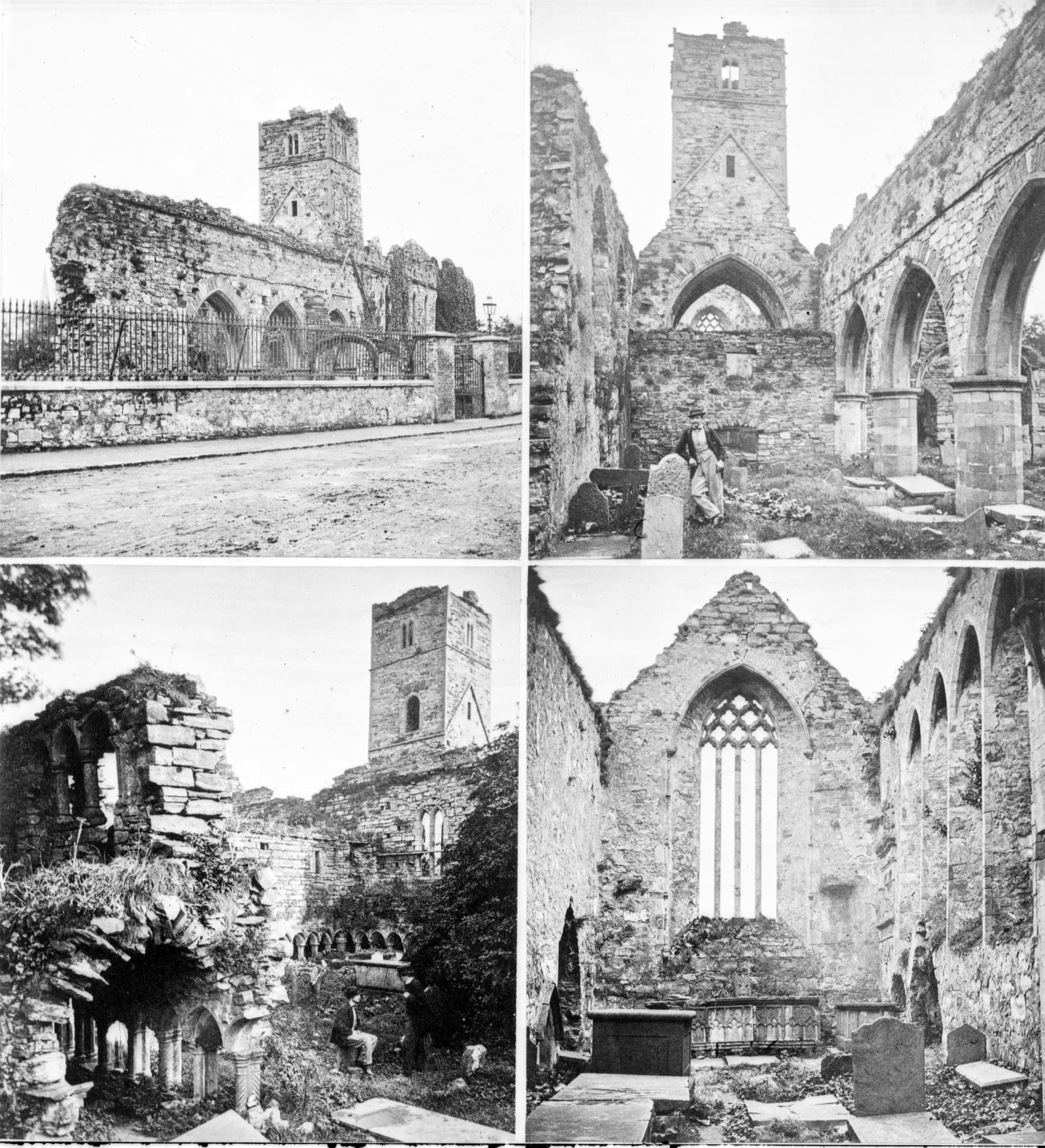
Visit essentials
A quick read before you go
- Duration
- Let the admitted route and current activity determine the visit.
- Access
- Abbey St, Abbeyquarter North, Sligo
Overview
Sligo Abbey asks for attention before explanation. Sligo Abbey follows the reviewed monastic benchmark for the Republic of Ireland and belongs to Christian monastic tradition. Approach its documented sacred focus without inventing private knowledge. Public practice combines protected heritage visitation with contemplative attention to the monastic landscape.
The named custodian remains the authority for current conduct. Reference sources establish identity and public chronology; the cited overview supplies historical context without replacing custodial interpretation.
Historic fabric or living landscape deserves non-invasive care. Worship and ceremony should never become visitor spectacle. Leave people, objects, and ground undisturbed.
Why this place is sacred
At Sligo, the sacred character of Sligo Abbey begins with documented relationship rather than a promised sensation. At Sligo, the cited research supplies the public historical frame and responsibilities. At Sligo, the material setting of Sligo gives inherited memory a visible and spatial form. At Sligo, continuing practice at Sligo matters more than a visitor's private interpretation. At Sligo, where original practice has ceased, stewardship at Sligo still protects evidence and context.
At Sligo, light, sound, enclosure, exposure, and movement can sharpen attention at Sligo. At Sligo, those qualities at Sligo should not be turned into proof of universal spiritual energy. At Sligo, a guest at Sligo may receive the place deeply without claiming every meaning. At Sligo, some knowledge associated with Sligo may belong to worshippers, custodians, or historical uncertainty. At Sligo, respect at Sligo includes accepting those limits without trying to fill them with speculation.
At Sligo, the reviewed sources place Sligo within Christian monastic tradition. At Sligo, public significance at Sligo is tied to worship, ritual memory, burial, pilgrimage, or sacred landscape. At Sligo, the exact original use of Sligo is stated only where the cited record supports it.
At Sligo, the meaning of Sligo has passed through changing institutions, communities, and patterns of access. At Sligo, conservation and contemporary practice now shape how Sligo can be encountered. At Sligo, current custodianship at Sligo is part of the site's sacred history rather than an administrative afterthought.
Experience and orientation
At Sligo, arrive at Sligo Abbey without making photography the first task. At Sligo, read every current notice at Sligo before entering a building or protected area. At Sligo, notice whether prayer, ceremony, maintenance, or ordinary community life is underway at Sligo. At Sligo, choose a position at Sligo that does not obstruct worshippers, guides, residents, or access paths. At Sligo, walk slowly enough at Sligo to perceive transitions in light, sound, ground, and scale.
At Sligo, where seating is available, use it at Sligo without occupying places reserved for participants. At Sligo, where no seating exists, remain on the admitted surface at Sligo. At Sligo, weather can change the emotional and physical character of Sligo without changing its significance. At Sligo, busy periods at Sligo call for patience rather than competition for an unobstructed view. At Sligo, quiet periods at Sligo invite attention without guaranteeing a particular inner response.
At Sligo, leave Sligo with every object, offering, stone, and threshold exactly as found. At Sligo, the most complete encounter with Sligo may include accepting an area that remains closed.
At Sligo, google Places and the cited custodian establish the public approach to Sligo Abbey. At Sligo, the official entrance may differ from the most visually obvious approach. At Sligo, follow signed circulation at Sligo instead of creating a shorter route. At Sligo, remote conditions, steps, uneven ground, or active services may affect orientation at Sligo. At Sligo, ask an authorized host at Sligo when the route or expected conduct is unclear.
Context and lineage
At Sligo, the historical overview for Sligo Abbey is preserved in the cited references. At Sligo, received tradition and material evidence may answer different questions. At Sligo, the record for Sligo is not made more certain than its sources allow. At Sligo, where dates or founders remain disputed, this page leaves that uncertainty visible at Sligo. At Sligo, where the record is secure, custodial interpretation still guides the living meaning of Sligo.
At Sligo, visitors seeking detailed chronology for Sligo should follow the references rather than unsupported retellings.
At Sligo, the documented lineage of Sligo is Christian monastic tradition. At Sligo, that lineage at Sligo is described in public terms without claiming private or restricted knowledge.
Traditions and practice
At Sligo, the reviewed record associates Sligo with protected heritage visitation and contemplative attention to the monastic landscape. At Sligo, traditional practice at Sligo belongs first to its practitioners and historical communities. At Sligo, a description of practice at Sligo is not permission to reproduce every form. At Sligo, ritual objects and sacred spaces at Sligo remain under custodial authority. At Sligo, historical reconstruction at Sligo is kept distinct from living observance.
At Sligo, current practice at Sligo may include worship, pilgrimage, teaching, remembrance, or conservation. At Sligo, schedules at Sligo can change with festivals, services, staffing, weather, and repair work. At Sligo, community needs at Sligo take priority over a visitor's preferred timing. At Sligo, contemporary stewardship at Sligo is itself a disciplined form of care. At Sligo, public access at Sligo does not make every activity public content.
At Sligo, use the admitted path through Sligo as a deliberate contemplative route. At Sligo, notice construction, orientation, horizon, and changing light without touching protected fabric. At Sligo, allow silence at Sligo to reveal distance from the people who first used the place. At Sligo, do not recreate imagined rituals at Sligo or present speculation as recovered tradition. At Sligo, support conservation at Sligo by leaving no offering, mark, rearrangement, or trace.
Christian monastic tradition
ActiveSligo Abbey is significant within Christian monastic tradition. The reviewed benchmark places Sligo Abbey among major monastic sites in Republic of Ireland. Custodial sources should govern the living interpretation of Sligo Abbey.
At Sligo Abbey, documented practice includes protected heritage visitation and contemplative attention to the monastic landscape.
Perspectives and open questions
At Sligo, sligo Abbey can be understood through tradition, history, stewardship, and personal response. At Sligo, those registers meet at Sligo without becoming interchangeable. At Sligo, the evidence for each perspective on Sligo remains visible in the cited sources.
Scholarly perspective
At Sligo, historical and archaeological interpretation of Sligo depends on material evidence and documented chronology. At Sligo, scholarly caution at Sligo is especially important when original practice is incompletely known. At Sligo, architecture, landscape, burial, text, and institutional history may illuminate different phases of Sligo. At Sligo, no single feature at Sligo proves every later interpretation. At Sligo, new research may refine the public account of Sligo without erasing traditional significance.
Living and traditional perspectives
At Sligo, traditionally, within Christian monastic tradition, Sligo is approached through inherited sacred meaning and practice. At Sligo, tradition holds that interpretation at Sligo should be presented in its own terms. At Sligo, according to public tradition, the account of Sligo does not demand that visitors share the tradition. At Sligo, traditionally, visitors at Sligo can respect a sacred claim without appropriating its ritual forms.
At Sligo, according to current custodians, they remain authoritative about what can be shared publicly at Sligo.
Alternative interpretations
At Sligo, alternative interpretations of Sligo require explicit identification and careful sourcing. At Sligo, alternative views do not establish a universal energy claim at Sligo as historical or traditional fact. At Sligo, some visitors may consider a personal experience at Sligo meaningful without treating it as evidence for others.
Open questions
At Sligo, some chronology, original practice, or private meaning at Sligo remains unknown. At Sligo, the absence of certainty at Sligo is not an invitation to invent detail. At Sligo, responsible interpretation lets unanswered questions remain part of Sligo.
Plan your visit
Access and arrival
Abbey St, Abbeyquarter North, Sligo
Respectful visit
At Sligo, choose clothing suitable for the weather, terrain, and sacred use of Sligo. At Sligo, follow posted requirements for shoes, shoulders, head coverings, or ceremonial areas. At Sligo, clothing at Sligo should not imitate clergy, monastics, or ritual participants.
At Sligo, ask before photographing inside Sligo. At Sligo, never photograph people in prayer, ceremony, grief, or private conversation at Sligo without consent. At Sligo, obey every object-specific, room-specific, memorial, and conservation camera restriction at Sligo. At Sligo, a permitted photograph at Sligo should not obstruct another person's worship or passage.
At Sligo, use only the authorized donation or offering practice at Sligo. At Sligo, never place objects on altars, stones, graves, trees, ledges, or water at Sligo. At Sligo, an improvised offering at Sligo may burden custodians or damage protected material.
At Sligo, stay on the published visitor route at Sligo. At Sligo, treat every closure at Sligo as binding even when no staff member is visible. At Sligo, do not seek private rooms, excavations, residences, or restricted landscapes at Sligo. At Sligo, children and groups at Sligo should remain close enough for quiet, careful supervision.
At Sligo, do not invent a ceremony for Sligo. At Sligo, do not photograph private devotion or memorial objects at Sligo. At Sligo, do not leave candles, food, cloth, coins, stones, or notes at Sligo without authorization. At Sligo, do not cross ropes, gates, screens, altar rails, or conservation boundaries at Sligo. At Sligo, do not treat a personal response at Sligo as proof of a universal claim.
At Sligo, do not pressure staff, clergy, residents, or worshippers at Sligo to explain private meaning.
Current practical details
Address
Abbey St, Abbeyquarter North, Sligo
Hours, fees, and access can change — verify on the official source before you travel. Practical details last checked Jul 2026.
Location
Map loads as you approach this section.
Pilgrim reflections
A portrait of encounter, not a score
Pilgrims describe what they felt, how present they could become, and whether the place would shape a journey. There are no stars and no ranking of traditions.
No reviewed reflections yet
The first pilgrims can help describe the character of being here.
Share a reflection
Available after an account-backed “Been there.” Every reflection is reviewed before publication.
Nearby sacred places
Explore other sacred places in the region. Proximity does not establish access or travel time; check each place’s guidance.
References
Sources consulted for this page. Source categories describe the publication, not a guarantee that every claim is verified. Traditional accounts and outside interpretations may differ.
- 01Sligo Abbey | Heritage Ireland — Site custodianofficialExact site-specific custodial page for current identity and visitor guidance.
- 02Official collection supporting the selection of Sligo Abbey — National church, heritage, or pilgrimage authorityofficialAuthoritative collection source for significance and national or regional context.
- 03Wikidata identity for Sligo Abbey — Wikidata contributorsacademicStructured exact-entity and coordinate reconciliation.
- 04Sligo Abbey — Wikipedia contributorsacademicGeneral identity, historical, architectural, and geographic cross-check.
- 05Google Maps exact-place record for Sligo Abbey — Google PlacesSource contextExact-place identity, address, coordinates, and operational cross-check.
Share a photo
Help visitors recognize Sligo Abbey. Every submission is reviewed before publication.