Ireland
Ballina Municipal District
1 site

Céide Fields Neolithic site, Ballycastle
Céide Fields Neolithic site, Ballycastle, Ireland is a neolithic site of sacred significance. Approximate coordinates: 54.30709, -9.45765. Attributes: built, cultural, archaeological. Located in Ballina Municipal District, Éire / Ireland.
Ballymote-Tubbercurry Municipal District
1 site

Carrowkeel
Carrowkeel may refer to the following places in Ireland: Carrowkeel, County Galway, a townland Carrowkeel Megalithic Cemetery, County Sligo Kerrykeel, County Donegal, known as Carrowkeel in census returns, is a village by Mulroy Bay Quigley's Point, sometimes known as Carrowkeel, is a village in County Donegal, north of Derry, on Lough Foyle
Boyle Municipal District
1 site

Rath Cruachan, Roscommon
Rath Cruachan, Roscommon, Ireland is a site of sacred significance. Approximate coordinates: 53.80227, -8.30423. Located in Boyle Municipal District, Éire / Ireland.
Claremorris-Swinford Municipal District
2 sites

Basilica of Our Lady of Knock, Queen of Ireland
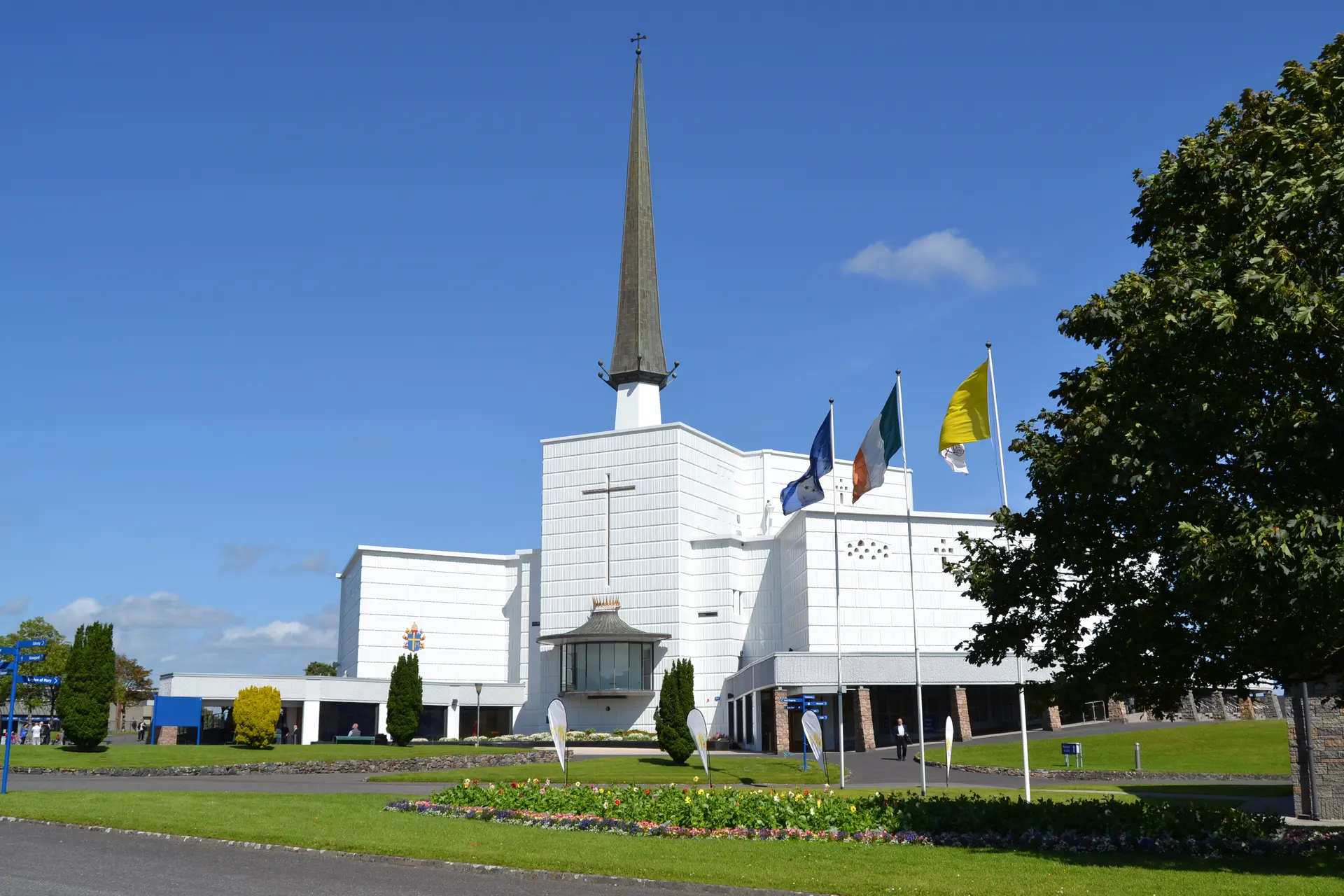
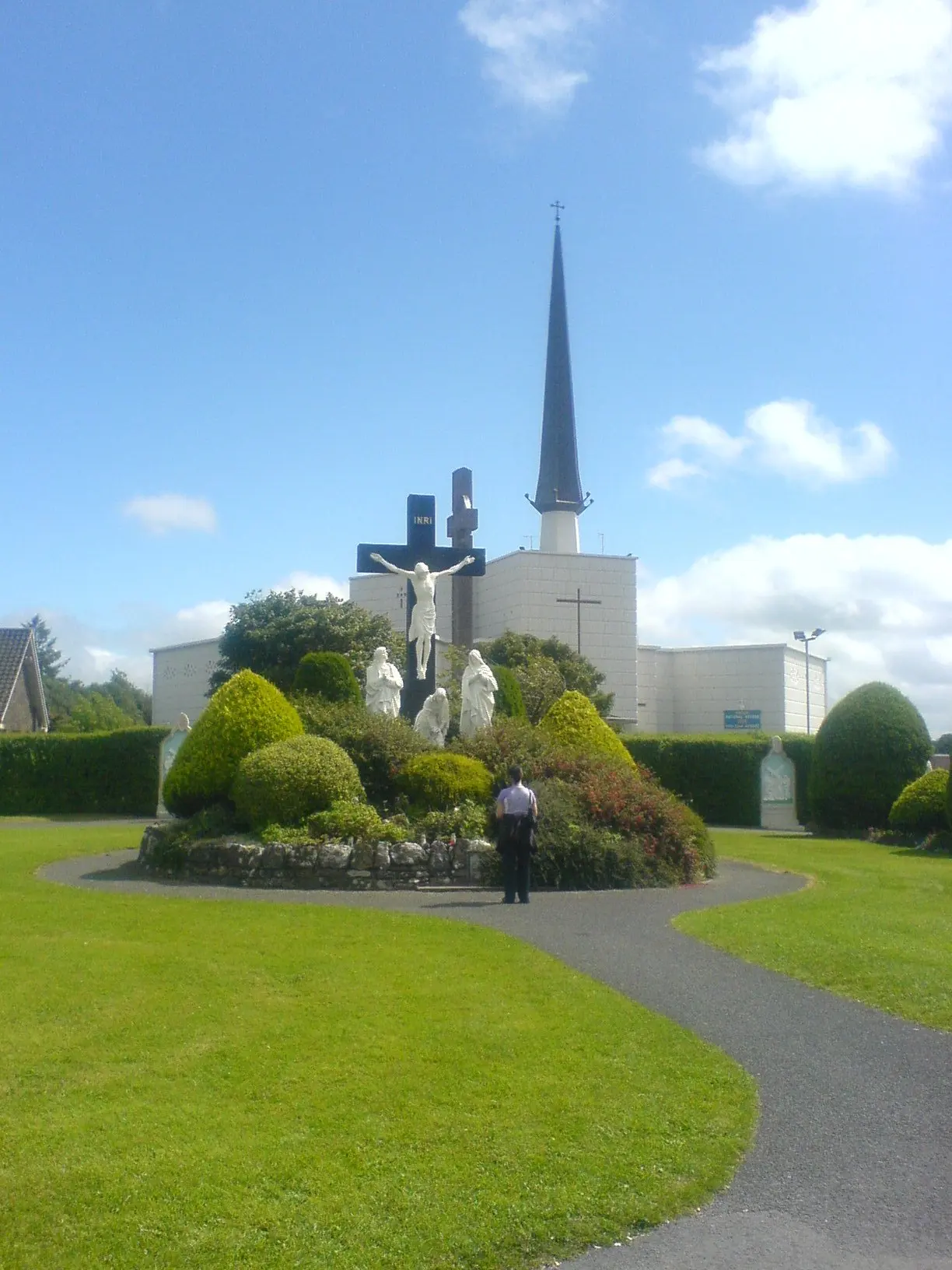
Basilica of Our Lady of Knock, Queen of Ireland is a christian shrine of sacred significance. Approximate coordinates: 53.79176, -8.91753. Attributes: built, cultural, pilgrimage. Tradition: Christianity. Associated figure: Our Lady of Knock, Queen of Ireland. Located in Claremorris-Swinford Municipal District, Éire / Ireland.
Knock
Knock may refer to:
County Cork
1 site

St Gobnait's well (Ballyvourney)
Ballyvourney (Irish: Baile Bhuirne [ˌbˠalʲə ˈwuːɾˠn̠ʲə], meaning 'Town of the Beloved', also spelled Baile Mhúirne) is a Gaeltacht village in southwest County Cork, Ireland. Ballyvourney is also a civil parish in the barony of Muskerry West, and an ecclesiastical parish in the Roman Catholic Diocese of Cloyne.
County Kildare
2 sites
Kildare
Kildare (Irish: Cill Dara, meaning 'church of oak') is a town in County Kildare, Ireland. As of 2022, its population was 10,302, making it the 7th largest town in County Kildare. It is home to Kildare Cathedral, historically the site of an important abbey said to have been founded by Saint Brigid of Kildare in the 5th century. The Curragh lies east of the town. The town lies on the R445, some 50 kilometres (31 mi) west of Dublin – near enough for it to have become, despite being a regional centre in its own right, a commuter town for the capital. Although Kildare gives its name to the county, Naas is the county town.
St. Brigid's Garden Well
Near the horse pastures of County Kildare, a natural spring rises from the earth in a garden tended by devotion. St. Brigid's Well has drawn pilgrims seeking healing for perhaps two thousand years—first in honor of a goddess, then of a saint who bears her name. Ribbons tied to the prayer tree flutter in the breeze, each one a prayer offered, a burden released, a blessing sought.
County Meath
2 sites
Newgrange
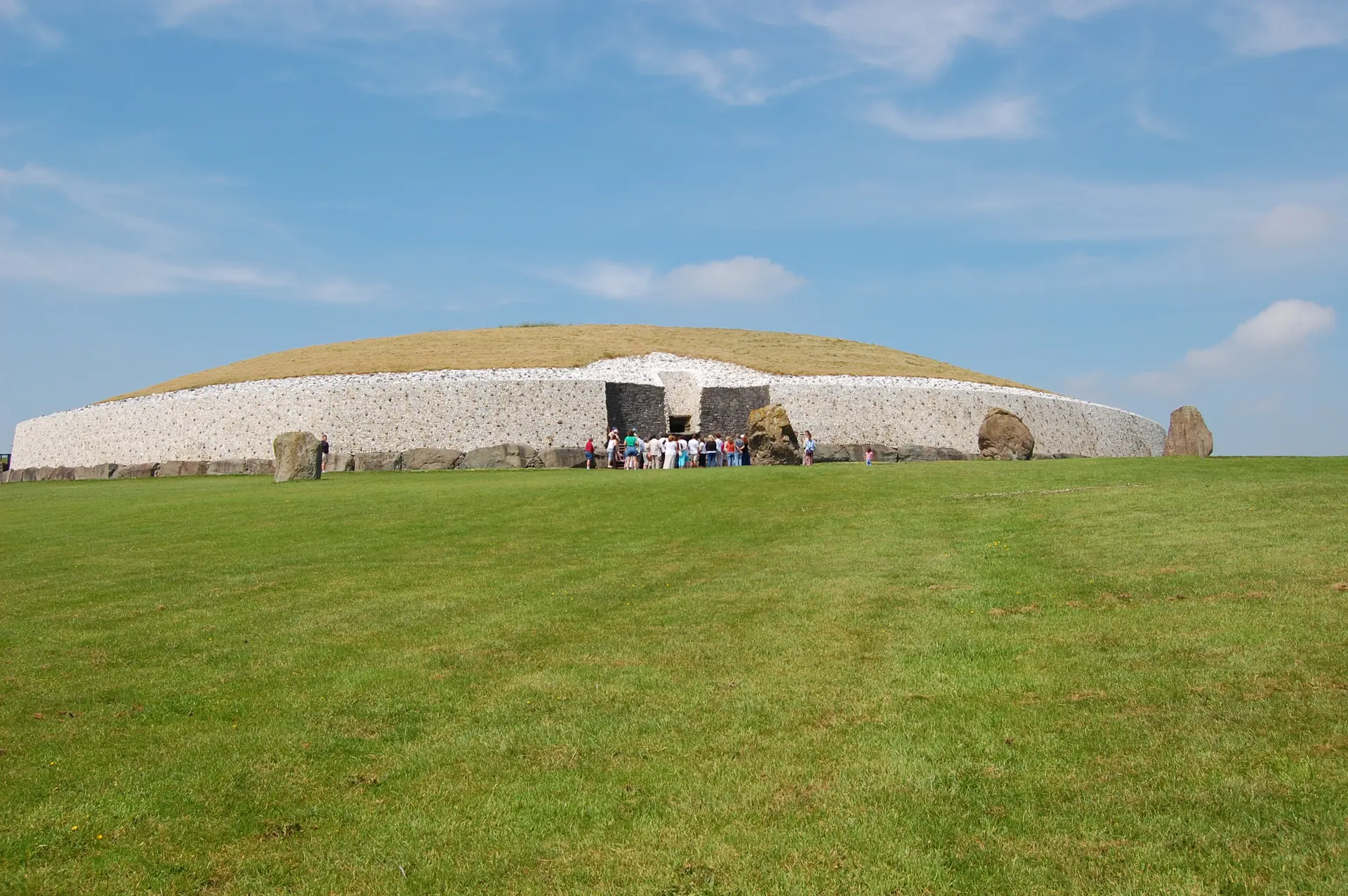
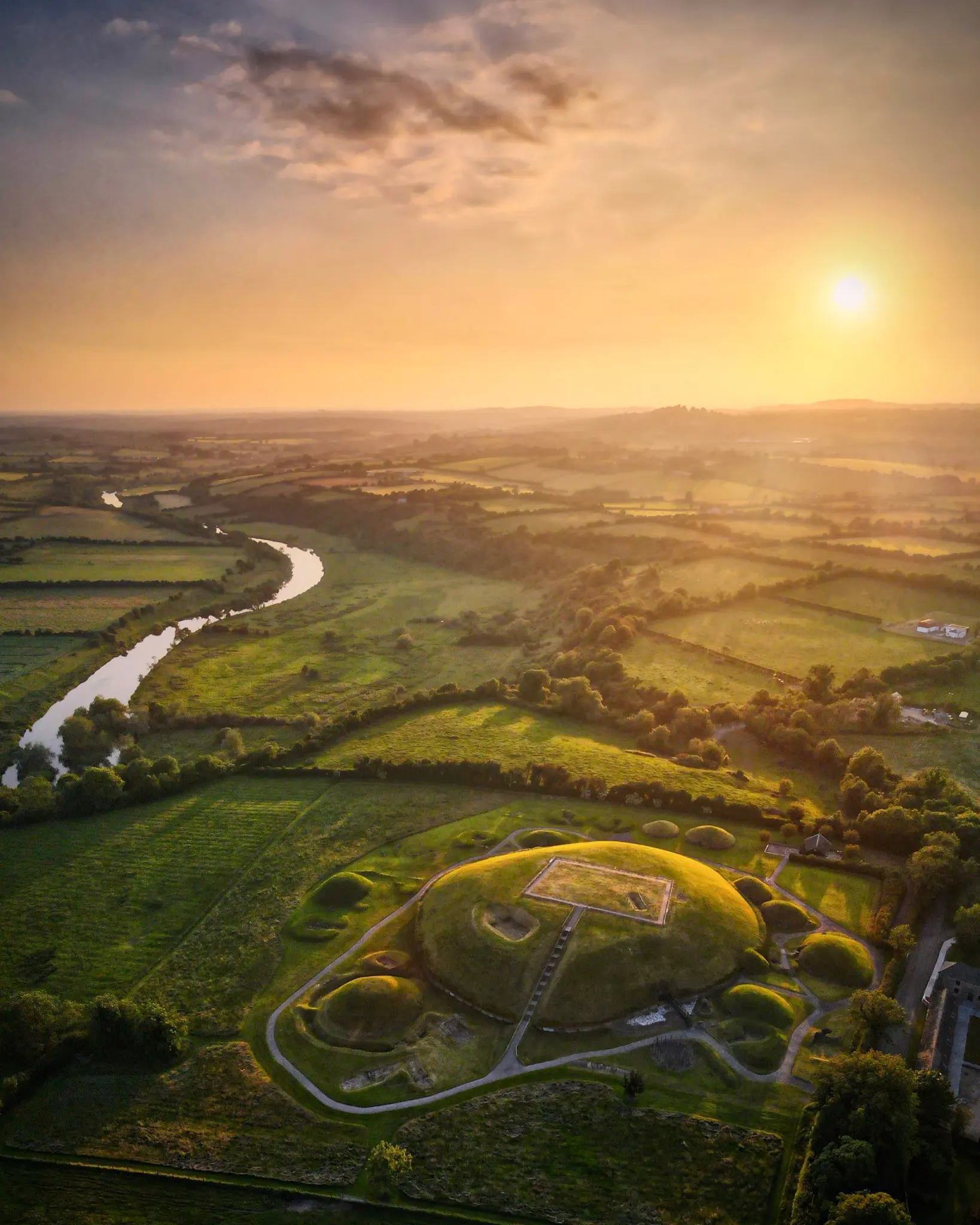
Newgrange (Irish: Sí an Bhrú) is a prehistoric monument in County Meath in Ireland, placed on a rise overlooking the River Boyne, eight kilometres (five miles) west of the town of Drogheda. It is an exceptionally grand passage tomb built during the Neolithic Period, around 3100 BC, making it older than Stonehenge and the Egyptian pyramids. Newgrange is the main monument in the Brú na Bóinne complex, a World Heritage Site that also includes the passage tombs of Knowth and Dowth, as well as other henges, burial mounds and standing stones. Newgrange consists of a large circular mound with an inner stone passageway and cruciform chamber. Burnt and unburnt human bones, and possible grave goods or votive offerings, were found in this chamber. The monument has a striking façade made mostly of white quartz cobblestones, and it is ringed by engraved kerbstones. Many of the larger stones of Newgrange are covered in megalithic art. The mound is also ringed by a stone circle. Some of the material that makes up the monument came from as far as the Mournes and Wicklow Mountains. There is no agreement about its purpose, but it is believed it had religious significance. It is aligned so that the rising sun on the winter solstice shines through a "roofbox" above the entrance and floods the inner chamber. Several other passage tombs in Ireland are aligned with solstices and equinoxes, and Cairn G at Carrowkeel has a similar "roofbox". Newgrange shares similarities with some other Neolithic monuments in Western Europe; especially Gavrinis in Brittany, which has a similar preserved facing and large carved stones, Maeshowe in Orkney, with its large corbelled chamber, and Bryn Celli Ddu in Wales. Its initial period of use lasted around 1,000 years. Newgrange then gradually became a ruin, although the area continued to be a site of ritual activity. It featured in Irish mythology and folklore, in which it is said to be a dwelling of the deities, particularly The Dagda and his son Aengus. Antiquarians first began its study in the seventeenth century, and archaeological excavations began in the twentieth century. Archaeologist Michael O'Kelly led the most extensive of these from 1962 to 1975 and also reconstructed the front of the monument, a reconstruction that is controversial. This included an inward-curving dark stone wall to ease visitor access. Newgrange is a popular tourist site and, according to archaeologist Colin Renfrew, is "unhesitatingly regarded by the prehistorian as the great national monument of Ireland" and as one of the most important megalithic structures in Europe.

Stone Of Destiny
Stone Of Destiny in Navan, County Meath, Ireland.
County Roscommon
1 site

Rathcroghan
Rathcroghan (Irish: Ráth Cruachan, meaning 'fort of Cruachan') is a complex of archaeological sites near Tulsk in County Roscommon, Ireland. It is identified as the site of Cruachan, the traditional capital of the Connachta, the prehistoric and early historic rulers of the western territory. The Rathcroghan Complex (Crúachan Aí) is an archaeological landscape with many references found in early Irish medieval manuscripts. Located on the plains of Connacht (Mag nAí/Machaire Connacht), Rathcroghan is one of the six Royal sites of Ireland. The landscape extends over 6 square kilometres (2.3 sq mi) and consists of over 240 archaeological sites, 60 of which are protected national monuments. The monuments range from the Neolithic (4000–2500 BC), the Bronze (2500–500 BC) and Iron Ages (500 BC–400 AD), to the medieval period. These monuments include burial mounds, ringforts and medieval field boundaries amongst others. The most prominent of these are the multi-period Rathcroghan Mound, the Oweynagat cave, the Mucklaghs (a set of linear earthworks), and the Carnfree medieval complex. There are many historic references to Rathcroghan (Ráth Crúachan) recorded in early medieval manuscripts, including the 12th-century Lebor na hUidre. Rathcroghan is recorded as the location of one of the great fairs of Ireland, as well as being one of the island's three great heathen cemeteries. It is also the location for the beginning and end of the Táin Bó Cúailnge and the royal seat of Medb, a mythical queen of Connacht. Rathcroghan is said to provide entrance to the Otherworld, described in the medieval period as "Ireland's Gate to Hell" (not to be confused with St Patrick's Purgatory), via Oweynagat (the Cave of the Cats). The cave has associations with the pagan festival of Samhain as well as being described as the dwelling of Morrígan, a mythical figure in early medieval Irish literature.
County Westmeath
1 site

Hill of Uisnech
Hill of Uisnech is a ceremonial hill of sacred significance. Approximate coordinates: 53.48369, -7.55638. Attributes: natural, cultural, ceremonial. Tradition: Irish Mythology. Mythological context: Omphalos of Ireland. Located in The Municipal District of Athlone — Moate, Éire / Ireland.
Donegal Municipal District
3 sites

Lough Dergh
Lough Dergh is a site of sacred significance. Approximate coordinates: 54.60932, -7.87151. Located in Donegal Municipal District, Éire / Ireland.
Sanctuary of St. Patrick, Lough Derg, County Donegal
Sanctuary of St. Patrick, Lough Derg, County Donegal, Ireland is a site of sacred significance. Approximate coordinates: 54.60881, -7.87128. Located in Donegal Municipal District, Éire / Ireland.

Slieve League, County Donegal
Slieve League, County Donegal, Ireland is a site of sacred significance. Approximate coordinates: 54.64009, -8.68220. Located in Donegal Municipal District, Éire / Ireland.
Glenties Municipal District
1 site

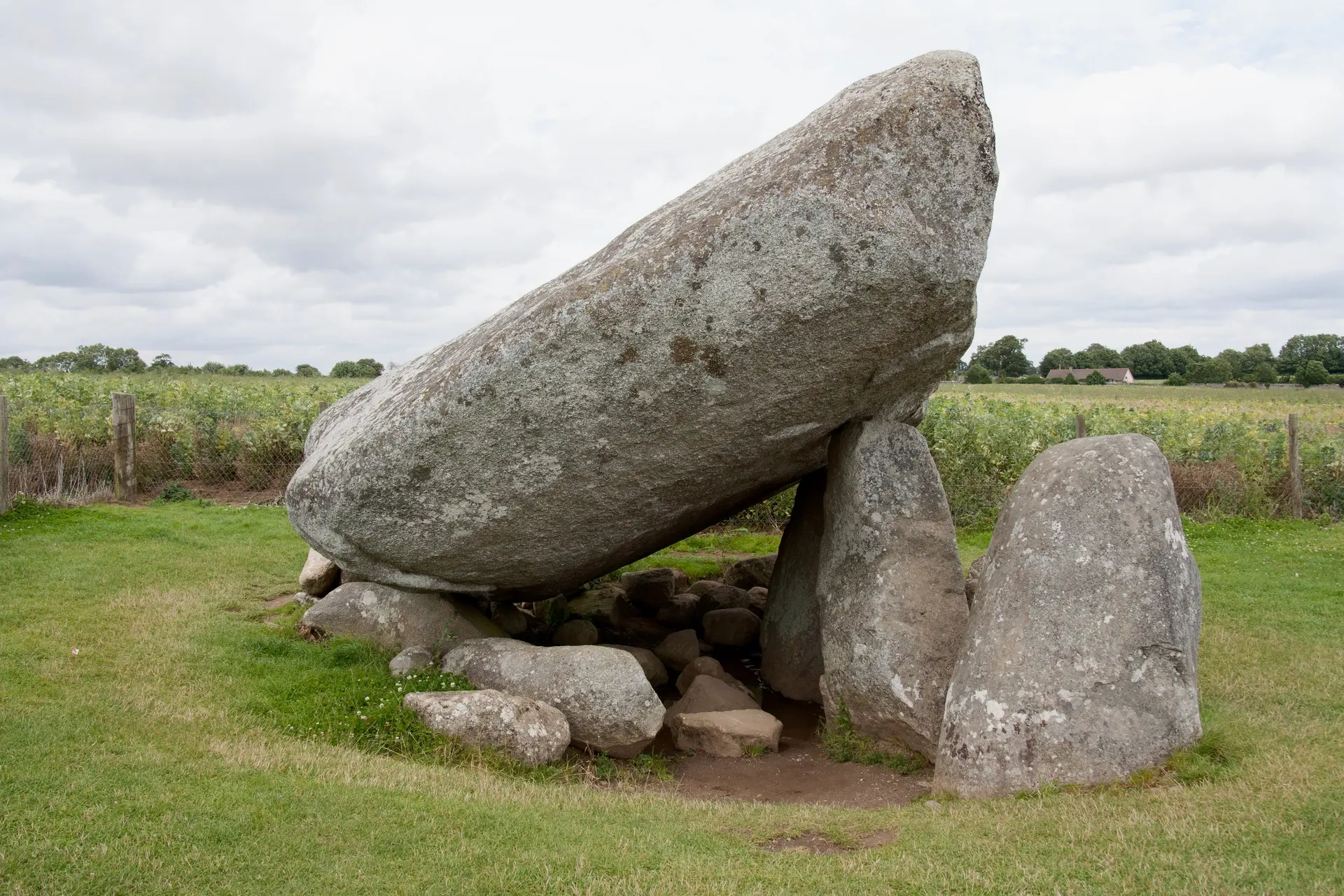
Kilclooney Dolmen, Ardara
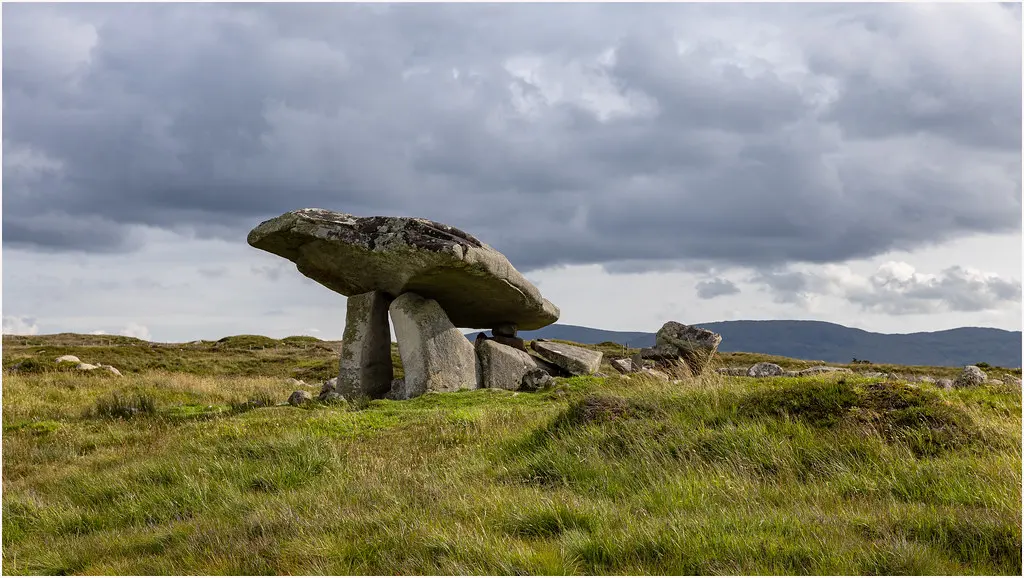
Kilclooney Dolmen, Ardara, Ireland is a dolmen of sacred significance. Approximate coordinates: 54.81756, -8.43315. Attributes: built, cultural, archaeological. Located in Glenties Municipal District, Éire / Ireland.
Kenmare Municipal District
7 sites
Brandon Mountain
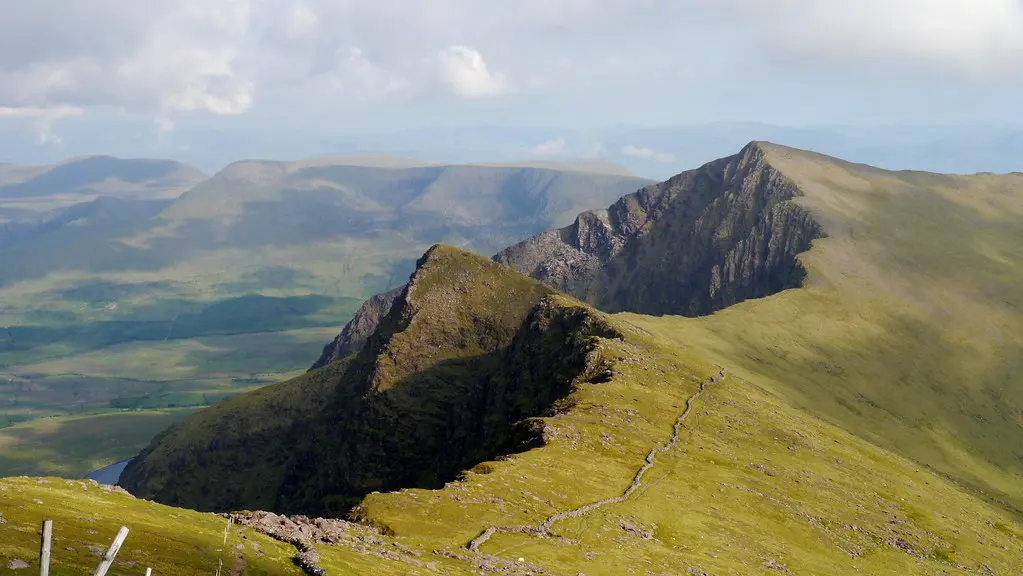
Brandon Mountain is a mountain of sacred significance. Approximate coordinates: 52.23494, -10.25440. Attributes: natural, cultural, pilgrimage. Tradition: Christianity. Associated figure: Saint Brendan. Mythological context: Saint Brendan's voyage to the Americas. Located in Kenmare Municipal District, Éire / Ireland.
Drombohilly
Drombohilly is a stone ring of sacred significance. Approximate coordinates: 51.78658, -9.75375. Attributes: built, cultural, archaeological. Located in Kenmare Municipal District, Éire / Ireland.

Kenmare
Kenmare (Irish: Neidín, meaning 'the little nest') is a small town in the south of County Kerry, Ireland. The name Kenmare is the anglicised form of Ceann Mara, meaning "head of the sea", referring to the head of Kenmare Bay. It is also a townland and civil parish.

Kenmare Stone Circle, Kenmare
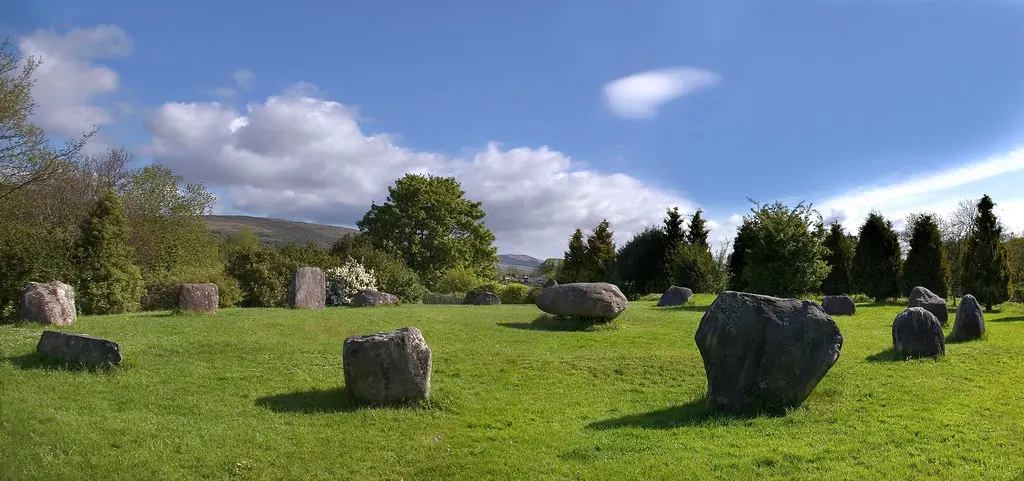
Kenmare Stone Circle, Kenmare, Ireland is a stone circle of sacred significance. Approximate coordinates: 51.87847, -9.58813. Attributes: built, cultural, archaeological. Located in Kenmare Municipal District, Éire / Ireland.

Mount Brandon, County Kerry
Mount Brandon, County Kerry, Ireland is a site of sacred significance. Approximate coordinates: 52.23511, -10.25434. Located in Kenmare Municipal District, Éire / Ireland.

Skellig Michael
Skellig Michael (Irish: Sceilg Mhichíl [ˌʃcɛlʲəɟ ˈvʲɪçiːlʲ]), also called Great Skellig (Irish: Sceilig Mhór [ˈʃcɛlʲəɟ woːɾˠ]), is a twin-pinnacled crag 11.6 kilometres (7.2 mi) west of the Iveragh Peninsula in County Kerry, Ireland. The island is named after the archangel Michael, with "Skellig" derived from the Irish language word sceilig, meaning a splinter of stone. Its twin island, Little Skellig (Sceilig Bheag), is smaller and inaccessible (landing is not permitted). The two islands rose c. 374–360 million years ago during a period of mountain formation, along with the MacGillycuddy's Reeks mountain range. Later, they were separated from the mainland by rising water levels. Skellig Michael consists of approximately 22 hectares (54 acres) of rock, with its highest point, known as the Spit, 218 m (714 ft) above sea level. The island is defined by its twin peaks and intervening valley (known as Christ's Saddle), which make its landscape steep and inhospitable. It is best known for its Gaelic monastery, founded between the 6th and 8th centuries, and its variety of inhabiting species, which include gannets, puffins, a colony of razorbills and a population of approximately fifty grey seals. The island is of special interest to archaeologists, as the monastic settlement is in unusually good condition. The monastery is situated at an elevation of 170 to 180 m (550 to 600 ft), Christ's Saddle at 129 m (422 ft), and the flagstaff area at 37 m (120 ft) above sea level. The monastery can be approached by narrow and steep flights of stone steps which ascend from three landing points. The hermitage on the south peak contains a dangerous approach and is largely closed to the public. Because of the often difficult crossing from the mainland and the exposed nature of the landing spots, the island is accessible only during summer months. UNESCO designated Skellig Michael a World Heritage Site in 1996.

Uragh
Uragh is a site of sacred significance. Approximate coordinates: 51.81127, -9.69478. Located in Kenmare Municipal District, Éire / Ireland.
Leinster
1 site

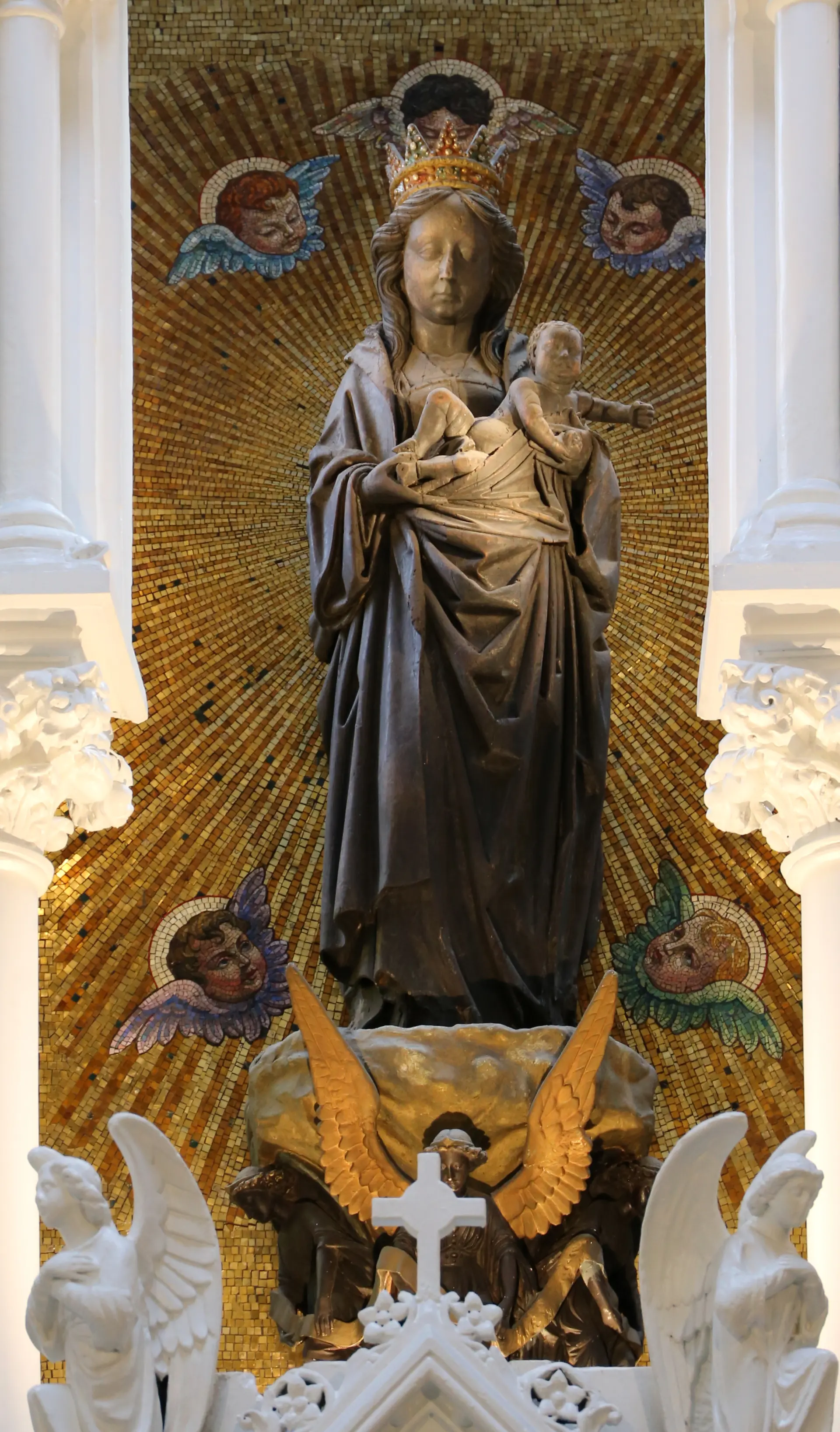
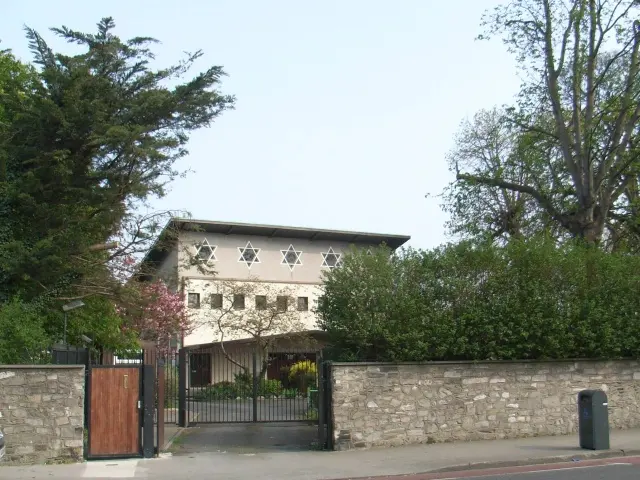
Black Madonna of Dublin
Black Madonna shrine known for Polish community shrine, immigrant devotion
Loughrea Municipal District
1 site

Kilmacduagh
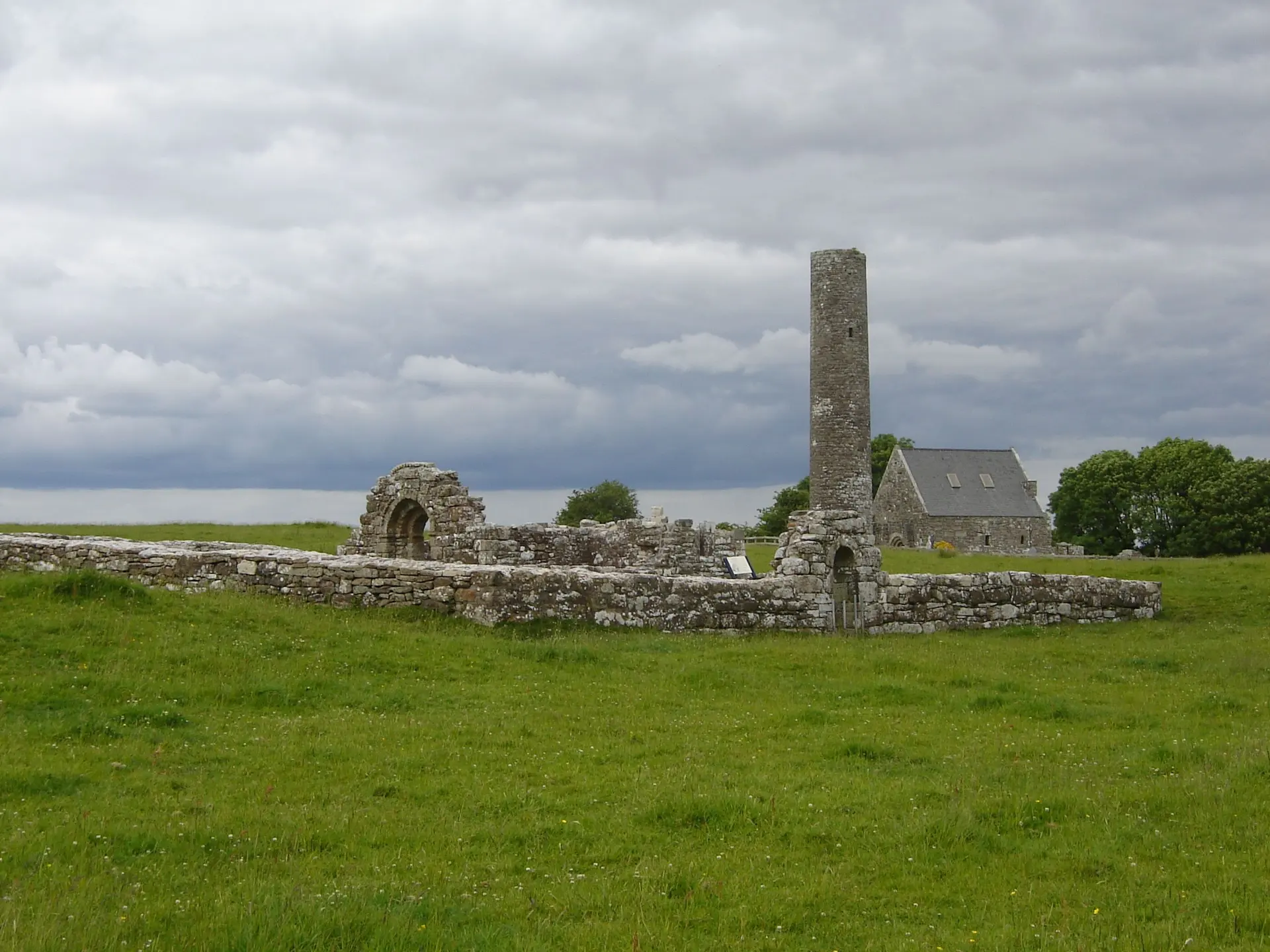
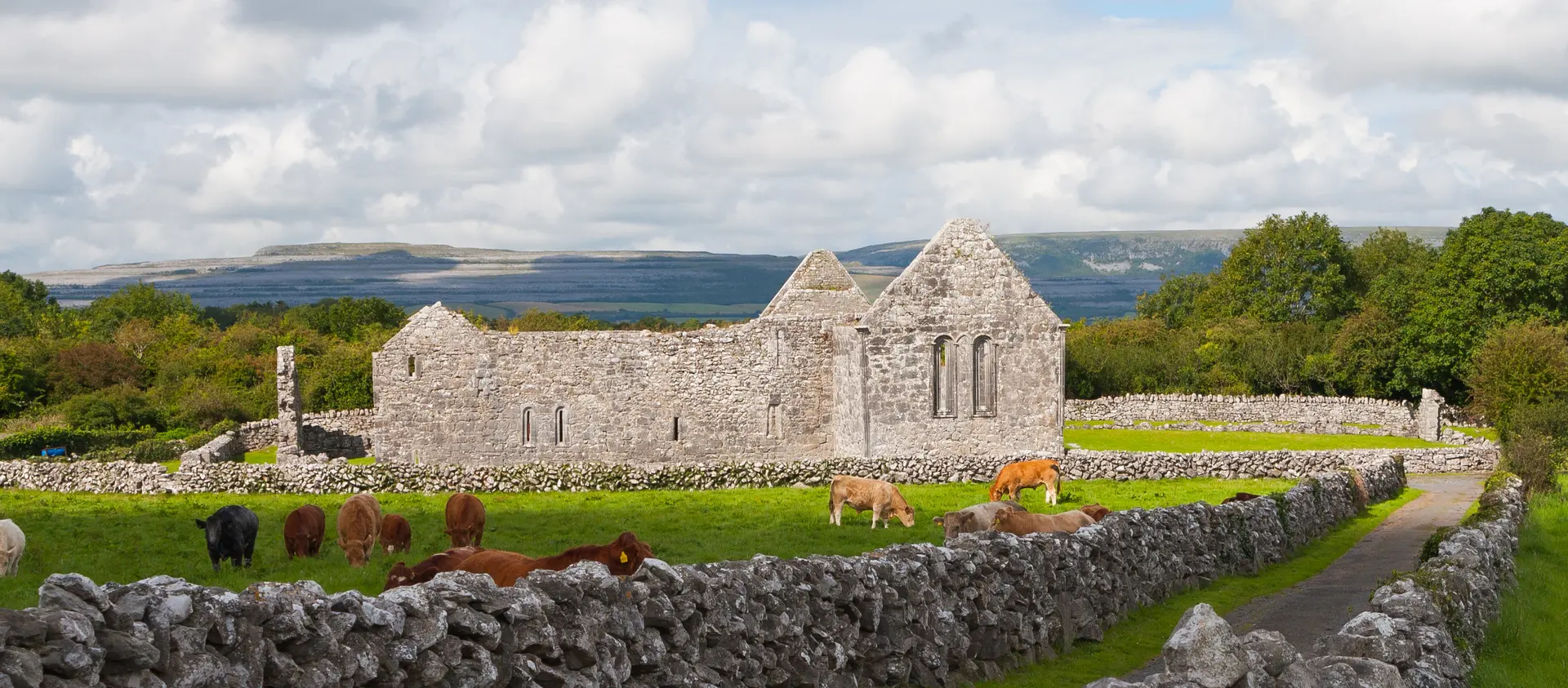
Kilmacduagh (Irish: Cill Mhic Dhuach, meaning 'church of Duach's son') is a small village in south County Galway, Ireland, near Gort. The village is in a townland and civil parish of the same name, in Kiltartan barony. It is the site of Kilmacduagh monastery, seat of the Diocese of that name. The diocese is now part of the Diocese of Galway and Kilmacduagh in the Roman Catholic Church and in the Diocese of Tuam, Limerick and Killaloe in the Church of Ireland. The former cathedral is now a ruin. The Round Tower sits beside the cathedral and is from the 11th or 12 century. At 112 feet it is the tallest tower in Ireland. The towers bell is said to lie at the bottom of a nearby lake. The village is 5 km (3 mi) to the south-west of Gort via the R460 road.
Munster
2 sites

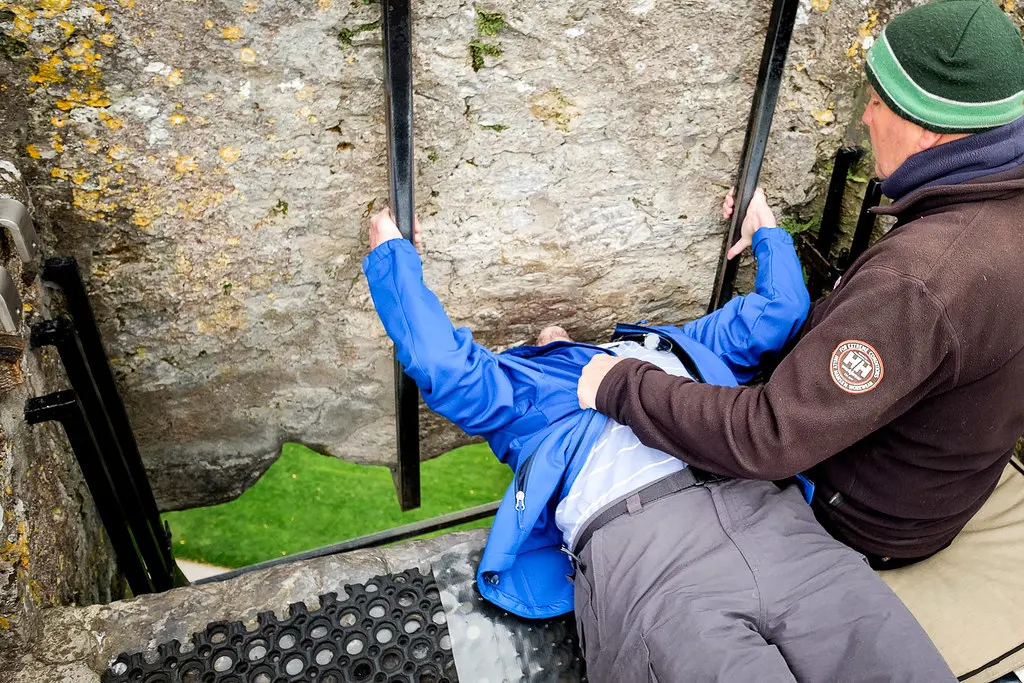
Blarney Stone
The Blarney Stone (Irish: Cloch na Blarnan) is a block of Carboniferous limestone built into the battlements of Blarney Castle, Blarney, about 8 kilometres (5 miles) from the centre of Cork City, Ireland. According to legend, kissing the stone endows the kisser with the gift of the gab (great eloquence or skill at flattery). The stone was set into a tower of the castle in 1446. The castle is a popular tourist site in Ireland, attracting visitors from all over the world to kiss the stone and tour the castle and its gardens. The word blarney has come to mean "clever, flattering, or coaxing talk". Irish politician John O'Connor Power defined it this way: "Blarney is something more than mere flattery. It is flattery sweetened by humour and flavoured by wit. Those who mix with Irish folk have many examples of it in their everyday experience." Letitia Elizabeth Landon described its contemporary meaning in an article entitled "Blarney Castle" in 1832.

Lough Gur
Lough Gur (Irish: Loch Goir) is a lake in County Limerick, Ireland between the towns of Herbertstown and Bruff. The lake forms a horseshoe shape at the base of Knockadoon Hill and some rugged elevated countryside. It is one of Ireland's most important archaeological sites. Humans have lived near Lough Gur since about 3000 BC and there are numerous megalithic remains there. Grange stone circle (the largest stone circle in Ireland) and a dolmen are located near the lake. The remains of at least three crannogs are present, and remains of Stone Age houses have been unearthed (the house outlines are known as "The Spectacles"). A number of ring forts are found in the area, with one hill fort overlooking the lake. Some are Irish national monuments. It is here that the 14th-century lord of Munster and poet Gearóid Iarla, votary of the Goddess Áine, is said to sleep in a cave and emerge at the time of Ireland's need to gallop around the lake on his great silver-shod white horse. A visitors' centre is open beside Lough Gur, along with a car park and picnic area. A gradual shoreline is present at the visitor area, with a shallow section of lake reaching up to the maintained lawn. As a result, the area is often used for water sports, though motorised craft are banned on the lake. There is a castle, or tower house (closed to visitors) near the entrance to the carpark. Named Bourchier's Castle after Sir George Bourchier, the son of the second Earl of Bath, it lies at the neck of the peninsula around which the lake washes. There is some other architecture dating from more recent times, with the ruins of an early Christian church by the road leading down to the lake. At the far end of the lake are the ruins of a Norman castle, Black Castle, which is reached by a hillside walk along the east side of the lake. This is one of the keeps used during the Desmond Rebellions and is probably the place where the Earl of Desmond secured his authority in 1573 after casting off his English apparel and donning Irish garments on his return to Munster from London. Lough Gur is a famous location for finding Irish Elk skeletons. The National Museum of Ireland - Natural History has specimens from Lough Gur as does Leeds Museums and Galleries in the UK.
Sligo Municipal Borough District
4 sites

Carrowmore
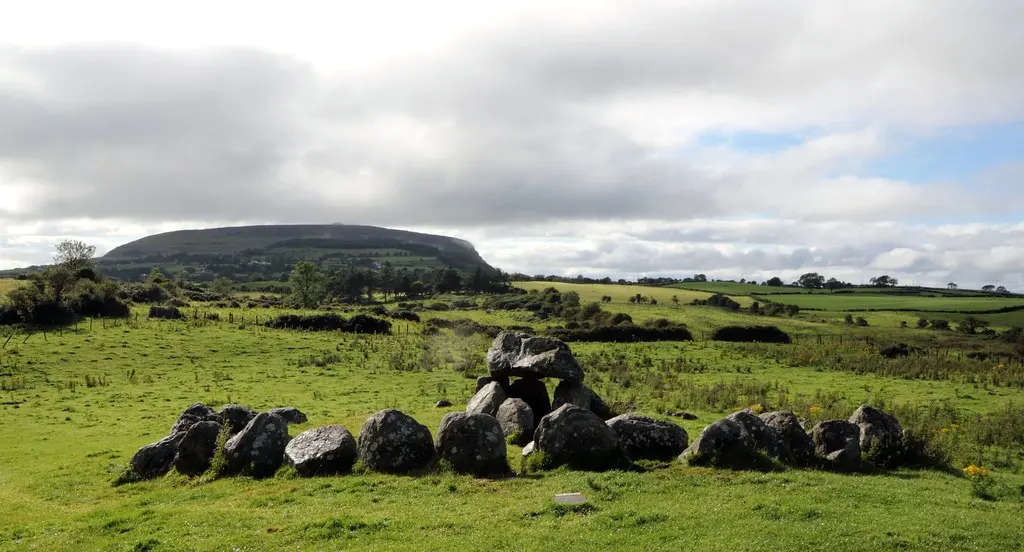
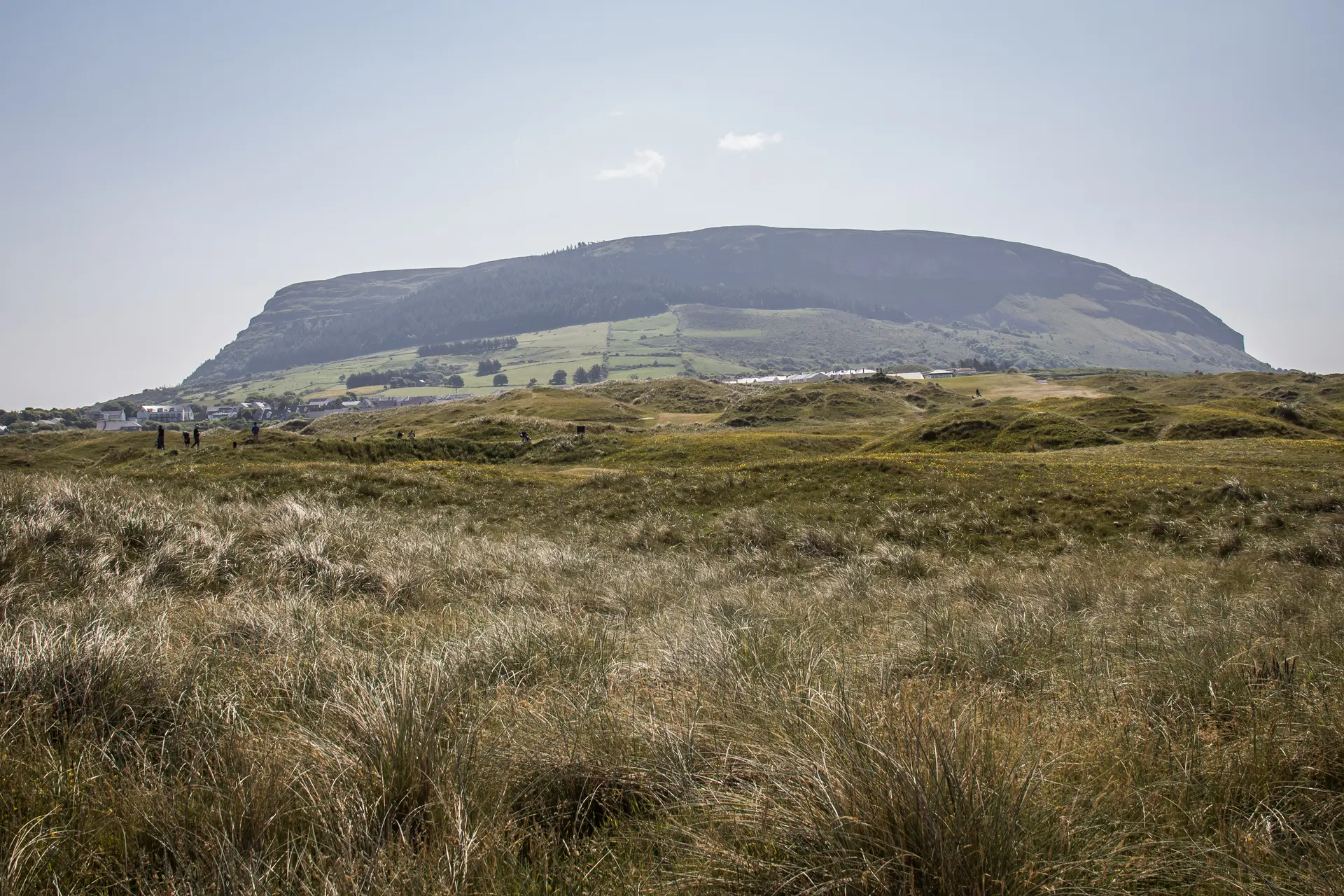
Carrowmore (Irish: An Cheathrú Mhór, 'the great quarter') is a large group of megalithic monuments on the Coolera Peninsula to the west of Sligo, Ireland. They were built in the 4th millennium BC, during the Neolithic (New Stone Age). There are thirty surviving tombs, making Carrowmore one of the largest clusters of megalithic tombs in Ireland, and one of the 'big four' along with Carrowkeel, Loughcrew and Brú na Bóinne. Carrowmore is the heart of an ancient ritual landscape which is dominated by the mountain of Knocknarea to the west. It is a protected National Monument.

Knocknarea megalthic site, Sligo
Knocknarea megalthic site, Sligo, Ireland is a megalithic of sacred significance. Approximate coordinates: 54.25876, -8.57450. Attributes: built, cultural, archaeological. Located in Sligo Municipal Borough District, Éire / Ireland.

Tobar Nalt
Tobar Nalt is a site of sacred significance. Approximate coordinates: 54.24391, -8.44601. Located in Sligo Municipal Borough District, Éire / Ireland.
Tobernalt Holy Well, Sligo
Tobernalt Holy Well, Sligo, Ireland is a site of sacred significance. Approximate coordinates: 54.24398, -8.44588. Located in Sligo Municipal Borough District, Éire / Ireland.
The Borough District of Drogheda
2 sites

Drogheda
Drogheda ( DRO-həd-ə, DRAW-də; Irish: Droichead Átha [ˈd̪ˠɾˠɛhəd̪ˠ ˈaːhə], meaning "bridge at the ford") is an industrial and port town in County Louth on the east coast of Ireland, 43 km (27 mi) north of Dublin. It is located on the Dublin–Belfast corridor on the east coast of Ireland, mostly in County Louth but with the south fringes of the town in County Meath, 40 km (25 mi) north of Dublin city centre. Drogheda had a population of 44,135 inhabitants in 2022, making it the eleventh largest settlement by population in all of Ireland, and the largest town in Ireland, by both population and area. It is the second largest in County Louth with 35,990 and sixth largest in County Meath with 8,145. It is the last bridging point on the River Boyne before it enters the Irish Sea. The UNESCO World Heritage Site of Newgrange is located 8 km (5.0 mi) west of the town.
Monasterboice Island
Monasterboice Island is a site of sacred significance. Approximate coordinates: 53.77768, -6.41771. Located in The Borough District of Drogheda, Éire / Ireland.
The Borough District of Wexford
2 sites
Lady's Island
Lady's Island is a pilgrimage site of sacred significance. Approximate coordinates: 52.19945, -6.39147. Attributes: built, cultural, pilgrimage. Tradition: Christianity. Associated figure: Our Lady. Mythological context: Christian. Located in The Borough District of Wexford, Éire / Ireland.

Our Lady’s Island Monastery, Rosslare
Our Lady’s Island Monastery, Rosslare, Ireland is a site of sacred significance. Approximate coordinates: 52.20856, -6.38177. Located in The Borough District of Wexford, Éire / Ireland.
The Municipal District of Ashbourne
1 site

Hill of Tara
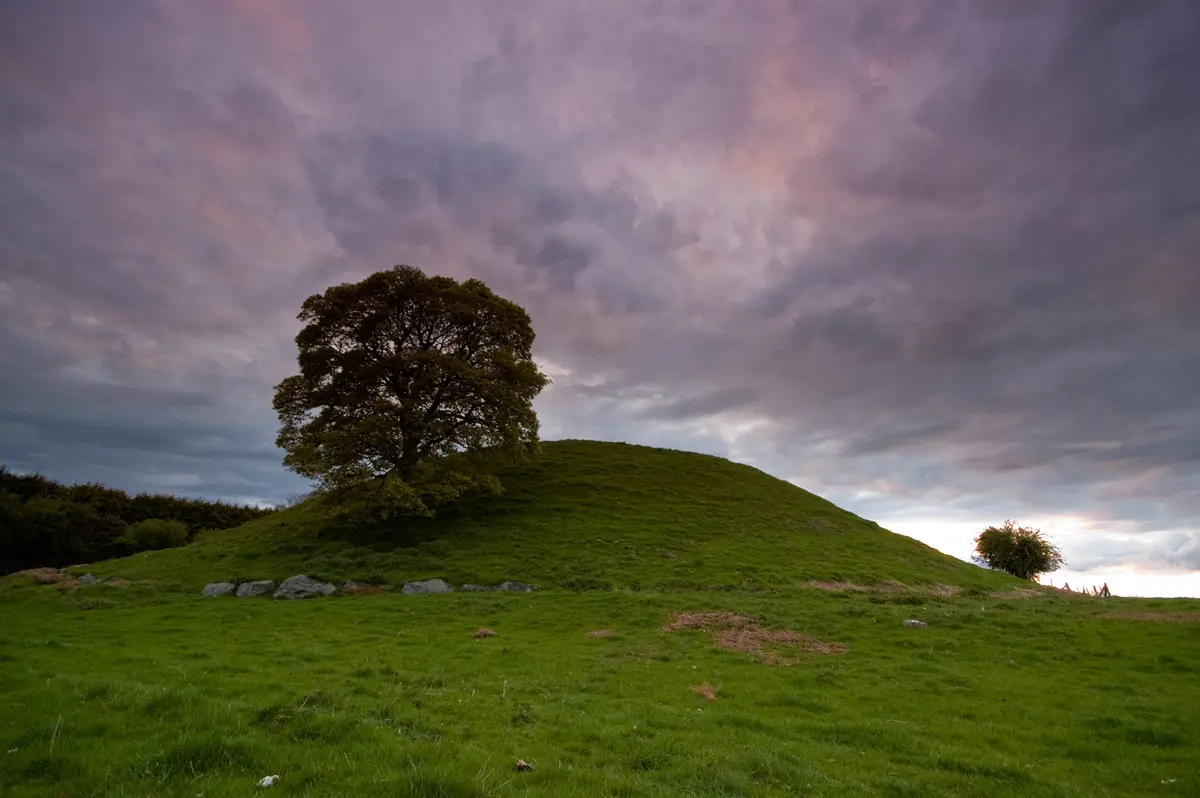
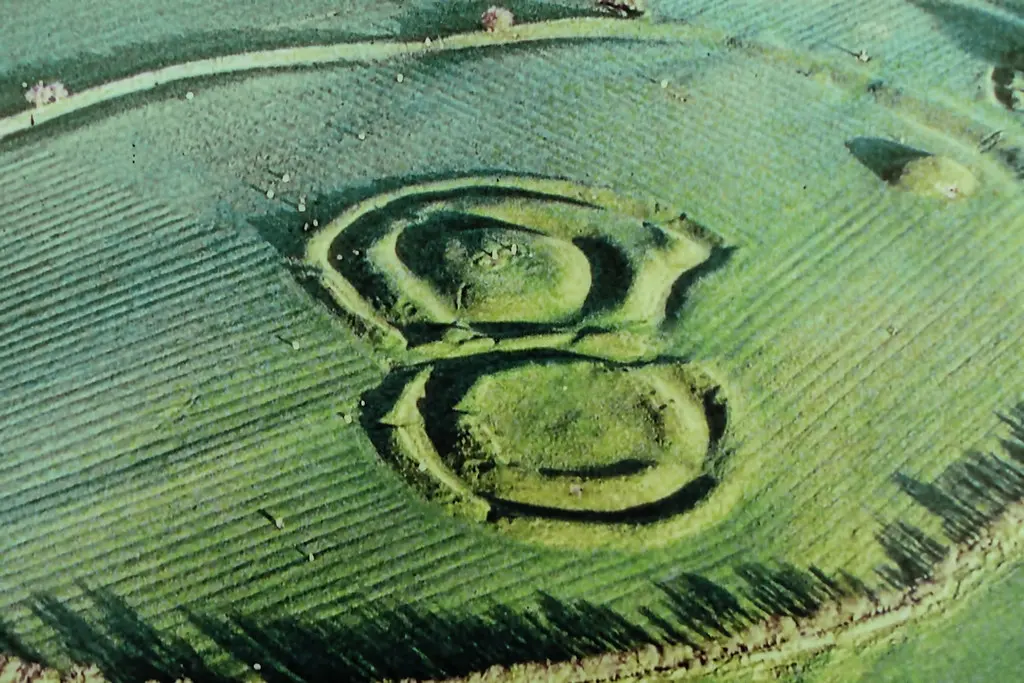
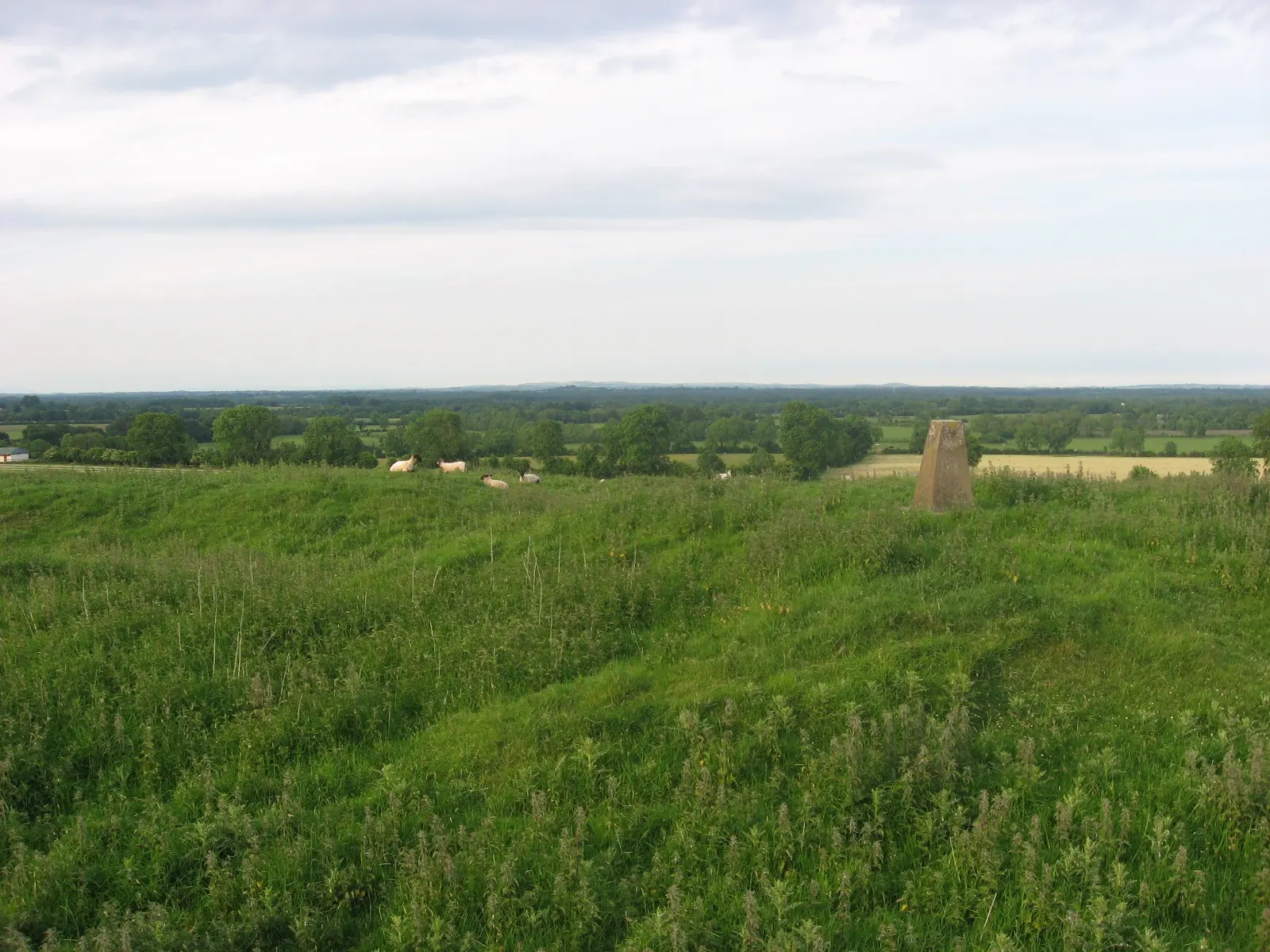
The Hill of Tara (Irish: Teamhair or Cnoc na Teamhrach) is a hill and ancient ceremonial and burial site near Skryne in County Meath, Ireland. Tradition identifies the hill as the inauguration place and seat of the High Kings of Ireland; it also appears in Irish mythology. Tara consists of numerous monuments and earthworks—dating from the Neolithic to the Iron Age—including a passage tomb (the "Mound of the Hostages"), burial mounds, round enclosures, a standing stone (believed to be the Lia Fáil or "Stone of Destiny"), and a ceremonial avenue. There is also a church and graveyard on the hill. Tara forms part of a larger ancient landscape and Tara itself is a protected national monument under the care of the Office of Public Works, an agency of the Irish Government.
The Municipal District of Baltinglass
1 site
Baltinglass
Baltinglass, historically known as Baltinglas (Irish: Bealach Conglais, meaning 'road (or way) of Conglas'), is a town in south-west County Wicklow, Ireland. It is located on the River Slaney near the border with County Carlow and County Kildare, on the N81 road. The town is in a civil parish of the same name.
The Municipal District of Birr
1 site
Clonmacnois
Clonmacnois is a round tower of sacred significance. Approximate coordinates: 53.32628, -7.98629. Attributes: built, cultural, archaeological. Located in Birr, Éire / Ireland.
The Municipal District of Cahir — Cashel
1 site
Cashel
Cashel (an Anglicised form of the Irish language word Caiseal, meaning "stone fort") may refer to:
The Municipal District of Callan — Thomastown
1 site

Knockroe passage mound
Knockroe passage mound, Ireland is a passage tomb of sacred significance. Approximate coordinates: 52.43175, -7.39982. Attributes: built, cultural, archaeological. Located in The Municipal District of Callan — Thomastown, Éire / Ireland.
The Municipal District of Carrick-on-Suir
1 site

Ossory group
Ossory group, Ireland is a site of sacred significance. Approximate coordinates: 52.41416, -7.39255. Located in The Municipal District of Carrick-on-Suir, Éire / Ireland.
The Municipal District of Dungarvan — Lismore
1 site
Ardmore
Ardmore comes from the Irish: Ard Mór or the Scottish Gaelic: Àird Mhòr meaning "great height" and may refer to:
The Municipal District of Kanturk-Mallow
1 site
St. Brigit’s Holy Well
St. Brigit’s Holy Well, Castlemagner is a site of sacred significance. Approximate coordinates: 52.16574, -8.82741. Located in The Municipal District of Kanturk-Mallow, Éire / Ireland.
The Municipal District of Kells
2 sites
Kells
Kells may refer to:
Loughcrew
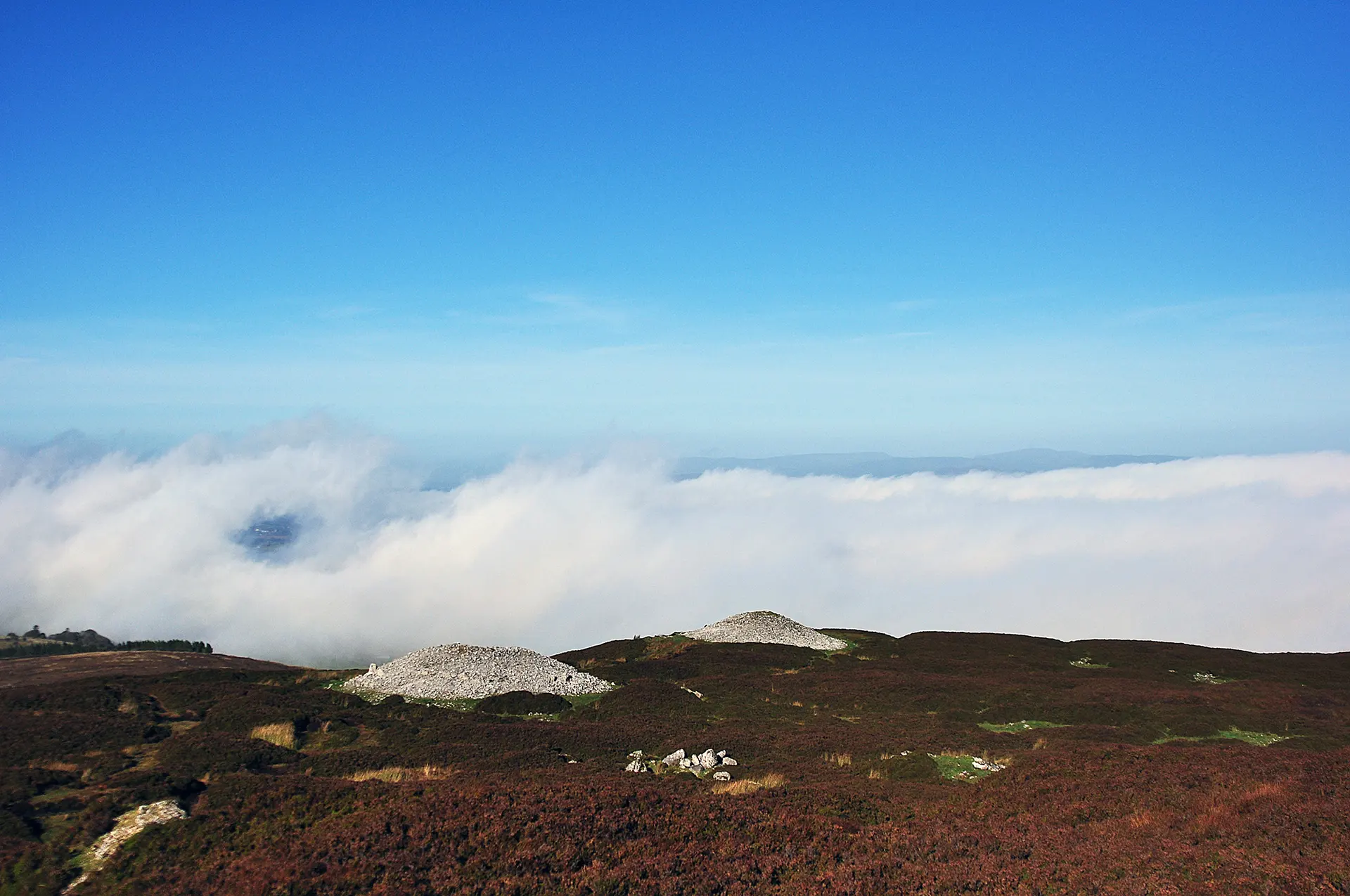
Loughcrew or Lough Crew (Irish: Loch Craobh, meaning 'lake of the tree') is an area of historical importance near Oldcastle, County Meath, Ireland. It is home to a group of ancient tombs from the 4th millennium BC, some decorated with rare megalithic art, which sit on top of a range of hills. The hills and tombs are together known as Slieve na Calliagh (Sliabh na Caillí) and are the highest point in Meath. It is one of the four main passage tomb cemeteries in Ireland and is a protected National Monument. The area is also home to the Loughcrew Estate, from which it is named.
The Municipal District of Thurles
1 site

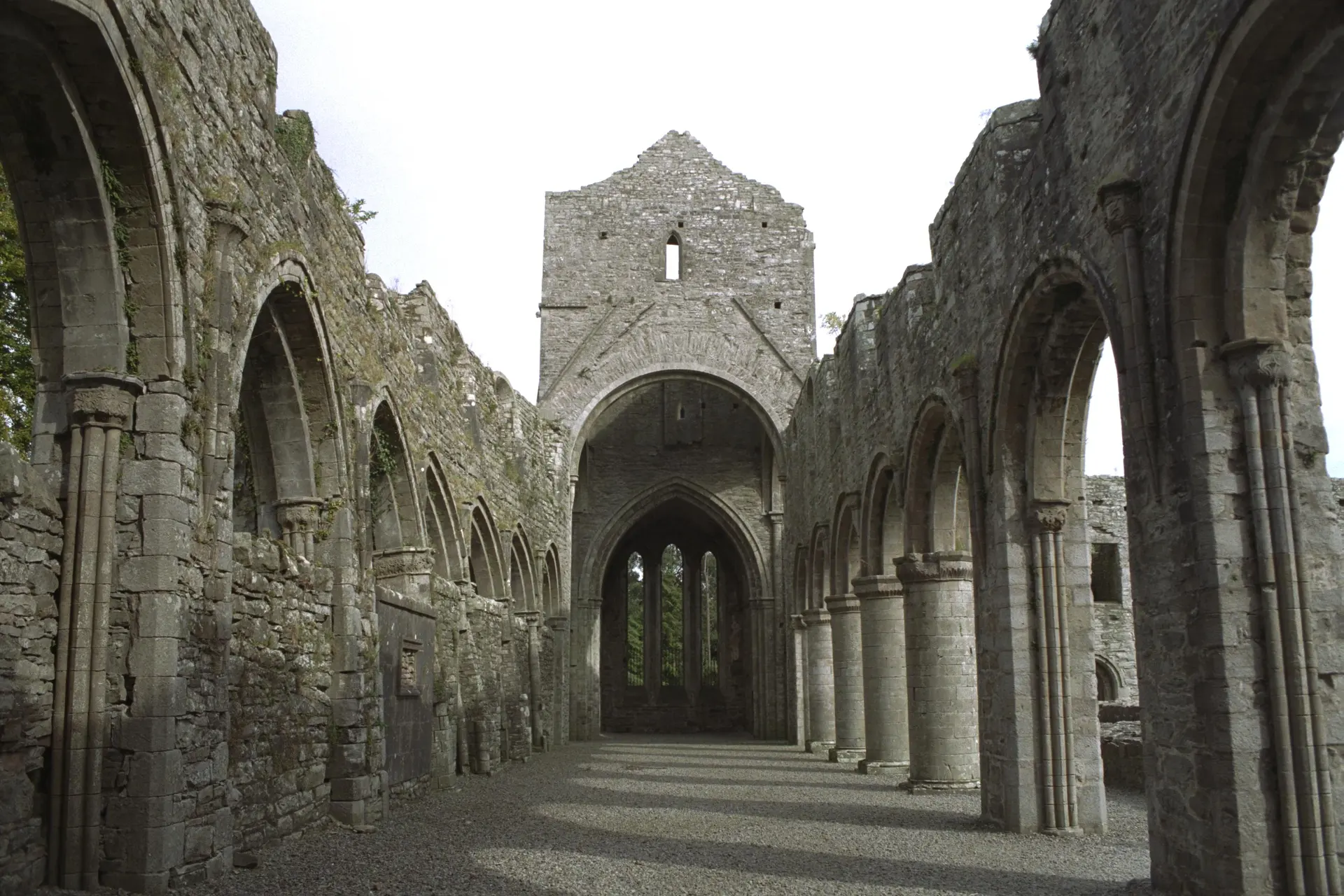
Holy Cross Abbey
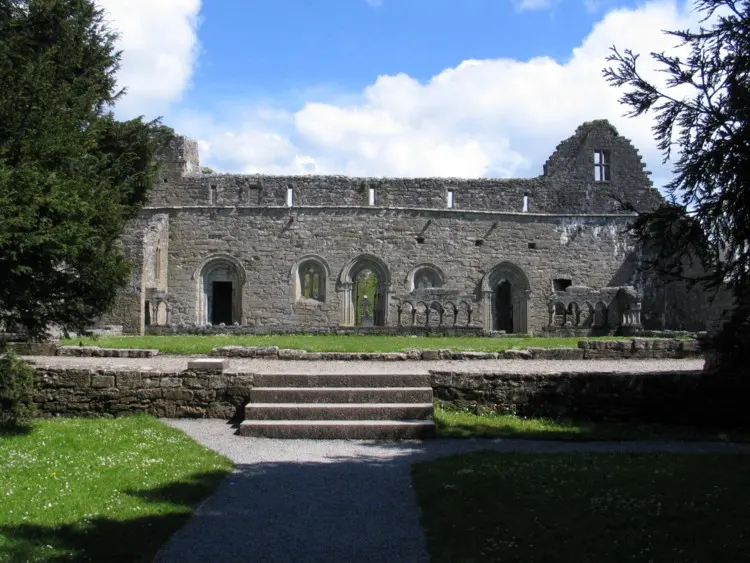
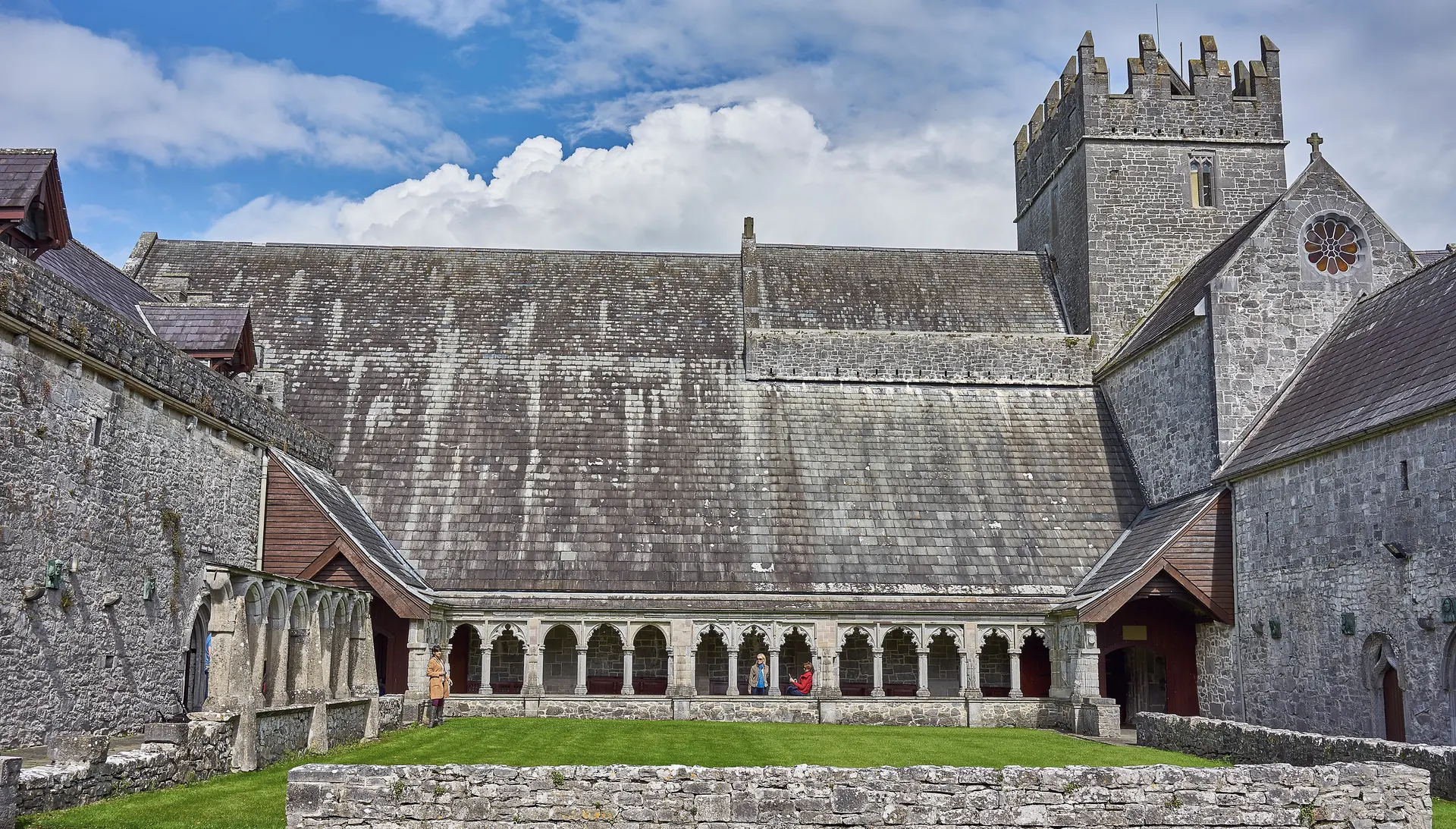
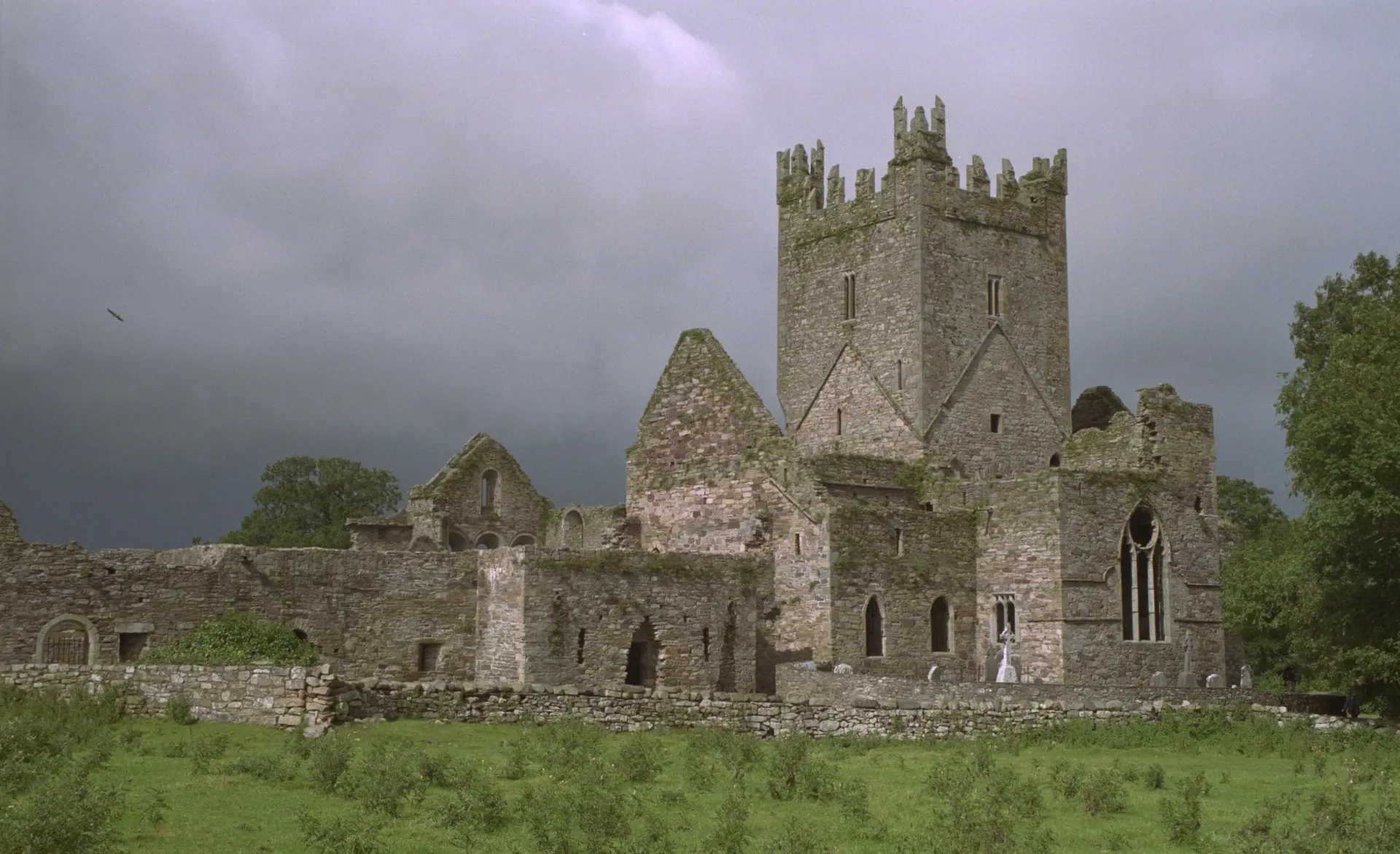
Holy Cross Abbey (Mainistir na Croise Naofa) was a Cistercian monastery in Holycross near Thurles, County Tipperary, Ireland, situated on the River Suir. It takes its name from a relic of the True Cross or Holy Rood.
The Municipal District of Wicklow
1 site

Glendalough
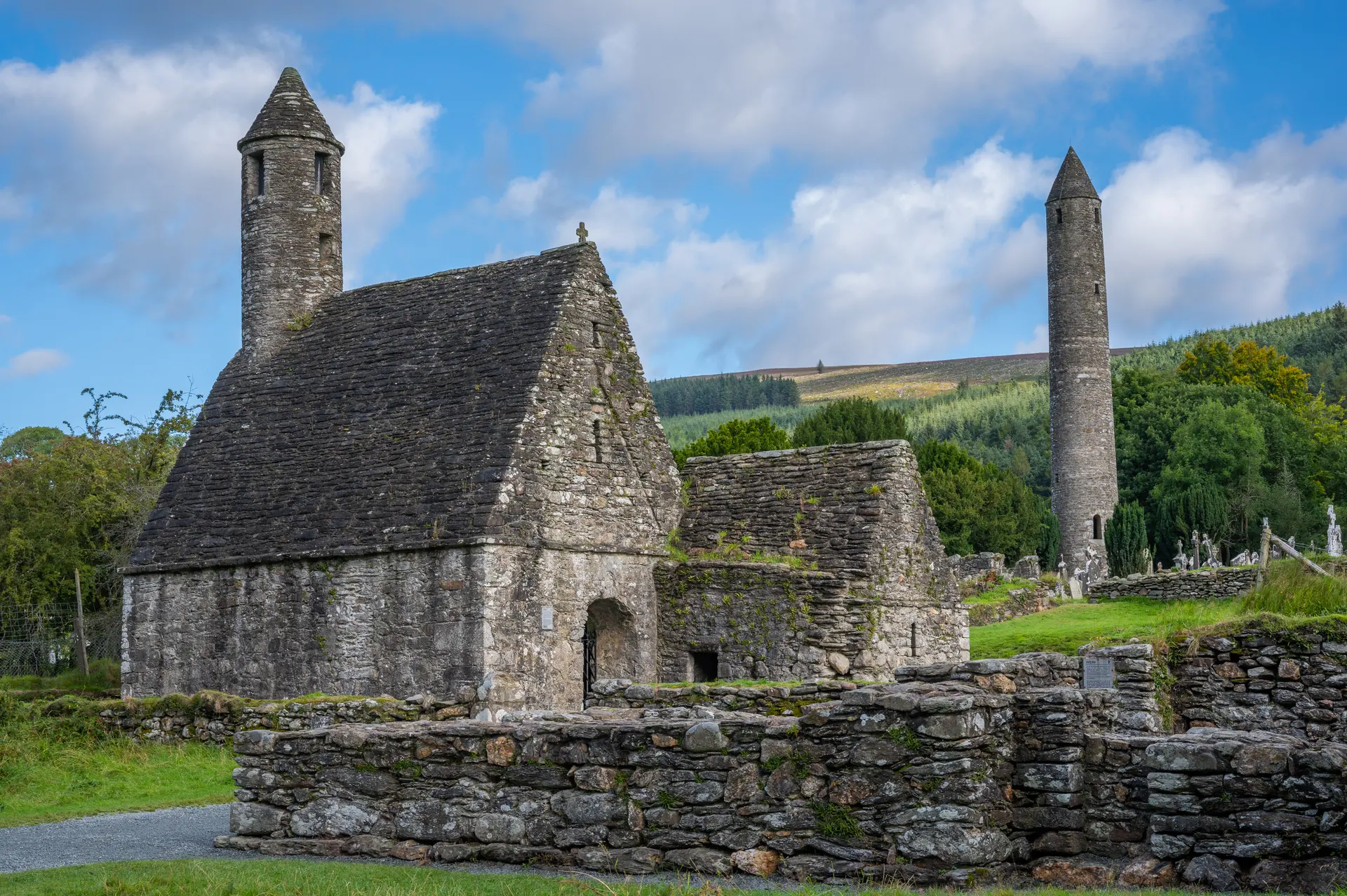
Glendalough (; Irish: Gleann Dá Loch, meaning 'valley of two lakes') is a glacial valley in County Wicklow, Ireland, renowned for an Early Medieval monastic settlement founded in the 6th century by St Kevin. From 1825 to 1957, the head of the Glendalough Valley was the site of a galena lead mine. Glendalough is also a recreational area for picnics, for walking along networks of maintained trails of varying difficulty, and also for rock climbing.
West Clare Municipal District
1 site
Scattery Island
Scattery Island is a site of sacred significance. Approximate coordinates: 52.61222, -9.51965. Located in West Clare Municipal District, Éire / Ireland.
West Cork
4 sites

Ardgroom
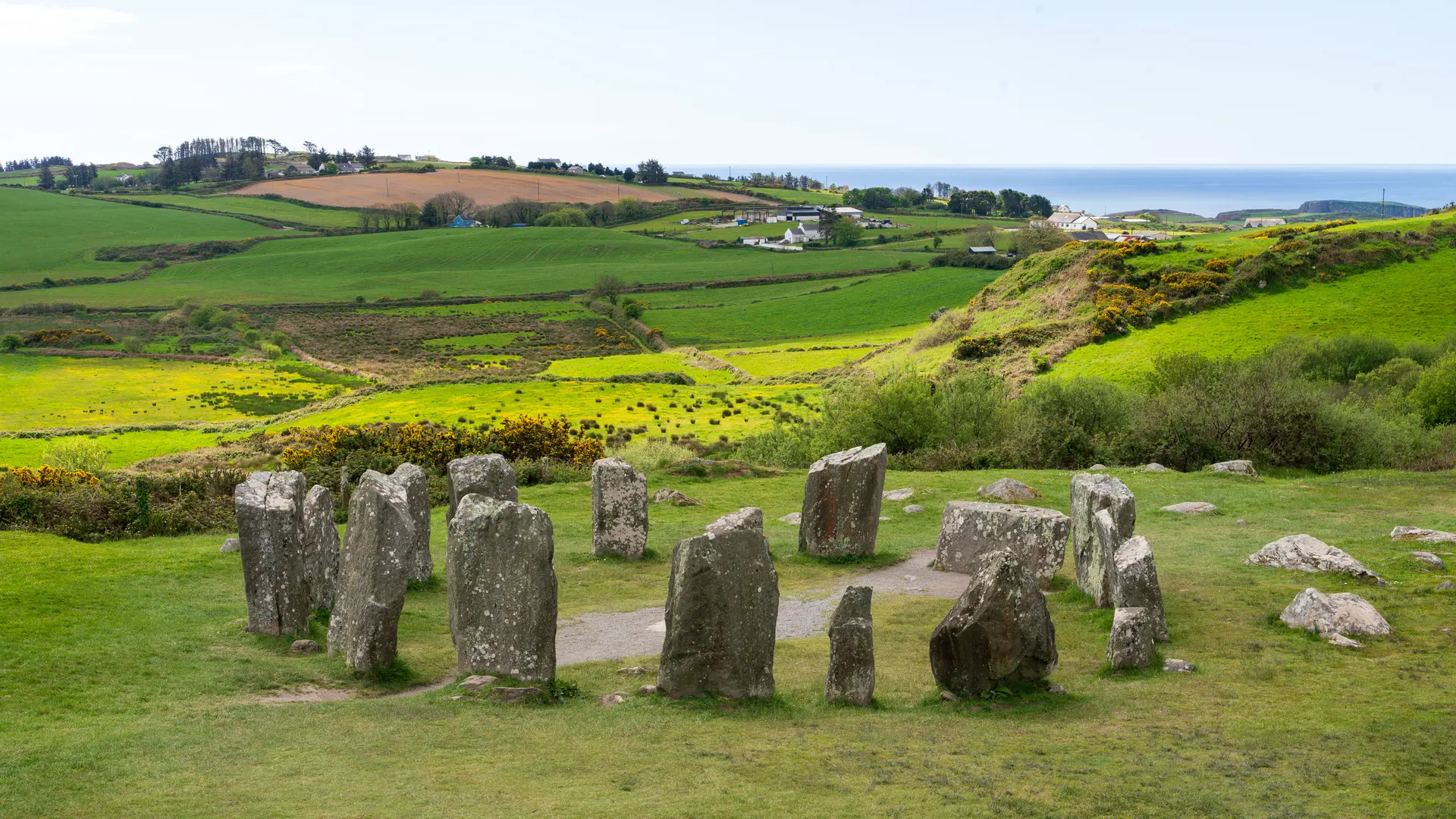
Ardgroom (Irish: Dhá Dhrom, meaning 'two drumlins') is a village on the Beara peninsula in County Cork, Ireland. Its name refers to two gravelly hills deposited by a glacier, Dromárd and Drombeg. It lies to the north west of Glenbeg Lough, overlooking the Kenmare River estuary. It sits between the coast and the Slieve Miskish Mountains. The village contains a shop, post office, a petrol station and "The Village Inn" pub.

Drombeg Stone Circle, Glandore
Drombeg Stone Circle, Glandore, Ireland is a stone circle of sacred significance. Approximate coordinates: 51.56457, -9.08738. Attributes: built, cultural, archaeological, ceremonial. Located in West Cork, Éire / Ireland.
Dromberg
Dromberg is a surname. Notable people with the surname include: Donnar Dromberg (1908–1992), Finnish philatelist Kaarina Dromberg (born 1942), Finnish politician
Kealkil
Kealkil is a stone circle of sacred significance. Approximate coordinates: 51.74519, -9.37057. Attributes: built, cultural, archaeological. Located in West Cork, Éire / Ireland.
Westport-Belmullet Municipal District
1 site

Mt. Croach Patrick
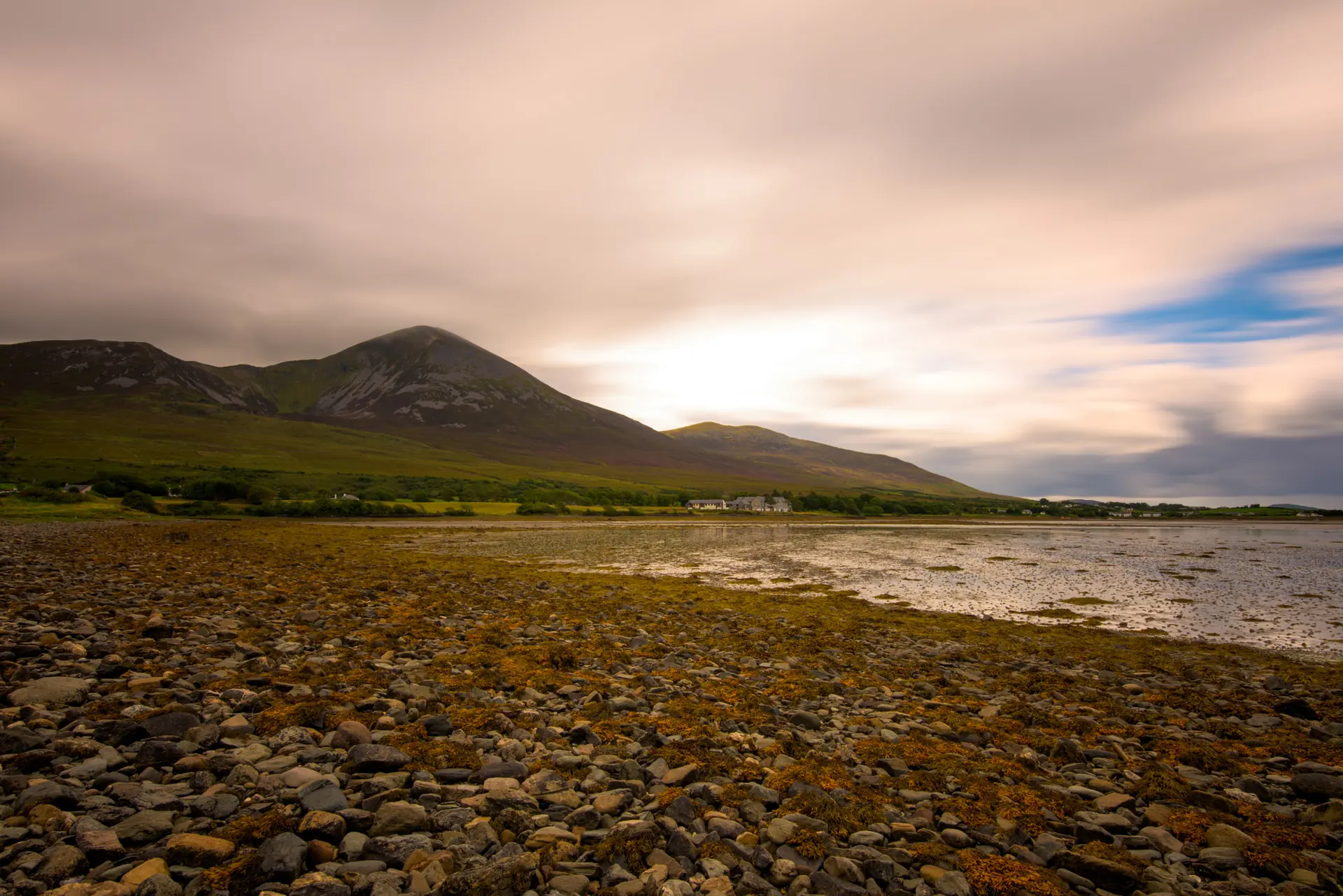
Mt. Croach Patrick is a site of sacred significance. Approximate coordinates: 53.75991, -9.65979. Located in Westport-Belmullet Municipal District, Éire / Ireland.