Carrowmore
Ireland's oldest stone cemetery, where sixty monuments once encircled a tomb aligned to the sunrise on Samhain
Understand sacred places, explore living traditions, and learn how to engage respectfully with Pilgrim Map.
Access has not been verified. Check current local guidance before planning a visit.
County Sligo, Sligo, Ireland
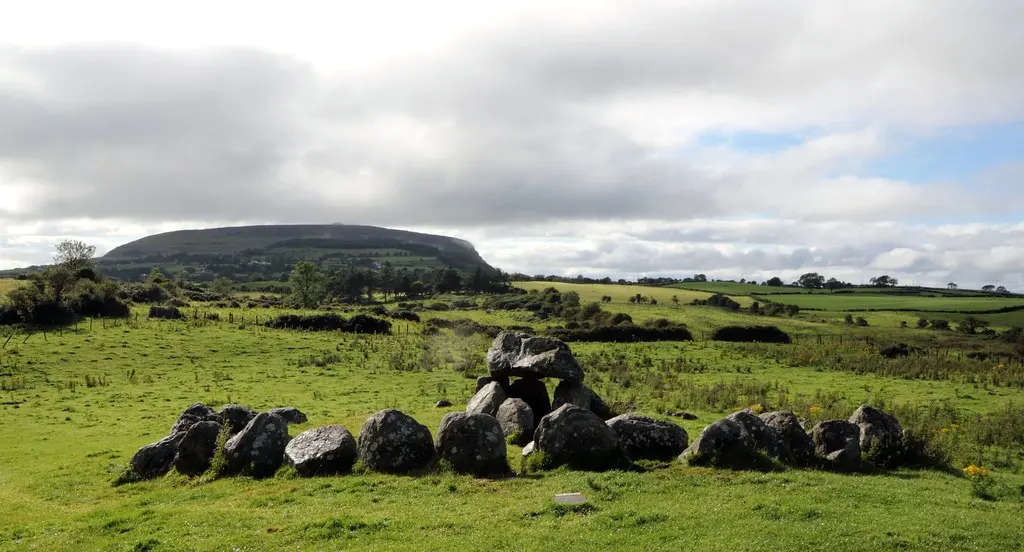
Image of Carrowmore. Image source
Visit essentials
A quick read before you go
- Duration
- 1.5 to 2 hours including the exhibition and a thorough walk through the cemetery
- Etiquette
- Respect the monuments as a burial ground.
Overview
Carrowmore lies on the Coolera Peninsula, five kilometres west of Sligo town, a landscape of low green fields scattered with standing stones, boulder circles, and the remnants of dolmens. Approximately sixty monuments once occupied this ground. Thirty survive. They represent one of the largest and, according to some dating estimates, potentially the oldest concentrations of megalithic tombs in Ireland.
The cemetery was built between approximately 3800 and 3000 BC by Neolithic farming communities whose ancestors had migrated from Anatolia through continental Europe, arriving in Ireland via Brittany. They brought a tradition of megalithic construction adapted to local conditions. Where other Irish passage tomb complexes used massive cairns with roofed passages, Carrowmore's builders created open boulder circles, rings of glacial erratics surrounding central dolmens, most without the passages, lintels, and enclosing cairns found at Newgrange or Carrowkeel.
This distinctive regional form has led some scholars to question whether Carrowmore's monuments are true passage tombs at all, or whether they represent an earlier, simpler tradition from which the more elaborate complexes developed.
At the centre of the cemetery stands Listoghil, Tomb 51, the largest and most complex monument. Listoghil was enclosed in a substantial cairn and, unlike its satellite tombs, contained both cremation and inhumation burials. A massive capstone, deliberately tilted six degrees above horizontal, is oriented toward a gap in the Ballygawley Mountains to the east.
On the mornings around Samhain, the cross-quarter day marking the transition into winter, the rising sun enters through this gap and illuminates the underside of the capstone, turning it golden. The corresponding alignment occurs around Imbolc, marking the transition out of winter. These are the hinge points of the Celtic year, the moments when the veil between seasons, and between worlds, was understood to be thinnest.
The visual relationship with Knocknarea is constant and deliberate. From almost every point in the cemetery, the flat summit of Knocknarea is visible to the northwest, crowned by Queen Maeve's cairn, the largest unopened cairn in Ireland. The cemetery and the mountain are in dialogue. The living brought their dead to Carrowmore and oriented their monuments toward the mountain where the legendary queen of Connacht was buried, or would be buried, or would always have been buried.
The mythology is layered, and the layers are the point.
Why this place is sacred
The thinness of Carrowmore is cumulative. It builds through density, through the sheer number of monuments occupying a relatively small area, through the knowledge of what they contain, and through the visual relationship with the landscape beyond.
Walk among the boulder circles and you are walking among the dead. These are not ornamental structures or astronomical observatories repurposed as monuments. They are graves. Cremated human remains were placed within them, along with grave goods: mushroom-headed antler pins, stone and clay balls, shellfish shells. At least one individual at Listoghil had been de-fleshed, the bones cleaned of soft tissue before burial, a practice that implies a complex relationship between the community and the physical body of the dead.
The thirty surviving monuments represent only half the original cemetery. Another thirty were destroyed after 1800, quarried for road-building or cleared for farming. The stones you see are the survivors.
The Samhain alignment at Listoghil is the cemetery's most powerful temporal marker. On the mornings around late October and early November, the rising sun enters from a specific gap in the Ballygawley Mountains and illuminates the underside of the massive capstone. This is the moment the Celtic calendar names Samhain, when summer ends and winter begins, when the boundary between the living and the dead is traditionally understood as permeable. The alignment is not coincidental.
Paidraig Meehan's peer-reviewed analysis confirmed the deliberate orientation. The Neolithic builders placed their central tomb to receive light at the moment when light begins to fail.
Knocknarea's presence in the cemetery's sightlines adds mythological weight. Queen Maeve's cairn, estimated to contain over forty thousand tonnes of stone, has never been excavated. What lies inside is unknown. The cairn's visible presence from the cemetery creates a constant visual relationship between the known dead of Carrowmore and the unknown contents of the mountain above.
The Cailleach legend, in which a divine crone goddess scattered the Carrowmore monuments from her apron while flying toward Knocknarea, provides a mythological framework that connects cemetery and mountain in a single narrative of creation and loss.
The dating controversy adds an intellectual dimension to the thinness. If the earlier dates (suggesting some monuments may be as old as 4600 BC) are correct, Carrowmore is among the oldest megalithic cemeteries in Europe. If the revised dates of 3800-3000 BC are accepted, it is contemporary with other Irish passage tomb complexes. Either way, the cemetery represents one of the earliest sustained expressions of monumental architecture for the dead in this part of the world.
A cemetery and ritual landscape for Neolithic farming communities, designed to accommodate the cremated and unburned remains of the dead within a cosmologically oriented landscape. The Samhain/Imbolc alignment at Listoghil indicates ceremonies tied to the agricultural and spiritual calendar.
Active use for approximately eight hundred years (3800-3000 BC). Incorporation into Celtic mythology through the Cailleach legend and Battle of Moytura traditions. Partial destruction after 1800 when half the monuments were lost to quarrying and land clearance. First documented by George Petrie in 1837. Major excavations by Goran Burenhult (1977-82, 1994-98) and re-dating by Stefan Bergh and Robert Hensey (2012). Purchased by the State in 1989-90. Managed by Heritage Ireland with a visitor centre, exhibition, and guided tours.
Experience and orientation
Carrowmore is gentle. Unlike Carrowkeel's mountain ascent or Newgrange's queued choreography, this cemetery sits in open, flat fields that you walk through at your own pace. The monuments are scattered across the green landscape like boulders left by a retreating glacier, which in part they were: many of the stones used for the boulder circles are glacial erratics, carried here by ice during the last Ice Age and repurposed by Neolithic hands.
Begin at the visitor centre. The exhibition provides essential context: the dating debates, the burial practices, the DNA research linking the builders to Anatolian migrants, the Cailleach legend, and the relationship with Knocknarea. A guided tour, lasting approximately one hour, is the richest way to experience the site.
The guides bring archaeological detail to life, explaining the difference between cremation and inhumation burials, the significance of the antler pins and clay balls found in the tombs, and the evidence of de-fleshing at Listoghil.
Walking among the monuments, you notice their arrangement. The satellite tombs form a rough oval, their openings facing inward toward Listoghil at the centre. This is not random scatter. It is designed convergence, a community of tombs oriented toward a single focal point. The effect, as you walk from the periphery toward the centre, is of approaching something that everything else defers to.
Listoghil has been restored, its cairn rebuilt to give a sense of the original structure. The massive capstone, one of the largest in Irish megaliths, sits tilted six degrees above horizontal. Stand beneath it and look east toward the Ballygawley Mountains. The gap in the mountain profile through which the Samhain sunrise enters is visible. Even outside the alignment period, the sight line is present, waiting.
Turn west from Listoghil and Knocknarea fills the view. Queen Maeve's cairn sits on the summit, visible as a dark mound against the sky. The distance is only four kilometres. The mountain feels closer. Every monument in the cemetery is aware of it.
The site's relative flatness and short grass make it accessible and easy to walk, but the ground can be muddy, particularly in autumn and spring. The quiet of the site is notable. Despite its proximity to Sligo town, Carrowmore holds a hush that the guided tours punctuate rather than dispel.
Carrowmore is on the Coolera Peninsula, approximately five kilometres west of Sligo town, off the R292 toward Strandhill. The visitor centre is at the entrance. Listoghil, the central monument, is at the centre of the cemetery. Knocknarea is visible to the northwest.
Context and lineage
The Cailleach, the divine crone goddess of Irish mythology, flew over the region from the Ox Mountains toward Knocknarea. She carried stones in her apron to build a pen for her animals. But the apron string broke, or she grew careless, and the stones scattered across the landscape below. Where they fell, the megalithic tombs of Carrowmore stand.
Archaeology tells a different story, no less remarkable. Between approximately 3800 and 3000 BC, Neolithic farming communities built a cemetery of sixty or more monuments on the Coolera Peninsula. DNA analysis suggests the builders were colonists whose ancestors had migrated from Anatolia around 8500 BC, travelling through continental Europe and arriving in Ireland via Brittany.
They brought a tradition of megalithic construction that they adapted to local materials, using the glacial erratics deposited across the landscape by retreating ice sheets as the building blocks of their tombs.
The cemetery is also associated with the Battle of Moytura, one of the founding myths of Irish mythology, in which the Tuatha De Danann defeated the Firbolgs for control of Ireland. The battle is traditionally located in the Sligo region, and the scattered monuments of Carrowmore and the surrounding landscape are sometimes interpreted as the physical remnants of this mythological conflict.
Carrowmore belongs to the Irish passage tomb tradition, though its monuments are atypical: most lack the passages, lintels, and enclosing cairns found at other sites. This has led to debate about whether Carrowmore represents an earlier, simpler form from which more elaborate complexes developed, or a distinct regional variant. The cemetery is the central element of a ritual landscape connecting Knocknarea to the northwest, Carrowkeel in the Bricklieve Mountains to the southeast, and Carns Hill to the east.
This landscape represents one of the densest concentrations of megalithic monuments in Europe.
Goran Burenhult
Stefan Bergh and Robert Hensey
George Petrie
Paidraig Meehan
Traditions and practice
Cremation was the dominant burial practice in the satellite monuments. At Listoghil, both cremation and inhumation were practiced. At least seven individuals were placed unburned in the inner chamber, and one male in his fifties had been de-fleshed, possibly representing a specialized funerary treatment. Grave goods included mushroom-headed antler pins, stone and clay balls, and shellfish shells. The oval arrangement of monuments facing Listoghil suggests centralized ceremonial organization.
Heritage Ireland operates the site with a visitor centre, exhibition, and guided tours from Easter to October. Self-guided visits are possible with a brochure. Modern pagans and archaeoastronomy enthusiasts gather around Samhain and Imbolc to observe the sunrise alignment at Listoghil. Archaeological research continues, with findings periodically published and public understanding continually refined.
Arrive with enough time for a guided tour if one is available. The guides at Carrowmore are knowledgeable and bring the archaeology to life in ways that solitary walking cannot replicate. If touring independently, begin with the visitor centre exhibition to understand the cemetery's layout, dating, and burial practices.
Walk from the periphery toward Listoghil. The satellite monuments are modest, many just circles of boulders, but their arrangement reveals the cemetery's structure. Notice how they face inward, toward the centre. You are following the same orientation the builders intended: everything converges on Listoghil.
At Listoghil, stand beneath the massive capstone. Look east through the gap in the mountains. Even if you are not visiting at Samhain or Imbolc, the alignment is architecturally present, built into the stone. The tilt of the capstone is deliberate, calculated to receive sunlight at a specific angle on specific mornings.
Then turn and face Knocknarea. The mountain's silhouette, crowned by Queen Maeve's cairn, provides the cemetery's western horizon. The relationship is visual, mythological, and spatial. The builders placed their dead in the shadow of the mountain, and the mountain has not moved.
If you can arrange a visit around Samhain (late October to early November) or Imbolc (early February), the sunrise alignment at Listoghil offers an extraordinary experience. Contact Heritage Ireland about access arrangements outside normal hours.
Neolithic Passage Tomb Tradition
HistoricalCarrowmore is one of the largest and potentially oldest concentrations of megalithic tombs in Ireland. The approximately sixty original monuments represent a sophisticated ritual landscape with astronomical alignments, hierarchical arrangement around the central Listoghil tomb, and complex funerary practices including cremation, inhumation, and de-fleshing.
Cremation and burial in boulder-circle monuments. De-fleshing of at least one individual. Placement of grave goods including antler pins and stone balls. Alignment of Listoghil to the Samhain/Imbolc sunrise. Arrangement of satellite tombs in an oval facing the central cairn.
Irish Mythology (Cailleach / Battle of Moytura)
HistoricalThe Cailleach legend provides a mythological origin for the scattered monuments. The Battle of Moytura traditions connect the Sligo region to the founding conflicts of Irish mythology. These narratives represent successive cultural layers of meaning applied to ancient monuments by later Celtic-speaking communities.
The mythological traditions were transmitted orally and later recorded in medieval manuscripts. They provided a framework for understanding the ancient monuments and for maintaining reverence toward the cemetery as a place of ancestral and supernatural significance.
Archaeological Heritage and Conservation
ActiveCarrowmore is a National Monument managed by Heritage Ireland with a visitor centre, guided tours, and ongoing archaeological research. The site's management balances public access with preservation of the fragile megalithic structures.
Guided tours, visitor centre exhibition, academic research and publication, conservation and maintenance of monuments, educational programmes. The 2012 re-dating project by Bergh and Hensey represents the most recent major scholarly contribution.
Perspectives and open questions
Carrowmore is understood through archaeological investigation, mythological tradition, astronomical analysis, and the ongoing debates about dating and classification that keep the site intellectually alive.
Scholarly perspective
Archaeologists classify Carrowmore as part of the Irish passage tomb tradition, though the monuments are atypical. Most lack passages, lintels, and cairns, suggesting either a distinct regional variant or an earlier, simpler form. The 2012 re-dating by Bergh and Hensey places the cemetery at approximately 3800-3000 BC. Burenhult's excavations documented cremation as the dominant funerary practice, with evidence of de-fleshing at Listoghil. Meehan's work established the Samhain/Imbolc astronomical alignment. DNA research links the builders to migrants from Anatolia.
The cemetery is interpreted as the central element of a ritual landscape connecting Knocknarea, Carrowkeel, and Carns Hill.
Living and traditional perspectives
Irish mythology offers two frameworks: the Cailleach legend, where the divine crone scattered the monuments from her apron, and the Battle of Moytura, connecting the Sligo region to the mythological contest between the Tuatha De Danann and the Firbolgs. Queen Maeve's association through Knocknarea places Carrowmore within the sovereignty mythology of Connacht. These myths reflect later Celtic communities' engagement with ancient monuments whose original meaning had been lost.
Alternative interpretations
Alternative interpretations view Carrowmore as a major earth energy centre, with the oval arrangement around Listoghil creating an energetic pattern. The Samhain alignment is sometimes interpreted as marking the thinning of the veil between worlds. Some practitioners identify ley line connections between the site, Knocknarea, and Carrowkeel. The Cailleach is reinterpreted as a pre-patriarchal goddess figure whose association with the cemetery reflects the feminine principle of death and rebirth.
Open questions
Many questions remain. What was the full extent of the cemetery before twenty-five or more monuments were destroyed after 1800? Why do Carrowmore's monuments lack the passages and cairns found at other passage tomb sites? What was the social organization of the community that maintained this cemetery for eight hundred years? The relationship between the Neolithic builders' cosmology and the later Celtic mythology cannot be bridged by archaeology. The original appearance of the landscape between the monuments is largely unknown.
Plan your visit
Access and arrival
Sligo town, five kilometres east, offers extensive accommodation at all price levels. The village of Strandhill, nearby on the coast, has cafes and guest houses. Mobile phone signal is reliable at the site. Contact Heritage Ireland for current opening hours, fees, and special access arrangements for alignment observations.
Respectful visit
Comfortable walking shoes suitable for grass paths and potentially muddy ground. Weather-appropriate outdoor clothing. No formal dress requirements.
Photography is freely permitted. The monuments and the Knocknarea backdrop offer exceptional photographic opportunities. Be respectful of other visitors and guided tour groups.
No offering tradition. Do not leave objects at or on the monuments. Leave no trace.
Do not climb on, sit on, or lean against any monument. Do not move, remove, or disturb any stones. Stay on marked paths. Admission fee applies (Heritage Card accepted). Seasonal opening hours, typically Easter to October. Dogs may not be permitted in all areas; check with site staff.
The site is outdoors and paths are grass, which can be muddy in wet weather. Dress warmly and wear appropriate footwear. The visitor centre and guided tours operate seasonally, typically Easter to October. Check with Heritage Ireland for current hours and fees.
Current practical details
Address
Carrowmore, Co. Sligo, F91 E638, Ireland
Phone
Hours
Hours, fees, and access can change — verify on the official source before you travel. Practical details last checked Jun 2026.
Location
Map loads as you approach this section.
Pilgrim reflections
A portrait of encounter, not a score
Pilgrims describe what they felt, how present they could become, and whether the place would shape a journey. There are no stars and no ranking of traditions.
No reviewed reflections yet
The first pilgrims can help describe the character of being here.
Share a reflection
Available after an account-backed “Been there.” Every reflection is reviewed before publication.
Nearby sacred places
Explore other sacred places in the region. Proximity does not establish access or travel time; check each place’s guidance.
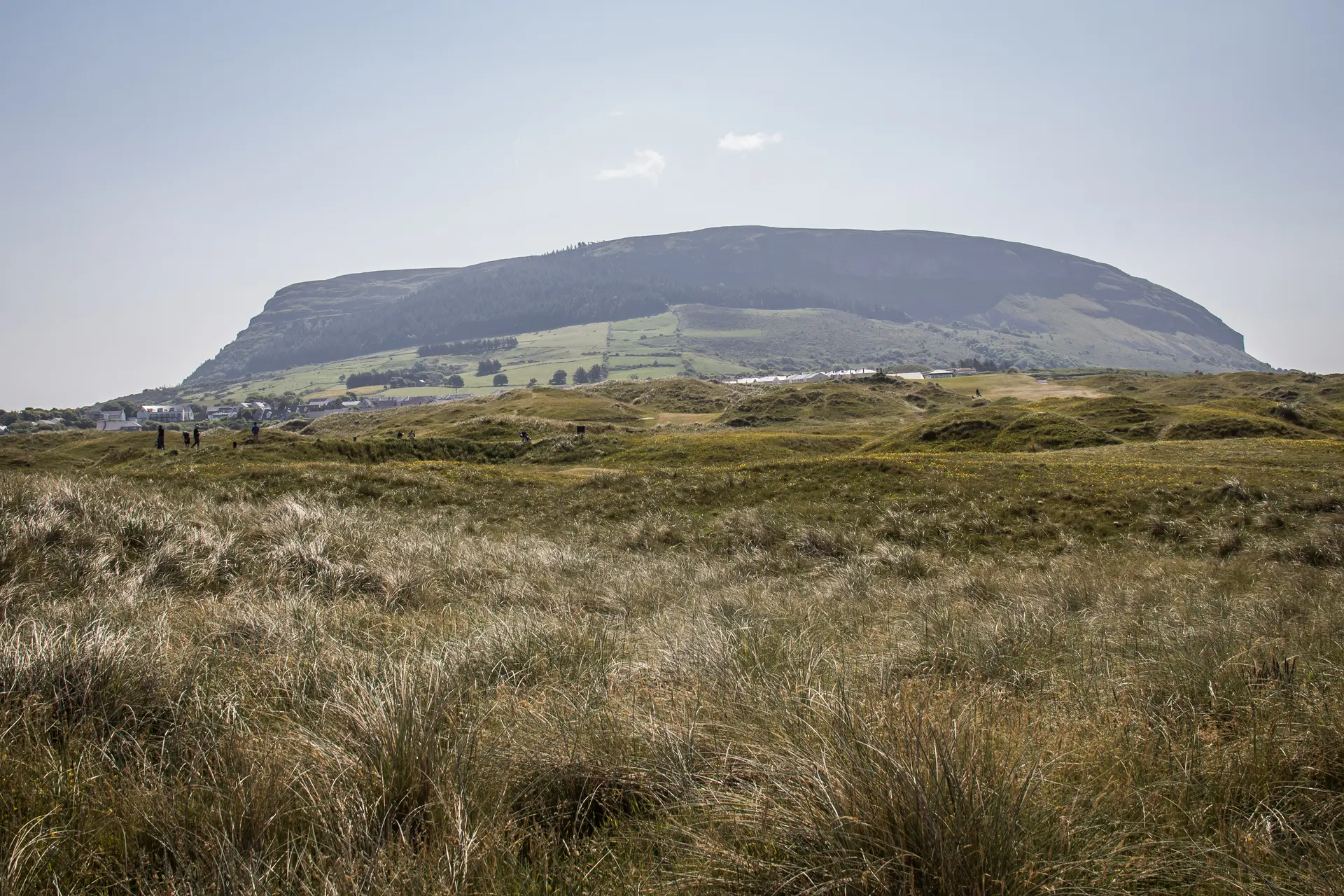


Photo gallery
3 curated photos
Share a photo
Help visitors recognize Carrowmore. Every submission is reviewed before publication.