Pontigny Abbey
Where Thomas Becket found refuge and Cistercian light fills the largest intact abbey church in France
Understand sacred places, explore living traditions, and learn how to engage respectfully with Pilgrim Map.
Access has not been verified. Check current local guidance before planning a visit.
Pontigny, Yonne, France
Read the sources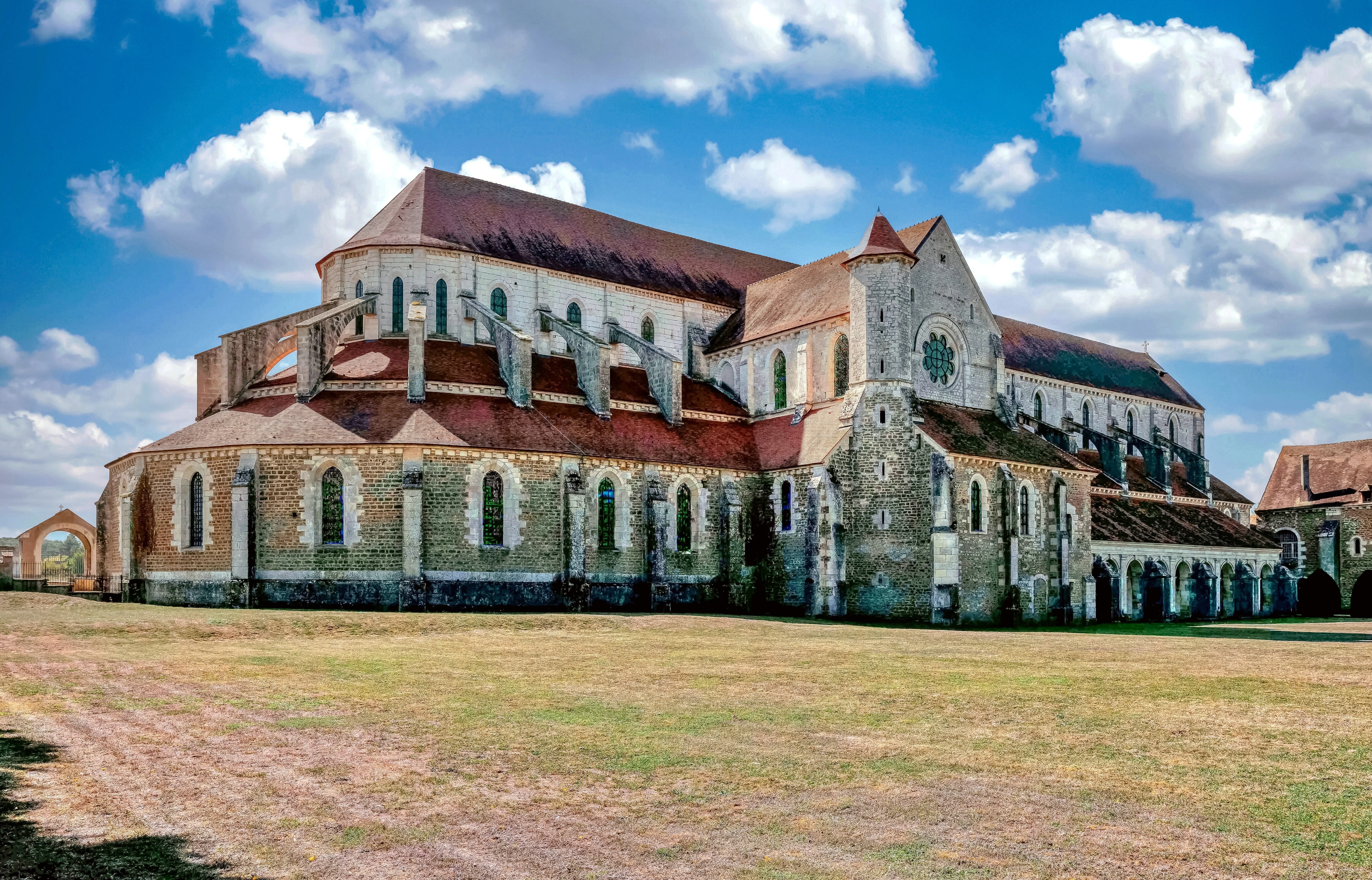
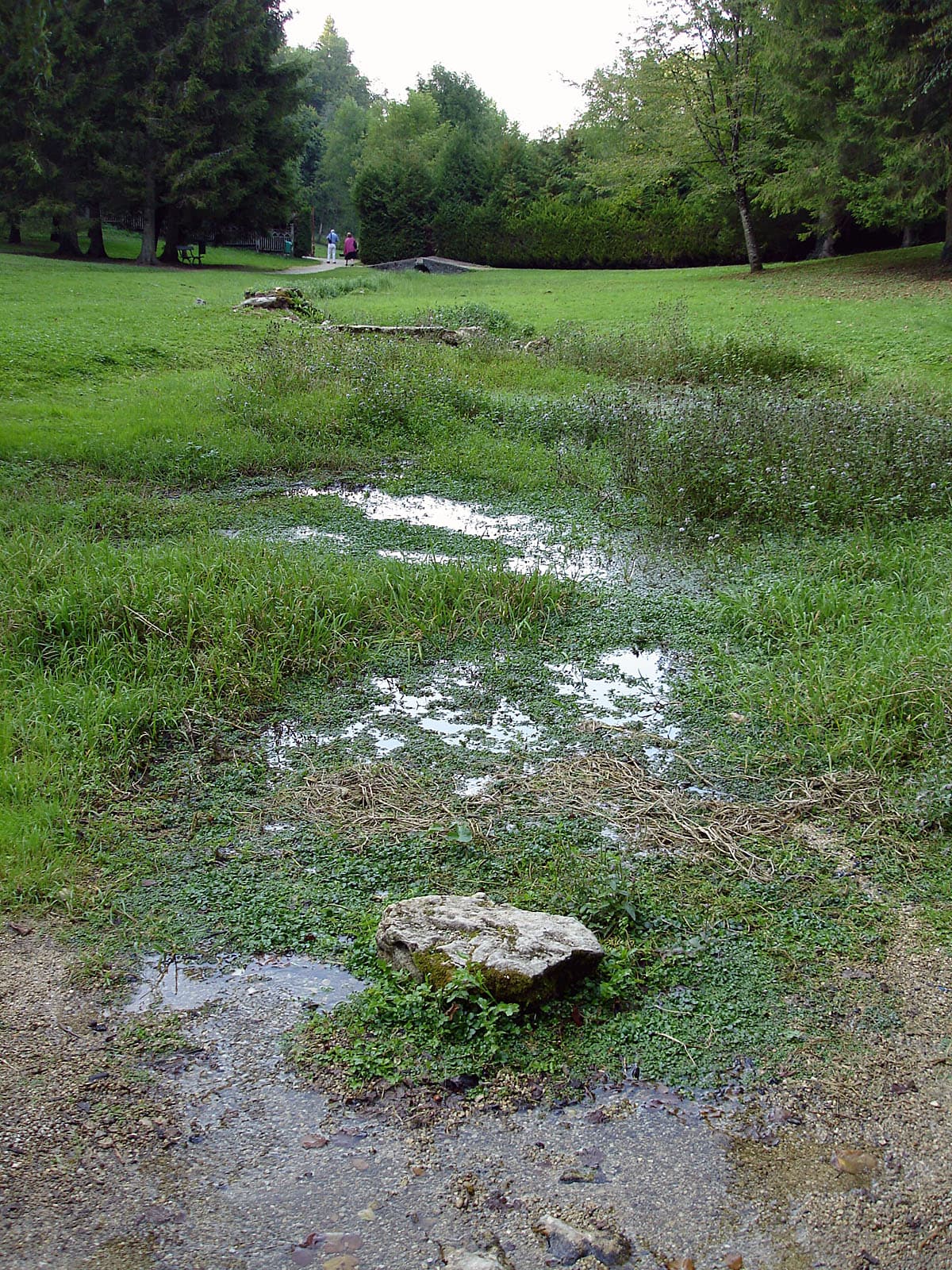
Image of Pontigny. Image source · CC-BY-SA-4.0
Visit essentials
A quick read before you go
- Duration
- 45-90 minutes for church and grounds
- Access
- Pontigny village, 15km from Chablis, Yonne department, Burgundy.
Overview
In 1114, twelve monks walked from Cîteaux to found a daughter house in the Serein valley. Under their first abbot, Hugh of Mâcon—friend and kinsman of Bernard of Clairvaux—the community became so renowned for sanctity that it established twenty-two monasteries. Pontigny became the second of Cîteaux's great daughter houses, and its architecture's light-filled simplicity became a model for Cistercian building across Europe.
Pontigny is also remembered for those it sheltered. When Thomas Becket's confrontation with Henry II erupted in 1164, the Archbishop of Canterbury fled to France. King Louis VII offered help, and Becket chose Pontigny. For nearly two years, he exchanged archiepiscopal splendor for Cistercian austerity: a simple habit, interrupted sleep for night prayers, and manual labor.
Becket left in 1166 when Henry II threatened the entire Cistercian Order, but the abbey remained a refuge. Stephen Langton came during the interdict crisis. Saint Edmund of Abingdon—another Archbishop of Canterbury—died returning from Rome and was buried here; his tomb still draws pilgrims. The monks also planted the first vines in what became the Chablis wine region.
Why this place is sacred
The Cistercians understood light as theological statement. While other medieval builders filled windows with colored stories, the Cistercians insisted on clear glass. Light should enter unmediated, unhued—pure illumination falling on white limestone, creating space for contemplation uncomplicated by imagery.
Pontigny embodies this vision. The church stretches 108 meters—the largest intact Cistercian church in France—yet feels buoyant, lifted by light. The windows admit the sky; the stone glows with what enters. This is architecture as spiritual practice, space designed to produce a state of mind.
Into this light came refugees. Thomas Becket, his conscience at war with his king, found here a place to think, to pray, to prepare for whatever would come. The Cistercian rhythm—prayer punctuating work, simplicity stripping pretense—suited a man remaking himself from chancellor to martyr. Stephen Langton came during his own crisis. Saint Edmund died on pilgrimage and found his final rest in this light.
The abbey was suppressed in the Revolution, its community scattered, but the church survived. The light still enters. The tomb still draws visitors. What Becket found here—sanctuary, simplicity, time to discern—remains available.
Cistercian monastery, second daughter house of Cîteaux, founded 1114 for contemplative monastic life
Founded 1114. Church built 1137-1150. Thomas Becket refuge 1164-1166. Saint Edmund buried here. Suppressed 1791. Re-founded 1843 as Fathers of St. Edmund. Santiago pilgrimage route stop.
Experience and orientation
Approach through the Burgundian countryside, passing the vineyards that the monks first planted—now Chablis, now famous. The abbey appears: massive yet somehow light, stone that seems to float rather than press.
Enter the church. The eye seeks narrative—sculpted saints, colored glass telling stories—and finds instead light. Plain windows, white limestone, the vast Cistercian space stripped of everything that distracts from presence. The architecture itself is the sermon: God is light, and in Him is no darkness at all.
Walk the length of the nave—108 meters, the largest intact Cistercian church in France. Consider who walked here before you. Thomas Becket, chancellor turned archbishop turned exile, pacing these stones as he prepared for a martyrdom he could not yet know. Stephen Langton, the archbishop who would help birth Magna Carta. Saint Edmund, who never left.
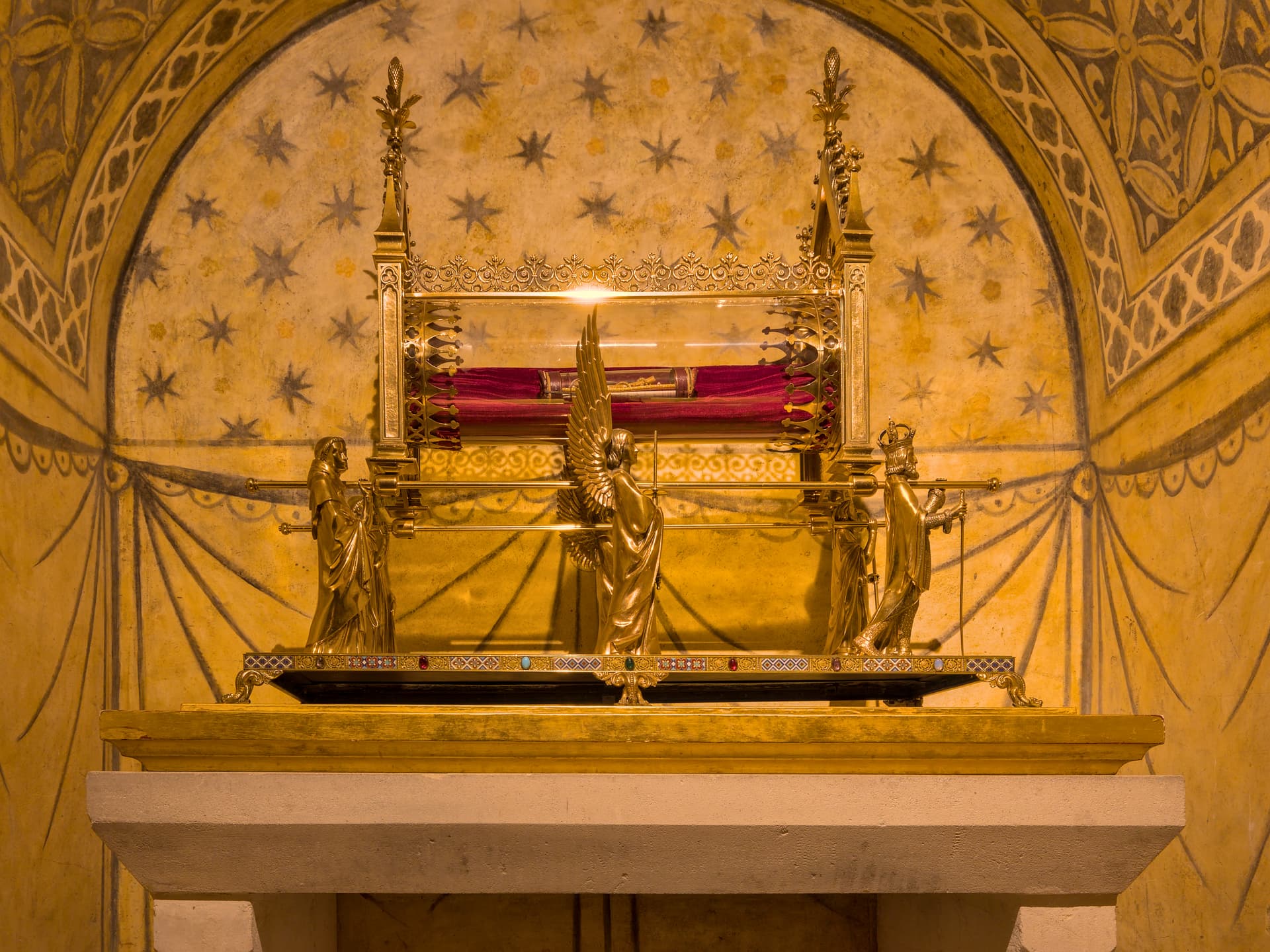
Find Edmund's tomb. Pilgrims have come here since the 13th century, seeking the intercession of the saintly archbishop. The tomb marks Pontigny as more than architectural monument—it remains active sacred space, a place where the living still address the dead.
Come as the exiles came—seeking sanctuary, seeking light, seeking time to discern what conscience demands.
Context and lineage
In 1114, Hildebert, a canon of Auxerre, petitioned Cîteaux to found a monastery. Stephen Harding sent twelve monks under Hugh of Mâcon, friend and kinsman of Bernard of Clairvaux. The community flourished, establishing twenty-two daughter houses of its own.
Second daughter house of Cîteaux. Founded twenty-two monasteries. Part of Cistercian network that spread contemplative monasticism across Europe.
Hugh of Mâcon
First abbot, friend of Bernard of Clairvaux
Thomas Becket
Archbishop of Canterbury, refugee 1164-1166
Saint Edmund of Abingdon
Archbishop of Canterbury, buried at Pontigny
Stephen Langton
Archbishop of Canterbury, also sought refuge here
Traditions and practice
Cistercian Divine Office (historically), pilgrimage to Saint Edmund's tomb
Regular worship, pilgrimage, Santiago route stop, contemplative visits
Allow time for the light to work. Sit in the nave and let the architecture do what it was designed to do. Visit Saint Edmund's tomb. If timing permits, attend a service to hear the acoustic.
Cistercian Christianity
ActiveSecond daughter house of Cîteaux. Largest intact Cistercian church in France. Refuge for three Archbishops of Canterbury. Tomb of Saint Edmund. Monks planted first Chablis vines.
Worship, pilgrimage to Saint Edmund, contemplation, Santiago route stop
Perspectives and open questions
Pontigny can be approached as Cistercian architectural achievement, as site of Thomas Becket's exile, or as active pilgrimage shrine to Saint Edmund.
Scholarly perspective
Recognized as largest intact Cistercian church in France. Transitional Romanesque-Gothic architecture significant. Thomas Becket connection well-documented.
Living and traditional perspectives
Catholic tradition honors the contemplative legacy, the exiled archbishops, and Saint Edmund's continued intercession.
Alternative interpretations
Some see Cistercian light-theology as intentional sacred technology—architecture designed to produce contemplative states through sensory environment.
Open questions
Content of Becket's thought during his Pontigny years. What he wrote here. The abbey's medieval library contents.
Plan your visit
Access and arrival
Pontigny village, 15km from Chablis, Yonne department, Burgundy. Open daily. Free admission.
Chablis area offers accommodation; Auxerre larger options
Respectful visit
Modest attire
Permitted outside services
Donations welcome
Quiet throughout; reverence at tomb
Active place of worship; respect services in progress.
Current practical details
Address
89230 Pontigny, France
Hours, fees, and access can change — verify on the official source before you travel. Practical details last checked Jun 2026.
Location
Map loads as you approach this section.
Pilgrim reflections
A portrait of encounter, not a score
Pilgrims describe what they felt, how present they could become, and whether the place would shape a journey. There are no stars and no ranking of traditions.
No reviewed reflections yet
The first pilgrims can help describe the character of being here.
Share a reflection
Available after an account-backed “Been there.” Every reflection is reviewed before publication.
Nearby sacred places
Explore other sacred places in the region. Proximity does not establish access or travel time; check each place’s guidance.
References
Sources consulted for this page. Source categories describe the publication, not a guarantee that every claim is verified. Traditional accounts and outside interpretations may differ.
- 01Pontigny Abbey — WikipediaSource contextComprehensive history
- 02Eglise abbatiale de Pontigny — Burgundy TourismSource contextVisitor information
- 03Pontigny, France: The Abbey of Pontigny and tomb of Saint Edmund — Catholic Travel GuidespiritualPilgrimage context
- 04Pontigny Abbey — France VoyageSource contextGeneral overview
Photo gallery
2 curated photos
Share a photo
Help visitors recognize Pontigny Abbey. Every submission is reviewed before publication.