Ban Chiang Archaeological Site
Burials, rice farming, pottery, and metalwork preserve prehistoric lives
Understand sacred places, explore living traditions, and learn how to engage respectfully with Pilgrim Map.
Access has not been verified. Check current local guidance before planning a visit.
Nong Han, Udon Thani, Thailand
Read the sources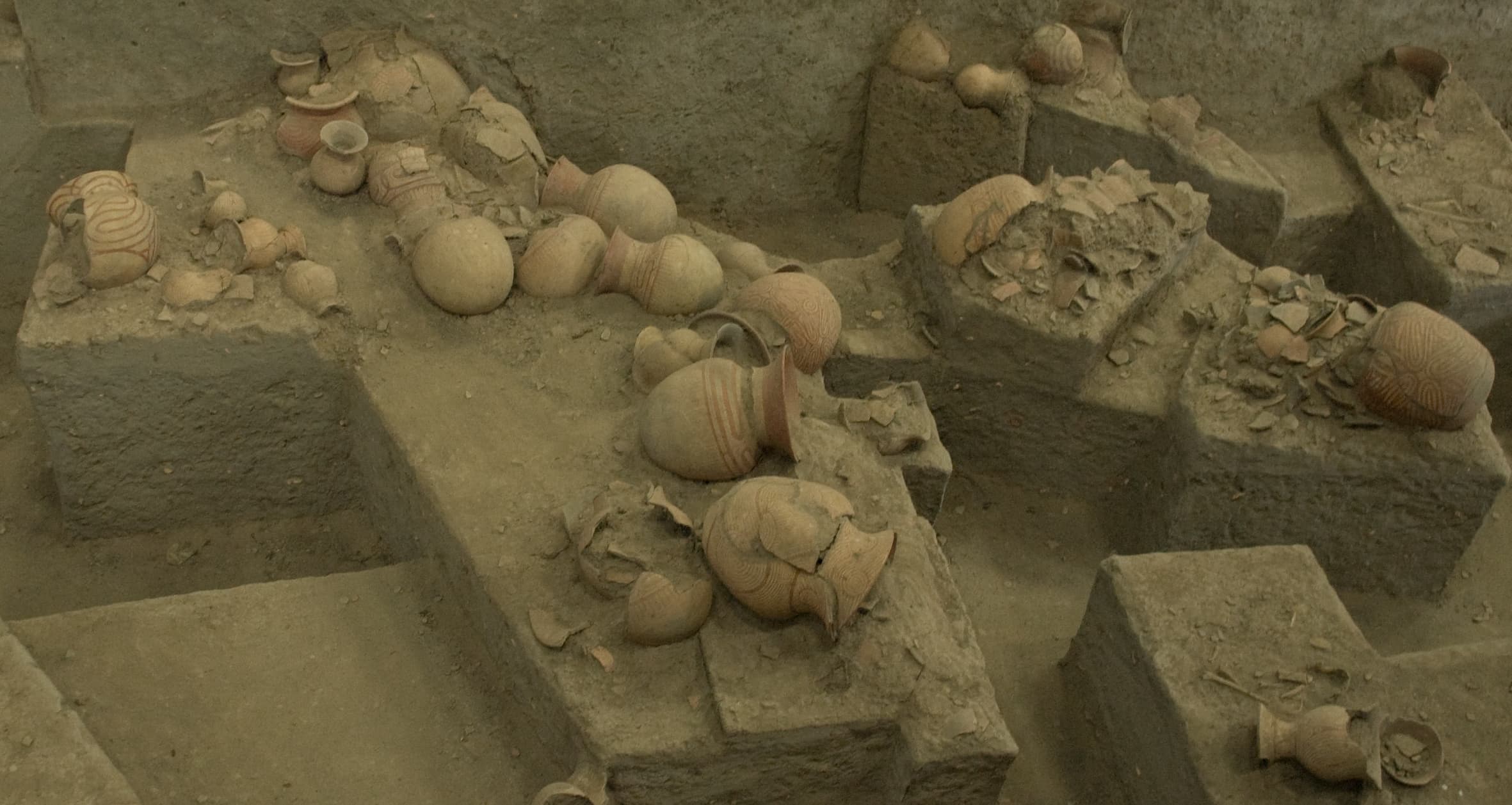
Ban Chiang Archaeological Site in Nong Han, Udon Thani, Thailand. Image source · CC BY-SA 2.0
Visit essentials
A quick read before you go
- Etiquette
- Protect worshippers, historic fabric, and closed thresholds.
Overview
Ban Chiang's excavated burials reveal human lives through bodies, pots, ornaments, tools, and carefully arranged contexts. They show that death and social identity mattered, but archaeology cannot translate grave goods directly into named gods, prayers, or doctrines. A long sequence also records rice agriculture, animal keeping, pottery, and metal technology. Sacred significance is therefore cautious and ethical: the mound holds an ancient community's ancestors in the broad human sense, without claiming genealogical descent or a continuous modern cult.
Why this place is sacred
Excavated skeletons and red-painted pottery can produce a powerful encounter with mortality. That response is understandable but does not prove haunting, ancestral communication, or residual energy. No rampant exact-site metaphysical claim appeared in the authoritative evidence, so none is manufactured. The deepest experience comes from recognizing how little excavation represents: UNESCO notes that only a small fraction of the mound has been opened, leaving future research and many past lives protected in place.
Restraint toward the unexcavated ground is more appropriate than occult speculation.
Experience and orientation
Use the museum and protected excavation area as complementary evidence. Do not touch exposed deposits, cross barriers, stage photographs with burials, or treat replica and original material as interchangeable. Strong Google Places data supplies practical hours and contact for the exact museum/site, while Fine Arts authority controls closures and interpretation. The surrounding village remains inhabited and agricultural, so visitors should respect homes and fields.
Museum labels may reflect changing chronologies as dating methods improve; that revision is a strength of archaeology.
Context and lineage
The mound accumulated through prehistoric habitation, work, and burial rather than through one founding event. UNESCO records discovery in 1966 and explains that dates have been refined as radiometric methods improved. Its statement of Outstanding Universal Value emphasizes social and technological evolution, settled agriculture, ceramics, and metal production. The property is a cultural World Heritage site, dossier 575, inscribed in 1992 under criterion iii.
The protected scope is Ban Chiang itself; the page does not generalize UNESCO status to unrelated regional sites.
Traditions and practice
There is no verified continuous prehistoric rite available for visitors to reenact. Contemporary responsible practice is heritage stewardship: read context, keep voices measured around human remains, refuse illicit antiquities, and support lawful museum custody. Do not leave offerings in excavation shelters or claim that pottery motifs transmit spiritual power. If local ceremonies occur, they should be described on their own contemporary terms rather than labeled survivals of Bronze Age religion without evidence.
The site is archaeological and funerary, not a current pilgrimage centre.
Archaeological heritage stewardship
ActiveDocumented tradition layer 1.
Perspectives and open questions
Religious, historical, and environmental evidence remain distinct.
Scholarly perspective
Archaeology reconstructs settlement, technology, subsistence, and burial through stratigraphy and material associations. UNESCO heritage management protects integrity, future research potential, and the surrounding agrarian setting. Mortuary studies can discuss care for the dead and social differentiation, but cannot securely name a deity from the available record. Local residents also live on and around the mound, making conservation a present community matter.
These perspectives give Ban Chiang spiritual seriousness through human dignity and mortality while preserving a clear boundary around what remains unknown. UNESCO dates the principal sequence from about 1495 BCE to about 900 BCE and records discovery in 1966. Human remains require vocabulary different from temple visitation. Individuals uncovered in graves are neither exhibits without dignity nor automatically ancestors of every present resident. Their treatment is governed by archaeology, museum ethics, Thai law, and community context.
The same caution applies to painted pots removed from burial associations: aesthetic admiration should not erase provenance. Ban Chiang's deepest interpretive achievement is showing social change through connected contexts, not offering isolated objects for mystical projection.
Plan your visit
Day-of authority overrides routine listing data.
Respectful visit
Protect worshippers, historic fabric, and closed thresholds.
Current practical details
Address
C65V+884 อด.2003 Nong Han, Amphoe Nong Han, Chang Wat Udon Thani 41320, Thailand
Hours
Hours, fees, and access can change — verify on the official source before you travel. Practical details last checked Jul 2026.
Location
Map loads as you approach this section.
Pilgrim reflections
A portrait of encounter, not a score
Pilgrims describe what they felt, how present they could become, and whether the place would shape a journey. There are no stars and no ranking of traditions.
No reviewed reflections yet
The first pilgrims can help describe the character of being here.
Share a reflection
Available after an account-backed “Been there.” Every reflection is reviewed before publication.
Nearby sacred places
Explore other sacred places in the region. Proximity does not establish access or travel time; check each place’s guidance.


References
Sources consulted for this page. Source categories describe the publication, not a guarantee that every claim is verified. Traditional accounts and outside interpretations may differ.
- 01Ban Chiang World Heritage Site Excavation Site — Google PlacesofficialExact practical metadata accepted after strong name, country, locality, and coordinate review.
- 02Ban Chiang Archaeological Site — UNESCO World Heritage CentreofficialProperty 575, inscription, scope, chronology, habitation, farming, metallurgy, burials, integrity, and management.
- 03Ban Chiang National Museum — Fine Arts Department, ThailandofficialOfficial custodian and current museum authority.
Share a photo
Help visitors recognize Ban Chiang Archaeological Site. Every submission is reviewed before publication.