Pak Ou Caves
Buddha images and acts of merit above the Mekong
Understand sacred places, explore living traditions, and learn how to engage respectfully with Pilgrim Map.
Access has not been verified. Check current local guidance before planning a visit.
Luang Prabang, Laos
Read the sources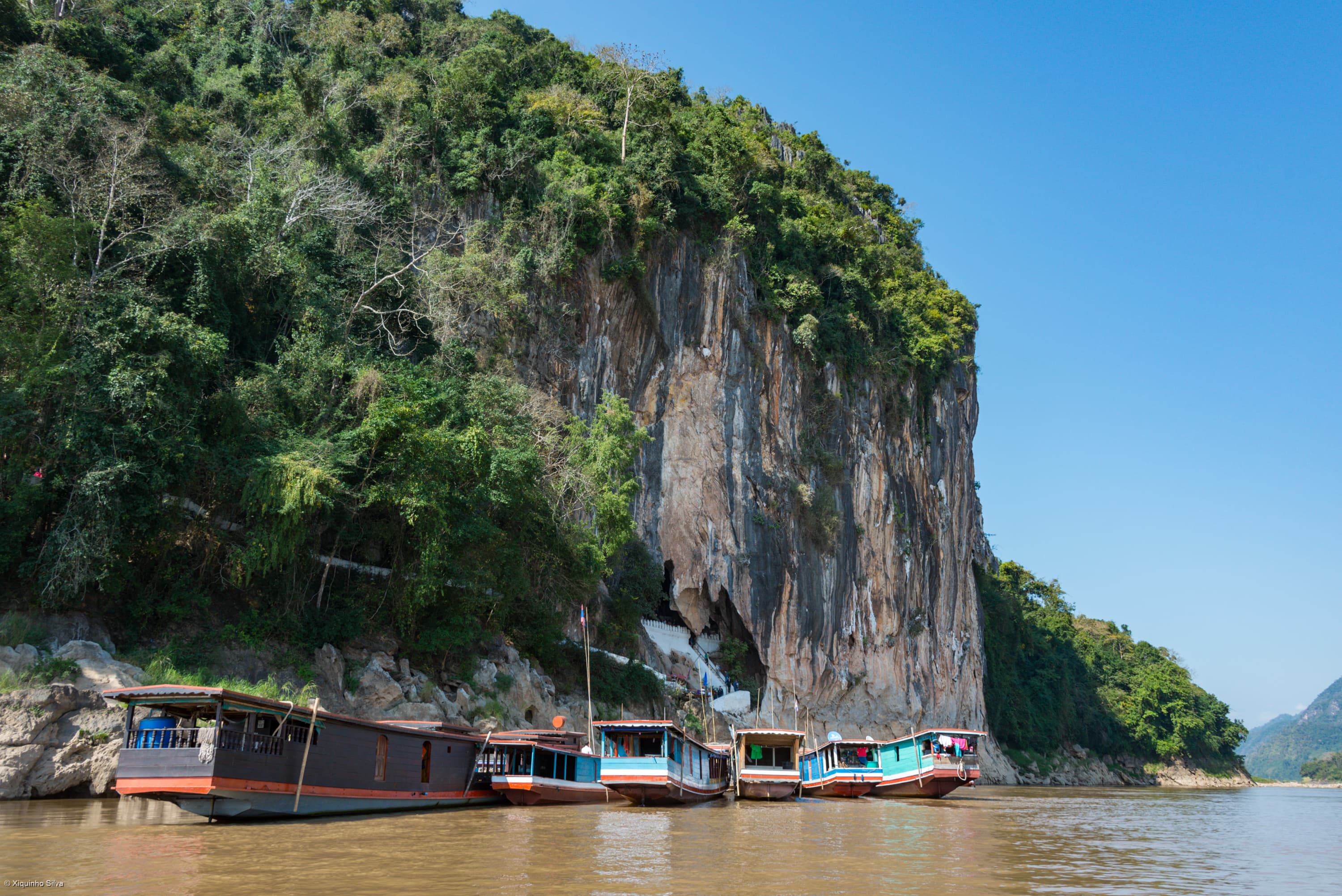
Boats beside the cliff and cave approach at Pak Ou. Image source · CC BY 2.0
Visit essentials
A quick read before you go
- Etiquette
- Respect worship, sacred objects and the people responsible for this place.
Overview
Pak Ou’s caves hold thousands of Buddha images. Laos’s tourism ministry describes their placement as acts of merit by local people. The lower and upper caves form one devotional complex, connected by a stairway through the forest.
The many Buddha images make the caves a place where individual offerings accumulate into a shared devotional presence. Laos’s tourism ministry describes their placement as merit-making, a religious act with meaning beyond the appearance of the objects. The two caves offer different spaces within the same complex. Visitors can follow the authorized route between them while remembering that the images were placed here by people expressing devotion. Looking closely is appropriate; rearranging an image for a photograph is not.
Why this place is sacred
The caves’ religious character comes in part from the continuing relationship between the Buddha images and the people who bring them. The varied objects should not be read simply as a collection assembled for tourism.
Experience and orientation
Take time to observe the place through its own religious and historical context. Follow the authorized visitor route and the guidance of its custodians.
Context and lineage
The tourism ministry recalls Lao New Year visits by the royal family, monks and local devotees, during which water was poured over a sacred Buddha image. This account connects the caves’ images with communal observance; it should not be presented as a current royal ceremony or as an activity every visitor may perform.
Traditions and practice
Leave each image where it stands. Ask before joining an observance or making an offering, and give worshippers room to use the space.
Buddhism
ActiveBuddhist devotion and religious heritage expressed through the site’s images or spaces.
Perspectives and open questions
The tourism ministry’s account of royal New Year visits describes a past practice. It helps explain the caves’ place in Lao ceremonial life without promising that the same ceremony will take place during a present visit.
Plan your visit
Confirm local visitor arrangements and worship etiquette. Do not handle or move the Buddha images; request guidance before participating in an observance.
Respectful visit
Follow the site’s current photography rules and ask before photographing worshippers.
Location
Map loads as you approach this section.
Pilgrim reflections
A portrait of encounter, not a score
Pilgrims describe what they felt, how present they could become, and whether the place would shape a journey. There are no stars and no ranking of traditions.
No reviewed reflections yet
The first pilgrims can help describe the character of being here.
Share a reflection
Available after an account-backed “Been there.” Every reflection is reviewed before publication.
Nearby sacred places
Explore other sacred places in the region. Proximity does not establish access or travel time; check each place’s guidance.


References
Sources consulted for this page. Source categories describe the publication, not a guarantee that every claim is verified. Traditional accounts and outside interpretations may differ.
- 01Laos tourism ministry: Pak Ou and Tham TingofficialBuddha images, merit-making, two caves, historical New Year practice
- 02Luang Prabang tourism: Pak Ou district brochureofficialLocal visitor geography and crossing from Pak Ou village
- 03Pak Ou Caves — geographic reference — Wikipedia contributorsacademicSecondary identity and representative complex coordinates; religious claims rely on the primary sources above.
Share a photo
Help visitors recognize Pak Ou Caves. Every submission is reviewed before publication.