Wat Manorom
Luang Prabang's oldest Buddha watches over its largest community of monks
Understand sacred places, explore living traditions, and learn how to engage respectfully with Pilgrim Map.
Access has not been verified. Check current local guidance before planning a visit.
Luang Prabang, Luang Prabang, Laos
Read the sources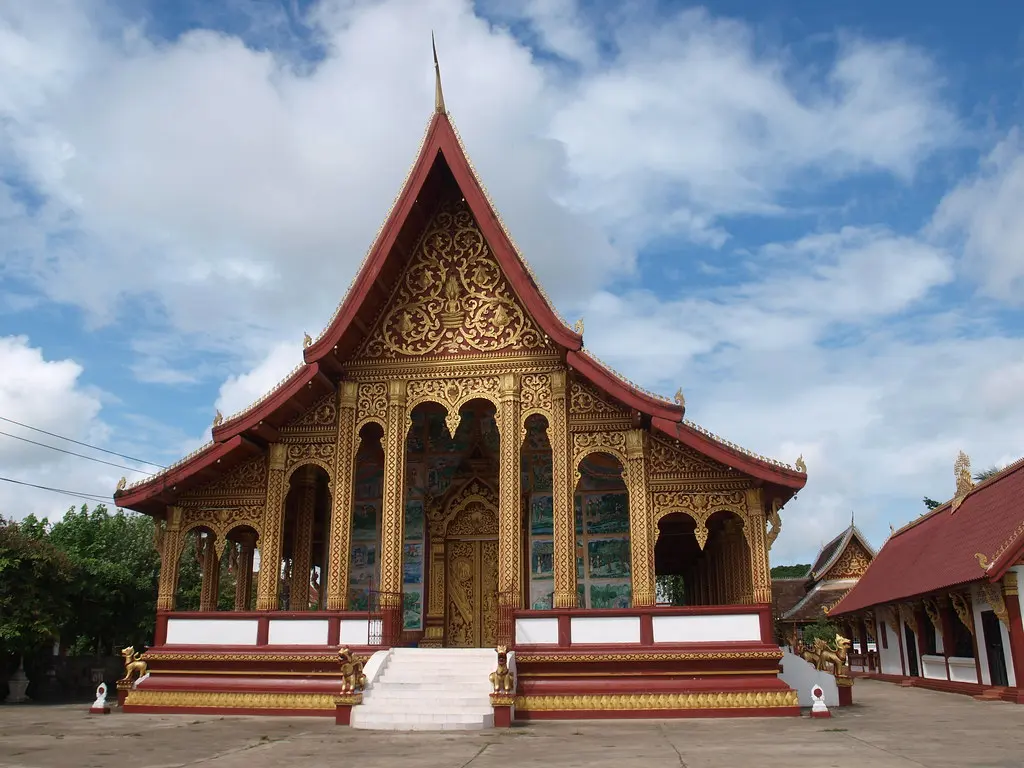
Image of Wat Manorom. Image source · CC-BY-2.0
Visit essentials
A quick read before you go
- Duration
- A contemplative visit requires thirty minutes to an hour.
- Etiquette
- Wat Manorom is an active monastery deserving the respect given to any place of living worship.
Overview
South of Luang Prabang's old city walls, Wat Manorom is a living royal monastery founded in the 1370s by King Samsenthai during the height of the Lan Xang Kingdom. It holds Luang Prabang's oldest Buddha image, a colossal Sukhothai-style bronze figure six meters tall and weighing twelve tons.
The statue's wounds carry its history: invaders and colonial forces took its original arms, later replaced in gold-plated cement. The repaired figure remains upright in meditation, bearing centuries of turmoil without disguising their damage.
Wat Manorom houses the city's largest resident monastic community. Young novices attend the primary school within its grounds, and monks walk silently through the streets each dawn to receive alms. More than six hundred years of practice continue here beyond the peninsula's better-known temple circuit. The sacred is not preserved behind glass but sustained through the daily rhythm of an active monastery.
Why this place is sacred
Some places become thin through age alone, the accumulated weight of human devotion pressing the membrane between ordinary and sacred. Wat Manorom carries six centuries of such accumulation.
King Samsenthai founded this temple as a place to inter his ashes upon death, investing it from the beginning with royal significance and funerary power. The colossal bronze Buddha was cast during his reign, one of the earliest monumental sculptures in Lao Buddhist art. For a time, the temple housed the Phra Bang itself, the most sacred Buddha image in Laos and namesake of the city.
Though the relic eventually moved to Wat Visounnarath, something of its presence seems to have remained.
In 1887, the Chinese Black Flag Army destroyed the temple completely. They stripped the Buddha of its precious stones, cut off its limbs. Later, French forces attempted to take the statue's arms as trophies. The arms were lost when their boat capsized in the Mekong. What remains is a figure that has been wounded and restored, wounded and restored again, each restoration an act of devotion in itself.
The statue now sits with cement arms covered in gold leaf. It is not diminished by this history. If anything, the visible scars intensify its presence. Here is a Buddha that has survived what the practitioners themselves have survived: invasion, colonialism, the near-erasure of a civilization. Yet the monks still rise before dawn. The alms bowls still circle through the streets. The prayers continue.
King Samsenthai established Wat Manorom in the 1370s as a royal funerary site, intending his ashes to be interred here. The colossal Buddha was commissioned as the temple's central devotional focus. The site served both as a center of Buddhist practice and as a location of royal spiritual significance, connecting the monarchy with the sangha in the manner characteristic of Theravada Buddhist kingdoms.
The temple has been destroyed and rebuilt multiple times. The most catastrophic destruction came in 1887, when invaders razed the structures and mutilated the Buddha. Reconstruction in 1919 replaced the statue's lost limbs with gold-plated cement. The current sim dates to 1971-1972 and stands among the tallest ordination halls in Luang Prabang.
Throughout this turbulent history, the temple has maintained its function as a center of monastic life and education. Today it operates a primary school for young novices, many from families who send their children to the monastery for education and sustenance. The tradition of merit-making continues unbroken.
Experience and orientation
Wat Manorom lies south of the old city walls, away from the temple circuit that draws most visitors to Luang Prabang. This slight remove creates space for a different quality of encounter.
The ordination hall rises tall above the compound, its height striking among the city's generally modest temple architecture. Inside, the ancient Buddha commands the space. Visitors consistently describe a moment of pause upon entering: something about the scale, the stillness, the evident age of the figure. Then the eye moves to the arms, clearly different from the body, and the story they tell begins to register. Many find themselves unexpectedly moved by this evidence of loss and restoration.
Gold relief decorates the main door. Wall paintings depict the life of the Buddha with careful attention. But the atmosphere here is not primarily aesthetic. Young monks move through the grounds on their way to or from classes. Their presence shifts the experience from visiting a monument to witnessing a way of life.
Those who time their visit for late afternoon often find monks gathered in the courtyard, the day's studies concluded. Occasionally visitors are invited to conversation, though language barriers may limit exchange. Even without words, the sense of an intact tradition communicating itself across cultures comes through clearly.
Wat Manorom rewards those who arrive without agenda. This is not a site of dramatic architecture or famous frescoes. Its significance lies in continuity: the fact that monks have practiced here for six centuries, that the damaged Buddha has presided over their prayers through destruction and restoration.
Consider removing your shoes and sitting quietly in the ordination hall before doing anything else. Let the space establish itself. The Buddha's damaged arms are not defects to be overlooked but evidence to be received. What has survived here, and at what cost?
If you are interested in the tradition's continuation, observe the young novices. Their presence is the most direct answer to any question about whether this place is alive.
Context and lineage
The Lan Xang Kingdom, the Lane Xang, the 'Land of a Million Elephants,' reached its golden age under King Samsenthai, who ruled from 1373 to 1416. During his reign, Theravada Buddhism became firmly established as the kingdom's official religion, temples rose throughout the capital at Luang Prabang, and Lao Buddhist art achieved some of its finest expressions.
Samsenthai founded Wat Manorom as a place for his ashes to rest after death. The colossal bronze Buddha was commissioned during his reign, cast in the Sukhothai style that reflects the cultural exchange between Lan Xang and the Thai kingdoms to the south. Standing six meters tall and weighing twelve tons, it represented one of the earliest monumental sculptures in Lao Buddhist art.
From 1502 to 1513, the temple gained additional significance when it housed the Phra Bang, the most sacred Buddha image in Laos. This small standing Buddha, said to have originated in Ceylon and possess the power to bring prosperity and protection, eventually gave Luang Prabang its name. Though the Phra Bang moved to Wat Visounnarath, Wat Manorom retained its status as one of the city's most significant temples.
Theravada Buddhism arrived in the region that would become Laos during the 14th century, spreading from the Thai kingdoms to the south. The Lan Xang kings adopted and propagated the tradition, establishing temples and supporting the sangha as a foundation of royal legitimacy.
Wat Manorom represents an unbroken chain of practice within this lineage. Through the kingdom's rise and fall, through French colonialism and the upheavals of the 20th century, monks have continued to study and practice here. The temple's role in educating young novices perpetuates the sangha for future generations, creating merit for the community and maintaining the tradition's transmission.
King Samsenthai
historical
Ruler of Lan Xang from 1373 to 1416, credited with founding Wat Manorom as a royal funerary site and commissioning the colossal bronze Buddha. His reign marked the consolidation of Theravada Buddhism as the kingdom's official religion.
The Buddha
deity
The six-meter bronze Buddha image is the central devotional object of the temple. Cast in the 14th century Sukhothai style, it has survived centuries of destruction and remains the oldest Buddha image in Luang Prabang.
Traditions and practice
The daily rhythm of Theravada monastic life structures time at Wat Manorom. Monks rise before dawn for morning prayers. They then join the procession of monks throughout Luang Prabang for Tak Bat, the morning alms collection that provides their sustenance and allows laypeople to make merit.
Puja ceremonies mark the full moon days and Buddhist holy days throughout the year. Baci ceremonies, which blend Buddhist and animist traditions, take place for major life transitions. Ordination rituals bring young men into the sangha, some for a lifetime of practice, others for the traditional period of monastic service expected of Lao men.
The temple continues all traditional practices while adapting to contemporary circumstances. The primary school on the grounds provides education to young novices, many from rural families who send their children for the combination of spiritual formation and practical learning the monastery offers.
Merit-making remains central to the relationship between the temple and lay community. Visitors can offer alms to monks during Tak Bat throughout Luang Prabang, though the ceremony deserves respectful observation rather than touristic intrusion. At the temple itself, offerings of incense, candles, and flowers may be made to the Buddha.
If you wish to witness Tak Bat, rise before dawn and position yourself respectfully along the monks' route. This is a living religious practice, not a performance. Give offerings if you wish to participate in the tradition of merit-making; otherwise, observe silently from a distance.
At Wat Manorom itself, the most meaningful practice may be the simplest: sit quietly in the ordination hall in the presence of the ancient Buddha. Notice the arms that are not original, the evidence of what has been lost and restored. Consider what it means to practice in a place that has endured so much.
If you encounter monks and wish to show respect, a slight bow with hands pressed together in anjali mudra is appropriate. Do not attempt to shake hands or touch monks in any way.
Theravada Buddhism
ActiveWat Manorom is one of the oldest Theravada Buddhist temples in Luang Prabang, possibly dating to the 1370s during the golden age of the Lan Xang Kingdom. It maintains the largest community of resident monks in the city and serves as a major center for Buddhist education. The temple houses Luang Prabang's oldest Buddha image, a six-meter bronze statue cast in the 14th century Sukhothai style, which remains the central focus of devotion.
Daily prayers and meditation mark the rhythm of monastic life. Each morning, monks participate in Tak Bat, the traditional alms collection that sustains the sangha and allows laypeople to make merit. Buddhist festivals and holy day observances bring the lay community to the temple throughout the year. Merit-making ceremonies connect practitioners to the Buddha's teachings and to one another.
Lao Monastic Education
ActiveThe temple operates a primary school providing education to young novices, many from poorer families who send their children to the monastery for food, shelter, and learning. This represents an important tradition of religious social welfare in Lao Buddhism, where monasteries serve as centers of education alongside their spiritual functions.
Young novices receive primary education alongside Buddhist scriptural studies and training in monastic discipline. The combination of secular and religious education prepares boys for potential lifelong ordination or for return to lay life with both practical skills and spiritual formation.
Perspectives and open questions
Wat Manorom can be understood through multiple frames: as a historical monument from the Lan Xang Kingdom, as an active center of Theravada Buddhist practice, or as a site whose damaged Buddha embodies the resilience of faith through trauma. These perspectives need not compete; together they suggest the depth of what is present here.
Scholarly perspective
Historical scholarship places Wat Manorom among the oldest temples in Luang Prabang, dating to the 14th century during the Lan Xang Kingdom's golden age. The colossal bronze Buddha represents an important example of early Lao Buddhist sculpture in the Sukhothai style, evidence of cultural exchange with Thai kingdoms to the south.
The temple's role in housing the Phra Bang from 1502 to 1513 marks it as a site of historical significance to the nation's identity. Despite the destruction of 1887 and subsequent rebuilding, scholars recognize the continuity of function that connects the contemporary monastery to its royal foundation.
Living and traditional perspectives
For Lao Buddhists, Wat Manorom represents an unbroken lineage of practice stretching back to the founding of the Lan Xang Kingdom. The damaged Buddha is not diminished by its wounds but honored for surviving centuries of turmoil. Each morning's alms round, each prayer before the ancient image, each novice who studies at the temple school extends this lineage into the future.
The temple's role in educating young monks is particularly valued. By providing food, shelter, and learning to novices from families who could not otherwise afford education, the monastery performs both spiritual and social functions, creating merit for all involved and perpetuating the sangha for generations to come.
Open questions
The exact founding date of Wat Manorom remains disputed. Some sources cite 1372 or 1375 under King Samsenthai; others suggest 1492 under King La Sen Thai Puvanart. Both may contain elements of truth if the temple was founded and later significantly renovated.
The circumstances surrounding the loss of the Buddha's arms during the Franco-Thai War blend history with legend. Stories of a boat capsizing in the Mekong, carrying French forces attempting to steal the arms as trophies, suggest historical fact wrapped in narrative embellishment. What is certain is that the original arms were lost and have been replaced with gold-plated cement.
Plan your visit
Access and arrival
Luang Prabang offers accommodation at all price points throughout the old city. The nearby Sofitel Luang Prabang places visitors within walking distance of Wat Manorom. Guesthouses along the peninsula provide easy access to all the city's temples. Those seeking extended retreat may find meditation programs at various temples, though arrangements should be made in advance with sensitivity to the traditions involved.
Respectful visit
Shoulders and knees must be covered. Loose, comfortable clothing in muted colors is appropriate. Avoid clothing with images that might be considered disrespectful. Shoes should be easily removable.
Exterior photography and courtyard photography are generally permitted. Inside the ordination hall, be respectful and never use flash. The Buddha image may be photographed, but do so from a distance and with reverence, not as a tourist trophy.
Always ask permission before photographing monks. Many will agree, but some prefer not to be photographed, and their wishes should be respected.
Merit-making offerings of incense, candles, and flowers can be made at the Buddha statue. These may be available for purchase or donation nearby. Cash donations to the temple are also welcomed and support the monastery's functions including education for novices.
Women must not touch monks or hand anything directly to them. All visitors should not point feet toward Buddha images or monks, should not sit higher than monks, and should not interrupt prayers or ceremonies. No food should be consumed within temple buildings. No smoking on temple grounds.
Do not participate in Tak Bat unless you understand the significance of the offering and have prepared appropriate food. Tourist participation without understanding has become a problem throughout Luang Prabang, diminishing the ceremony's sacred character. When in doubt, observe rather than participate.
Do not interrupt monks during prayers or formal activities. If the ordination hall is in use for ceremony, wait outside until it concludes.
Current practical details
Address
V4MM+27P, Luang Prabang, Laos
Hours, fees, and access can change — verify on the official source before you travel. Practical details last checked Jun 2026.
Location
Map loads as you approach this section.
Pilgrim reflections
A portrait of encounter, not a score
Pilgrims describe what they felt, how present they could become, and whether the place would shape a journey. There are no stars and no ranking of traditions.
No reviewed reflections yet
The first pilgrims can help describe the character of being here.
Share a reflection
Available after an account-backed “Been there.” Every reflection is reviewed before publication.
Nearby sacred places
Explore other sacred places in the region. Proximity does not establish access or travel time; check each place’s guidance.



References
Sources consulted for this page. Source categories describe the publication, not a guarantee that every claim is verified. Traditional accounts and outside interpretations may differ.
- 01Wat Manorom - WikipediaencyclopediaPrimary encyclopedic source
- 02Wat Manorom | Lonely Planet — Lonely PlanetguideRespected travel publication
- 03Lao Buddhist sculpture - WikipediaencyclopediaContext on Lao Buddhist art
- 04Morning Alms (Sai Bat) - Tourism Luang Prabang — Tourism Luang PrabangspiritualOfficial tourism source on alms ceremony
- 05Wat Manorom, Luang Prabang | Laos Travel Guide — Laos LifeguideDetailed temple description
- 06Wat Manorom, Luang Prabang | Holidify — HolidifyguideVisitor information
- 07Wat Manorom - Discover Laos — Discover LaosguideLocal tourism resource
- 08Wat Manolom - Travelfish — TravelfishguideTravel guide with historical details
Photo gallery
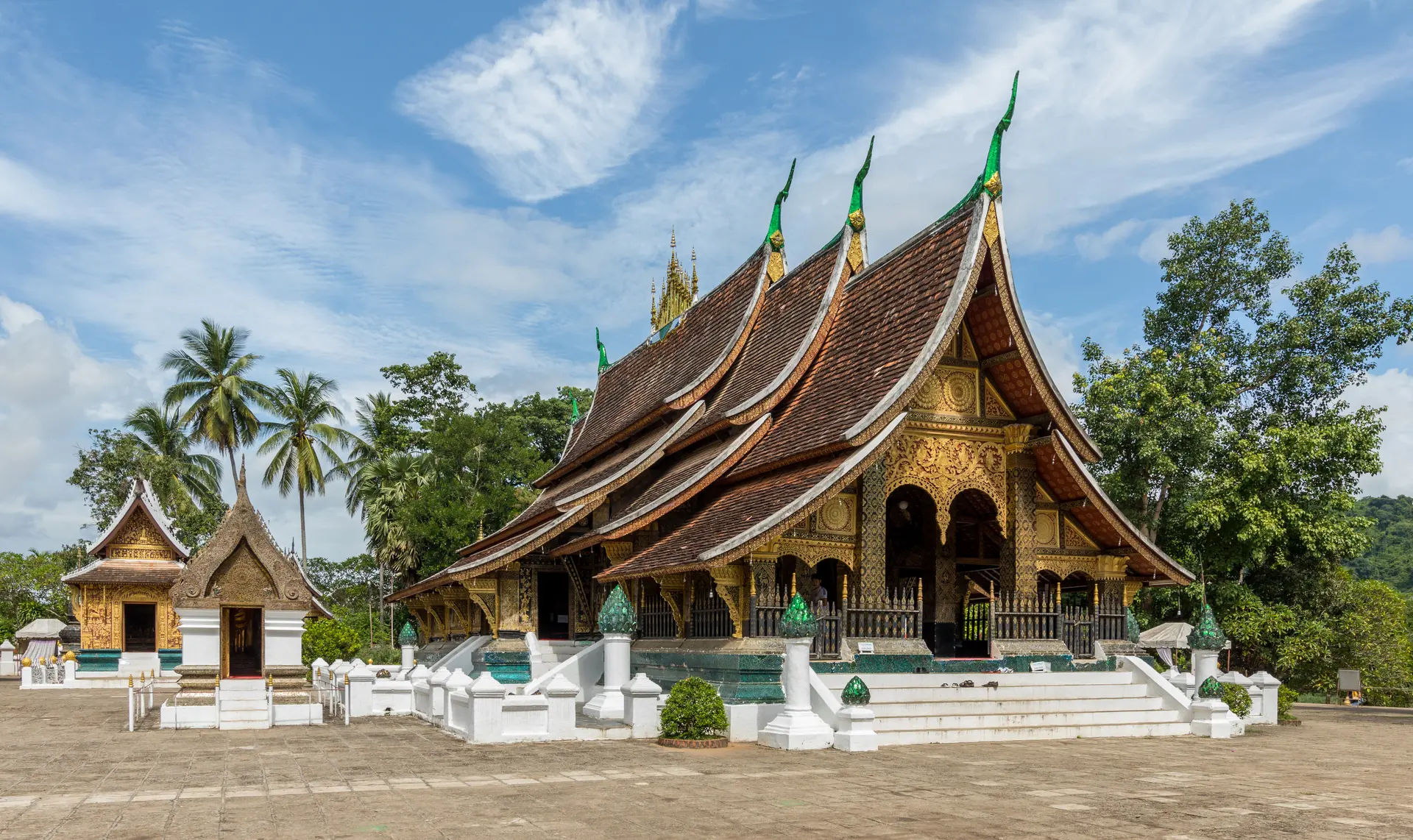
2 curated photos
Pilgrim glossary
- Mudra
- A symbolic hand gesture used in Buddhist iconography and practice.
- Sangha
- The community of Buddhist practitioners, traditionally monks and nuns.
Share a photo
Help visitors recognize Wat Manorom. Every submission is reviewed before publication.