Osun-Osogbo Sacred Grove, Osogbo, Nigeria
A river, forest, city, and goddess held in living relationship
Understand sacred places, explore living traditions, and learn how to engage respectfully with Pilgrim Map.
Access has not been verified. Check current local guidance before planning a visit.
Egbedore, Osun, Nigeria
Read the sources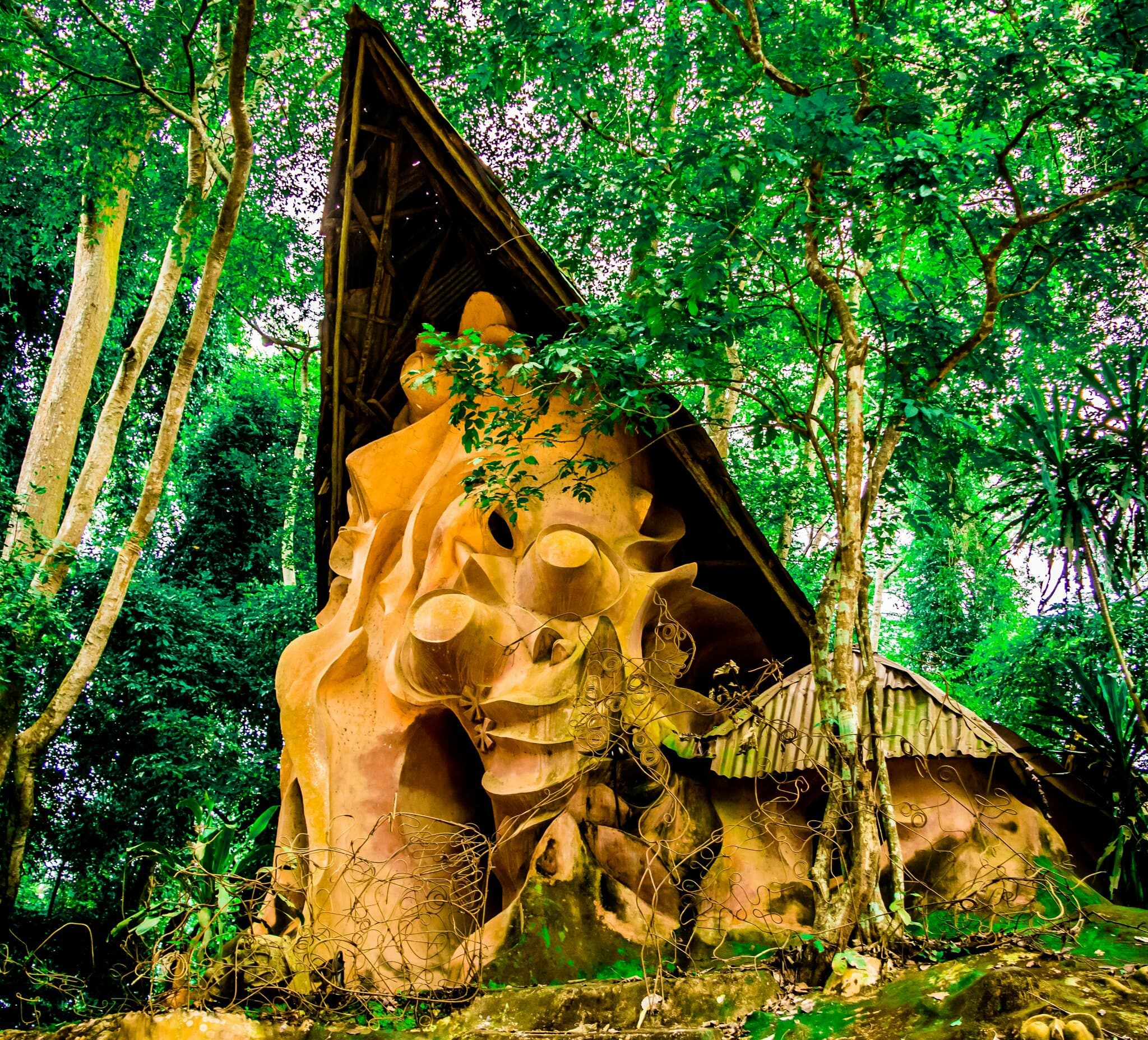
Visit essentials
A quick read before you go
- Duration
- Allow at least two hours for a guided ordinary visit and substantially longer during festival…
- Access
- Travel from central Osogbo by local road transport and confirm hours and fees with site…
Overview
Forest closes around the paths as sculptures emerge among roots, riverbanks, and shrines. Though some are monumental, they were not made to turn the grove into an outdoor gallery. UNESCO records that they reinforce sacredness and renew relationships between the Yoruba community and the orisa: art here serves presence.
The Osun River moves through the sanctuary as Ọ̀ṣun's spiritual abode. In Yoruba understanding, she is associated with water, fertility, protection, wealth, and Osogbo's flourishing. The grove binds her to the city's origins, ruler, priests and priestesses, devotees, ancestors, medicinal plants, and protected forest. Daily, weekly, and monthly worship continues.
The annual festival makes that relationship public, not unrestricted. City cleansing, lighting the sacred lamp, royal rites, and the final procession led by the Ataoja and Arugba belong to living authority. Visitors are guests within sacred land and a vulnerable ecosystem: follow custodians, ask before photographing, and let some knowledge remain unspoken.
Why this place is sacred
A forest sanctuary changes attention through shade, humidity, sound, and partial visibility. Paths bend. Sculptures emerge rather than announce themselves from a distance. The river is sometimes glimpsed before it is reached. This gradual encounter supports a cosmology in which sacred presence is distributed through living relationships.
According to Yoruba understanding documented by the site's custodians and UNESCO, Ọ̀ṣun is not merely represented by the river. River and goddess belong to the same sacred reality. Shrines, worship points, plants, priestly offices, praise poetry, offerings, and the authority of the Ataoja give that relationship social form.
Twentieth-century renewal deepened rather than replaced this structure. Susanne Wenger and the New Sacred Artists worked with Yoruba forms to restore shrines and create new sacred sculpture. UNESCO emphasizes that these works were not intended to glorify individual artists. Their scale and presence served the grove's spiritual renewal. To look well is therefore to look beyond authorship toward the relationships the works protect.
The grove is sacred forest and river sanctuary associated with Ọ̀ṣun, Osogbo's origins, worship, kingship, and community protection.
As many Yoruba sacred groves diminished, community custodians and the New Sacred Artists renewed Ọ̀ṣun-Òṣogbo. It became a national monument and was inscribed by UNESCO in 2005 while remaining an active religious site.
Why pilgrims come
Fertility and the wellbeing of life
In Yoruba devotion the grove and river are Osun’s abode. Her association with fertility makes hopes for family and flourishing meaningful within this sacred relationship.
How devotees visit
Worshippers gather at the grove, including during the annual festival, to offer prayers to Osun. Priests and priestesses serve designated shrines; visitors should follow custodial invitations rather than reproduce ceremonies independently.
A cultural account does not grant access to every shrine or permission to use the river.
These are religious traditions and devotional practices, not promises of an outcome. Follow the community’s current guidance.
Experience and orientation
The grove rewards a pace slower than a museum visit. Notice the transitions between dense vegetation, open ritual areas, river edges, and sculptural thresholds. Do not touch, climb, or pose on sacred works. Their surfaces may be fragile, and their meaning does not depend on physical access.
If worship is underway, stop at a respectful distance until invited. Ask before photographing people, offerings, shrines, or ceremonies. The absence of a barrier is not permission. Some knowledge belongs to priests, priestesses, lineage holders, or particular ritual moments.
Festival experience is denser and more demanding. Drumming, dance, praise poetry, royal presence, procession, and crowds gather along the route. Keep passageways clear and resist pushing toward the Arugba or sacred offerings. The most responsible witness may see less while respecting more.
The grove follows the Osun River outside central Osogbo. Public paths connect shrines, sculptures, sacred places, and worship points, but access changes with ritual and conservation needs.
Context and lineage
Traditional accounts connect Osogbo's founding to a compact between the early ruler and Ọ̀ṣun. Festival rites renew that bond through the Ataoja, priestesses, the Arugba, offerings, and the procession into the grove.
The grove belongs first to living Yoruba religious authority. Modern sacred art, national heritage management, UNESCO conservation, and diaspora attention enter that lineage without replacing local custodianship.
Ọ̀ṣun
River orisa and guardian presence at the center of the grove.
The Ataoja of Osogbo
Traditional ruler whose office participates in the covenant and annual rites.
The Arugba
Ritual bearer in the culminating festival procession.
Susanne Wenger and the New Sacred Artists
Participants in twentieth-century shrine renewal and sacred sculpture.
Traditions and practice
Priests and priestesses maintain shrines and worship points. Festival preparation includes Iwopopo, the cleansing of Osogbo, followed by the lighting of the sacred sixteen-point lamp and rites involving the crowns of former rulers. The culminating procession carries the community's offering toward Ọ̀ṣun.
Ritual practice continues alongside conservation, education, tourism, and sacred-art stewardship. The grove also connects Yoruba communities in Nigeria with devotees and descendants across the diaspora.
Before entering, acknowledge inwardly that you are visiting another community's sacred land. Walk without collecting leaves, water, or objects. At the river, remain quiet and let authorized practice set the terms of proximity.
Yoruba religion
ActiveA living cosmological landscape joining orisa, ancestors, ruler, city, river, forest, and community.
Shrine worship, divination, offerings, praise, procession, music, dance, and stewardship.
Ọ̀ṣun devotion
ActiveThe grove is the principal sanctuary of the river orisa Ọ̀ṣun and the ritual center of her bond with Osogbo.
River and shrine devotion, offerings, priestly service, and annual festival rites.
New Sacred Art movement
ActiveModern sacred sculpture and restoration renewed the grove's ritual presence without turning it into an artist-centered gallery.
Sacred art, conservation, repair, apprenticeship, and interpretation.
Perspectives and open questions
The grove is simultaneously deity abode, forest sanctuary, ritual institution, sacred-art landscape, medicinal archive, and protected heritage. Yoruba custodianship holds these dimensions together.
Scholarly perspective
UNESCO recognizes the grove as a rare surviving Yoruba sacred landscape and as evidence of a fertile twentieth-century exchange that renewed sacred art and conservation.
Living and traditional perspectives
In Yoruba understanding, Ọ̀ṣun, river, city, ruler, devotees, ancestors, and forest participate in a living covenant. Festival rites renew rather than merely symbolize that relationship.
Alternative interpretations
Diaspora devotion may create authentic relationships with Ọ̀ṣun, but generic claims about energy should not displace Yoruba language, authority, or protocol.
Open questions
Sacred secrecy is not an information gap to be filled. Some meanings properly remain with initiated or authorized custodians.
Plan your visit
Access and arrival
Travel from central Osogbo by local road transport and confirm hours and fees with site management or Nigeria's National Commission for Museums and Monuments. No reliable official mobile-signal information was available; arrange meeting points. In emergencies seek site staff and return toward Osogbo road access.
Osogbo has local lodging. Reserve early for the festival and confirm late transport after major events.
Respectful visit
Modest, breathable clothing and stable shoes for humid or wet paths.
Seek explicit permission around people, rites, offerings, shrines, and restricted spaces.
Only with guidance from an authorized priest, priestess, or custodian.
No hunting, fishing, plant cutting, material removal, sculpture climbing, or entry into restricted sacred areas.
Do not invent offerings, imitate ritual gestures, seek secret knowledge, enter restricted places, or describe every sculpture as decorative folklore. Avoid fishing, hunting, cutting plants, or removing any material.
Location
Map loads as you approach this section.
Pilgrim reflections
A portrait of encounter, not a score
Pilgrims describe what they felt, how present they could become, and whether the place would shape a journey. There are no stars and no ranking of traditions.
No reviewed reflections yet
The first pilgrims can help describe the character of being here.
Share a reflection
Available after an account-backed “Been there.” Every reflection is reviewed before publication.
Nearby sacred places
Explore other sacred places in the region. Proximity does not establish access or travel time; check each place’s guidance.

References
Sources consulted for this page. Source categories describe the publication, not a guarantee that every claim is verified. Traditional accounts and outside interpretations may differ.
- 01Osun-Osogbo Sacred Grove — UNESCO World Heritage CentreofficialOutstanding Universal Value, ritual life, ecology, management and conservation.
- 02Osun Osogbo Sacred Grove and Related Sites — National Commission for Museums and Monuments, NigeriaofficialNigerian custodian account of festival sequence and site management.
- 03Osun-Osogbo Sacred Grove — Federal Ministry of Art, Culture, Tourism and Creative Economy, NigeriaofficialFederal heritage description and living religious role.
- 04Osogbo — Osun State GovernmentofficialState context for the city and annual festival.
- 05Osun Osogbo Sacred Grove — Peter Probst, Routledge Encyclopedia of ModernismSource contextModern sacred-art movement, landscape restrictions and historical context.
- 06Osun Festival 2026 — Osun-Osogbo FestivalofficialCurrent festival dates and visitor framing.
Photo gallery
4 curated photos
Share a photo
Help visitors recognize Osun-Osogbo Sacred Grove, Osogbo, Nigeria. Every submission is reviewed before publication.