Linh Ứng Pagoda, Bà Nà
Linh Ứng Bà Nà: mountain quiet gathered around the seated Buddha
Understand sacred places, explore living traditions, and learn how to engage respectfully with Pilgrim Map.
Access has not been verified. Check current local guidance before planning a visit.
Bà Nà, Da Nang, Vietnam
Read the sources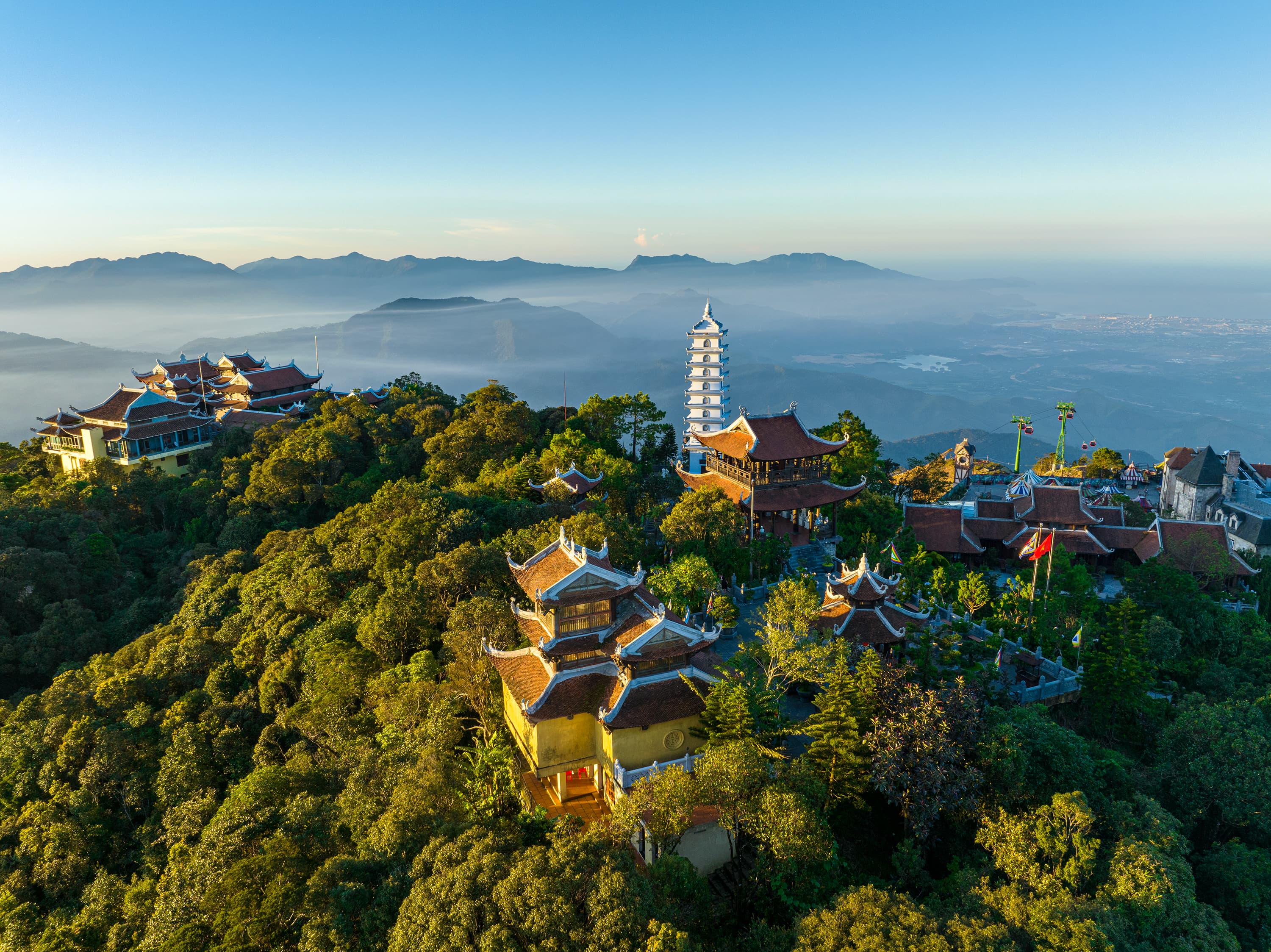
Linh Ứng Pagoda, Bà Nà in Hòa Vang, Đà Nẵng, Vietnam. Image source · CC BY-SA 4.0
Visit essentials
A quick read before you go
- Duration
- Allow enough time to settle after arrival and visit the worship core without rushing through it.
- Access
- A strong Google Places match identifies the pagoda at Bà Nà.
Overview
An elevated landscape slows the eye, but Linh Ứng's sacred meaning does not come from altitude alone. The seated Buddha and continuing worship give its mountain pause Buddhist direction. Devotees may bow, offer incense, or sit in recollection while others arrive through the wider Bà Nà visitor system, an overlap requiring attention.
Identify the worship hall and Śākyamuni image before turning outward. Mist, bright sun, or crowds can alter sensory character without changing religious purpose. Sources support no measurable energy or guaranteed transformation; they show a living pagoda using elevation to sustain devotion, discipline, and release from the ordinary pace below.
Why this place is sacred
Height can feel like removal from ordinary life, but at Linh Ứng Bà Nà that feeling is shaped by an active Buddhist institution. The Buddha image gathers attention that might otherwise disperse across the panorama. Incense, bells, footfall, and changing weather each contribute to the atmosphere; none proves a supernatural property. The sacred quality is better located in repeated acts of reverence and the care required to maintain worship within a public destination.
The supported purpose is Mahayana Buddhist worship centered on Śākyamuni Buddha in a mountain pagoda.
The sanctuary now receives worshippers and sightseers within Bà Nà's broader visitor landscape, while its altar order remains religious.
Experience and orientation
Arrival may be visually busy, especially when groups move through the surrounding attraction. Pause near the pagoda boundary and listen for the quieter pattern of temple use. Notice where shoes are removed, where incense is offered, and which route remains open for prayer. The scale of the Buddha can be received from a respectful distance without turning the image into a backdrop.
Weather may close the view or sharpen it; either condition can support attention if the visit is not organized around obtaining a particular photograph.
On arrival, learn where worship begins; the panoramic route can wait until the Buddha precinct and private areas are clear.
Context and lineage
The reviewed sources establish Chùa Linh Ứng Bà Nà as a mountain pagoda with a large seated Buddha and active Mahayana use. They do not resolve every origin story or construction detail circulated online. Because several temples share the Linh Ứng name, accounts and images from another site must not be transferred here. The pagoda is not presented as a UNESCO World Heritage property in its own right.
Vietnamese Mahayana Buddhism provides the ritual and interpretive frame for the Buddha image and the living sanctuary.
Śākyamuni Buddha
principal source-attested devotional focus
Traditions and practice
Worshippers may approach the Buddha with incense, offerings, prostration, or silent prayer according to local custom. An unfamiliar visitor should observe the established sequence rather than inventing one. A simple pause outside the altar line can be more respectful than copying gestures without understanding their place.
Regular devotion continues alongside high visitor traffic and the practical demands of caring for a mountain temple.
Sit or stand at the edge of circulation and notice how the Buddha image redirects attention from the horizon toward conduct.
Vietnamese Mahayana Buddhism
ActiveThe mountain sanctuary centers Śākyamuni Buddha as the focus of devotion and disciplined recollection.
Bows, incense, offerings, prayer, and quiet contemplation follow the pagoda's current guidance.
Perspectives and open questions
Mountain geography, monumental Buddhist art, living devotion, and destination tourism each explain a different part of the encounter.
Scholarly perspective
A material reading can describe how elevation and a large seated image organize movement and attention. That analysis need not dismiss faith, and faith need not turn the physical setting into evidence of paranormal effects. The useful distinction is between a landscape response and the Buddhist practices that give it communal continuity.
Living and traditional perspectives
Within Vietnamese Mahayana Buddhism, Śākyamuni is approached as the awakened teacher; reverence points toward recollection and conduct rather than spectacle.
Open questions
No uniform emotional result, healing effect, or energetic property has been established for visitors.
Plan your visit
Access and arrival
A strong Google Places match identifies the pagoda at Bà Nà. Consult the linked official destination page and recheck current operating access rather than relying on old schedules.
No lodging is represented as part of the pagoda; use current licensed accommodation in the wider Đà Nẵng area.
Respectful visit
Cover shoulders and knees and carry a layer suitable for changing mountain weather.
Frame the Buddha and landscape without staging poses on altar approaches or including worshippers without consent.
Use only the incense burners, donation points, or materials accepted by the pagoda.
Do not touch statues, altar objects, bells, or protected surfaces unless a custodian explicitly invites it.
Do not claim that elevation, mist, or stillness confirms a mystical force, and never block an active prayer route.
Current practical details
Address
XXWV+VJ3, Dương Cát Lợi, Thôn An, Bà Nà, Đà Nẵng, Vietnam
Hours
Hours, fees, and access can change — verify on the official source before you travel. Practical details last checked Jul 2026.
Location
Map loads as you approach this section.
Pilgrim reflections
A portrait of encounter, not a score
Pilgrims describe what they felt, how present they could become, and whether the place would shape a journey. There are no stars and no ranking of traditions.
No reviewed reflections yet
The first pilgrims can help describe the character of being here.
Share a reflection
Available after an account-backed “Been there.” Every reflection is reviewed before publication.
Nearby sacred places
Explore other sacred places in the region. Proximity does not establish access or travel time; check each place’s guidance.

References
Sources consulted for this page. Source categories describe the publication, not a guarantee that every claim is verified. Traditional accounts and outside interpretations may differ.
- 01A pagoda on top of Ba Na Mountain — Viet Nam National Authority of TourismofficialExact national-tourism article distinguishing Bà Nà from the other Linh Ứng pagodas and identifying its 27-metre Śākyamuni image.
- 02Chùa Linh Ứng Bà Nà — Sun World Ba Na HillsofficialExact site operator page for identity, Śākyamuni focus, living worship, and visitor conduct.
- 03National Assembly approves provincial-level administrative reorganization — Government of Viet NamofficialAuthoritative 2025 successor-province and municipality boundaries.
- 04Chùa Linh Ứng - Bà Nà — Google PlacesofficialStrong exact-entity practical metadata from the authoritative current preflight.
- 05Chùa Linh Ứng ở Bà Nà - Núi Chúa — Đà Nẵng City PortalofficialLive exact government source for the Bà Nà temple, 2004 inauguration, and 27-metre Śākyamuni image.
- 06Vietnamese-language reference search for Chùa Linh Ứng Bà Nà — Vietnamese Wikipedia contributorsacademicDiscovery reference only; unsupported details were not promoted into factual prose.
Share a photo
Help visitors recognize Linh Ứng Pagoda, Bà Nà. Every submission is reviewed before publication.