Lake Titicaca
An Andean lake where living communities, ancient offerings, and lakeside pilgrimage meet
Understand sacred places, explore living traditions, and learn how to engage respectfully with Pilgrim Map.
Access has not been verified. Check current local guidance before planning a visit.
Puno / La Paz, Peru / Bolivia
Read the sources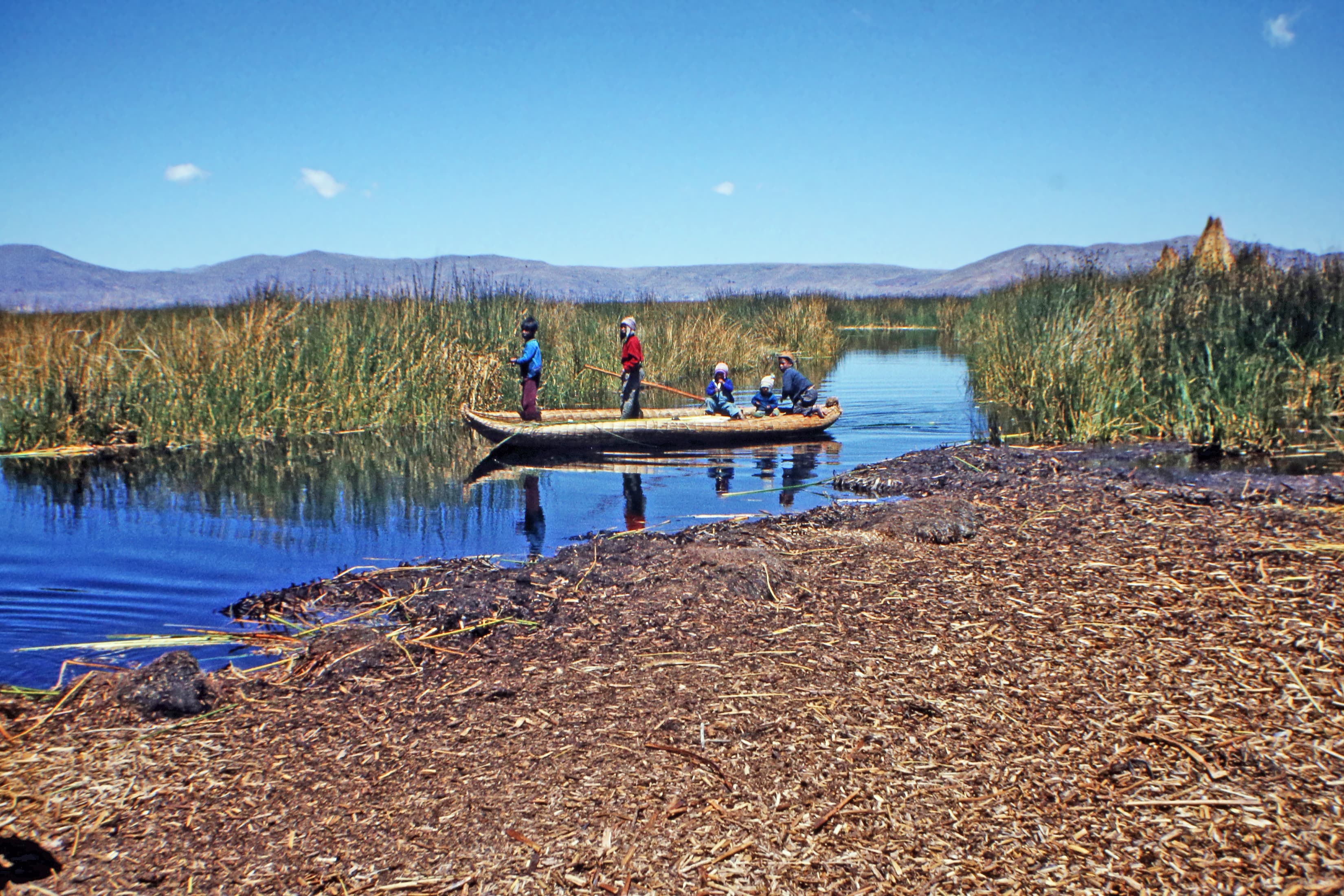
Image of Lake Titicaca. Image source
Visit essentials
A quick read before you go
- Duration
- Two to four days with acclimatization
- Access
- Use licensed or community-authorized boats from established ports in Puno, Copacabana, and other…
Overview
Lake Titicaca is a connected sacred landscape of water, islands, mountains, communities, archaeological remains, and pilgrimage routes. At 3,810 metres in the Andes between Peru and Bolivia, it shaped Tiwanaku and Inca cosmologies. UNESCO-supported underwater archaeology has documented offering shrines, settlements, a pre-Columbian port, and thousands of objects beneath its waters.
This deep history continues beside living Aymara, Quechua, and Uros communities. Reed craft and boats, fishing knowledge, agriculture, Catholic devotion, and reciprocal relations with land and water coexist without forming one uniform tradition. Islands and shores are homes as well as visitor destinations. Respect means recognizing community authority, paying fairly for local services, and asking before photographing people or ceremonies.
Each August, pilgrims travel to Copacabana on the Bolivian shore to honor the Virgin of Copacabana. This major Christian pilgrimage layer developed in an Andean cultural setting but is not interchangeable with Indigenous lake traditions. Titicaca's power lies partly in this plurality: ancient sacred geography, living Indigenous knowledge, Christian pilgrimage, ecological vulnerability, and daily life remain present together.
Why this place is sacred
The lake’s scale changes how distance and weather are perceived. High-altitude light travels across open water toward snow-bright mountains, while reed beds create intimate passages at the shoreline. These sensory qualities help explain why visitors experience the lake as a threshold, but they are not evidence by themselves.
Material evidence is stronger. Underwater investigations described by UNESCO have identified offering shrines and other submerged sites associated with long histories of ritual and settlement. Inca pilgrimage focused particularly on the Island of the Sun and its Sacred Rock, while earlier Tiwanaku communities also placed offerings in the lake. Present-day Aymara and Quechua relationships with water, mountains, ancestors, agriculture, and reciprocity are living traditions, not archaeological survivals frozen in time.
Titicaca is therefore not one sanctuary with one doctrine. Its sacredness is relational and distributed. A visitor may encounter a reserve landscape, an island community, an archaeological site, a family-run boat, a Christian procession, or a quiet shoreline. Each setting has its own custodians and expectations.
Experience and orientation
Puno and Copacabana are the principal visitor gateways, but they reveal different parts of the lake. From Puno, reserve and island routes enter totora reed habitats and Uros territories. From Copacabana, boats connect with the Island of the Sun and nearby pilgrimage landscapes. Travel times and conditions change with route and weather.
At this elevation, a modest climb can feel demanding. Build time for acclimatization before steep island paths. Sun exposure is intense, temperatures fall rapidly after sunset, and wind can turn the water rough. On the lake, use established operators and wear the supplied flotation equipment.
The most meaningful encounters are often ordinary: listening to reeds move in the wind, watching cultivation on terraced slopes, or learning why a family maintains a particular craft. Cultural exchange should be reciprocal. Ask questions without expecting residents to disclose sacred knowledge, and accept that some ceremonies or places are not for visitors.
Choose a specific shore or island route rather than trying to consume the entire lake in one day. Verify boat conditions and community protocols locally. If visiting during the Copacabana pilgrimage, expect crowds and give worshippers priority.
Context and lineage
Inca traditions recorded in colonial-era sources place the emergence of foundational ancestors and the ordering of the world within the Titicaca landscape, particularly around the Island of the Sun. Aymara communities maintain their own relationships and narratives concerning the lake, mountains, and ceremonial places. Because accounts vary, this profile does not present one version as universal.
Tiwanaku ritual activity preceded Inca expansion around the lake. Inca authorities developed pilgrimage and offering networks focused on sacred islands and rocks. Aymara, Quechua, and Uros communities continue to live around and on the lake, while Catholic devotion at Copacabana has formed another active pilgrimage tradition.
Traditions and practice
Aymara and Quechua ceremonial practices commonly emphasize reciprocity with Pachamama, mountains, water, and ancestors, but form and authority vary. Community members or recognized ritual specialists determine when participation by outsiders is appropriate.
The August pilgrimage to the Virgin of Copacabana brings worshippers from Bolivia, Peru, and beyond. Community tourism, conservation work, and the transmission of totora skills are also contemporary forms of cultural continuity.
Walk quietly, learn the names of the community and island you are visiting, and spend time looking across the water without turning contemplation into a staged ceremony.
Aymara and Quechua Sacred Landscape
ActiveThe lake remains embedded in living relationships with water, mountains, ancestors, agriculture, and reciprocity.
Community-specific offerings, seasonal observances, livelihood traditions, and cultural transmission.
Tiwanaku and Inca Ritual Heritage
HistoricalSubmerged offerings, sacred islands, and pilgrimage infrastructure document ancient ceremonial engagement.
Historically included offerings and pilgrimage to sacred places.
Catholic Pilgrimage to Copacabana
ActiveThe lakeshore basilica and Virgin of Copacabana draw major annual pilgrimage.
Processions, Mass, prayer, blessings, and journeys by road and boat.
Perspectives and open questions
Titicaca can be understood through archaeological, living Indigenous, Christian pilgrimage, ecological, and contemporary spiritual lenses. They should remain distinct where their evidence and authority differ.
Scholarly perspective
Archaeology documents long-term settlement, navigation, offering, and pilgrimage around the lake. UNESCO reporting identifies submerged shrines and a wider underwater cultural landscape tied to Tiwanaku and Inca histories.
Living and traditional perspectives
According to the community-based and ethnographic sources consulted, Aymara and Quechua relationships with the lake include water, mountains, earth, ancestors, and livelihood. No single description can stand for every community.
Alternative interpretations
In an alternative contemporary interpretation, Matías De Stefano’s Gaia episode presents Lake Titicaca within his spiritual journey. It is included as a media perspective, not as evidence for archaeological chronology or as a statement of Aymara, Quechua, or Uros teaching.
Open questions
The meanings of particular ancient offerings and the full extent of submerged sites remain subjects of research. Community-held knowledge may also be intentionally private.
Plan your visit
Access and arrival
Use licensed or community-authorized boats from established ports in Puno, Copacabana, and other local gateways. | Difficulty: Boat access is easy, but island paths can be steep at 3,810 metres.
Respectful visit
Layered clothing, sun protection, and sturdy footwear. In churches, cover shoulders and remove hats where requested.
permitted: Yes | Landscape photography is generally acceptable; obtain explicit permission for people, ceremonies, homes, and restricted heritage.
Community-specific and conducted under local authority. | Do not leave independent offerings or introduce candles, food, coins, or plastics.
Do not leave offerings, handle archaeological material, photograph rituals, or enter community spaces without permission. Avoid commercial ceremonies that make unverifiable claims of universal Indigenous authority.
Location
Map loads as you approach this section.
Pilgrim reflections
A portrait of encounter, not a score
Pilgrims describe what they felt, how present they could become, and whether the place would shape a journey. There are no stars and no ranking of traditions.
No reviewed reflections yet
The first pilgrims can help describe the character of being here.
Share a reflection
Available after an account-backed “Been there.” Every reflection is reviewed before publication.
Nearby sacred places
Explore other sacred places in the region. Proximity does not establish access or travel time; check each place’s guidance.


References
Sources consulted for this page. Source categories describe the publication, not a guarantee that every claim is verified. Traditional accounts and outside interpretations may differ.
- 01Titicaca: The sacred lake reveals its secrets — UNESCOofficialUnderwater archaeology, altitude, Tiwanaku and Inca significance.
- 02Titicaca National Reserve — SERNANPofficialReserve, Uros cultural tourism, and visitor context.
- 03Lake Titicaca: Legend, Myth and Science — UCLA Cotsen InstituteSource contextArchaeology and continuing Aymara and Quechua presence.
- 04Pachjiri. Cerro sagrado del Titicaca — Revista Española de Antropología AmericanaacademicEthnographic sacred landscape context.
- 05How one man's dream led to 50,000 pilgrims honoring Our Lady of Copacabana — Associated PressSource contextCurrent pilgrimage scale and August observance.
- 06The Journey of Remembering S1:E4 — Part 4: The Land of No One — GaiaSource contextContemporary spiritual perspective only.
Share a photo
Help visitors recognize Lake Titicaca. Every submission is reviewed before publication.