Khanqah-e-Moula
A living Srinagar khanqah shaped by remembrance, prayer, timber craft, and the Jhelum
Understand sacred places, explore living traditions, and learn how to engage respectfully with Pilgrim Map.
Access has not been verified. Check current local guidance before planning a visit.
Srinagar, Jammu and Kashmir, India
Read the sources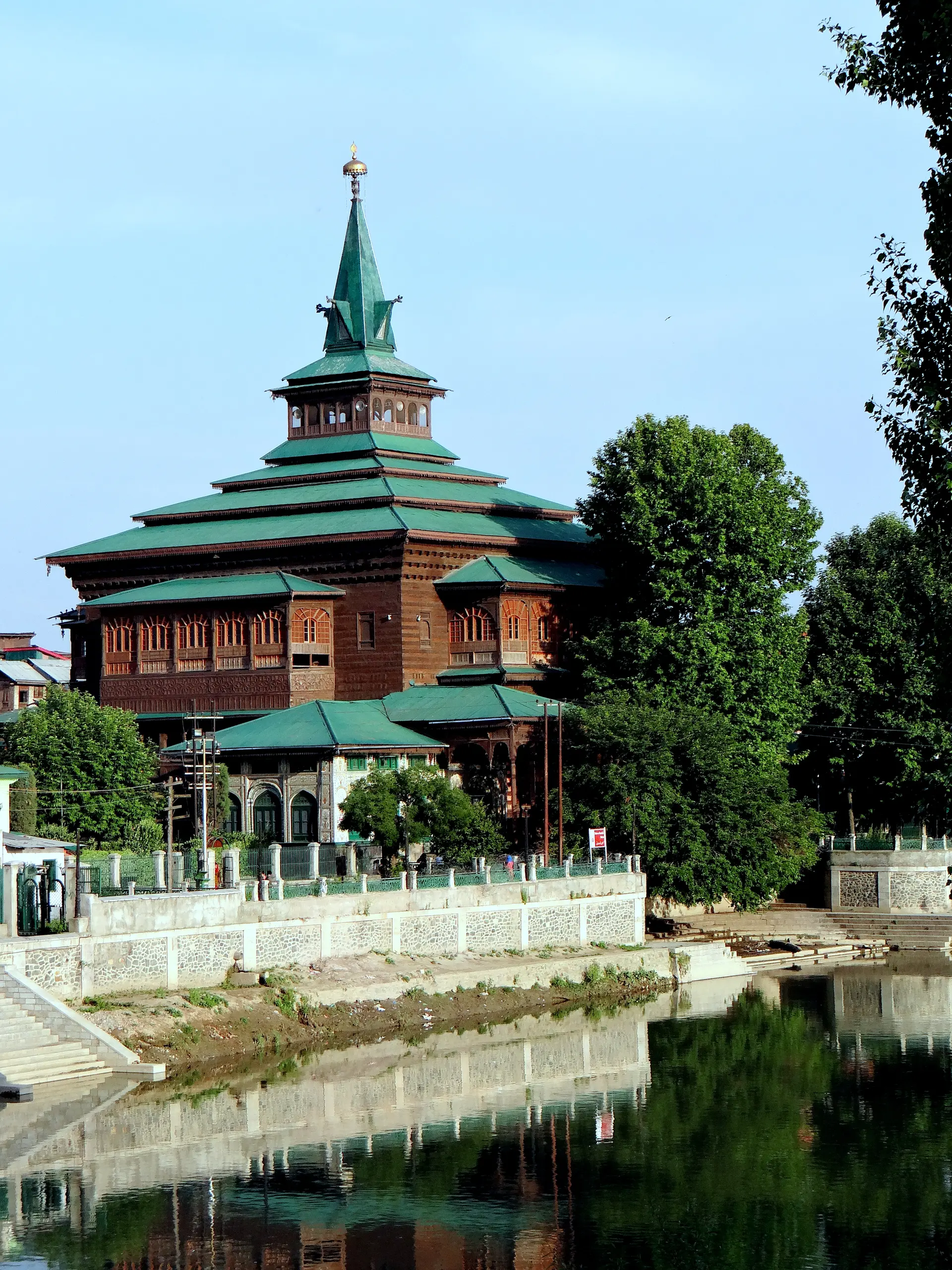
Khanqah-e-Moula's timber shrine and mosque beside the Jhelum in Srinagar. Image source · CC BY-SA 3.0
Visit essentials
A quick read before you go
- Duration
- Plan flexibly around local directions and the pace of the old city.
- Access
- Use a local route to the Jhelum riverfront in Srinagar's old city and follow current access…
Overview
Khanqah-e-Moula is best approached first as a place of worship. The building is a major landmark, but its significance does not stop at age or appearance. Jammu & Kashmir Tourism identifies it as one of Srinagar's oldest Muslim shrines and links it to the memory of the Persian Sufi teacher Mir Sayyid Ali Hamadani, widely called Shah-e-Hamadan. The khanqah form joins congregational prayer, teaching, remembrance, and community life.
The monument's layered wooden form records both continuity and loss. Official and heritage accounts place the first building in 1395 and describe later fires and reconstructions. INTACH emphasizes the two-storey timber structure, pyramidal roofs, decorated cornices, and papier-mache craft. Those features belong to a regional architectural language shaped in Kashmir rather than to a simple imported style.
For Pilgrim Map, the page represents this exact riverbank shrine in Srinagar. It does not merge the building with every place named for Shah-e-Hamadan, and it does not turn a living Muslim institution into an architectural exhibit.
Why this place is sacred
Mir Sayyid Ali Hamadani is remembered in Kashmir as a Sufi teacher whose visits and influence were important to the spread of Islam in the region. The reviewed sources attribute the shrine's foundation to Sultan Sikander in his memory. The language of memory matters: the building is associated with the saint, but this entry does not invent a tomb claim or identify every devotional practice without custodial evidence.
Khanqah-e-Moula also expresses sacred continuity through craft. Timber walls, arcaded levels, sloping roofs, carved cornices, and painted or papier-mache surfaces create an interior and exterior suited to Kashmir's material traditions. INTACH describes the architecture as composite, drawing on forms associated with Buddhist, Hindu, and Islamic building traditions. That observation is architectural, not a claim that the mosque's worship is syncretic.
Fire has repeatedly damaged the monument. Rebuilding after loss can be read as a community act of care, but dates and surviving fabric should not be simplified into one original structure. The present building carries several episodes of reconstruction.
Experience and orientation
Visitors should expect the rhythms of an active mosque to shape the encounter. Prayer, local movement, weather, security, and custodial decisions take precedence over sightseeing. Observe the building from public approaches without blocking entrances or treating worshippers as scenery. The vertical sequence of arcades, roofs, and crowning pavilion is especially legible from outside.
Inside access must never be assumed. Jammu & Kashmir Tourism currently publishes a restriction on non-Muslim entry; because such rules can change and may be applied by local custodians, visitors should confirm at the site and accept a refusal without argument. A meaningful visit may consist entirely of respectful exterior observation from permitted areas.
The riverbank setting is part of the place's identity. Notice how the structure belongs to the dense old city rather than standing as an isolated monument.
Context and lineage
The reviewed sources agree on the essential identity while differing in some rebuilding details. They place the first construction in the late fourteenth century and connect it with Sultan Sikander and Mir Sayyid Ali Hamadani. The saint's wider influence belongs to Kashmir's religious history; the page avoids reducing that history to a single conversion story.
The monument's timber construction made it vulnerable to fire. JKTDC and INTACH record destructive episodes followed by rebuilding, including work that produced much of the present form in the eighteenth century and repair after damage to the spire in 2017. Because renewal is cumulative, visitors should not assume every visible element dates to 1395.
The mosque's composite regional architecture has sometimes been described through Buddhist, Hindu, and Islamic influences. This page reports that heritage interpretation while keeping the building's current Islamic custodianship clear.
A living Sunni Muslim mosque and khanqah within Kashmir's Sufi devotional and architectural heritage.
Mir Sayyid Ali Hamadani
Sufi teacher remembered as Shah-e-Hamadan and central to the shrine's devotional identity.
Sultan Sikander
Ruler whom the reviewed sources associate with the first construction in memory of Shah-e-Hamadan.
Traditions and practice
The khanqah form historically supports collective prayer, religious learning, remembrance, and hospitality. The reviewed public sources establish these broad functions but do not provide authority for Pilgrim Map to prescribe devotional acts.
Treat any service as worship rather than performance. Participate only when invited and when you understand the expectations of the congregation.
If remaining outside, attend to the river setting, timber craft, and continuity of community care. Quiet observation is a complete and respectful encounter.
Kashmiri Islam and Sufi remembrance
ActiveThe khanqah is an active Muslim place of prayer and a memorial focus for Mir Sayyid Ali Hamadani.
Perspectives and open questions
The place can be understood simultaneously as a living mosque, a Sufi memorial landscape, a landmark of Kashmiri timber craft, and a repeatedly restored monument.
Scholarly perspective
Architectural study emphasizes the square plan, tiered timber construction, pyramidal roofs, arcades, carved cornices, and papier-mache decoration. Rebuilding complicates any attempt to assign the whole visible fabric to one date.
Living and traditional perspectives
Within the shrine's Islamic setting, Mir Sayyid Ali Hamadani is remembered with reverence for teaching and spiritual influence. The page reports that devotion without defining theology for the community.
Alternative interpretations
Claims about secret powers or universal access are not treated as established fact. JKTDC repeats a traditional phrase about a divine secret, but the page does not turn it into a literal visitor promise.
Open questions
Current interior access, photography rules, service schedules, and the date of every surviving architectural layer require confirmation from custodians.
Plan your visit
Access and arrival
Use a local route to the Jhelum riverfront in Srinagar's old city and follow current access controls. | The exterior approach is urban; accessibility inside the historic timber building is not established. | Not applicable.
Srinagar has visitor services; no commercial recommendation is implied.
Respectful visit
Khanqah-e-Moula is not an unrestricted tourist interior. The official tourism page publishes conservative dress guidance and a restriction on non-Muslim entry. Confirm current rules locally because online guidance can lag custodial practice. If entry is not permitted, remain in public exterior areas and do not pressure staff or worshippers for an exception.
If admitted, follow the congregation's lead about shoes, head covering, gendered spaces, prayer times, and movement. Avoid flash, tripods, posed portraits, and close photographs of worshippers. Ask before photographing craft details inside. Do not touch painted woodwork or lean equipment against the building.
Political language about Kashmir can carry real risk and pain. Describe the location precisely and respectfully without recruiting the shrine into a political argument.
Do not imitate Sufi ritual, enter during prayer for photography, touch devotional objects, or claim access based on information found online.
Location
Map loads as you approach this section.
Pilgrim reflections
A portrait of encounter, not a score
Pilgrims describe what they felt, how present they could become, and whether the place would shape a journey. There are no stars and no ranking of traditions.
No reviewed reflections yet
The first pilgrims can help describe the character of being here.
Share a reflection
Available after an account-backed “Been there.” Every reflection is reviewed before publication.
Nearby sacred places
Explore other sacred places in the region. Proximity does not establish access or travel time; check each place’s guidance.
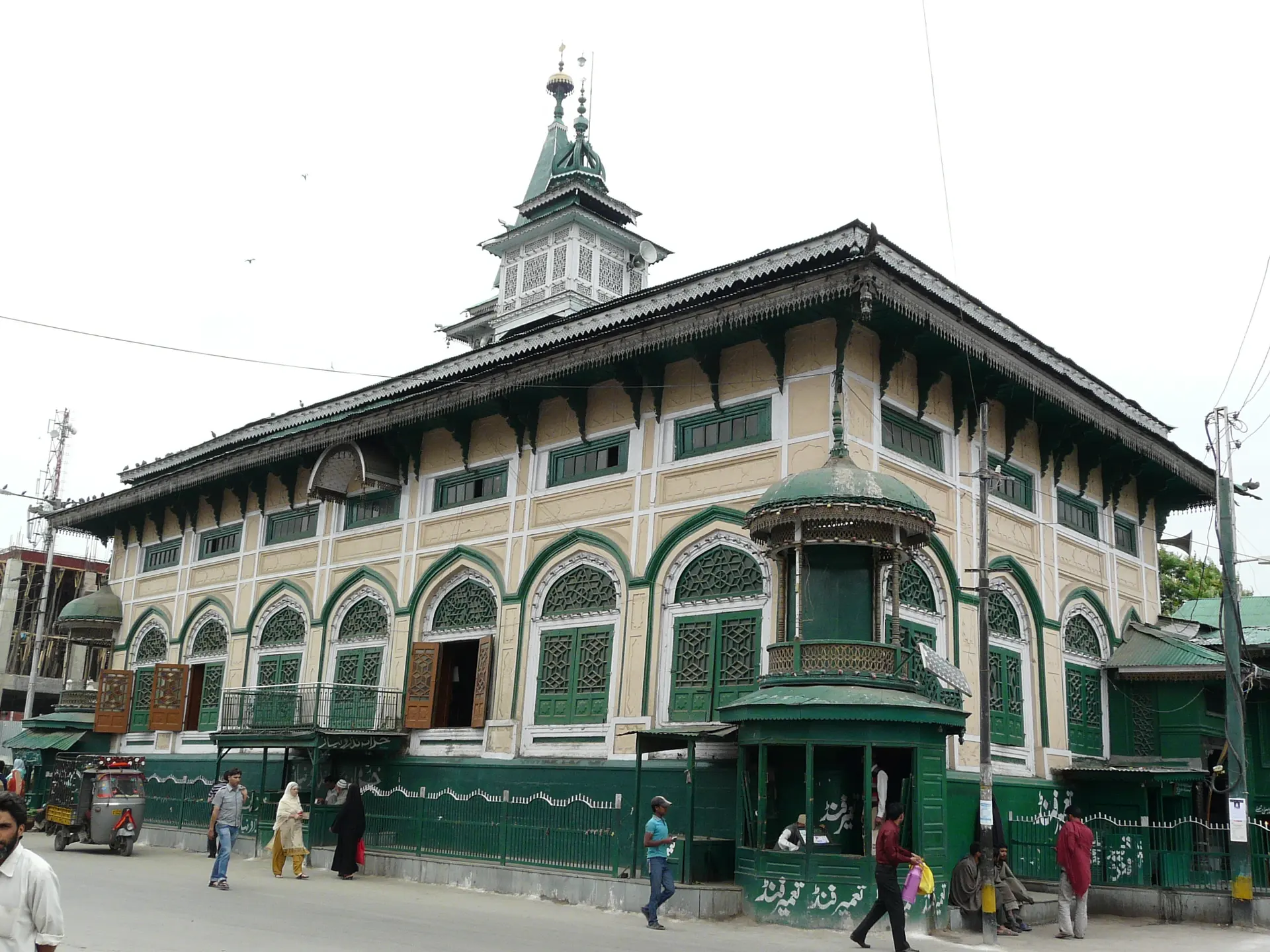
Masjid Dastgeer Sahib, Kashmir
Srinagar, Jammu and Kashmir, India
0.9 km away

Chati Patshahi Gurudwara, Srinagar, Kashmir
Srinagar, Jammu and Kashmir, India
1.8 km away

Shri Chakreshwari Devi Temple (Sharika Mata Temple)
Srinagar, Jammu and Kashmir, India
2.1 km away

Shree Kheer Bhawani Durga Temple, Tulmulla, Kashmir
Wahidpora, Jammu and Kashmir, India
16.2 km away
References
Sources consulted for this page. Source categories describe the publication, not a guarantee that every claim is verified. Traditional accounts and outside interpretations may differ.
- 01Khanqah-e-Molla in Kashmir — Jammu & Kashmir Tourism Development CorporationofficialOfficial tourism account of the shrine's identity, Jhelum setting, association with Mir Sayyid Ali Hamadani, construction and rebuilding history, architecture, and published visitor restrictions. Current access must still be confirmed with the mosque.
- 02Mosques of India: Khanqah-e-Moula, Srinagar — Indian National Trust for Art and Cultural HeritageofficialHeritage education dossier corroborating the old-city identity, 1395 date, repeated rebuilding, timber construction, pyramidal roofs, papier-mache decoration, and composite regional architecture.
- 03Mausoleum of Shah e Hamadan 01 — TauqeerzahidacademicExact-site photograph with coordinates near the record, released under CC BY-SA 3.0.
- 04Shah Hamadan Mosque (Q19459653) — Wikidata contributorsacademicStructured identity and coordinates used only as corroboration.
Share a photo
Help visitors recognize Khanqah-e-Moula. Every submission is reviewed before publication.