Shri Chakreshwari Devi Temple (Sharika Mata Temple)
Where the goddess dropped a stone to slay chaos, and her presence lingers in a self-manifested sacred geometry
Understand sacred places, explore living traditions, and learn how to engage respectfully with Pilgrim Map.
Access has not been verified. Check current local guidance before planning a visit.
Srinagar, Jammu and Kashmir, India
Read the sources
Image of Shri Chakreshwari Devi Temple (Sharika Mata Temple). Image source · CC-BY-SA-4.0
Visit essentials
A quick read before you go
- Duration
- Allow one to two hours for a meaningful visit.
- Etiquette
- Sharika Mata Temple is an active pilgrimage site where daily worship continues.
Overview
Above Srinagar's old city, 108 steps leave traffic and commerce for a modest summit temple centered on a sindoor-smeared natural rock. Upon it, tradition holds, the Sri Chakra—the supreme symbol of Shakti worship—appears in self-manifested form.
According to the Nilamata Purana, composed perhaps fourteen centuries ago, Kashmir was a demon-haunted lake where Jalodbhava devoured those who came to bathe. Its inhabitants appealed to Parvati, who became a myna bird—haer in Kashmiri—and dropped a pebble that grew into a mountain, crushing the demon. Establishing her eternal abode there, she took the name Sharika.
For Kashmiri Pandits this is cosmology, not merely myth. Sharika Mata is their Kul Devi, presiding over their community and Srinagar itself; some hold that the city's name derives from her. Through exodus, return, and decades of displacement, the goddess remained. In 2022 Kashmiri Pandits celebrated Navreh here for the first time in thirty-two years, a homecoming to the spiritual mother entwined with their identity.
Why this place is sacred
The hill itself is the first element. In Shakta and Tantric understanding, certain landscapes hold concentrated power—not because humans consecrate them, but because they already possess a quality that draws humans to consecrate there. Hari Parbat rises like an assertion from the flat valley floor, its form insistent against the Himalayan backdrop. Local tradition holds that the stone dropped by the goddess-as-bird grew into this very landmass.
Whether one reads this as literal cosmology or poetic geology, the narrative expresses something true: this place feels primordial, as if it preceded human arrival and human meaning-making.
At the temple's heart lies the Svayambhu Sri Chakra, engraved—or manifested, depending on one's framework—on natural rock. The Sri Chakra is the supreme yantra in Tantric tradition, a geometric representation of the goddess that also encodes the relationship between consciousness and cosmos. Most Sri Chakras are ritually inscribed and consecrated; this one is understood to have appeared by its own accord.
Whether the pattern is geological coincidence, ancient carving lost to memory, or something beyond either explanation, its presence makes this one of the rare sites where the highest form of Shakti worship can occur without ritual installation.
The temple does not stand alone. Eight Bhairav temples—the Ashta Bhairav—are positioned around Hari Parbat in cardinal and ordinal directions. In Tantric cosmology, Bhairav protects wherever Shakti dwells; the pattern here suggests not random accumulation but intentional sacred architecture on a landscape scale. The goddess at the center, her fierce masculine aspect guarding the approaches.
Centuries of worship have added their own weight. The Nilamata Purana references establish that this place has drawn devotion for at least twelve hundred years. More recently, the exodus of Kashmiri Pandits in 1990 and their gradual return—including that emotional Navreh celebration in 2022—demonstrates that devotion persists through displacement. The accumulated prayers, the generations of festival observance, the tears of those returning to their ancestral goddess: these too contribute to what practitioners sense when they climb those 108 steps.
The Nilamata Purana, dating to the 6th-8th century CE, establishes the hill's mythological significance and confirms that worship at this site has roots extending deep into Kashmir's Hindu past. The presence of the Sri Chakra indicates that the temple has long served as a center for Shakti worship in both devotional and Tantric modes.
As the Kul Devi temple of all Kashmiri Pandits, it has functioned as a unifying spiritual center for the community—a place where collective identity and divine relationship converge.
The original structures and their dating remain uncertain, though the site's sanctity clearly predates any surviving temple. Mughal Emperor Akbar constructed the fortification wall surrounding Hari Parbat in 1590, and the Durrani Empire later built the fort that now shares the hilltop. Through these political changes, the temple endured.
The twentieth century brought disruption of a different kind. As Kashmiri Pandits were forced to leave the valley in 1990, their access to Sharika Mata became sporadic at best, pilgrimage possible only under difficult circumstances. The temple remained, maintained through uncertain years. In recent times, increased security has allowed more regular worship to resume, culminating in the 2022 Navreh celebration that brought Kashmiri Pandits back to their goddess in numbers not seen for three decades.
Today, the temple operates as an active pilgrimage site, daily puja continuing the thread of devotion that stretches back into the valley's deep past.
Experience and orientation
The experience begins with the climb. The 108 steps are not merely practical access but pilgrimage in miniature—the number itself sacred, the effort a shedding of the city's concerns. As Srinagar falls away below, the ascent creates the internal shift that makes genuine encounter possible. Those who arrive by this means, rather than rushing, often describe feeling that they have earned their arrival.
At the summit, the vista opens in all directions. Srinagar sprawls across the valley floor, Dal Lake glinting to the east, the Himalayas rising in layered blue-grey ranges beyond. This panoramic context does something to perspective: it locates the personal within the vast, reminding the visitor that whatever brought them here exists within a scale that dwarfs individual concerns. Many sit for some time before entering the temple itself, allowing the view to work on them.
The temple interior is modest—a small shrine housing the goddess in her eighteen-armed form, flanked by the sacred rock bearing the Sri Chakra. After the expansiveness outside, this intimacy concentrates the experience. The vermilion-smeared stone, the lamp flames, the scent of incense and flowers: these create a sensory envelope within which something subtler may become accessible. Devotees describe feeling the goddess's presence with unusual directness.
Others, arriving without such framework, report an unmistakable sense that this space is different from the ordinary, that attention is required here.
For Kashmiri Pandits, the experience carries additional dimensions. This is homecoming to their Kul Devi, whatever their current residence. Many weep—not from sorrow alone, but from recognition, from the accumulated weight of family memories and collective belonging. The temple holds their identity in ways that transcend individual biography.
Approach the climb as pilgrimage, not mere transit. Take the steps slowly, allowing breath and effort to create internal shift. At the top, pause before entering—let the panorama do its work on perspective before moving into the concentrated space of the shrine.
Within the temple, the Sri Chakra on its rock may not be immediately obvious to unfamiliar eyes. Take time to observe it, to let its geometric complexity register. Whether or not you practice Tantra, the form itself—interlocking triangles radiating from a central point—rewards contemplation.
If you come with grief, with seeking, with questions: this is a goddess to whom such things have been brought for centuries. You need not know the proper forms. Sincerity is the essential protocol. Many visitors speak directly to Sharika Mata in their own words, trusting that a goddess who has protected her community through millennia of change can handle unpolished address.
Context and lineage
The Nilamata Purana, likely composed between the 6th and 8th centuries CE, preserves Kashmir's creation mythology. The valley was once Satisar, a vast lake inhabited by the water demon Jalodbhava, who would emerge to devour anyone attempting to bathe or perform rituals at its shores. The terrorized inhabitants prayed to Goddess Parvati for deliverance.
Parvati responded by taking the form of a haer—a myna bird—and flying over the lake. She dropped a pebble that, as it fell, expanded miraculously until it had become an enormous hill, crushing Jalodbhava beneath its mass. The goddess then established her eternal abode on this hill, taking the name Sharika. Meanwhile, Lord Ananta, Vishnu's serpent, cut through the surrounding mountains at Baramulla, draining the lake and creating the habitable valley.
Rishi Kashyapa settled the drained land with humans, giving Kashmir its name.
The narrative encodes several truths that operate whether taken literally or mythologically. The valley does appear to have been a lake in geological time. The hill does rise with unusual abruptness from the valley floor. And the goddess does preside: every telling of Kashmir's origin story features her decisive intervention against the forces of chaos.
The temple sits within the stream of Kashmiri Shaktism and Shaivism, traditions that achieved particular philosophical sophistication in Kashmir's medieval period. The presence of the Sri Chakra connects the site to Srividya, one of the most developed schools of Tantric practice, which regards this geometric form as the supreme expression of the goddess.
The Kashmiri Pandit community has maintained unbroken devotion to Sharika Mata across the centuries, through rule by Hindu, Muslim, Sikh, and secular governments. Major festivals—Navratri, Navreh, Sharika Jayanti—have been celebrated here in unbroken succession except during the most difficult years of displacement. The 2022 return of Kashmiri Pandits for Navreh represents not a new beginning but a restoration of continuity, the resumption of a thread that was stretched but never fully broken.
Sharika Mata
deity
The presiding goddess of Srinagar and Kul Devi of all Kashmiri Pandits. Known also as Chakreshwari, Tripurasundari, and Jagadamba Sharika Bhagwati. She manifests with eighteen arms (Ashtadushbuja), representing the completeness of her power.
Bhairav
deity
Shiva's fierce aspect, protector of the goddess. Eight Bhairav temples (Ashta Bhairav) surround Hari Parbat, guarding Sharika's abode from all directions according to Tantric principles.
Jalodbhava
mythological
The water demon whose defeat enabled Kashmir to become habitable. His crushing beneath the goddess's stone symbolizes the triumph of cosmic order over chaos.
Rishi Kashyapa
mythological/founder
The sage who settled Kashmir after the valley was drained, bringing human civilization to the region. Kashmir bears his name.
Traditions and practice
Traditional Shakti worship at this site centers on the Sri Chakra, considered the highest form of yantra worship in Tantric tradition. Practitioners approach the sindoor-smeared sacred rock with offerings of flowers, especially red blooms, and may apply vermilion to the stone themselves as an act of devotion. The eighteen-armed goddess receives traditional puja including lamp offering, incense, and prayers.
Sharika Jayanti, observed on the ninth day of Ashadh Shukla Paksha (typically July), marks the goddess's birthday with a three-day festival. A distinctive offering called taher-charvan—rice cooked with turmeric and goat liver—is prepared and offered to the goddess during this celebration.
Navreh, the Kashmiri New Year observed on the first day of Vasant Navratri (typically March or April), brings special significance to the temple. Kashmiri Pandits traditionally begin the new year with darshan of their Kul Devi, seeking her blessing for the year ahead. The nine days of Navratri see continuous special pujas honoring the goddess's various forms.
Daily puja takes place from early morning through evening, maintaining continuous worship at the shrine. Devotees arrive throughout the day for darshan, the visual encounter with the deity that constitutes the central act of Hindu worship. The temple staff perform regular aarti and maintain the shrine's ritual purity.
Festival celebrations have resumed with increasing vigor since security conditions improved. Navratri and Navreh draw both local devotees and Kashmiri Pandits returning from exile. The 2022 Navreh celebration—the first in thirty-two years to see significant Kashmiri Pandit attendance—has set a precedent for continued community return.
For visitors seeking meaningful engagement: arrive early in the morning, when crowds are thinner and the climb feels more like pilgrimage than tourism. Take the 108 steps slowly, using the physical effort as preparation for the encounter ahead.
At the shrine, observe before acting. Watch how devotees approach the goddess; their comportment will teach you the appropriate reverence. When you approach the Sri Chakra, take time to actually see it—the interlocking triangles, the pattern that emerges from what appears to be natural rock. Whether or not you engage in formal puja, a moment of sincere address to the goddess is appropriate.
Before departing, circumambulate the shrine if space permits. Spend time with the panoramic view from the hilltop—let the context of valley and mountain locate your experience within the vast.
Kashmiri Shaktism
ActiveSharika Mata Temple stands as the paramount Shakti worship site for Kashmiri Pandits, housing their Kul Devi—the clan goddess who defines their spiritual identity. The temple's Svayambhu Sri Chakra represents the highest form of yantra worship, and the eighteen-armed goddess (Ashtadushbuja) embodies the complete power of the divine feminine. For this tradition, the temple is not merely sacred but essential—the spiritual center without which Kashmiri Pandit identity would be incomplete.
Daily puja maintains continuous worship. Festival observances include Navratri (nine nights of goddess worship), Navreh (Kashmiri New Year), and Sharika Jayanti (the goddess's birthday). Worship of the Sri Chakra with sindoor application, darshan of the eighteen-armed goddess, offerings of red flowers, and the distinctive taher-charvan offering on Sharika Jayanti constitute core practices. Community gatherings at the temple strengthen the collective bond with the Kul Devi.
Kashmir Shaivism/Tantra
ActiveWithin the sophisticated philosophical traditions of Kashmir Shaivism and Tantra, this temple represents a site of exceptional power. The Svayambhu Sri Chakra—self-manifested rather than ritually installed—is understood to emanate spiritual energy continuously. The protective arrangement of eight Bhairav temples (Ashta Bhairav) around Hari Parbat follows Tantric principles of sacred geography, creating a mandala on the landscape scale. The temple embodies the non-dual Shaiva-Shakta philosophy in which Shiva and Shakti are understood as inseparable aspects of ultimate reality.
Srividya practitioners may engage in meditation focused on the Sri Chakra, using the naturally manifested form as an external support for internal visualization. The relationship between the central Shakti shrine and the surrounding Bhairav temples creates opportunities for circumambulation that engages the full mandala structure. Advanced practitioners may approach the site as a location for intensive sadhana, though specific practices require proper initiation and guidance.
Perspectives and open questions
Sharika Mata Temple holds meaning that varies with the observer's framework. For Kashmiri Pandits, it is the seat of their clan goddess, inseparable from their identity. For practitioners of Tantra, the Svayambhu Sri Chakra makes it one of the most potent Shakti sites in existence. For scholars, it represents a window into Kashmir's rich Hindu heritage and the syncretic sacred geography of Hari Parbat. Each perspective illuminates; none exhausts the site's significance.
Scholarly perspective
The Nilamata Purana provides the earliest textual evidence for the site's sacredness, placing the temple's mythological significance at least in the 6th-8th century CE, though the site's sanctity likely predates even this text. Scholars recognize the temple as a key example of Kashmiri Shakti worship, part of the sophisticated Shaiva-Shakta traditions that flourished in medieval Kashmir.
The Sri Chakra's presence connects the site to Srividya tradition, one of the most philosophically developed schools of Tantric practice. Whether the geometric form on the rock is naturally occurring or an ancient carving remains undetermined—a question scholars have not definitively resolved.
The sacred geography of Hari Parbat exemplifies Kashmir's syncretic religious history. The hill hosts Hindu temples (including the Ashta Bhairav), the Muslim Makhdoom Sahib shrine, and the Gurdwara Chatti Padshahi. This coexistence, whatever tensions have existed between communities, speaks to a shared recognition of the hill's significance that transcends any single tradition.
Living and traditional perspectives
For Kashmiri Pandits, Sharika Mata is not simply a goddess to be worshipped but the defining spiritual reality of their community. She is Kul Devi—the clan deity whose relationship with the community extends back beyond historical memory. The mythology is not merely story but cosmological truth: the goddess did defeat the demon, did establish her presence here, does watch over her devotees.
The Sri Chakra's self-manifestation (Svayambhu nature) is not a matter of geological interpretation but of spiritual recognition. The pattern appears on this rock because the goddess chose to mark it so. The accumulated centuries of worship have deepened rather than created the power that pilgrims encounter.
The thirty-two-year exile from this temple was not merely geographical displacement but spiritual rupture. The 2022 Navreh celebration represented not tourism but homecoming—the restoration of a relationship that defines who Kashmiri Pandits are.
Alternative interpretations
Some practitioners of Tantra and Srividya who come from outside the Kashmiri Pandit tradition regard this temple as one of the most significant Shakti sites in South Asia precisely because of the Svayambhu Sri Chakra. The yantra's self-manifestation means, in this understanding, that no human ritual was required to install the goddess's presence—she established it herself, making the site permanently charged with her energy.
From this perspective, the temple offers an opportunity for advanced meditation and practice that few other sites can match. The concentration of Shakti here is understood to be unusually intense, potentially catalyzing spiritual development in ways that human-consecrated sites cannot.
Open questions
The Sri Chakra's actual origin remains genuinely uncertain. Is the geometric pattern a natural formation—an extraordinary coincidence of mineralogy and erosion? An ancient carving, perhaps pre-dating the current temple by centuries, its maker forgotten? Or something that resists both explanations? The honest answer is that no one knows.
The exact age and architectural history of the temple structures remain similarly unclear. When was the current temple built? What earlier structures preceded it? How has the worship practice evolved across the centuries? The textual and archaeological record provides fragments rather than complete answers.
What happened at this temple during the most difficult years of Kashmiri Pandit displacement? Who maintained the shrine? What was lost, materially or ritually, during those decades? The full story has not been documented.
Plan your visit
Access and arrival
Srinagar offers accommodation at all price points, from budget guesthouses to luxury houseboats on Dal Lake. For those making Sharika Mata Temple their primary focus, staying in the old city near Hari Parbat allows early morning access. Houseboats on Dal Lake provide a quintessential Kashmir experience while maintaining easy reach of the temple.
Respectful visit
Conservative dress is required. Cover shoulders and knees. Remove shoes before entering the temple precinct. Avoid loud colors or attention-seeking attire; you are not the focus here.
Photography is permitted in the temple complex, but approach it with restraint. The sacred rock and shrine may be photographed respectfully. Do not photograph devotees in prayer without permission. Flash photography is inappropriate. Consider whether the photograph serves any purpose beyond accumulation.
Traditional offerings include flowers (especially red blooms), sindoor (vermilion), and sweets for prasad. Offerings can typically be purchased near the temple entrance or in the surrounding area. The temple accepts monetary donations that support ongoing maintenance and worship.
Shoes must be removed before temple entry. Security clearance is required before ascending the hill. Mobile phones should be silenced within the temple. Smoking and alcohol are prohibited on temple premises. Loud conversation or disruptive behavior is inappropriate. Follow all instructions from temple staff and security personnel.
Security protocols require permission before entry; follow all instructions from military personnel. Do not attempt to reach the temple without proper permission.
The 108-step climb has no alternative route; those with mobility limitations should assess their capability before attempting. The steps can be slippery in rain.
Photography is permitted but should be approached with discretion. This is an active worship site, and devotees engaged in prayer should not become subjects without consent.
Current practical details
Address
4R58+FGP, Botaraj Colony, Srinagar, 190003
Hours, fees, and access can change — verify on the official source before you travel. Practical details last checked Jun 2026.
Location
Map loads as you approach this section.
Pilgrim reflections
A portrait of encounter, not a score
Pilgrims describe what they felt, how present they could become, and whether the place would shape a journey. There are no stars and no ranking of traditions.
No reviewed reflections yet
The first pilgrims can help describe the character of being here.
Share a reflection
Available after an account-backed “Been there.” Every reflection is reviewed before publication.
Nearby sacred places
Explore other sacred places in the region. Proximity does not establish access or travel time; check each place’s guidance.

Chati Patshahi Gurudwara, Srinagar, Kashmir
Srinagar, Jammu and Kashmir, India
0.8 km away
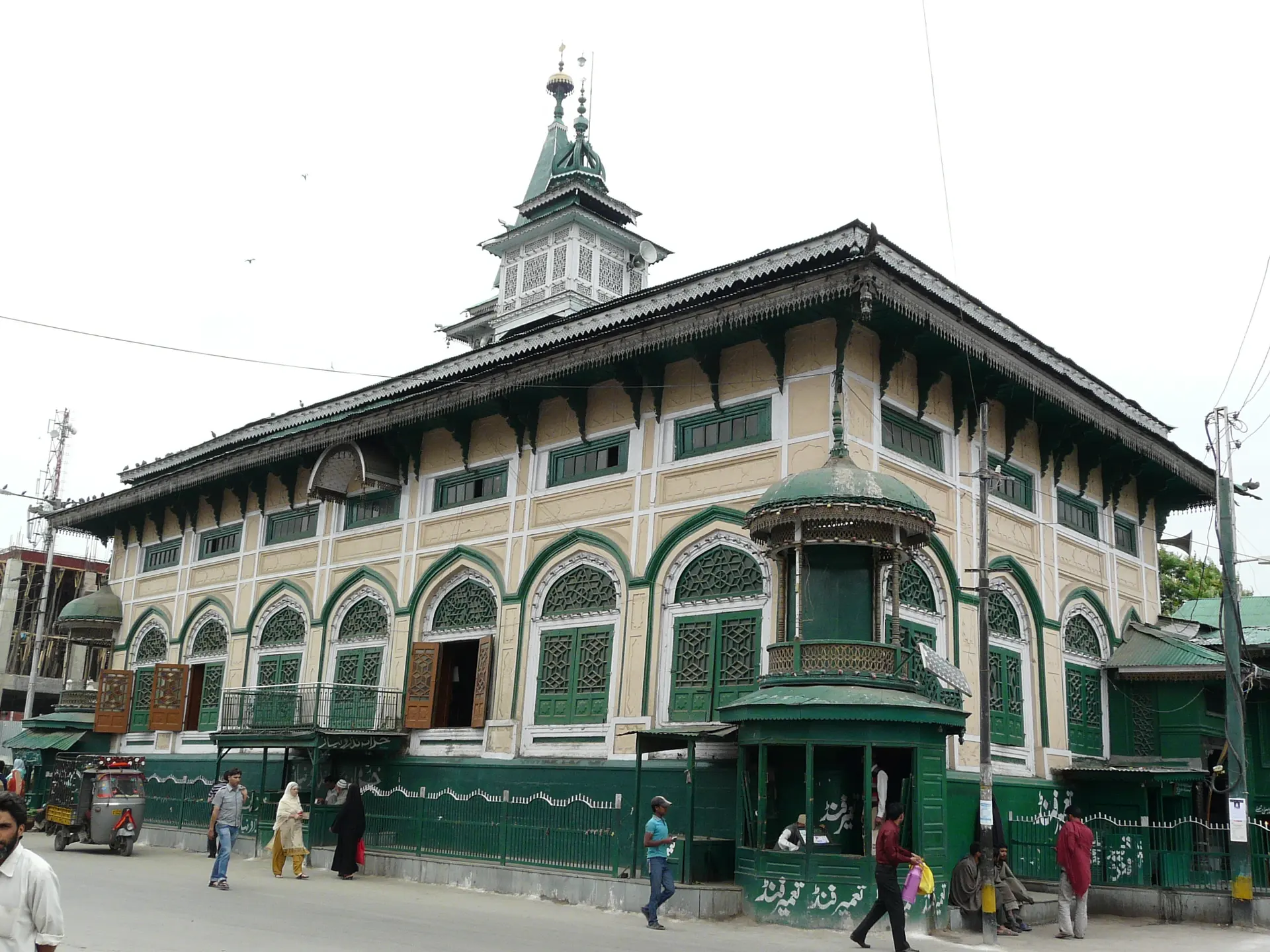
Masjid Dastgeer Sahib, Kashmir
Srinagar, Jammu and Kashmir, India
1.7 km away
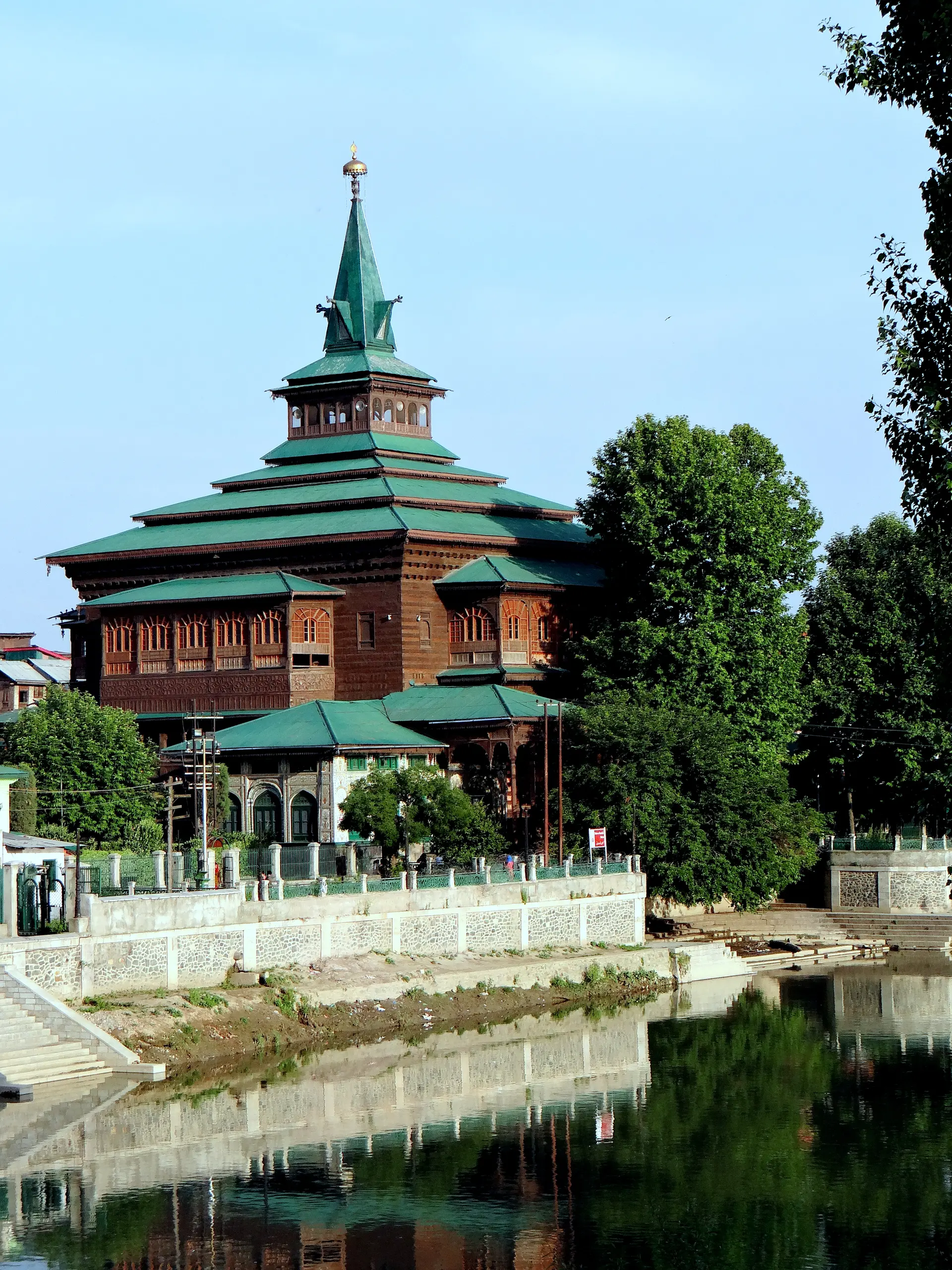
Khanqah-e-Moula
Srinagar, Jammu and Kashmir, India
2.1 km away

Shree Kheer Bhawani Durga Temple, Tulmulla, Kashmir
Wahidpora, Jammu and Kashmir, India
14.9 km away
References
Sources consulted for this page. Source categories describe the publication, not a guarantee that every claim is verified. Traditional accounts and outside interpretations may differ.
- 01Hari Parbat - WikipediaacademicPrimary encyclopedic source on Hari Parbat hill and temple
- 02Nilamata Purana - WikipediaacademicSource text for Kashmir mythology
- 03Hari Parbat Map - MapcartaofficialGPS coordinates
- 04Sri Sharika Devi Chakreshwari Temple In Srinagar - Inditales — InditalesguideDetailed visitor account with historical context
- 05The Mystic Chakra of Sharika Mata at Hari Parbhat - Kashmir BlogsspiritualDetailed information on Sri Chakra significance
- 06Hariparbat - The abode of Goddess Sharika - Daily ExcelsiorspiritualRegional news source with cultural context
- 07Sharika Devi Temple - Kashmir HillsguideVisitor information
- 08Sharika Mata's Mystic Chakra: Vedic antecedents of Kashmir - Indus ScrollsspiritualSpiritual and mythological analysis
- 09Sharika Devi Temple Srinagar - YatraDhamguideTemple timings and visitor information
- 10DC Srinagar visits Sharika Devi Temple - Rising KashmirofficialFestival arrangements and official visits
- 11The tradition of Navreh & Navratri in Kashmir - OrganiserspiritualFestival traditions
Share a photo
Help visitors recognize Shri Chakreshwari Devi Temple (Sharika Mata Temple). Every submission is reviewed before publication.