Masjid Dastgeer Sahib, Kashmir
Where Kashmir invokes its guardian saint, and seekers find refuge in centuries of devotion
Understand sacred places, explore living traditions, and learn how to engage respectfully with Pilgrim Map.
Access has not been verified. Check current local guidance before planning a visit.
Srinagar, Jammu and Kashmir, India
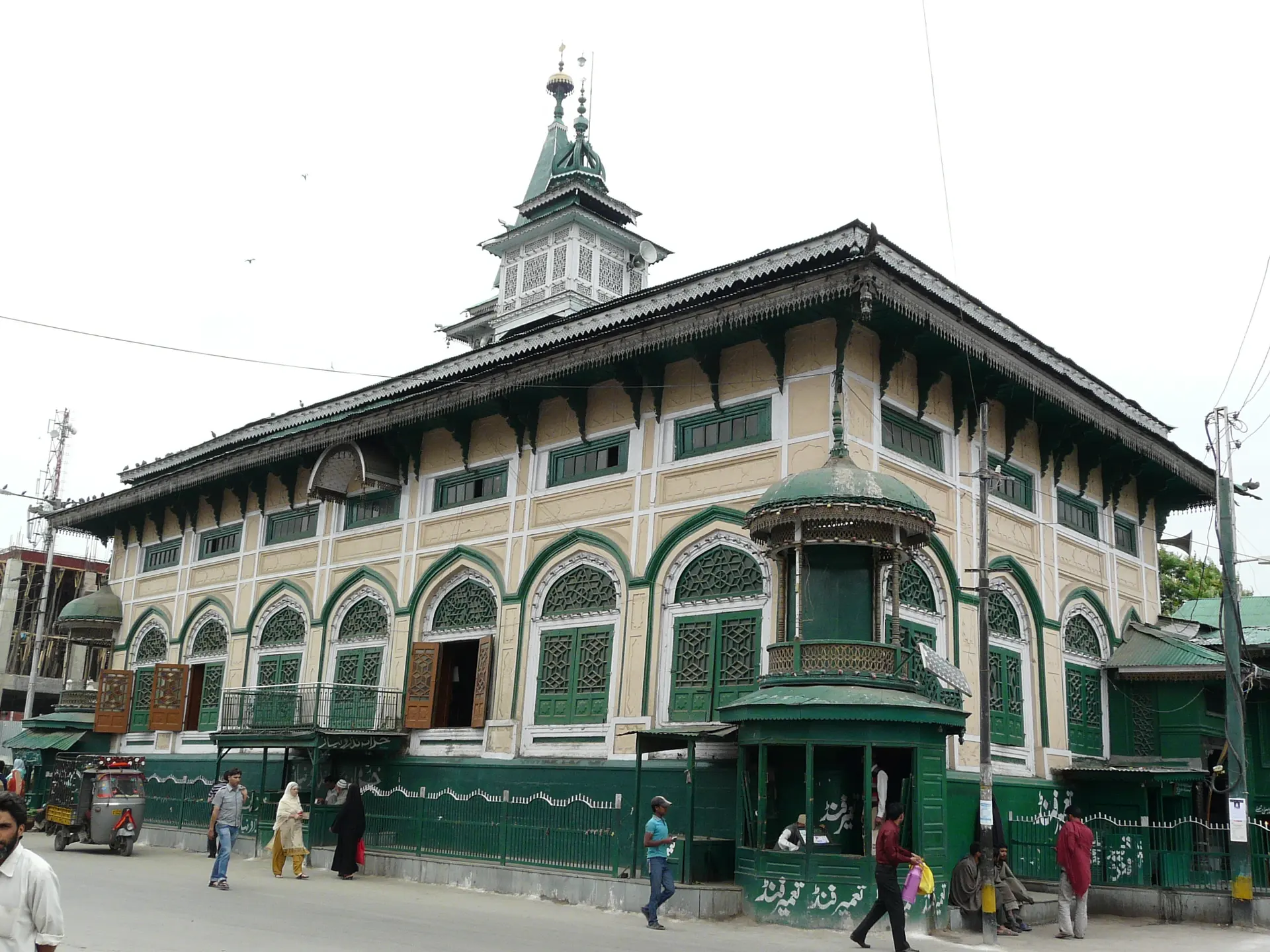
Image of Masjid Dastgeer Sahib, Kashmir. Image source · CC-BY-2.0
Visit essentials
A quick read before you go
- Duration
- A contemplative visit requires one to two hours minimum.
- Etiquette
- Dastgeer Sahib is an active place of worship requiring modest dress, covered heads for women,…
Overview
Some places become sacred through the presence of what they hold. Dastgeer Sahib is such a place.
Within its restored wooden walls, beneath a spire whose ball glints with gold plating, rests a hair relic of Abdul Qadir Gilani, the 12th-century saint who founded the Qadiriyya Sufi order. Though he never set foot in Kashmir, his spiritual influence permeates the valley so thoroughly that his name rises instinctively to Kashmiri lips. When difficulty arrives, they say 'Myane Dasgeera'—'my Dastgeer'—calling on the one whose title means 'Holder of the Hand,' the one who catches those who are falling.
The shrine arrived here through an unusual chain: a merchant from Kandahar, a gift to a governor, entrustment to a Sufi saint. From that seed planted in 1806, an entire ecosystem of devotion has grown. Today, thousands pass through these doors daily. Zikr sessions fill the air with the rhythmic recitation of divine names. During the annual Urs, devotees queue for hours to glimpse the relic that connects them to a presence they experience as living.
In 2012, fire consumed most of the wooden structure. The relics survived in a fireproof vault, and the shrine rose again. Such is the pattern of this place: destruction cannot sever the connection that drew it into being.
Why this place is sacred
What makes a place thin? At Dastgeer Sahib, the answer emerges from convergence.
First, there is the relic itself. In Sufi understanding, the physical traces of saints retain baraka, spiritual blessing that can be transmitted to those who approach with sincerity. The hair of Abdul Qadir Gilani is not merely hair; it is a doorway, a point of contact with a presence devotees experience as alive and responsive. When the relic is displayed during Urs, the atmosphere in the shrine becomes dense with longing and gratitude.
Second, there is continuity. For over two hundred years, this site has been soaked in prayer. Morning to night, devotees have come with their needs and left with something—if not the fulfillment they sought, then a steadiness that sustains through waiting. Such accumulated intention leaves traces. Many visitors report feeling enveloped by peace the moment they enter, before any prayer is offered.
Third, there is the saint himself. Abdul Qadir Gilani holds the highest rank in the Sufi hierarchy: Ghawth, the supreme helper. According to Qadiri teaching, his capacity to intercede did not end with physical death. Devotees address him directly, asking his aid as though speaking to someone present. The shrine functions as a communication point with a consciousness understood to be vast, compassionate, and actively engaged.
Finally, there is Kashmir itself—its beauty, its suffering, its particular quality of longing. Shrines like Dastgeer Sahib have served as refuges when other sources of help failed. The thinness here is not abstract; it is woven into the lived history of a people who have needed places of intercession.
The shrine was established specifically to house the sacred relic and to serve as the center of Qadiriyya Sufism in Kashmir. From its founding, it was intended as a place of active devotion: a site where seekers could connect with the saint's baraka, where zikr sessions would maintain the spiritual atmosphere, and where the Qadri lineage would continue its work. It was never merely historical or commemorative; it was built for ongoing encounter.
The Qadiriyya order had established itself in Kashmir by 1767, but the current shrine emerged only after the relic's arrival in 1806. What began as a modest structure grew through patronage and devotion. Mir Husain Qadri funded major expansion between 1845 and 1854. An 1879 fire damaged the building but led to repairs that included gilding the spire's ball.
The 2012 fire marked the most significant transformation. The wooden structure, so characteristic of Kashmiri sacred architecture, was largely destroyed. Yet the relics—not only the saint's hair but also a Quran attributed to Ali Ibn Abi Talib, the Prophet's cousin and son-in-law—survived in their fireproof vault. Reconstruction restored the traditional architectural style while incorporating modern fire protection. The shrine that stands today is both ancient and new: the same baraka, a rebuilt vessel.
Throughout these changes, the devotional practice has continued unbroken. The zikr sessions that filled the old building now fill the new. The lineage of custodians has maintained transmission across generations.
Experience and orientation
Entry into Dastgeer Sahib begins a shift in atmosphere. The sounds of Srinagar's streets fade. Voices lower. Footsteps become deliberate. Whether visitor or devotee, something adjusts upon crossing the threshold.
The most immediate experience is peace—not drowsy or passive, but alert. The shrine functions as a container, and what it contains is the accumulated stillness of two centuries of prayer. Many describe feeling this before any thought of the saint or his relic; the building itself seems to hold a quality of refuge.
During regular hours, devotees sit in contemplation, recite Quran, or quietly offer their needs to the saint. The atmosphere is gentle, spacious. Conversations are hushed. There is time for whatever arises.
The zikr sessions create something different. When the congregation gathers, individual awareness can dissolve into collective movement. The repetition builds; bodies sway; breath synchronizes. Those unfamiliar with such practice sometimes find themselves unexpectedly moved, as though the sound were reaching places beneath thought. Experiencing it in this shrine, with its centuries of accumulated baraka, intensifies the effect.
The annual Urs represents the peak of devotional intensity. Devotees who have traveled great distances, who have queued for hours, who carry years of longing and gratitude, finally stand before the hair of the saint they have invoked all their lives. Tears are common. So is laughter. The boundary between grief and joy, between petition and praise, dissolves in the presence of what is held sacred.
Approach the shrine as a guest in a house of devoted love. Whatever your own beliefs, the people around you are engaged in genuine practice. Matching their tone of reverence—even if your understanding differs—allows the space to work on you.
If possible, time your visit to include a zikr session. Even as an observer, the sound and movement of collective practice offer something that quiet contemplation does not. Alternatively, come in the early morning when crowds are thin and silence is most available.
For the deepest experience, come during Urs—but know that you will be one among tens of thousands. The intensity is genuine; so is the crowd. Some visitors find the collective devotion overwhelming in the best sense. Others prefer the intimacy of ordinary days.
Context and lineage
The story begins in 12th-century Baghdad, where Abdul Qadir Gilani established the Qadiriyya order and earned the rank of Ghawth, the supreme helper among Sufi saints. His influence spread far beyond his lifetime and geography. Though he never visited Kashmir, his veneration took root there through the transmission of his spiritual lineage.
The Qadri order's presence in Kashmir dates to 1767, when Hazrat Syed Mohammed Fazil Gilani and his brother arrived in the valley. They settled in Khanyar, which became the center of the Silsilai-Qadria, the Qadri lineage.
The shrine itself emerged from an unexpected gift. In 1806, a merchant traveling from Kandahar brought with him a hair relic of Abdul Qadir Gilani. He presented it to Sardar Abdullah Khan, the governor of Kashmir. Recognizing its significance, the governor entrusted the relic to Syed Buzargh Shah, a Qadri Sufi. From this act of entrustment, the shrine began to grow.
The exact circumstances of the relic's journey from Baghdad to Kandahar to Kashmir remain matters of oral tradition rather than documented history. What is certain is that the relic's arrival transformed Khanyar into a pilgrimage destination and established Dastgeer Sahib as the heart of Qadiriyya Sufism in the valley.
The Qadiriyya order traces an unbroken chain of transmission from Abdul Qadir Gilani to the present. In Kashmir, this lineage established itself through the arrival of Syed Mohammed Fazil Gilani in 1767 and was anchored by the relic's arrival in 1806.
The shrine has been maintained by custodians who inherit responsibility through spiritual and often familial succession. Administration transferred to the Central Waqf Council in 2003, but the devotional traditions continue through the community of practitioners who gather for zikr, the monthly Ghyarvi Sharif observances, and the annual Urs.
The lineage is not merely administrative. In Qadiriyya understanding, there is a living connection between the saint in his current state—beyond physical death but spiritually present—and those who practice within his tradition. The shrine functions as a node in this network, a place where that connection can be accessed.
Abdul Qadir Gilani
founder
Known as Dastgeer (Holder of the Hand) and Ghawth-e-Azam (the Greatest Helper), Abdul Qadir Gilani founded the Qadiriyya order in 12th-century Baghdad. His spiritual influence extends across the Muslim world. For Kashmiris, he is a living presence who responds to those who invoke him with sincerity.
Syed Buzargh Shah
historical
The Qadri Sufi to whom the saint's hair relic was entrusted in 1806. His acceptance of this responsibility led to the establishment of the shrine.
Mir Husain Qadri
patron
Major benefactor whose patronage funded the shrine's expansion between 1845 and 1854, giving it the substantial form it maintained until the 2012 fire.
Ali Ibn Abi Talib
historical
The Prophet Muhammad's cousin and son-in-law, revered by all Muslims and particularly central in Shia Islam and Sufi lineages. The shrine houses a Quran believed to be written in his hand, in 6th-century Kufi script.
Traditions and practice
The central practice of the Qadiriyya order is zikr: the rhythmic recitation of God's names or sacred phrases. At Dastgeer Sahib, zikr sessions gather practitioners in collective remembrance, using sound, breath, and sometimes movement to cultivate states of presence and openness to the divine. This practice has continued at the shrine since its founding.
Shab Khawani, night-long prayer vigils, mark significant occasions. These all-night sessions combine recitation, prayer, and the collective intensity of sustained devotion.
The monthly Ghyarvi Sharif on the 11th of each Islamic lunar month commemorates Abdul Qadir Gilani, whose death anniversary falls on the 11th of Rabi al-Thani. These regular gatherings maintain the rhythm of devotion throughout the year.
The annual Urs spans the first eleven days of Rabi al-Thani, culminating on the death anniversary itself. During Urs, the community gathers in intensive devotion, and on the 11th, the holy relic is displayed for devotees to view.
Contemporary practice at Dastgeer Sahib continues these traditional forms while accommodating the rhythms of modern life. The shrine is open from early morning until evening, with formal prayers at the five daily times. Zikr sessions occur at regular intervals.
Devotees come throughout the day to offer prayers, sit in contemplation, or simply rest in the shrine's atmosphere. Many bring specific intentions: healing for illness, resolution of difficulties, guidance for decisions. They address the saint directly, asking his intercession.
The Urs remains the annual peak, drawing tens of thousands from across Kashmir and beyond. Contemporary media coverage and improved transportation have increased attendance while the traditional forms of devotion remain intact.
If you visit seeking more than observation, consider these invitations.
Time your visit to include a zikr session if possible. Even as an observer, sit at the edge of the gathering and allow the sound to work on you. You need not understand the words; the practice operates below the level of semantic meaning.
If you come outside of zikr times, find a place to sit in the main hall and simply be present. Notice what arises when you stop moving. The shrine has held two centuries of seekers; some of that accumulated stillness may become available to you.
If you carry a genuine need or question, you might address the saint silently. You need not share the tradition's beliefs about intercession to engage sincerely with the practice. Frame it as you will—prayer, intention-setting, honest acknowledgment of what you carry. The form matters less than the sincerity.
Qadiriyya Sufism
ActiveThe shrine is the center of the Qadiriyya Sufi order in Kashmir, housing the hair relic of its founder, Abdul Qadir Gilani. For practitioners, it is not merely a memorial but a living point of connection to a saint they understand as spiritually present and actively responsive. The invocation to Dastgeer is the third most common in Kashmir after God and Prophet Muhammad, indicating the depth of his integration into Kashmiri spiritual life.
Daily zikr sessions involve rhythmic recitation of divine names, building states of collective presence. Shab Khawani, night-long prayer vigils, mark significant occasions. Monthly Ghyarvi Sharif observances on the 11th of each lunar month maintain regular devotional rhythm. The annual Urs during the first 11 days of Rabi al-Thani culminates in the display of the holy relic. Devotees address the saint directly in personal prayer, seeking intercession for their needs.
Kashmiri Sufi Syncretism
ActiveDastgeer Sahib exemplifies Kashmir's syncretic spiritual culture, known locally as 'Pirwaer' (garden of saints). In this tradition, shrine visitation crosses religious boundaries. Hindus and Sikhs also visit Dastgeer Sahib, seeking the saint's blessings regardless of doctrinal differences. This reflects a Kashmiri understanding that spiritual power transcends religious categories.
Interfaith visitation involves approaching the shrine with respect and sincerity, seeking blessings according to one's own understanding. Devotees of different traditions may sit together in the shrine's atmosphere, each engaging in their own form of prayer or contemplation. The shrine's custodians welcome all who come with appropriate reverence.
Perspectives and open questions
Dastgeer Sahib invites understanding from multiple vantage points: scholarly analysis of Sufi orders and their spread, the living tradition of practitioners who experience the saint as actively present, and the cultural perspective that sees the shrine as an expression of Kashmir's distinctive spiritual character. These perspectives complement rather than contradict each other.
Scholarly perspective
Academic study places Dastgeer Sahib within the broader pattern of Qadiriyya expansion across the Muslim world, which spread through networks of disciples, relic veneration, and the establishment of khanqahs (Sufi lodges). The Kashmir shrine represents a relatively late node in this network, established through the convergence of an already-present Qadri community and the arrival of the saint's relic.
Scholars note the shrine's significance in understanding Kashmiri Islam's Sufi character, which emphasizes saint veneration, shrine visitation, and the accessibility of the sacred through intermediaries. The 2012 fire and subsequent reconstruction offer material for studying how sacred sites are rebuilt and how communities maintain continuity through physical destruction.
Historical sources disagree on some details: different dates are cited for the shrine's establishment (1806 versus 1767 for the initial Qadri presence). The relic's chain of custody from Baghdad to Kandahar to Srinagar relies on oral tradition. Scholars approach these narratives as significant regardless of their verifiable historicity, understanding their role in constructing sacred meaning.
Living and traditional perspectives
For practitioners within the Qadiriyya tradition, Dastgeer Sahib is not primarily historical or cultural; it is a place of living encounter. Abdul Qadir Gilani, though physically deceased since 1166, is understood to be spiritually alive and actively responsive to those who invoke him. The shrine, housing his relic, functions as a point of access to his baraka.
In this understanding, the saint's rank as Ghawth grants him particular power to intercede with the Divine on behalf of seekers. The phrase 'Myane Dasgeera' is not nostalgia or metaphor; it is direct address to a consciousness believed to hear and respond. Devotees report answers to prayers, guidance received in dreams, and transformations attributed to the saint's intervention.
The lineage of transmission connecting contemporary practitioners to Abdul Qadir Gilani is understood as spiritually real, not merely historical. Those initiated into the order participate in a living chain of blessing that extends from the founder through every generation of teachers to the present moment.
Open questions
How the hair of a saint who died in 1166 came to be in Kandahar centuries later, and the specific chain of custody that brought it to a merchant who happened to be traveling to Kashmir, are questions the historical record does not answer; they remain a matter of oral tradition.
The experience of devotees at the shrine—the peace, the sense of presence, the reported responses to prayer—cannot be verified by external observation. Whether these experiences reflect the genuine activity of a spiritually living saint, psychological responses to accumulated sacred space, or something else entirely, remains a question each visitor must hold for themselves.
Plan your visit
Access and arrival
Srinagar offers accommodation at all price points, from heritage houseboats on Dal Lake to modern hotels in the city center. No accommodations are specifically affiliated with the shrine. During Urs, book well in advance as the city fills with pilgrims.
Respectful visit
Modest clothing is required for all visitors. Women must cover their heads with a scarf or shawl. Arms and legs should be covered. Avoid tight, revealing, or brightly patterned clothing. Dress as you would for a formal religious occasion, regardless of whether this is your own tradition.
Photography inside the shrine is not permitted. Do not attempt to photograph the interior, the relics, or devotees at prayer. Exterior and courtyard photography is allowed. If photographing people outside, seek permission first, particularly during sensitive moments. During zikr sessions, do not photograph the practitioners.
Remove shoes before entering the prayer hall. Storage is available near the entrance. Move quietly; speak in hushed tones or not at all within the main prayer hall, and step outside for phone calls. No food or drink inside the shrine. During zikr sessions, if you are not participating, sit quietly at the periphery and do not walk through the gathering. During crowded periods, follow the directions of shrine staff regarding movement and access.
Respect the devotional atmosphere. This is not a museum or historical site; it is a living place of worship where people come in genuine need. Conduct yourself accordingly.
During busy times, particularly Urs, crowds can be intense. If you are uncomfortable in dense gatherings, choose quieter times for your visit.
Do not attempt to touch or approach the relic display area outside of designated viewing times. The custodians manage access for the safety of both relics and visitors.
Current practical details
Address
3RV8+8V5, Khaniyar, Srinagar, 190003
Hours
Hours, fees, and access can change — verify on the official source before you travel. Practical details last checked Jun 2026.
Location
Map loads as you approach this section.
Pilgrim reflections
A portrait of encounter, not a score
Pilgrims describe what they felt, how present they could become, and whether the place would shape a journey. There are no stars and no ranking of traditions.
No reviewed reflections yet
The first pilgrims can help describe the character of being here.
Share a reflection
Available after an account-backed “Been there.” Every reflection is reviewed before publication.
Nearby sacred places
Explore other sacred places in the region. Proximity does not establish access or travel time; check each place’s guidance.
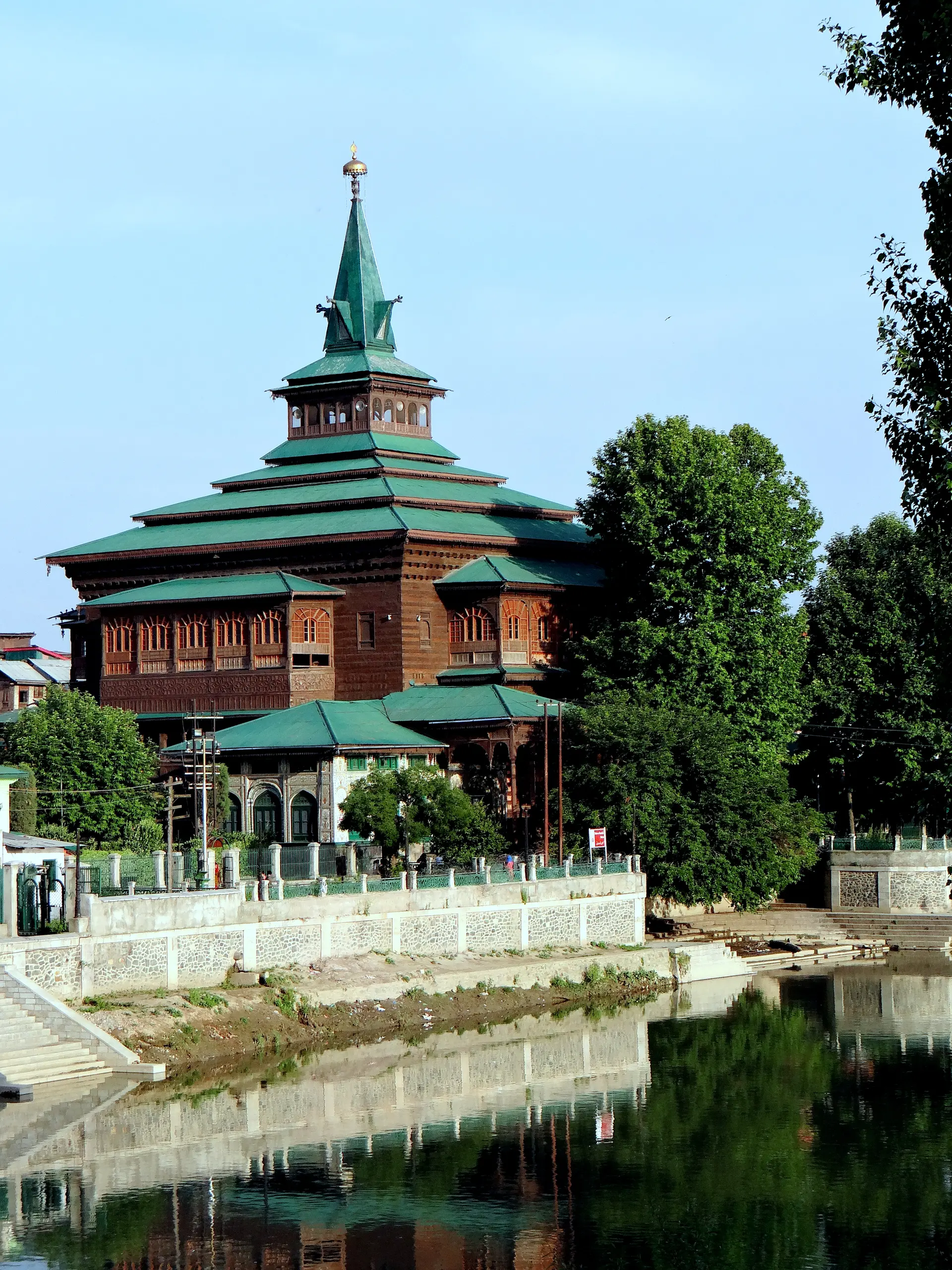
Khanqah-e-Moula
Srinagar, Jammu and Kashmir, India
0.9 km away

Chati Patshahi Gurudwara, Srinagar, Kashmir
Srinagar, Jammu and Kashmir, India
1.2 km away

Shri Chakreshwari Devi Temple (Sharika Mata Temple)
Srinagar, Jammu and Kashmir, India
1.7 km away

Shree Kheer Bhawani Durga Temple, Tulmulla, Kashmir
Wahidpora, Jammu and Kashmir, India
16.4 km away
Share a photo
Help visitors recognize Masjid Dastgeer Sahib, Kashmir. Every submission is reviewed before publication.