Harbiye Falls, Antakya, Turkey
Daphne’s tears in the springs of ancient Daphne
Understand sacred places, explore living traditions, and learn how to engage respectfully with Pilgrim Map.
Access has not been verified. Check current local guidance before planning a visit.
Defne, Hatay, Turkey
Read the sources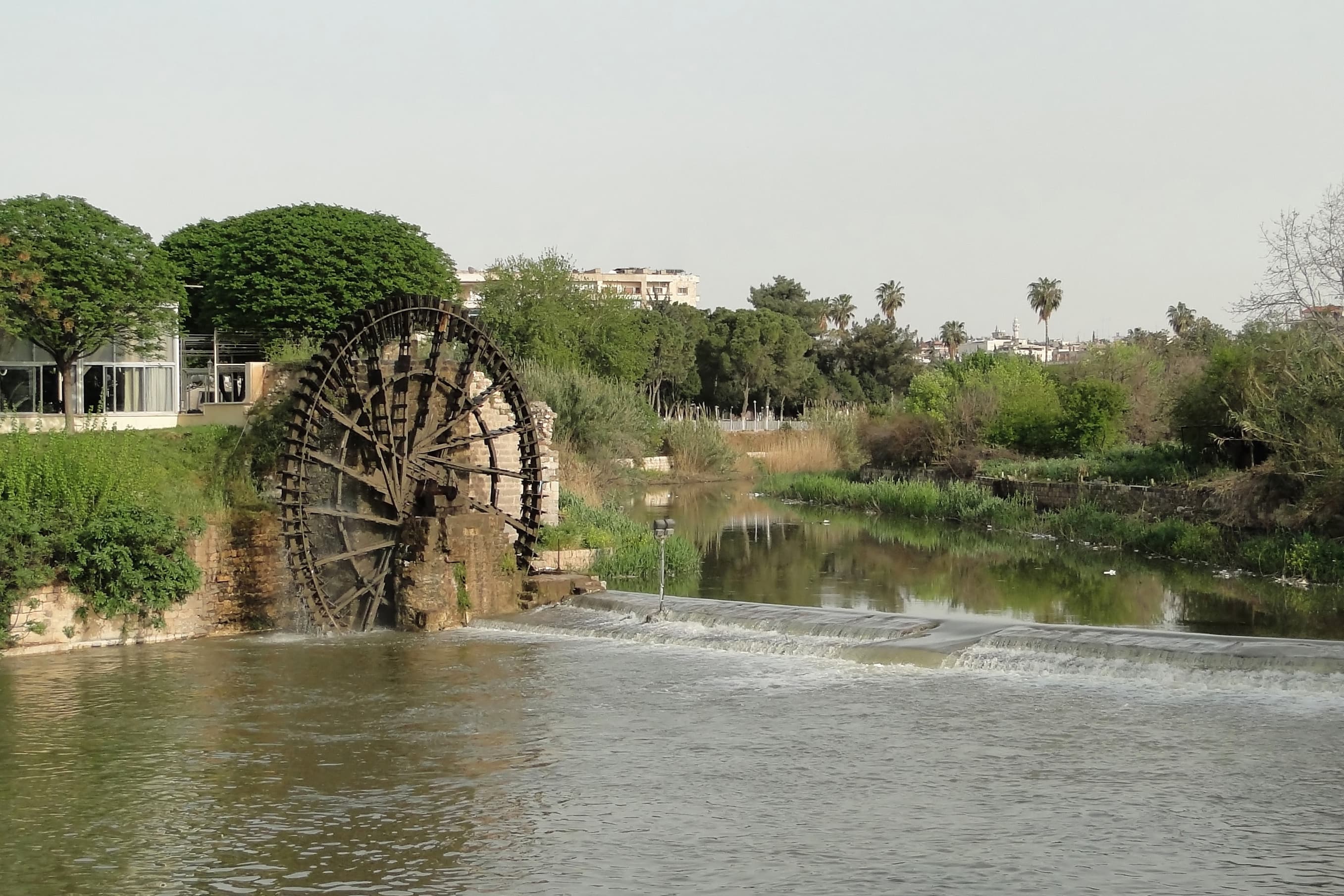
A noria on Orontes River in Hama, Syria. Image source · CC BY-SA 3.0
Visit essentials
A quick read before you go
Overview
Harbiye's cascades flow through the landscape known in antiquity as Daphne, south of Antakya in Hatay. Their sacred association comes from a locally preserved account of Daphne and Apollo and from the wider area's ancient religious history. This entry concerns the falls and their narrative setting; it does not identify every cascade as an excavated sanctuary or claim continuous ancient worship.
Why this place is sacred
The water gives a lasting landscape form to Daphne's escape. Laurels and cascades become ways of remembering her story, while the sacred tree's place in Apollo's tradition links the local telling to a wider classical religious world.
Context and lineage
In the version published by Defne Municipality, Eros sends two arrows with contrary effects: Apollo is filled with desire, while Daphne turns away from him. Apollo pursues her until, exhausted, she calls on Earth Mother to hide her. Earth answers by transforming her into a laurel tree. Her tears become the falling water of Harbiye. Türkiye's Culture Portal also preserves the local association between the cascades and Daphne's tears.
The tale centres on pursuit, refuge and transformation; it should not be retold as though Daphne freely welcomes Apollo's advances.
Traditions and practice
An archaeological publication project at Harvard describes ancient Daphne's springs and groves alongside temples, synagogues and churches, with festivals and conflicts over many centuries. That evidence concerns the wider settlement. Present-day sightseeing at the falls should not be described as an uninterrupted survival of any one ancient rite.
Ancient Greek religious narrative
HistoricalThe cascades are locally understood through the story of Daphne and Apollo.
Perspectives and open questions
Municipal and national cultural sources preserve a public local myth; archaeology establishes the broader historical setting. These are different kinds of evidence. Neither proves that a supernatural transformation occurred, and this profile makes no claim that all residents understand the falls in the same way.
Plan your visit
Ask Defne Municipality or Hatay's visitor authorities about current access before travelling. The cascades occupy a developed visitor landscape, but paths, services and operating conditions require an up-to-date local check. Keep clear of slippery edges and respect any closures. This research does not establish step-free access, current mobile reception or emergency response arrangements.
Location
Map loads as you approach this section.
Pilgrim reflections
A portrait of encounter, not a score
Pilgrims describe what they felt, how present they could become, and whether the place would shape a journey. There are no stars and no ranking of traditions.
No reviewed reflections yet
The first pilgrims can help describe the character of being here.
Share a reflection
Available after an account-backed “Been there.” Every reflection is reviewed before publication.
Nearby sacred places
Explore other sacred places in the region. Proximity does not establish access or travel time; check each place’s guidance.


References
Sources consulted for this page. Source categories describe the publication, not a guarantee that every claim is verified. Traditional accounts and outside interpretations may differ.
- 01Daphne (Harbiye) legend — Defne MunicipalityofficialLocal version: opposed arrows, pursuit, Earth Mother, laurel transformation and tears becoming cascades.
- 02Daphne ile Apollon Efsanesi — Türkiye Culture PortalofficialPublic local classical narrative and waterfall association; treated as mythology, not empirical history.
- 03The Archaeology of Daphne — Shelby White and Leon Levy Program, Harvard UniversityacademicSprings, groves and plural religious history of the wider ancient settlement; no exact cascade-temple identification.
- 04Harbiye Waterfall — Outdooractive editorial teamSource contextFalls identity and coordinates corroborate existing record. Operating descriptions are not guaranteed current.
Share a photo
Help visitors recognize Harbiye Falls, Antakya, Turkey. Every submission is reviewed before publication.