Hang Pagoda, Núi Sam
Phước Điền Tự: a quieter hillside refuge within the Núi Sam pilgrimage world
Understand sacred places, explore living traditions, and learn how to engage respectfully with Pilgrim Map.
Access has not been verified. Check current local guidance before planning a visit.
Châu Đốc, An Giang, Vietnam
Read the sources
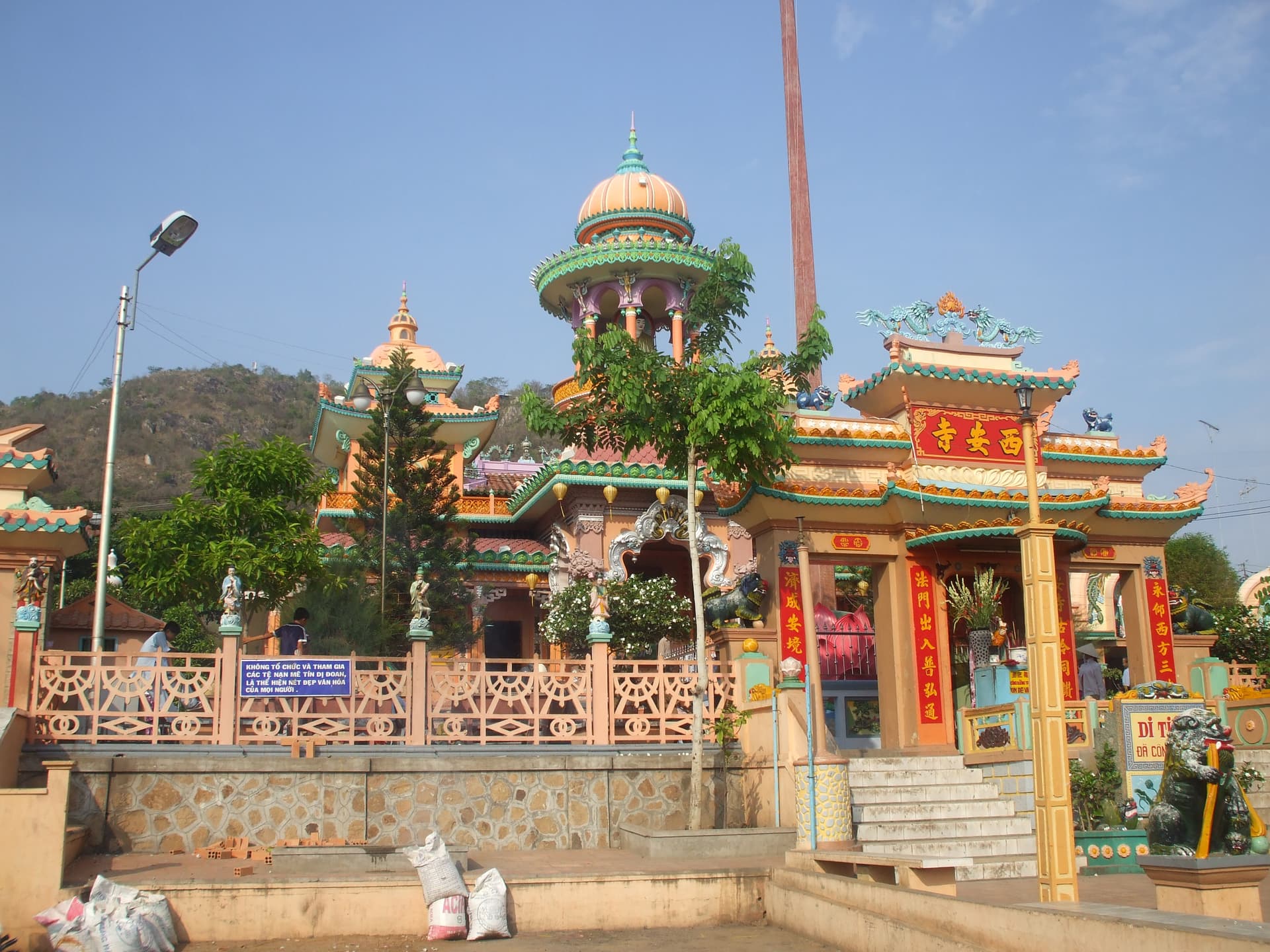
Hang Pagoda, Núi Sam in Châu Đốc, An Giang, Vietnam. Image source · CC BY-SA 3.0
Visit essentials
A quick read before you go
- Duration
- Allow time for the ascent, the worship hall, and an unhurried descent.
- Access
- The strong Places record identifies Phước Điền Tự; same-day hours and route conditions still…
Overview
Núi Sam draws large pilgrim flows, but Phước Điền Tự occupies a more withdrawn register. Stairs and hillside terrain separate the temple from the busiest routes, and the compound's history recalls women's role in establishing and sustaining religious space. That history should not be romanticized as an escape from community; it is evidence that female practice helped shape the mountain's Buddhist life.
The name 'Hang Pagoda' can suggest that a cave is the whole attraction, yet the institution is a working pagoda with altars, custodians, and its own boundaries. Visitors should identify the Buddha hall and public paths before looking for scenic recesses. Quiet is meaningful here because it protects practice, not because the temple promises isolation or a private mystical experience.
Why this place is sacred
The contrast with busier pilgrimage sites can be striking. A narrower approach, vegetation, and smaller worship spaces slow movement without requiring grand architecture. The supported sacred meaning lies in Buddhist refuge, disciplined care, and the women whose practice is connected to the foundation. Stillness may aid contemplation, but it is not a commodity guaranteed by the location. Other visitors and ceremonies remain part of the monastery's life.
The hillside sanctuary developed through Buddhist practice, with women central to its founding memory.
It remains an active pagoda while receiving visitors circulating through the wider Núi Sam pilgrimage area.
Experience and orientation
Approach at a pace that keeps the stairs safe and leaves room for people carrying offerings. At the compound, find the principal Buddha focus rather than assuming that every grotto or side image is the temple's center. Notice how buildings use the slope and how public paths avoid residential areas. If the space is quiet, keep it quiet; if worship is active, step aside rather than waiting for an empty photograph.
Distinguish the hillside route, main worship hall, cave-associated areas, graves or memorials, and monastic boundaries.
Context and lineage
The sources identify the pagoda, its location, Buddhist character, and female founding association. They do not establish every local tale connected with caves or miraculous protection. The page therefore treats those matters cautiously and does not borrow the goddess narratives of Bà Chúa Xứ. No individual UNESCO inscription is claimed.
Vietnamese Mahayana Buddhism governs the temple's altars and monastic practice.
Śākyamuni Buddha
principal Buddhist devotional focus
Traditions and practice
Devotees may bow, light incense, chant, or make an accepted donation. Observe footwear and altar customs at this pagoda rather than copying a gesture from another mountain shrine. The story of women's religious labor can be honored through attention to institutional history, not through invented ritual.
Worship, maintenance, memorial care, and quieter heritage visitation continue.
Pause after the climb and observe how the temple makes limited hillside ground support refuge.
Vietnamese Mahayana Buddhism
ActiveThe pagoda sustains Buddha devotion and a founding memory shaped by female religious practice on Núi Sam.
Bows, incense, chanting, offerings, and quiet contemplation follow temple guidance.
Perspectives and open questions
Women's religious history, Mahayana practice, hillside architecture, and regional pilgrimage distinguish the pagoda.
Scholarly perspective
Smaller institutions can reveal religious agency that monumental narratives overlook. Attention to founders, caretakers, slope use, and the relation to neighboring shrines makes this more than a scenic side trip. Entity accuracy is especially important because 'Hang Pagoda' is a common name in Vietnam.
Living and traditional perspectives
Buddhist refuge and merit provide the central frame; the temple's quiet supports discipline rather than spiritual exclusivity.
Open questions
No healing, cave energy, or guaranteed peace is independently verified.
Plan your visit
Access and arrival
The strong Places record identifies Phước Điền Tự; same-day hours and route conditions still need confirmation.
Use current licensed lodging around Châu Đốc and Núi Sam.
Respectful visit
Cover shoulders and knees and use shoes safe for stairs.
Ask before photographing people or confined interiors.
Use only temple-approved incense, flowers, food, or donations.
Residential rooms, closed grottoes, steep edges, and marked memorial areas remain protected.
Do not enter caves, cells, or graveside areas unless clearly open to the public.
Current practical details
Address
Vĩnh Tây 1, Vinh Te, An Giang, Vietnam
Hours
Hours, fees, and access can change — verify on the official source before you travel. Practical details last checked Jul 2026.
Location
Map loads as you approach this section.
Pilgrim reflections
A portrait of encounter, not a score
Pilgrims describe what they felt, how present they could become, and whether the place would shape a journey. There are no stars and no ranking of traditions.
No reviewed reflections yet
The first pilgrims can help describe the character of being here.
Share a reflection
Available after an account-backed “Been there.” Every reflection is reviewed before publication.
Nearby sacred places
Explore other sacred places in the region. Proximity does not establish access or travel time; check each place’s guidance.


References
Sources consulted for this page. Source categories describe the publication, not a guarantee that every claim is verified. Traditional accounts and outside interpretations may differ.
- 01Official heritage or tourism context for Hang Pagoda, Núi Sam — Vietnam National Authority of Tourism or responsible heritage authorityofficialSupports the site's physical, cultural, religious, or visitor context.
- 02Địa chí An Giang — An Giang provincial authorityofficialExact Phước Điền Tự/Hang Pagoda identity within the provincial gazetteer.
- 03Vietnamese-language reference search for Phước Điền Tự — Vietnamese Wikipedia contributorsacademicDiscovery reference only; unsupported details were not promoted into factual prose.
- 04Google Maps listing for Hang Pagoda, Núi Sam — Google MapsSource contextUsed only for strong-match coordinates and practical fields.
Share a photo
Help visitors recognize Hang Pagoda, Núi Sam. Every submission is reviewed before publication.