Sacred sites in Cambodia
Hinduism

Phnom Da

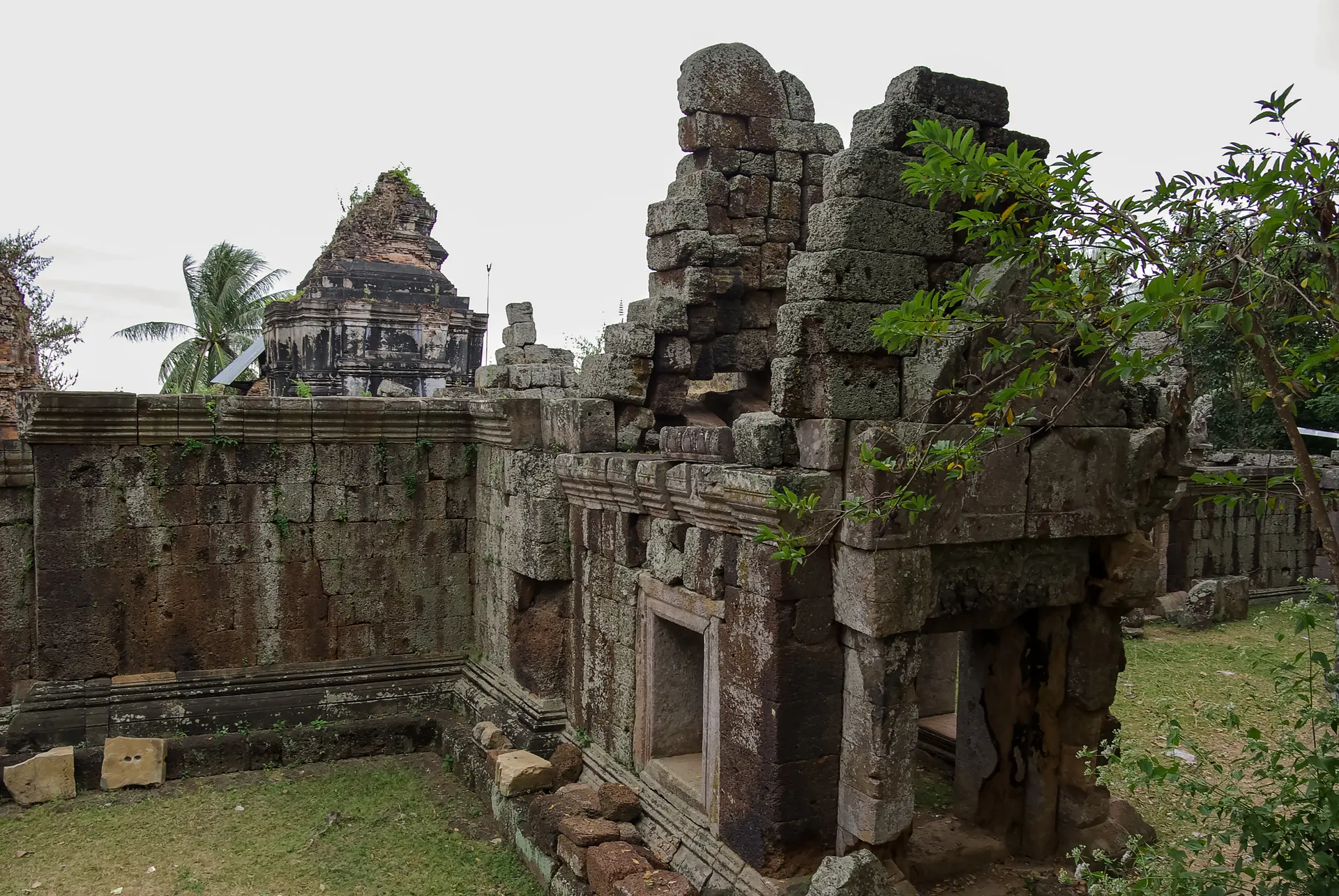
Phnom Da is the temple-bearing hill south of Angkor Borei, known for its summit sanctuary, caves, inscriptions, and sculptures associated with early Cambodian art

Angkor Borei, Takeo, Cambodia

Visit essentials

A quick read before you go

Full notes
Access
Angkor Borei, Takeo, Cambodia
Etiquette
Dress modestly, keep voices low around worship, and ask before photographing people or…

Overview

Phnom Da should be read at two scales: the named hill temple and the wider cultural landscape that gives it meaning. Phnom Da is the temple-bearing hill south of Angkor Borei, known for its summit sanctuary, caves, inscriptions, and sculptures associated with early Cambodian art. The reviewed boundary for this page is the Phnom Da hill and summit sanctuary south of Angkor Borei, not the settlement itself. This boundary prevents nearby monuments, names, or archaeological features from being silently merged.

Why this place is sacred

The page represents the Phnom Da hill and summit sanctuary south of Angkor Borei, not the settlement itself. It does not absorb neighboring temples or the entire regional landscape unless the name and evidence explicitly do so.

Experience and orientation

Keep the hill temple separate from Angkor Borei's settlement record and follow local directions around caves, slopes, and surviving masonry.

Context and lineage

Early historic, with later phases

Recent research & discoveries

Dated findings and publications from the past 15 years, attached to this exact place and linked to their sources.

LiDAR

Airborne LiDAR survey covered the Phnom Da landscape

The EFEO annual report records March 2024 airborne laser scanning in the Angkor Borei and Phnom Da research area.

Why it matters: The survey offers a new terrain-scale record for studying the hill temple in relation to the surrounding early settlement landscape.

Traditions and practice

The hill sanctuary and images belong to the region's early Hindu religious history while later use and removal of objects are part of the site's modern heritage story.

Quiet observation or prayer is appropriate only where current custodians permit it.

Hinduism

Active

The hill sanctuary and images belong to the region's early Hindu religious history while later use and removal of objects are part of the site's modern heritage story.

Perspectives and open questions

This page separates source-supported archaeology, living Hinduism meaning, and modern personal interpretation. The first is tied to the cited evidence; the second is attributed to communities and traditions; the third is not presented as inherited teaching or scientific fact.

Scholarly perspective

Phnom Da is the temple-bearing hill south of Angkor Borei, known for its summit sanctuary, caves, inscriptions, and sculptures associated with early Cambodian art. The primary reference for this release is École française d'Extrême-Orient / CISARK, used for the exact identity and historical frame. Coppersmith's public corpus establishes only why Phnom Da entered this research batch; its alternative interpretations are not treated as archaeological evidence.

Living and traditional perspectives

The hill sanctuary and images belong to the region's early Hindu religious history while later use and removal of objects are part of the site's modern heritage story.

Alternative interpretations

Modern alternative-history interpretations are not presented as archaeological conclusions.

Open questions

Unresolved dates, functions, or ritual meanings remain explicitly uncertain.

Plan your visit

Access and arrival

Angkor Borei, Takeo, Cambodia

Respectful visit

Modest clothing suitable for an active Cambodian sacred place.

Follow posted rules and ask before photographing worshippers.

Leave offerings only where local practice and custodians explicitly permit them.

Respect barriers, conservation closures, and drone restrictions.

Do not invent, stage, or imitate rites at archaeological structures.

Location

Loading map...

Pilgrim reflections

A portrait of encounter, not a score

Pilgrims describe what they felt, how present they could become, and whether the place would shape a journey. There are no stars and no ranking of traditions.

No reviewed reflections yet

The first pilgrims can help describe the character of being here.

Share a reflection

Available after an account-backed “Been there.” Every reflection is reviewed before publication.

Watch deeper

Nearby sacred places

References

Sources consulted when researching this page. Independent verification by readers is welcome.

  1. 01Inventaire descriptif des monuments du Cambodge: Phnom DaÉcole française d'Extrême-Orient / CISARKhigh-reliability