Ba Chúc Tomb and Phi Lai Pagoda
Ba Chúc: Buddhist care beside the material evidence of massacre
Understand sacred places, explore living traditions, and learn how to engage respectfully with Pilgrim Map.
Access has not been verified. Check current local guidance before planning a visit.
Ba Chúc, An Giang, Vietnam
Read the sources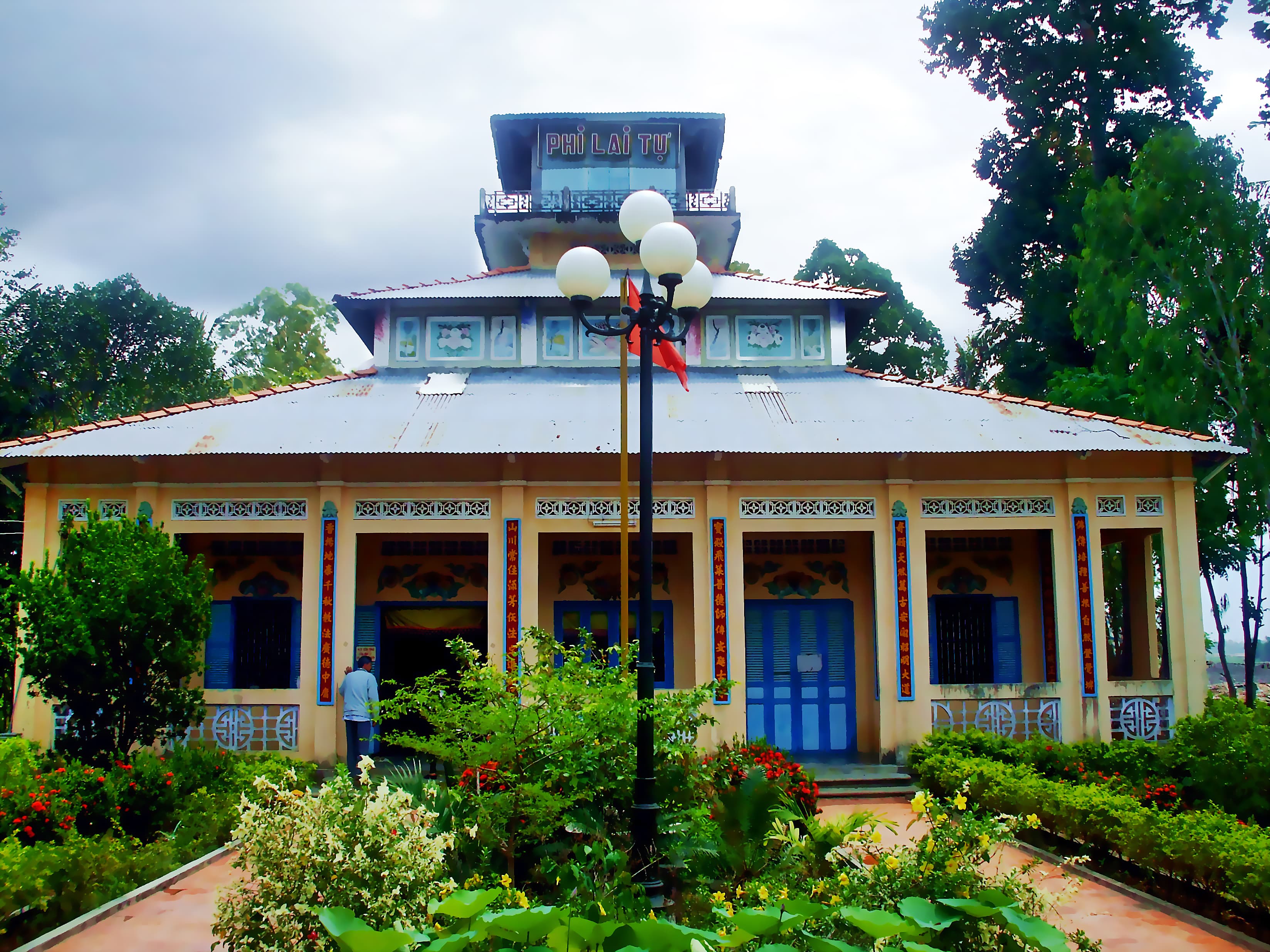
Ba Chúc Tomb and Phi Lai Pagoda in Tri Tôn, An Giang, Vietnam. Image source · CC BY-SA 3.0
Visit essentials
A quick read before you go
- Duration
- Allow time for historical reading, quiet memorial attention, and recovery afterward.
- Access
- No single Google Places result matched the paired scope.
Overview
Ba Chúc Tomb and Phi Lai Pagoda are not one institution. Local and provincial authorities describe a three-part national historical complex—Ba Chúc Tomb, Phi Lai Pagoda, and Tam Bửu Pagoda—and this page follows the CSV's two named subjects while stating that larger scope. The tomb's remains and interpretation demand witness without spectacle; Phi Lai sustains Tứ Ân Hiếu Nghĩa prayer, incense, festivals, and pilgrim life.
Religious care and public remembrance share the landscape, but each component has distinct custodianship and purpose. Tam Bửu is a sibling component, not part of Phi Lai.
Why this place is sacred
The intensity of Ba Chúc comes from documented evidence rather than manufactured atmosphere. Human remains make historical violence physically present; the pagoda gives mourners and community members a place to pray. Silence may be a suitable response, but it should not become vague language about energy. The strongest ethical claim is direct: the dead must not be used as objects, and remembrance carries obligations toward accuracy and dignity.
The tomb preserves victims' remains and memory; the pagoda supports Buddhist prayer and communal care.
Public education, mourning, religious observance, and protection now operate together.
Experience and orientation
Begin with available historical interpretation and the custodian's rules. Names, dates, testimony, and material evidence should be encountered in that order when possible, so remains are not stripped of human identity. At Phi Lai Pagoda, allow worship to proceed without turning it into an emotional supplement to the memorial. If the visit becomes overwhelming, step outside quietly rather than demanding an explanation or consolation from staff.
Separate the memorial tomb, interpretive material, Buddhist prayer spaces, and any area reserved for descendants or ceremonies.
Context and lineage
In the aftermath of the 1978 Ba Chúc massacre, authorities and residents began constructing the memorial complex in 1979. The three-component ensemble of Tam Bửu, Phi Lai, and Ba Chúc Tomb received national historical designation in 1980, and the tomb complex was redeveloped in 2013. Current local-authority reporting documents commemorations, incense offerings, religious rites, and Tứ Ân Hiếu Nghĩa pilgrims. No UNESCO World Heritage status applies.
Tứ Ân Hiếu Nghĩa Buddhist practice at Phi Lai and Tam Bửu remains distinct from, but closely adjacent to, civic and family remembrance at the tomb.
Victims of the Ba Chúc massacre
people commemorated and protected in the memorial
Traditions and practice
Buddhist monks and laypeople may chant, bow, offer incense, or dedicate merit for the dead. Public remembrance may also involve speeches, wreaths, or survivor testimony. Visitors should not copy rites without invitation and should never rearrange memorial objects for a photograph.
Commemoration, education, religious care, and family mourning continue.
Read one name or testimony fully and hold a period of silence without photographing.
Tứ Ân Hiếu Nghĩa Buddhism
ActivePhi Lai is part of a living religious center where major observances draw adherents and pilgrims.
Prayer, incense, festival rites, pilgrim visitation, and memorial observance follow community authority.
Public and family memorial practice
ActiveThe tomb preserves victims' remains and supports recurring civic, religious, and descendant remembrance.
Incense, flowers, silence, historical education, and public commemoration.
Perspectives and open questions
Oral history, forensic evidence, Buddhist mourning, survivor authority, and memorial ethics must be considered together.
Scholarly perspective
A responsible memorial account distinguishes evidence from rhetoric and keeps victims from becoming anonymous symbols. The proximity of a pagoda shows how religious practice can support mourning, but it does not replace historical documentation. Photography policy is part of interpretation because it governs how remains circulate beyond the site.
Living and traditional perspectives
Tứ Ân Hiếu Nghĩa practice gives Phi Lai an active religious identity, while incense, ritual observance, and merit-oriented remembrance help the community care for the dead.
Open questions
No paranormal presence or guaranteed healing of grief is asserted; personal reports would require attribution and a clear disclaimer.
Plan your visit
Access and arrival
No single Google Places result matched the paired scope. Exact component records for Phi Lai and the tomb establish that they are about 79 metres apart inside the official complex, but their hours, phone, address, and website were not promoted as whole-site practical data.
Use licensed lodging in the wider An Giang area; the memorial and pagoda are not visitor accommodation.
Respectful visit
Wear subdued, modest clothing appropriate to a tomb and pagoda.
Follow explicit rules; when uncertain, do not photograph human remains or mourners.
Use only memorial or Buddhist offerings accepted by custodians.
Displays, remains, altars, archives, and ceremony areas must never be touched or crossed.
Do not seek graphic detail, touch remains, or turn grief into a claim about your own transformation.
Location
Map loads as you approach this section.
Pilgrim reflections
A portrait of encounter, not a score
Pilgrims describe what they felt, how present they could become, and whether the place would shape a journey. There are no stars and no ranking of traditions.
No reviewed reflections yet
The first pilgrims can help describe the character of being here.
Share a reflection
Available after an account-backed “Been there.” Every reflection is reviewed before publication.
Nearby sacred places
Explore other sacred places in the region. Proximity does not establish access or travel time; check each place’s guidance.


References
Sources consulted for this page. Source categories describe the publication, not a guarantee that every claim is verified. Traditional accounts and outside interpretations may differ.
- 01Official visit to Ba Chúc national historical complex — Ba Chúc local governmentofficialCurrent local-authority source naming the national historical complex as Ba Chúc Tomb, Phi Lai Pagoda, and Tam Bửu Pagoda; records incense commemoration and the 2013 complex redevelopment.
- 0248th Ba Chúc massacre commemoration plan — Ba Chúc local governmentofficialCurrent authority account of the recurring memorial, religious rites, incense and flower offerings, and the official three-component heritage cluster.
- 03Ba Chúc remembrance and national historical status — Ba Chúc local governmentofficialCurrent authority record for the 1980 national designation of the Tam Bửu–Phi Lai–Ba Chúc Tomb complex and continuing public remembrance.
- 04Tứ Ân Hiếu Nghĩa Buddhist triple celebration at Tam Bửu–Phi Lai — Ba Chúc local governmentofficialExact current source identifying Phi Lai within active Tứ Ân Hiếu Nghĩa religious life and noting pilgrims attending major observances.
- 05Phi Lai Tự component map record — Google MapsSource contextExact component record at 10.4998695, 104.9088483; retained only to bound the official complex, not as a whole-site practical match.
- 06Ba Chúc Crypt component map record — Google MapsSource contextExact tomb component record at 10.4991924, 104.9085877; retained only to bound the official complex, not as a whole-site practical match.
- 07Chùa Phi Lai ở Ba Chúc — Bùi Thụy Đào Nguyên via Wikimedia CommonsacademicExact photograph of the named tomb component; Flickr license reviewed on Commons as CC BY 2.0.
Share a photo
Help visitors recognize Ba Chúc Tomb and Phi Lai Pagoda. Every submission is reviewed before publication.